Love this? Save it for later!
Share the inspiration with your friends
My friend’s annual “Soup & Sweater” party was in four hours and I’d completely forgotten. Everyone else would be bringing those elaborate, slow-simmered creations from heirloom recipes—think roasted tomato basil with homemade croutons and a French onion soup that took two days. I had a single butternut squash sitting on my counter, a box of pasta, and a block of cheddar that was past its prime. Honestly, I almost bailed.
Then I remembered this weird trick I’d seen online—blending roasted squash into a cheese sauce. It sounded like a disaster waiting to happen, but I had nothing to lose. I threw the squash in the oven, crossed my fingers, and started grating cheese. The kitchen smelled like a fall candle, which felt like a small victory. The sauce came together in a blur of butter, flour, and milk, and when I stirred in the squash puree, it turned this gorgeous, golden-orange color.
I showed up late, carrying a baking dish that looked way too simple next to everyone else’s masterpieces. My friend took one bite and just stared at me. “What did you put in this?” she asked. I shrugged, trying to look casual. The whole dish was gone in twenty minutes, and three people asked for the recipe. I mean, I was as surprised as anyone. That accidental, slightly panicked creation is now the only mac and cheese I make. Maybe you’ve been there—scrambling for something good when you’ve got nothing special to work with. This is that recipe.
Why You’ll Love This Recipe
This isn’t just another boxed mac and cheese with a vegetable thrown in. I’ve tested this version about a dozen times to get the balance just right—enough squash to make it creamy and a little sweet, but not so much that it tastes like a health food experiment. My neighbor, a former chef, tried it and said it reminded him of the fancy restaurant versions that cost twenty dollars a bowl.
- Quick & Easy: Comes together in under 45 minutes, and most of that is hands-off roasting time. Perfect for a Tuesday night when you need something cozy fast.
- Simple Ingredients: No fancy grocery trips needed. Butternut squash, pasta, cheddar, milk, butter, and flour are all you really need.
- Perfect for Cold Weather: Great for those evenings when you just want to curl up on the couch with something warm and cheesy.
- Crowd-Pleaser: Kids love the creamy texture, and adults appreciate the subtle squash flavor. It’s a win-win.
- Unbelievably Delicious: The texture is next-level comfort food—silky, rich, and satisfying without being heavy.
What makes this recipe different from the rest is the technique. Instead of just mashing squash into a cheese sauce (which can get grainy), I roast it first to concentrate the sweetness, then blend it until it’s completely smooth. This creates a sauce that’s velvety and luxurious, with a natural sweetness that balances the sharp cheddar perfectly. It’s comfort food reimagined—healthier, faster, but with the same soul-soothing satisfaction.
What Ingredients You Will Need
This recipe uses simple, wholesome ingredients to deliver bold flavor and satisfying texture without the fuss. Most of these are pantry staples, and the squash does the heavy lifting for creaminess.
For the Roasted Squash
- 1 medium butternut squash (about 2-3 pounds), peeled, seeded, and cubed
- 2 tablespoons olive oil
- 1/2 teaspoon salt
- 1/4 teaspoon black pepper
- 1/4 teaspoon garlic powder (optional, but adds a nice savory note)
For the Pasta and Cheese Sauce
- 1 pound (450g) elbow macaroni or cavatappi pasta (I recommend De Cecco for best texture)
- 4 tablespoons (1/2 stick) unsalted butter
- 1/4 cup all-purpose flour
- 2 cups whole milk, warmed (use 2% in a pinch, but whole milk makes it creamier)
- 1 cup reserved pasta water (this is liquid gold for adjusting consistency)
- 2 cups (8 ounces) sharp cheddar cheese, grated (freshly grated melts better than pre-shredded)
- 1 cup (4 ounces) Gruyère or fontina cheese, grated (adds incredible meltiness)
- 1/2 cup grated Parmesan cheese
- 1 teaspoon Dijon mustard (cuts through the richness)
- 1/2 teaspoon smoked paprika
- Salt and pepper to taste
For the Topping (Optional but Highly Recommended)
- 1/2 cup panko breadcrumbs
- 2 tablespoons melted butter
- 1/4 cup grated Parmesan cheese
- Fresh thyme or parsley for garnish
Ingredient Tips: Look for a squash that feels heavy for its size—that means it’s fresh and not dried out. If you’re short on time, you can use frozen cubed butternut squash (about 3 cups), just thaw and pat it dry before roasting. For a dairy-free option, swap the butter for vegan butter, use unsweetened oat milk, and try a dairy-free cheddar-style shred. The texture won’t be exactly the same, but it’s still pretty good.
Equipment Needed
You don’t need a professional kitchen to pull this off, but a few key tools make the process smoother.
- Baking Sheet: For roasting the squash. A rimmed sheet is best to catch any juices.
- Large Pot: For boiling pasta. Go big—you need room for the water to bubble.
- Medium Saucepan: For making the cheese sauce. A heavy-bottomed pan prevents scorching.
- Blender or Food Processor: To puree the roasted squash until silky smooth. An immersion blender works too, but a regular blender gives the smoothest results.
- Box Grater: Freshly grated cheese melts so much better than pre-shredded stuff (which has anti-caking agents that mess with the texture).
- 9×13-inch Baking Dish: For the final bake. A 3-quart casserole dish works too.
- Whisk: For a lump-free sauce. A silicone whisk is my favorite—it’s gentle on nonstick pans.
If you don’t have a blender, you can mash the roasted squash with a fork or potato masher, but the sauce will be a little chunkier. That’s not a bad thing—it adds a rustic feel. And honestly, I’ve made this with a hand mixer before when my blender broke, and it worked just fine.
Preparation Method
Let’s get cooking. This comes together in stages, but don’t let the steps overwhelm you—it’s actually pretty straightforward.
- Roast the Squash: Preheat your oven to 400°F (200°C). Toss the peeled, cubed squash with olive oil, salt, pepper, and garlic powder. Spread it in a single layer on a baking sheet. Roast for 25-30 minutes, flipping halfway, until the squash is tender and lightly caramelized. You want it fork-tender—soft enough to mash easily.
- Blend the Squash: Let the roasted squash cool for a few minutes, then transfer it to a blender. Add about 1/4 cup of water or milk and blend until completely smooth. You’re looking for a baby food-like consistency. Set this aside.
- Cook the Pasta: Bring a large pot of salted water to a boil. Cook the pasta according to package directions until al dente—usually about 8-10 minutes. Important: Reserve 1 cup of pasta water before draining. That starchy water is magic for adjusting the sauce later. Drain the pasta and set it aside.
- Make the Roux: In a medium saucepan, melt the butter over medium heat. Whisk in the flour and cook for 1-2 minutes, stirring constantly. You’re looking for a light golden color—don’t let it brown too much. This is the base of your sauce.
- Build the Sauce: Slowly whisk in the warm milk, a little at a time, until the mixture is smooth. Keep whisking as it thickens—about 3-4 minutes. It should be thick enough to coat the back of a spoon.
- Add the Squash and Cheese: Reduce the heat to low. Stir in the blended squash puree until fully incorporated. Then add the grated cheddar, Gruyère, and Parmesan, a handful at a time, stirring until each addition melts completely. Add the Dijon mustard and smoked paprika. Taste and adjust salt and pepper.
- Combine Pasta and Sauce: Pour the cheese sauce over the cooked pasta and stir gently to coat everything evenly. If the sauce seems too thick, add a splash of the reserved pasta water until it reaches your desired consistency. The sauce will thicken more as it bakes, so keep it a little looser than you think you need.
- Assemble and Bake: Preheat your oven to 375°F (190°C). Transfer the mac and cheese to a greased 9×13-inch baking dish. In a small bowl, mix the panko breadcrumbs, melted butter, and Parmesan. Sprinkle this evenly over the top. Bake for 20-25 minutes, until bubbly and golden on top. For extra crunch, broil for 1-2 minutes at the end—but watch it closely so it doesn’t burn.
- Rest and Serve: Let the dish rest for 5 minutes before serving. This allows the sauce to set slightly so it doesn’t run all over the plate. Garnish with fresh thyme or parsley if you’re feeling fancy.
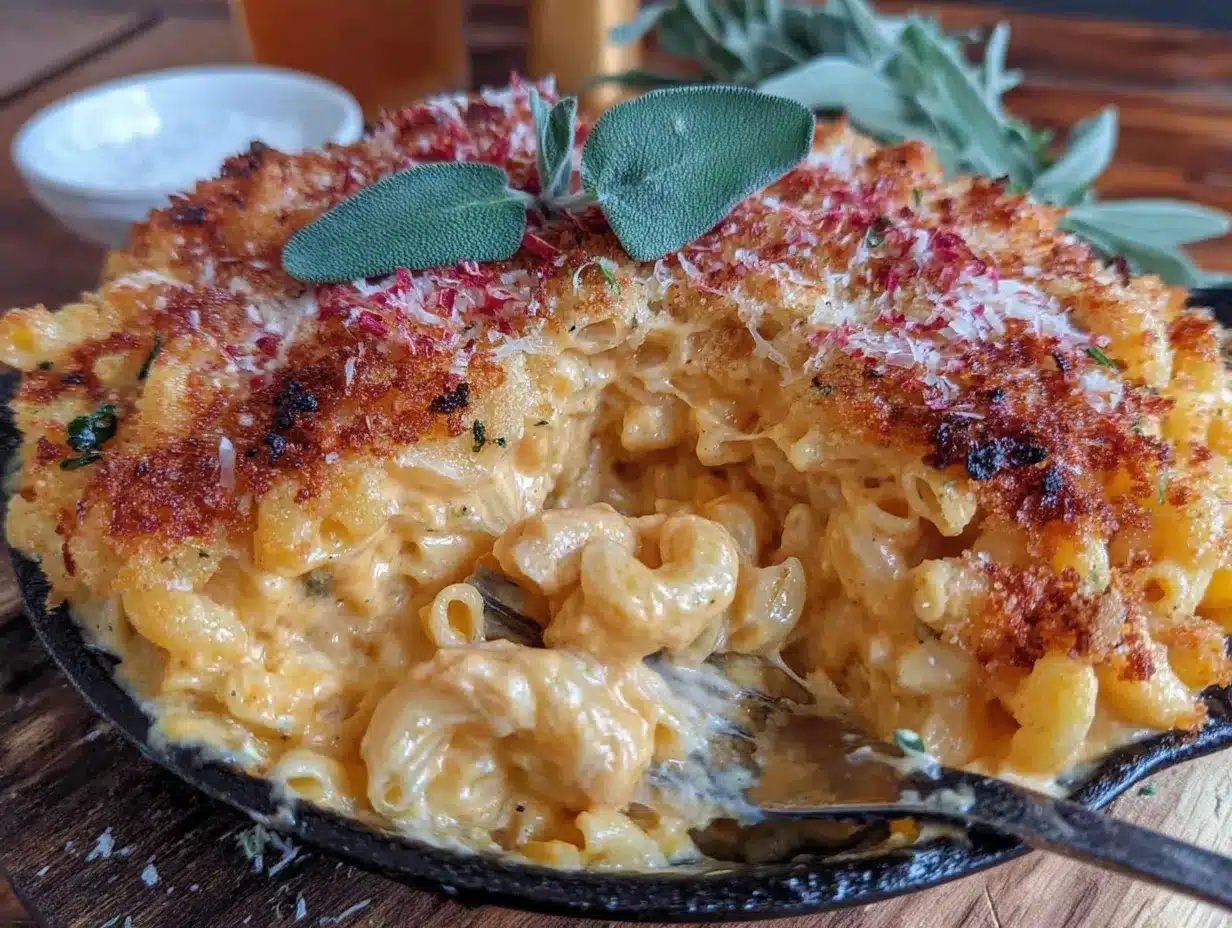
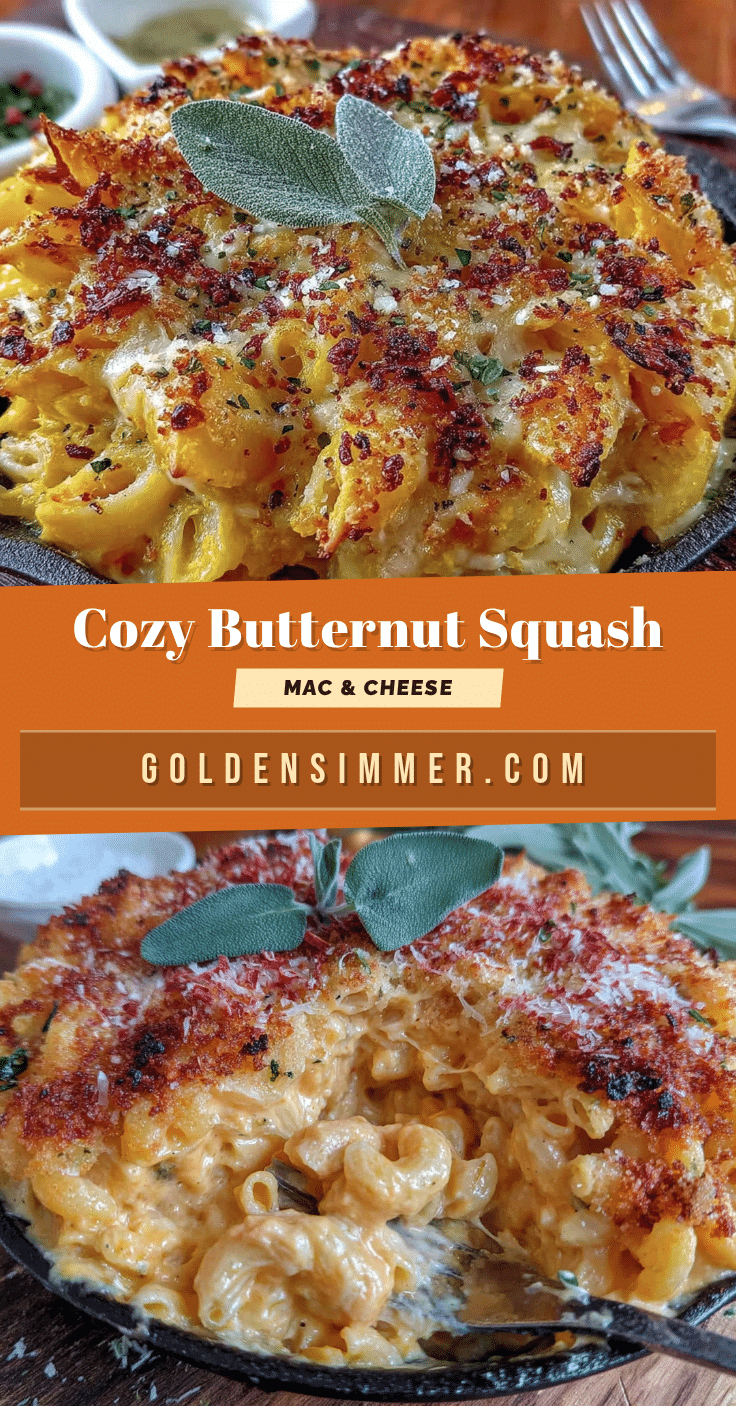
Sensory Cue: When you take it out of the oven, the top should be golden and crispy, and you’ll see little bubbles of cheese peeking through. The smell is incredible—toasty, cheesy, with a hint of sweetness from the squash.
Cooking Tips & Techniques
I’ve made plenty of mistakes with this recipe, so you don’t have to. Here’s what I’ve learned the hard way.
Don’t Skip Roasting the Squash: I tried boiling it once to save time. Big mistake. Boiled squash is watery and bland, and it made my sauce thin and sad. Roasting concentrates the flavor and removes excess moisture, which is key for a thick, creamy sauce.
Grate Your Own Cheese: I know, I know—it’s extra work. But pre-shredded cheese is coated with cellulose to prevent clumping, and that stuff doesn’t melt smoothly. You’ll end up with a grainy sauce. Freshly grated cheese melts like a dream. Trust me on this one.
Warm Your Milk: Adding cold milk to a hot roux can cause lumps. I learned this when I was rushing and ended up with a lumpy mess. Just microwave the milk for 30 seconds or warm it in a separate pan while you’re making the roux.
Reserve That Pasta Water: I cannot stress this enough. That starchy water is the secret to a silky sauce. If your sauce gets too thick after baking, stir in a splash before serving. It’s like a magic fix.
Don’t Overcook the Pasta: Cook it al dente—firm to the bite. It will continue cooking in the oven, and nobody likes mushy mac and cheese. I usually cook it a full minute less than the package says.
Timing Strategy: Roast the squash while you’re grating cheese and measuring ingredients. By the time the squash is done, everything else is ready to go. It makes the whole process feel seamless.
Variations & Adaptations
This recipe is a great base for customization. Here are a few ways I’ve adapted it over the years.
Make It Gluten-Free
Swap the all-purpose flour for a 1:1 gluten-free flour blend (I like Bob’s Red Mill). Use gluten-free pasta—brown rice pasta works well. The panko topping can be replaced with crushed gluten-free crackers or omitted entirely.
Add Some Protein
Stir in 2 cups of shredded rotisserie chicken or cooked bacon bits before baking. I did this for a Super Bowl party once, and it was gone in minutes. You could also add leftover pulled pork for a barbecue twist.
Make It Vegan
Use vegan butter, unsweetened oat milk, and dairy-free cheese shreds. The sauce won’t be as creamy, but adding a tablespoon of nutritional yeast helps with the cheesy flavor. Roast the squash with a little smoked paprika to boost the savory notes.
Spice It Up
Add 1/2 teaspoon of cayenne pepper or a chopped jalapeño to the sauce for a kick. I tried this on a whim and loved the contrast between the sweet squash and the heat. A pinch of red pepper flakes on top before serving works too.
Seasonal Swaps
In the fall, swap butternut squash for roasted pumpkin or sweet potato. In the summer, try roasted zucchini (squeeze out the excess water first). Each variation gives a slightly different flavor profile, but they all work beautifully.
Serving & Storage Suggestions
This mac and cheese is best served hot, straight from the oven, when the cheese is still stretchy and the top is crispy. Let it rest for 5 minutes so it holds its shape on the plate. I like to serve it with a simple green salad dressed with lemon vinaigrette—the acidity cuts through the richness perfectly.
For a cozy dinner, pair it with roasted broccoli or a side of steamed green beans. If you’re feeling indulgent, serve it alongside a piece of crusty bread to soak up any extra sauce. A glass of crisp white wine, like Sauvignon Blanc, complements the squash and cheese nicely.
Storage: Leftovers keep in an airtight container in the refrigerator for up to 4 days. The pasta will absorb some of the sauce, so it won’t be as creamy the next day, but it’s still delicious. To reheat, add a splash of milk or water and microwave in 30-second intervals, stirring between each, or reheat in a 350°F oven for 10-15 minutes.
Freezing: This recipe freezes surprisingly well. Assemble the dish completely but don’t bake it. Cover tightly with foil and freeze for up to 3 months. When you’re ready to eat, bake from frozen at 375°F for 45-50 minutes, removing the foil for the last 10 minutes. You may need to add a few minutes of extra time.
Flavor Development: Honestly, this dish tastes even better the next day. The flavors meld together overnight, and the squash sweetness becomes more pronounced. If you can resist eating it all, save some for lunch tomorrow.
Nutritional Information & Benefits
This recipe makes about 8 servings. Per serving (based on the recipe as written): approximately 520 calories, 22g protein, 55g carbohydrates, 24g fat, 12g saturated fat, 65mg cholesterol, 680mg sodium, 4g fiber, 8g sugar.
The butternut squash is the star here—it’s packed with vitamin A (over 200% of your daily needs per serving), vitamin C, and fiber. It adds natural sweetness without needing extra sugar, and it helps you eat a serving of vegetables without even noticing. The cheese provides calcium and protein, making this a more balanced meal than traditional mac and cheese.
Dietary Considerations: This recipe is vegetarian. To make it gluten-free, use gluten-free pasta and flour. For a lower-fat version, use reduced-fat cheese and skim milk, but the texture won’t be as creamy. It contains dairy and gluten (unless modified).
I like to think of this as comfort food that’s a little kinder to your body. You get the satisfaction of a cheesy, creamy pasta dish, but with a bonus dose of vegetables and nutrients. It’s the kind of meal that makes you feel good from the inside out.
Frequently Asked Questions
Can I use frozen butternut squash instead of fresh?
Yes, absolutely. Thaw the frozen squash first and pat it dry with paper towels to remove excess moisture. Roast it the same way as fresh—it might take a few minutes less. The texture is slightly different, but it works great in a pinch.
Why is my cheese sauce grainy?
This usually happens when you use pre-shredded cheese or cook the sauce at too high a temperature. Always grate your own cheese and keep the heat on low when adding it to the sauce. If it does get grainy, try whisking in a tablespoon of cold butter to smooth it out.
Can I make this ahead of time?
Definitely. Assemble the dish completely but don’t bake it. Cover and refrigerate for up to 24 hours. When you’re ready, bake at 375°F for 30-35 minutes (add 10 minutes if it’s straight from the fridge). You might need to add a splash of milk before baking if the sauce seems thick.
How do I make the topping extra crispy?
For maximum crunch, use panko breadcrumbs mixed with melted butter and Parmesan. Broil the dish for 1-2 minutes at the very end of baking, but watch it like a hawk—it can go from golden to burnt in seconds. You can also add crushed potato chips or fried onions for extra texture.
Can I use a different type of squash?
Yes! Acorn squash, pumpkin, or even sweet potato work beautifully. Each will give a slightly different flavor—pumpkin is milder, sweet potato is sweeter, and acorn squash has a more earthy taste. Adjust the seasoning accordingly, and you’ll have a whole new dish.
Conclusion
This butternut squash mac and cheese is the kind of recipe that makes you wonder why you ever bothered with the boxed stuff. It’s creamy, comforting, and just a little bit fancy—but it comes together with ingredients you probably already have in your kitchen. Whether you’re making it for a cozy night in, a holiday gathering, or just because you need a hug in food form, this dish delivers every time.
I love this recipe because it reminds me that sometimes the best things come from happy accidents. That panicked afternoon when I forgot about a party turned into one of my most-requested dishes. It’s proof that you don’t need elaborate plans or fancy techniques to make something truly special. Just good ingredients, a little patience, and a willingness to try something new.
Now I want to hear from you. Have you tried adding squash to mac and cheese before? What’s your favorite variation? Drop a comment below and let me know—I’m always looking for new ideas to test in my kitchen. And if you make this recipe, tag me in your photos. Nothing makes my day like seeing your beautiful creations.
Go ahead, give it a try. Your taste buds will thank you.
Pin This Recipe!
Best Easy Butternut Squash Mac and Cheese Recipe

This creamy, comforting mac and cheese gets a healthy twist with roasted butternut squash blended into the cheese sauce. It’s quick, easy, and perfect for cozy nights or holiday gatherings.
- Prep Time: 15 minutes
- Cook Time: 45 minutes
- Total Time: 1 hour
- Yield: 8 servings 1x
- Category: Main Course
- Cuisine: American
Ingredients
- 1 medium butternut squash (about 2–3 pounds), peeled, seeded, and cubed
- 2 tablespoons olive oil
- 1/2 teaspoon salt
- 1/4 teaspoon black pepper
- 1/4 teaspoon garlic powder (optional)
- 1 pound (450g) elbow macaroni or cavatappi pasta
- 4 tablespoons (1/2 stick) unsalted butter
- 1/4 cup all-purpose flour
- 2 cups whole milk, warmed
- 1 cup reserved pasta water
- 2 cups (8 ounces) sharp cheddar cheese, grated
- 1 cup (4 ounces) Gruyère or fontina cheese, grated
- 1/2 cup grated Parmesan cheese
- 1 teaspoon Dijon mustard
- 1/2 teaspoon smoked paprika
- Salt and pepper to taste
- 1/2 cup panko breadcrumbs
- 2 tablespoons melted butter
- 1/4 cup grated Parmesan cheese
- Fresh thyme or parsley for garnish
Instructions
- Preheat oven to 400°F (200°C). Toss cubed squash with olive oil, salt, pepper, and garlic powder. Spread in a single layer on a baking sheet. Roast for 25-30 minutes, flipping halfway, until tender and caramelized.
- Let roasted squash cool slightly, then transfer to a blender with 1/4 cup water or milk. Blend until completely smooth. Set aside.
- Bring a large pot of salted water to a boil. Cook pasta according to package directions until al dente. Reserve 1 cup pasta water before draining. Drain pasta and set aside.
- In a medium saucepan, melt butter over medium heat. Whisk in flour and cook for 1-2 minutes, stirring constantly, until light golden.
- Slowly whisk in warm milk, a little at a time, until smooth. Continue whisking for 3-4 minutes until thickened enough to coat the back of a spoon.
- Reduce heat to low. Stir in blended squash puree until fully incorporated. Add cheddar, Gruyère, and Parmesan a handful at a time, stirring until melted. Add Dijon mustard and smoked paprika. Season with salt and pepper.
- Pour cheese sauce over cooked pasta and stir gently to coat. Add reserved pasta water as needed to reach desired consistency (sauce should be slightly loose).
- Preheat oven to 375°F (190°C). Transfer mac and cheese to a greased 9×13-inch baking dish. Mix panko, melted butter, and Parmesan; sprinkle evenly over top.
- Bake for 20-25 minutes until bubbly and golden. For extra crunch, broil 1-2 minutes at the end. Let rest 5 minutes before serving. Garnish with fresh thyme or parsley.
Notes
Don’t skip roasting the squash—boiling makes it watery. Always grate your own cheese for smooth melting. Warm the milk before adding to the roux to prevent lumps. Reserve pasta water for adjusting sauce consistency. Cook pasta al dente as it will continue cooking in the oven. For best results, let the dish rest 5 minutes before serving.
Nutrition
- Serving Size: 1 serving (about 1/8
- Calories: 520
- Sugar: 8
- Sodium: 680
- Fat: 24
- Saturated Fat: 12
- Carbohydrates: 55
- Fiber: 4
- Protein: 22
Keywords: butternut squash mac and cheese, healthy mac and cheese, creamy mac and cheese, fall comfort food, vegetarian mac and cheese