Love this? Save it for later!
Share the inspiration with your friends
I had refused to bake shortbread cookies for years. A solid decade, maybe more. Then I found myself standing in my tiny kitchen last December, butter softening on the counter, a bag of fresh cranberries staring at me from the fridge, and I realized I was about to prove myself wrong without even trying.
Here’s the thing about shortbread—I always found it boring. Too crumbly, too plain, too much of a letdown after all that butter and effort. My grandmother made it every Christmas, and I’d always sneak past the cookie tray looking for something with chocolate. Last year, a neighbor dropped off a tin of her cranberry orange shortbread, and I ate six before I even took my coat off. Six. I asked for the recipe, and she laughed and said, “It’s just shortbread.” But it wasn’t. It was the kind of cookie that makes you slow down and actually taste what you’re eating.
So I called my grandmother, apologized for all those years of ignoring her cookie tray, and spent a Wednesday afternoon figuring out how to make these myself. The first batch came out too dry. The second batch was better. The third batch—the one I’m sharing today—was the one where I actually closed my eyes after the first bite. Honestly, if someone had told me ten years ago that I’d be writing a love letter to shortbread cookies, I would’ve laughed. But here we are. Maybe you’ve been there too, thinking you knew exactly what a cookie should be, only to have a buttery little disc of cranberry and orange change your whole mind.
Why You’ll Love This Recipe
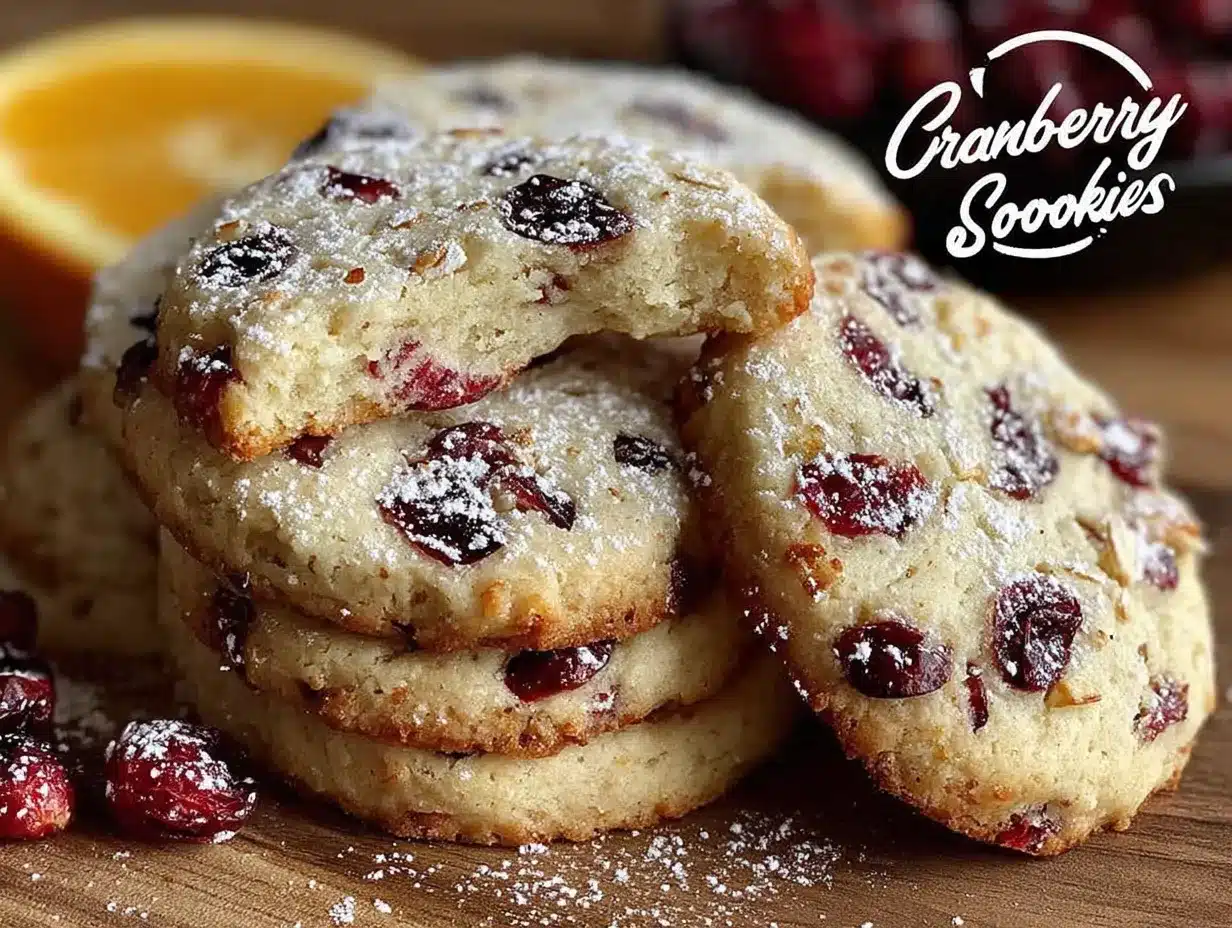
These cranberry orange shortbread cookies aren’t just another holiday cookie recipe. They’re the ones that disappear first from the tin, the ones people ask about for weeks after the party ends. I’ve tested this recipe six times to get the texture exactly right—crisp edges, tender centers, and just enough tartness from the cranberries to keep you reaching for another.
- Quick & Easy: From start to finish, these take about 35 minutes. No chilling required, no complicated techniques. You can have warm cookies in your hands before your coffee cools down.
- Simple Ingredients: Butter, sugar, flour, dried cranberries, orange zest, and a pinch of salt. That’s it. You probably have everything already.
- Perfect for Gifting: These cookies travel beautifully, stay fresh for over a week, and look gorgeous stacked in a simple tin or wrapped in cellophane with a ribbon.
- Crowd-Pleaser: I’ve served these to everyone from picky toddlers to my uncle who “doesn’t do fruit in desserts.” Every single person has asked for the recipe.
- Unbelievably Delicious: The butter-to-flour ratio is the secret. It’s higher than most shortbread recipes, which gives you that melt-in-your-mouth texture without making the cookies greasy.
What makes these different from the other shortbread recipes out there? It’s the method. I cream the butter and sugar longer than most recipes suggest—a full five minutes—which creates tiny air pockets that make the cookies tender instead of dense. And I use dried cranberries instead of fresh, which means they don’t release moisture into the dough and make the cookies soggy. It’s a small thing, but it changes everything.
These cookies are the kind that make you feel like you’ve got your life together, even if you’re baking them in your pajamas at 10 PM on a Tuesday. They’re comfort in cookie form—buttery, bright, and just sweet enough.
What Ingredients You Will Need
This recipe uses simple, wholesome ingredients to deliver bold flavor and satisfying texture without the fuss. Most of these are pantry staples, which makes these cookies perfect for spontaneous baking sessions.
- Unsalted butter (1 cup / 226 grams), softened to room temperature. I use Kerrygold for the best flavor, but any good-quality unsalted butter works. Let it sit out for at least 30 minutes before starting—cold butter won’t cream properly and will give you dense cookies.
- Granulated sugar (½ cup / 100 grams). Regular white sugar is perfect here. Don’t substitute brown sugar—it changes the texture and makes the cookies too soft.
- All-purpose flour (2 cups / 240 grams). Spoon and level your flour for the most accurate measurement. Scooping directly with the measuring cup packs in too much flour and makes dry cookies.
- Dried cranberries (¾ cup / 90 grams). Look for ones that are plump and moist, not hard and shriveled. Ocean Spray works great. If your cranberries feel dry, soak them in hot water for 10 minutes, then drain and pat dry before using.
- Fresh orange zest (2 tablespoons). This is non-negotiable. You need the zest from about 2 medium oranges. Make sure you only get the orange part—the white pith is bitter. I zest directly over the mixing bowl to catch all the oils.
- Fresh orange juice (1 tablespoon / 15 ml). Just a little to brighten the flavor. Save the rest of the orange for snacking or mulling wine.
- Vanilla extract (1 teaspoon). Real vanilla, not imitation. It makes a difference in the depth of flavor.
- Salt (¼ teaspoon). Fine sea salt or table salt. Don’t skip it—salt balances the sweetness and makes the butter flavor pop.
- Powdered sugar (optional, for dusting). A light dusting right before serving makes these cookies look bakery-worthy.
For the best results, I recommend using a kitchen scale to weigh your flour and butter. It’s more accurate than measuring cups, and with shortbread, precision matters. If you don’t have a scale, fluff your flour with a fork before spooning it into the measuring cup, then level it off with a knife.
Equipment Needed
You don’t need much to make these cookies, which is part of why I love this recipe. Here’s what you’ll need:
- Electric mixer (stand mixer or hand mixer). You can cream butter and sugar by hand, but it takes about 10 minutes of vigorous stirring. A mixer makes it much easier and gives you better texture.
- Large mixing bowl. Any bowl works, but a wider bowl is easier for creaming butter.
- Baking sheets (2 sheets). Light-colored aluminum sheets give the most even browning. Dark sheets can make the bottoms too dark.
- Parchment paper or silicone baking mat. Non-stick is essential here—shortbread is delicate and can stick to ungreased pans.
- Wire cooling rack. Cookies need to cool completely to set properly. A wire rack lets air circulate underneath.
- Microplane or fine grater. For zesting the oranges. A box grater works too, but a microplane gives you finer zest that blends into the dough better.
- Cookie scoop (1.5 tablespoon size). Optional but helpful for uniform cookies. I use a #40 scoop for perfectly round portions.
- Measuring cups and spoons. Standard set for dry and wet ingredients.
If you don’t have a mixer, you can make these by hand. Use a wooden spoon and some elbow grease—cream the butter and sugar until light and fluffy, which takes about 8-10 minutes. It’s a good arm workout, honestly.
Preparation Method
- Preheat your oven to 350°F (175°C). Line two baking sheets with parchment paper or silicone mats. Getting the oven hot before you start mixing ensures even baking from the moment the cookies go in.
- Zest and juice your oranges first. This is one of those small steps that makes everything easier later. Zest two oranges until you have 2 tablespoons of bright orange zest. Then cut one orange in half and squeeze out 1 tablespoon of juice. Set both aside.
- Cream the butter and sugar. In a large mixing bowl, beat the softened butter and granulated sugar together on medium speed for 5 minutes. I’m serious about the time—set a timer. The mixture should become pale, light, and fluffy. Scrape down the sides of the bowl halfway through. This step creates the tender texture that makes these cookies special.
- Add the wet ingredients. Beat in the orange zest, orange juice, and vanilla extract. Mix on low speed until just combined. The mixture might look slightly curdled at this point—that’s normal, don’t panic.
- Add the dry ingredients. In a separate bowl, whisk together the flour and salt. Add this to the butter mixture in two additions, mixing on low speed after each addition. Stop mixing as soon as the flour disappears—overmixing develops gluten and makes tough cookies.
- Fold in the cranberries. Use a rubber spatula to gently fold in the dried cranberries. Make sure they’re evenly distributed throughout the dough. The dough will be soft but not sticky—it should hold together when pressed.
- Portion the cookies. Use a 1.5-tablespoon cookie scoop or a regular spoon to scoop portions of dough. Roll each portion into a ball between your palms, then place them on the prepared baking sheets about 2 inches apart. You should get about 24 cookies.
- Flatten slightly. Use the bottom of a glass or your palm to gently flatten each ball to about ½ inch thick. Don’t press too hard—you want even thickness, not paper-thin cookies.
- Bake for 12-14 minutes. Place one baking sheet at a time on the middle rack. The cookies are done when the edges are just barely golden and the centers look set but not brown. They’ll look slightly pale on top—that’s what you want.
- Cool on the baking sheet for 5 minutes. Shortbread is fragile when hot. Let them rest on the pan to firm up before moving them. Then transfer to a wire cooling rack to cool completely.
- Dust with powdered sugar (optional). Once the cookies are completely cool, sift a light dusting of powdered sugar over the tops. This makes them look festive and adds a touch of extra sweetness.
A note on timing: the first batch might take a minute or two longer than the second batch because the oven recovers heat differently. Keep an eye on your cookies and rotate the pan halfway through if your oven has hot spots.
Cooking Tips & Techniques
The first time I made shortbread, I ended up with cookies that crumbled into dust the moment I picked them up. It was disappointing, to say the least. Here’s what I’ve learned since then.
Temperature matters more than you think. Butter that’s too cold won’t cream properly. Butter that’s too warm (melted or even very soft) will make the cookies spread into flat discs. You want butter that’s soft enough to hold a thumbprint but still cool to the touch. If you forgot to take it out of the fridge, cut it into small cubes and let it sit for 15 minutes—it’ll soften faster.
Don’t overmix the dough. This is the most common mistake. Once you add the flour, mix only until it disappears. Overmixing develops gluten, and gluten makes shortbread tough instead of tender. I mix by hand at this stage, using a spatula, just to be safe.
Chill if you need to. If your kitchen is warm or your dough feels sticky, pop the portioned cookies in the fridge for 15 minutes before baking. This helps them hold their shape and prevents spreading. I usually skip this step because my kitchen runs cold, but it’s a good trick to know.
Rotate your baking sheets halfway through. Most ovens have hot spots. Rotating the pan front-to-back at the 6-minute mark ensures even browning. If you’re baking two sheets at once, swap their positions too.
Watch for the edges. Shortbread doesn’t brown much on top. The best indicator of doneness is the edges—they should be just barely golden. If the tops are browning, the cookies are overbaked and will be dry.
I once left a batch in the oven while I answered the phone, and by the time I came back, the edges were dark brown and the cookies tasted like toast. It was a sad day. Set a timer, and don’t wander too far.
Variations & Adaptations
One of the best things about this recipe is how easy it is to adapt. Here are some variations I’ve tried and loved.
Lemon Blueberry Shortbread: Swap the orange zest and juice for lemon zest and juice. Replace the dried cranberries with dried blueberries. The lemon gives these cookies a brighter, more tart flavor that’s perfect for spring.
Chocolate Chip Orange Shortbread: Replace the dried cranberries with ¾ cup of mini chocolate chips. The combination of orange and dark chocolate is classic for a reason. Use mini chips so they distribute evenly throughout the dough.
Vegan Version: Use 1 cup of vegan butter (I like Miyoko’s or Country Crock Plant Butter) and replace the egg with 2 tablespoons of aquafaba (the liquid from a can of chickpeas). The texture will be slightly different—a bit more crumbly—but still delicious. Make sure your powdered sugar is vegan if you’re dusting.
Gluten-Free Option: Replace the all-purpose flour with a 1:1 gluten-free baking flour blend that contains xanthan gum. Cup4Cup and King Arthur Measure for Measure both work well. Don’t use almond flour or coconut flour—the texture won’t hold up.
Spiced Cranberry Orange: Add ½ teaspoon of cinnamon and ¼ teaspoon of nutmeg along with the flour. The warm spices complement the orange and cranberry beautifully, especially during the holidays.
I’ve made the spiced version for Thanksgiving the last two years, and it’s become my most-requested cookie. Something about that cinnamon-orange combination just feels like December.
Serving & Storage Suggestions
These cookies are best served at room temperature, which lets the butter flavor really shine. I like to arrange them on a simple white platter with a light dusting of powdered sugar and a few fresh cranberries scattered around for color.
They pair beautifully with a cup of hot tea—Earl Grey or chai are my favorites—or a mug of spiced apple cider. If you’re serving them after dinner, a small glass of dessert wine or even a hot toddy works wonderfully. The tartness of the cranberries cuts through rich flavors, making these cookies a great palate cleanser after a heavy meal.
Storage Instructions:
- Room temperature: Store in an airtight container for up to 1 week. Layer them with parchment paper between each layer to prevent sticking.
- Freezer: These cookies freeze beautifully. Place cooled cookies in a single layer in a freezer-safe container, separating layers with parchment. Freeze for up to 3 months. Thaw at room temperature for about 30 minutes before serving.
- Dough: You can also freeze the dough. Scoop and roll the dough balls, place them on a baking sheet, and freeze until solid. Transfer to a freezer bag and store for up to 3 months. Bake directly from frozen, adding 2-3 minutes to the baking time.
The flavors actually improve after a day or two. The orange zest mellows and blends with the butter, and the cranberries soften slightly. I’ve been known to hide a few in the back of the pantry just for myself.
Nutritional Information & Benefits
Per cookie (based on 24 cookies):
- Calories: 145
- Total Fat: 8g
- Saturated Fat: 5g
- Cholesterol: 20mg
- Sodium: 35mg
- Total Carbohydrates: 17g
- Dietary Fiber: 1g
- Sugars: 9g
- Protein: 2g
These cookies are a treat, no question, but they do have some redeeming qualities. Dried cranberries are a good source of antioxidants, and orange zest provides vitamin C and flavonoids that support immune health. The butter, in moderation, contains fat-soluble vitamins A, D, and E.
If you’re watching your sugar intake, you can reduce the sugar to ⅓ cup without significantly affecting the texture. The cookies will be slightly less sweet, but the cranberries and orange provide plenty of flavor.
For anyone with dietary restrictions, please note that these cookies contain gluten and dairy. See the variations section above for vegan and gluten-free adaptations.
Conclusion
These cranberry orange shortbread cookies are the kind of recipe that makes you feel like a better baker than you actually are. They’re simple enough for a Tuesday afternoon but special enough for a holiday cookie exchange. The buttery texture, the pop of tart cranberry, the bright citrus finish—it’s a combination that works every single time.
I’ve made these cookies for cookie swaps, for neighbors, for my own quiet nights with a cup of tea. They never last long. There’s something about that first bite that makes people close their eyes and just enjoy the moment. That’s what good food should do, right?
I’d love to hear how these turn out for you. Did you try one of the variations? Did you come up with your own twist? Drop a comment below and let me know. And if you share them on social media, tag me so I can see your beautiful cookies. Happy baking, friends—I hope these bring you as much comfort as they’ve brought me.
Frequently Asked Questions
Can I use fresh cranberries instead of dried?
I don’t recommend it. Fresh cranberries contain a lot of moisture, which will make the dough soggy and cause the cookies to spread too much. Dried cranberries give you that chewy texture without the extra liquid. If fresh is all you have, chop them finely and toss them in a tablespoon of flour before adding to the dough.
Why did my cookies spread too much?
This usually happens for one of three reasons: your butter was too soft or melted, your dough wasn’t chilled, or your baking sheets were too warm. Make sure your butter is softened but not melty, and let your baking sheets cool completely between batches.
Can I make these cookies ahead of time?
Absolutely. You can make the dough up to 3 days ahead and keep it in the fridge. Let it sit at room temperature for 10 minutes before scooping. You can also freeze the baked cookies for up to 3 months—they thaw beautifully.
How do I get the orange zest without the bitter white pith?
Use a microplane or fine grater and only grate the very outer layer of the orange. Stop as soon as you see white. If you don’t have a microplane, a vegetable peeler works—just make sure to peel only the orange part, then finely chop the strips.
Can I double this recipe?
Yes, and I do it all the time during the holidays. Just make sure your mixing bowl is large enough to handle double the ingredients. The baking time stays the same, but you’ll need more baking sheets or you’ll have to bake in batches. The dough keeps well in the fridge between batches.
Pin This Recipe!

Cozy Cranberry Orange Shortbread Cookies: Easy Holiday Recipe
These buttery cranberry orange shortbread cookies have crisp edges, tender centers, and just enough tartness from the cranberries. Quick and easy to make with simple ingredients, they’re perfect for holiday gifting or a cozy treat.
- Prep Time: 15 minutes
- Cook Time: 14 minutes
- Total Time: 35 minutes
- Yield: 24 cookies 1x
- Category: Dessert
- Cuisine: American
Ingredients
- 1 cup (226 grams) unsalted butter, softened
- ½ cup (100 grams) granulated sugar
- 2 cups (240 grams) all-purpose flour
- ¾ cup (90 grams) dried cranberries
- 2 tablespoons fresh orange zest
- 1 tablespoon (15 ml) fresh orange juice
- 1 teaspoon vanilla extract
- ¼ teaspoon fine sea salt
- Powdered sugar (optional, for dusting)
Instructions
- Preheat your oven to 350°F (175°C). Line two baking sheets with parchment paper or silicone mats.
- Zest and juice your oranges first. Zest two oranges until you have 2 tablespoons of bright orange zest. Then cut one orange in half and squeeze out 1 tablespoon of juice. Set both aside.
- In a large mixing bowl, beat the softened butter and granulated sugar together on medium speed for 5 minutes until pale, light, and fluffy. Scrape down the sides of the bowl halfway through.
- Beat in the orange zest, orange juice, and vanilla extract on low speed until just combined.
- In a separate bowl, whisk together the flour and salt. Add this to the butter mixture in two additions, mixing on low speed after each addition. Stop mixing as soon as the flour disappears.
- Use a rubber spatula to gently fold in the dried cranberries until evenly distributed.
- Use a 1.5-tablespoon cookie scoop or spoon to scoop portions of dough. Roll each portion into a ball and place on the prepared baking sheets about 2 inches apart. You should get about 24 cookies.
- Use the bottom of a glass or your palm to gently flatten each ball to about ½ inch thick.
- Bake for 12-14 minutes, one sheet at a time on the middle rack, until the edges are just barely golden and the centers look set but not brown.
- Cool on the baking sheet for 5 minutes, then transfer to a wire cooling rack to cool completely.
- Once completely cool, sift a light dusting of powdered sugar over the tops (optional).
Notes
Butter should be softened but still cool to the touch. Don’t overmix the dough once flour is added. If dough feels sticky, chill portioned cookies for 15 minutes before baking. Rotate baking sheet halfway through for even browning. Cookies improve after a day or two.
Nutrition
- Serving Size: 1 cookie
- Calories: 145
- Sugar: 9
- Sodium: 35
- Fat: 8
- Saturated Fat: 5
- Carbohydrates: 17
- Fiber: 1
- Protein: 2
Keywords: cranberry orange shortbread, holiday cookies, easy shortbread recipe, butter cookies, Christmas cookies