Love this? Save it for later!
Share the inspiration with your friends
“You have to try the fattoush and tabbouleh here,” said the elderly vendor with a knowing smile as I wandered through the sun-drenched Beirut market one scorching July afternoon. The air was thick with the scent of fresh herbs, toasted pita, and ripe tomatoes, and honestly, the vibrant colors on his stall pulled me in like a magnet. I wasn’t expecting to fall head over heels for a salad combo that day, especially one that seemed so simple, but there I was, balancing a cracked ceramic bowl in one hand and a cold glass of mint tea in the other, utterly hooked.
The freshness of the fattoush with its tangy sumac dressing and the bright, herby tabbouleh—both tossed together like a summer melody—felt like a celebration of the season itself. Maybe you’ve been there, caught off guard by a dish so lively it wakes up your taste buds and your soul. I forgot to take notes that day (typical me), but that little market encounter stayed with me, inspiring countless kitchen experiments to capture that exact magic.
This Fresh Lebanese Summer Mezze Fattoush Tabbouleh Salad recipe is my way of sharing that sunlit moment with you. It’s not just a salad; it’s a joyful mix of crunchy, tangy, and herbaceous flavors that never fails to brighten my table. So, let me tell you about the ingredients, the prep, and the little tricks I picked up along the way—because this salad deserves a spot on your summer menu, trust me.
Why You’ll Love This Fresh Lebanese Summer Mezze Fattoush Tabbouleh Salad Recipe
Honestly, this salad has become a staple in my summer cooking, and here’s why it might quickly become yours too:
- Quick & Easy: You can whip this up in under 30 minutes, which is perfect when you want fresh flavors without fuss.
- Simple Ingredients: No need for exotic shopping trips; most are pantry staples or easy to find at any local market.
- Perfect for Summer Gatherings: Whether a casual backyard BBQ or a light lunch, this salad fits right in with its refreshing vibe.
- Crowd-Pleaser: Kids and adults alike love the crisp textures and zesty dressing—there’s something for everyone.
- Unbelievably Delicious: The blend of toasted pita chips from the fattoush, the fresh parsley and mint in tabbouleh, and the lemony dressing hits all the right notes.
This isn’t just another salad—it’s a bit of Lebanese sunshine on your plate. What sets it apart is the harmony of textures and flavors: the fattoush’s crunchy pita contrasts beautifully with the fine, almost fluffy tabbouleh, all brightened by a zingy sumac dressing. I experimented with different balances of lemon juice and olive oil until it felt just right—tangy but smooth, fresh but comforting.
You know that sensation when you take a bite, close your eyes, and your mind drifts away to a warm breeze and laughter? That’s what this salad does. It’s a refreshing, soul-soothing dish that’s simple enough for busy weeknights but elegant enough to impress guests without breaking a sweat.
What Ingredients You Will Need
This recipe uses simple, wholesome ingredients to deliver bold flavor and satisfying texture without the fuss. Most are pantry staples or fresh herbs you can find year-round, but feel free to swap where needed.
- For the Fattoush:
- 2 cups pita bread, torn into bite-sized pieces (preferably day-old for extra crunch)
- 2 medium tomatoes, diced (ripe and juicy)
- 1 cucumber, diced (seeded if preferred)
- 1 small red onion, thinly sliced
- 1 bunch romaine lettuce, washed and chopped
- 1/2 cup fresh parsley, chopped (flat-leaf preferred)
- 1 tablespoon sumac (adds a tangy, lemony flavor)
- 3 tablespoons olive oil (I like Colavita for its fruity notes)
- Juice of 1 lemon (freshly squeezed)
- Salt and pepper, to taste
- For the Tabbouleh:
- 1/2 cup fine bulgur wheat (soaked in cold water for 15 minutes, then drained)
- 1 large bunch flat-leaf parsley, finely chopped (about 2 cups packed)
- 1/2 cup fresh mint leaves, finely chopped
- 2 medium tomatoes, finely diced
- 3 green onions, finely chopped
- Juice of 2 lemons
- 4 tablespoons extra-virgin olive oil
- Salt and pepper, to taste
Substitution tips: Use gluten-free quinoa instead of bulgur for a gluten-free version. For dairy-free or vegan diets, this recipe is already safe, but just double-check your pita bread. If sumac is unavailable, a mix of lemon zest and paprika can mimic some of its tang.
Equipment Needed
- Large mixing bowls for tossing the salad components separately and together
- Sharp chef’s knife for chopping herbs and vegetables
- Cutting board
- Measuring cups and spoons for precise lemon juice and olive oil quantities
- Colander or fine sieve (to drain bulgur wheat)
- Salad tongs or large spoons for mixing and serving
If you don’t have a fine sieve for the bulgur, a clean kitchen towel works well to squeeze out excess water. I’ve also tossed the pita pieces on a baking sheet and toasted them in the oven when day-old pita isn’t on hand—makes a nice crispy crunch.
Preparation Method
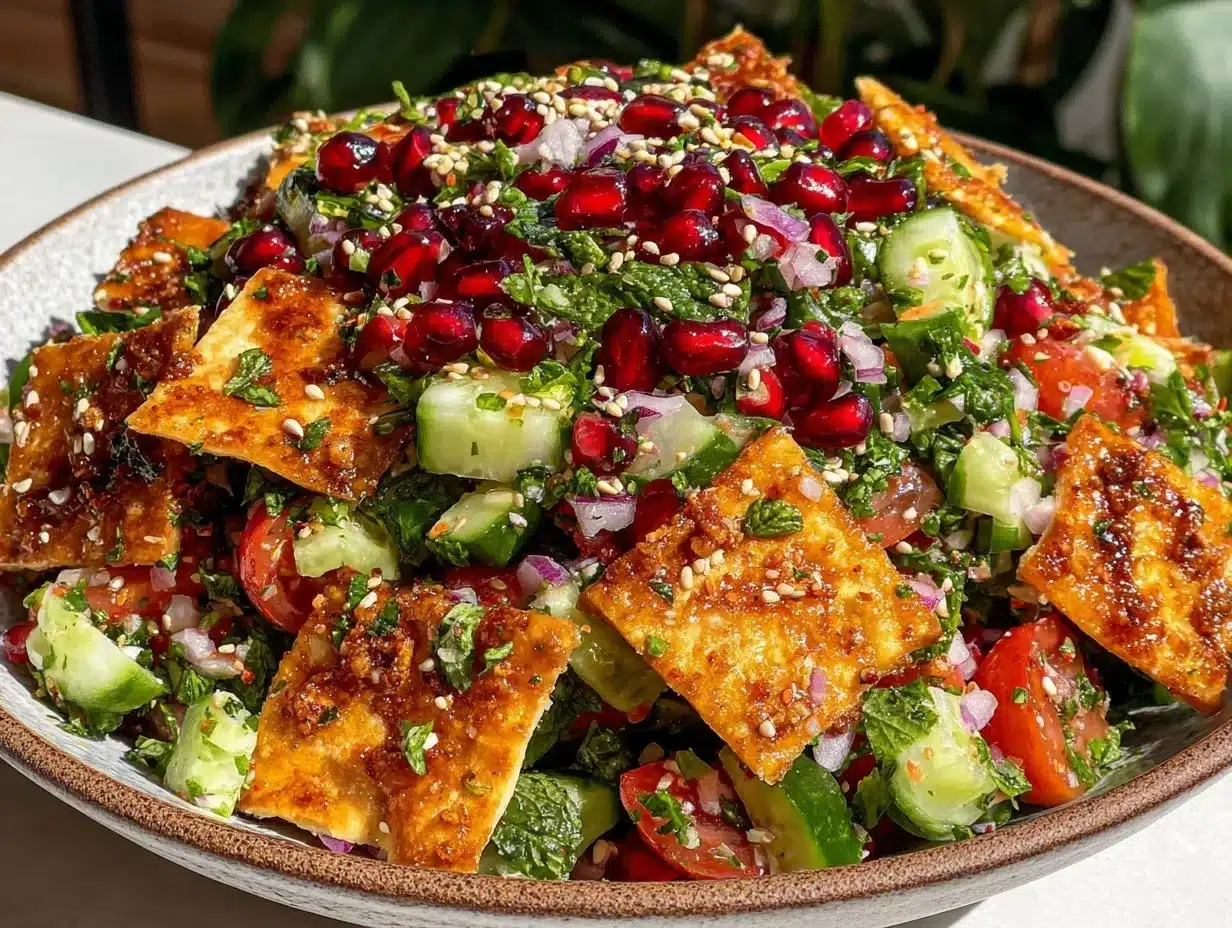
- Prepare the bulgur: Place 1/2 cup bulgur wheat in a bowl, cover with cold water, and let soak for 15 minutes. Drain thoroughly using a fine sieve or kitchen towel, squeezing out excess moisture. This step ensures the bulgur stays light and fluffy, not mushy.
- Chop the herbs and vegetables for tabbouleh: Finely chop the parsley, mint, tomatoes, and green onions. The finer, the better! Combine these in a large bowl.
- Mix the tabbouleh dressing: Add lemon juice, olive oil, salt, and pepper to the bowl with herbs and vegetables. Stir in the soaked bulgur wheat gently. Let it sit while you prepare the fattoush; this resting allows flavors to meld nicely.
- Prepare the fattoush base: Tear pita bread into bite-sized pieces. If not already toasted, spread them on a baking sheet and bake at 375°F (190°C) for about 8-10 minutes until golden and crisp. Let cool.
- Chop the fattoush vegetables: Dice tomatoes and cucumber, finely slice red onion, chop romaine lettuce and parsley. Toss all in a large bowl.
- Make the fattoush dressing: Whisk together lemon juice, olive oil, sumac, salt, and pepper. Pour over the fattoush veggies and toss well to combine.
- Combine and serve: Just before serving, add the toasted pita pieces to the fattoush to keep them crunchy. Plate fattoush and tabbouleh side by side or gently toss both together for a colorful mezze salad plate.
Note: If you prefer, you can prepare the components ahead and assemble right before serving to keep textures fresh. I usually make the tabbouleh a few hours ahead; it tastes even better after the flavors settle.
Cooking Tips & Techniques
Here are some nuggets of wisdom from my kitchen trials that make this salad shine:
- Don’t over-soak bulgur: Bulgur should be fluffy, not mushy. A quick soak in cold water is enough.
- Chop herbs finely: Tabbouleh’s magic lies in the herbaceous brightness. Coarse chopping dulls the flavor and makes it harder to eat.
- Toast your pita: Day-old pita works best if toasted or baked for crunch. Avoid adding pita too early to the salad or it will turn soggy.
- Balance your dressing: Lemon juice and sumac provide the tang. Start with less and add gradually to avoid overwhelming the fresh veggies.
- Multitasking tip: Soak bulgur while chopping veggies to save time.
- Keep it cool: Chill the salad slightly before serving to enhance freshness—perfect for hot summer days.
- Personal mishap: Once I added too much sumac and had to dilute with extra olive oil and lemon—lesson learned to always taste as you go!
Variations & Adaptations
Feel free to customize this salad to suit your taste or dietary needs:
- Grain-free version: Replace bulgur with finely chopped cauliflower for a low-carb, paleo-friendly tabbouleh.
- Seasonal twists: In winter, try adding pomegranate seeds to the fattoush for a pop of color and sweetness.
- Protein boost: Toss in grilled chicken or chickpeas to make it a light main dish.
- Spice it up: Add a pinch of Aleppo pepper or chili flakes to the dressing for a subtle kick.
- Personal favorite: I sometimes swap romaine for arugula in the fattoush for a peppery bite—a nice change of pace.
Serving & Storage Suggestions
This salad is best served chilled or at room temperature. For a mezze spread, plate the fattoush and tabbouleh separately with lemon wedges on the side—letting guests add extra zing as they like.
Pair with grilled meats, falafel, or a simple hummus and pita platter for a full Lebanese-inspired meal. Mint tea or a crisp white wine complements the flavors beautifully.
Store leftovers in airtight containers in the fridge for up to 2 days. Keep toasted pita pieces separate to maintain crunch. To re-crisp pita, pop them in a toaster oven for a few minutes before serving.
Flavors actually deepen after a few hours as the herbs mingle with the dressing, so making it ahead can be a smart move for entertaining.
Nutritional Information & Benefits
This Fresh Lebanese Summer Mezze Fattoush Tabbouleh Salad is packed with nutrients—high in fiber and antioxidants thanks to the fresh herbs and vegetables. Bulgur wheat provides a good source of whole-grain carbohydrates and protein, while olive oil adds healthy monounsaturated fats.
Free from heavy creams and processed ingredients, it’s naturally gluten-friendly if you swap bulgur for quinoa or cauliflower, making it accessible for various diets. The lemon juice and sumac are great for vitamin C, boosting immunity during summer months.
Personally, I love how this salad feels light but satisfying—a perfect balance for those warm days when you want to eat well but not feel weighed down.
Conclusion
If you’re looking for a vibrant, fresh summer salad that’s bursting with flavor and texture, this Fresh Lebanese Summer Mezze Fattoush Tabbouleh Salad is your answer. It’s easy to make, uses simple ingredients, and brings a little slice of Lebanon’s sunny markets right into your kitchen.
Feel free to tweak the herbs, adjust the tanginess, or add your favorite veggies to make it truly yours. I keep coming back to this recipe because it’s reliable, refreshing, and always feels like a small celebration on my plate.
Give it a try, and please share your experience or any fun variations you come up with—I’d love to hear how it fits into your summer table!
Frequently Asked Questions
Can I make this salad ahead of time?
Yes! Prepare the tabbouleh and fattoush components separately and combine just before serving to keep the pita crunchy and herbs fresh.
What can I substitute for bulgur if I’m gluten intolerant?
Quinoa or finely chopped cauliflower work well as gluten-free alternatives.
How do I keep the pita bread from getting soggy?
Toast or bake the pita pieces until crisp and add them to the salad right before serving.
Is sumac essential for the fattoush dressing?
Sumac adds a unique tangy flavor, but if unavailable, lemon zest and a bit of paprika can be used instead.
Can I store leftovers?
Store in airtight containers for up to 2 days in the fridge, keeping the pita separate to maintain crunchiness.
For those who enjoy vibrant, herb-packed dishes, this recipe pairs wonderfully with other Mediterranean favorites like crispy garlic chicken and a refreshing lemony hummus dip, adding more variety to your mezze spread.
Pin This Recipe!
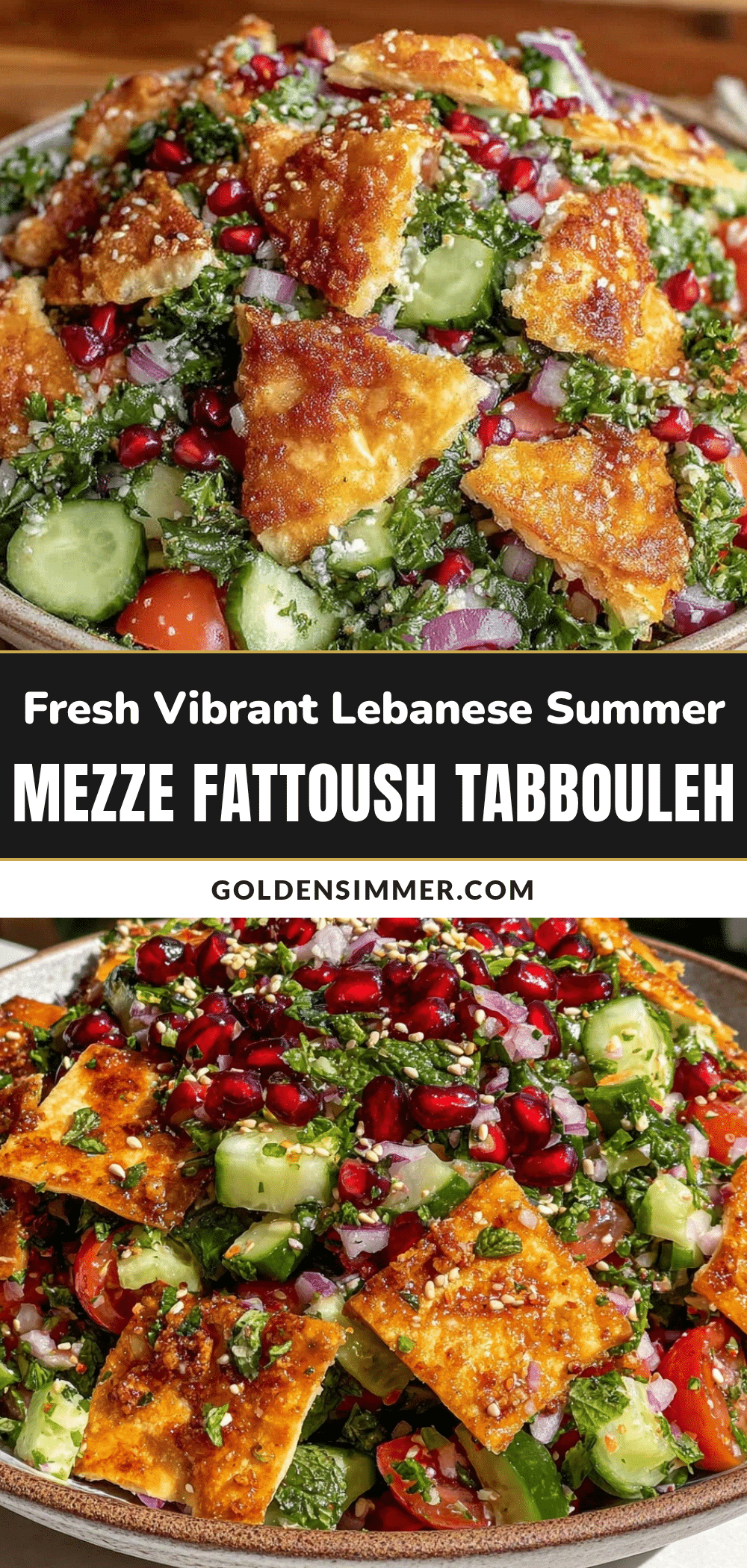
Fresh Lebanese Summer Mezze Fattoush Tabbouleh Salad
A vibrant and refreshing Lebanese salad combining crunchy fattoush with tangy sumac dressing and bright, herby tabbouleh. Perfect for summer gatherings and quick to prepare.
- Prep Time: 20 minutes
- Cook Time: 10 minutes
- Total Time: 30 minutes
- Yield: 6 servings 1x
- Category: Salad
- Cuisine: Lebanese
Ingredients
- 2 cups pita bread, torn into bite-sized pieces (preferably day-old for extra crunch)
- 2 medium tomatoes, diced
- 1 cucumber, diced (seeded if preferred)
- 1 small red onion, thinly sliced
- 1 bunch romaine lettuce, washed and chopped
- 1/2 cup fresh parsley, chopped (flat-leaf preferred)
- 1 tablespoon sumac
- 3 tablespoons olive oil
- Juice of 1 lemon
- Salt and pepper, to taste
- 1/2 cup fine bulgur wheat (soaked in cold water for 15 minutes, then drained)
- 1 large bunch flat-leaf parsley, finely chopped (about 2 cups packed)
- 1/2 cup fresh mint leaves, finely chopped
- 2 medium tomatoes, finely diced
- 3 green onions, finely chopped
- Juice of 2 lemons
- 4 tablespoons extra-virgin olive oil
- Salt and pepper, to taste
Instructions
- Place 1/2 cup bulgur wheat in a bowl, cover with cold water, and let soak for 15 minutes. Drain thoroughly using a fine sieve or kitchen towel, squeezing out excess moisture.
- Finely chop the parsley, mint, tomatoes, and green onions for the tabbouleh. Combine in a large bowl.
- Add lemon juice, olive oil, salt, and pepper to the bowl with herbs and vegetables. Stir in the soaked bulgur wheat gently. Let it sit while preparing the fattoush.
- Tear pita bread into bite-sized pieces. If not toasted, spread on a baking sheet and bake at 375°F (190°C) for 8-10 minutes until golden and crisp. Let cool.
- Dice tomatoes and cucumber, thinly slice red onion, chop romaine lettuce and parsley for the fattoush. Toss all in a large bowl.
- Whisk together lemon juice, olive oil, sumac, salt, and pepper for the fattoush dressing. Pour over the fattoush vegetables and toss well.
- Just before serving, add toasted pita pieces to the fattoush to keep them crunchy. Serve fattoush and tabbouleh side by side or gently toss together.
Notes
Do not over-soak bulgur to keep it fluffy. Toast pita bread just before serving to maintain crunch. Chop herbs finely for best flavor. Prepare tabbouleh ahead for better flavor melding. Substitute quinoa or cauliflower for gluten-free versions. If sumac is unavailable, use lemon zest and paprika.
Nutrition
- Serving Size: About 1 cup per serv
- Calories: 210
- Sugar: 4
- Sodium: 220
- Fat: 12
- Saturated Fat: 2
- Carbohydrates: 22
- Fiber: 5
- Protein: 5
Keywords: fattoush, tabbouleh, Lebanese salad, summer salad, mezze, fresh herbs, sumac, bulgur wheat, pita chips, healthy salad