Love this? Save it for later!
Share the inspiration with your friends
“The clatter of the lunchbox hitting the kitchen table was louder than I expected,” I remember thinking one chilly Wednesday morning. My neighbor, Mrs. Kim, was packing her son’s school lunch with such care, folding each gimbap roll like a little treasure. I wasn’t expecting to be drawn into the world of Korean school lunchboxes that day, but honestly, watching her prepare those bite-sized delights was mesmerizing.
She told me how gimbap—a simple yet flavorful rice roll wrapped in seaweed—was a staple in her childhood lunches. But what really caught my attention was the way she paired it with quick, colorful banchan (side dishes) that transformed an ordinary meal into something vibrant and comforting. You know that feeling when a meal isn’t just food but a little packet of culture and care? That’s exactly what this is.
Maybe you’ve been there—scrambling to pack something tasty and wholesome for your kids or yourself, wishing you had ideas beyond the usual sandwich. Mrs. Kim’s approach showed me how Korean school lunchbox gimbap ideas could be both flavorful and fuss-free, perfect for busy mornings. And honestly, the best part? These recipes stick with you long after the last bite.
Why You’ll Love This Recipe
- Quick & Easy: Comes together in under 30 minutes, making it ideal for hectic mornings or last-minute meal prep.
- Simple Ingredients: No need for exotic items—most ingredients are pantry staples or easy to find in local markets.
- Perfect for School Lunches & Picnics: These gimbap rolls and banchan sides travel well and keep their flavor, making lunchtime feel special anywhere.
- Crowd-Pleaser: Kids and adults alike love the combination of savory rice rolls and colorful side dishes.
- Unbelievably Delicious: The balance of textures—from the crisp seaweed to the tender fillings—and harmonious flavors make this a comfort food classic.
This isn’t just another gimbap recipe floating around the internet. What makes it stand out is a little trick I learned from Mrs. Kim—marinating the fillings just right and keeping the banchan fresh and simple but packed with flavor. It’s like the lunchbox version of a home-cooked hug, you know?
Whether you’re a seasoned Korean cuisine fan or just curious about adding some variety to your lunch routine, these gimbap banchan ideas bring a genuine taste of Korean comfort food that you’ll want to make again and again.
What Ingredients You Will Need
This recipe uses simple, wholesome ingredients to deliver bold flavor and satisfying texture without the fuss. Most are pantry basics, with some fresh veggies to brighten things up. Feel free to swap in seasonal vegetables or your favorite proteins.
- For the Gimbap:
- Short-grain white rice (2 cups / 360g) – cooked and slightly cooled
- Sesame oil (2 tablespoons) – adds nutty aroma
- Salt (1/2 teaspoon) – to season the rice
- Roasted seaweed sheets (4-5 sheets) – look for Korean-style gim for best texture
- Eggs (3 large) – beaten and cooked into thin sheets for slicing
- Carrots (1 medium) – julienned and sautéed lightly
- Spinach (2 cups / 60g) – blanched and seasoned with sesame oil and salt
- Pickled radish (danmuji) – thinly sliced for a sweet crunch
- Crab sticks or cooked ham (optional) – sliced into strips
- For the Banchan (Side Dishes):
- Kimchi (1 cup) – homemade or store-bought, for that classic tangy bite
- Seasoned bean sprouts (1 cup) – blanched and tossed with garlic, sesame oil, and soy sauce
- Pan-fried tofu cubes (1 cup) – lightly seasoned with soy sauce and sesame seeds
- Sesame seeds (1 tablespoon) – toasted, for garnish
- Green onions (2 stalks) – chopped for freshness
If you want to keep it gluten-free, look for tamari instead of regular soy sauce. And if you can’t find danmuji, thin strips of cucumber or bell pepper make a great crunchy substitute. Personally, I always grab my seaweed sheets from Jongga brand—it’s reliable and has a great crispness that holds up well in lunchboxes.
Equipment Needed
- Rice cooker or heavy-bottomed pot for perfectly cooked rice
- Non-stick frying pan for cooking egg sheets and sautéing vegetables
- Bamboo sushi rolling mat (optional but helpful) – if you don’t have one, clean parchment paper works in a pinch
- Sharp knife for slicing gimbap rolls cleanly without squishing
- Mixing bowls for prepping vegetables and seasoning banchan
I started without a sushi rolling mat, using just my hands and a sheet of parchment, and it worked fine, but the mat really speeds things up and helps keep everything tight. Also, keep your knife sharp! I learned the hard way that a dull blade makes a mess of the rolls.
Preparation Method
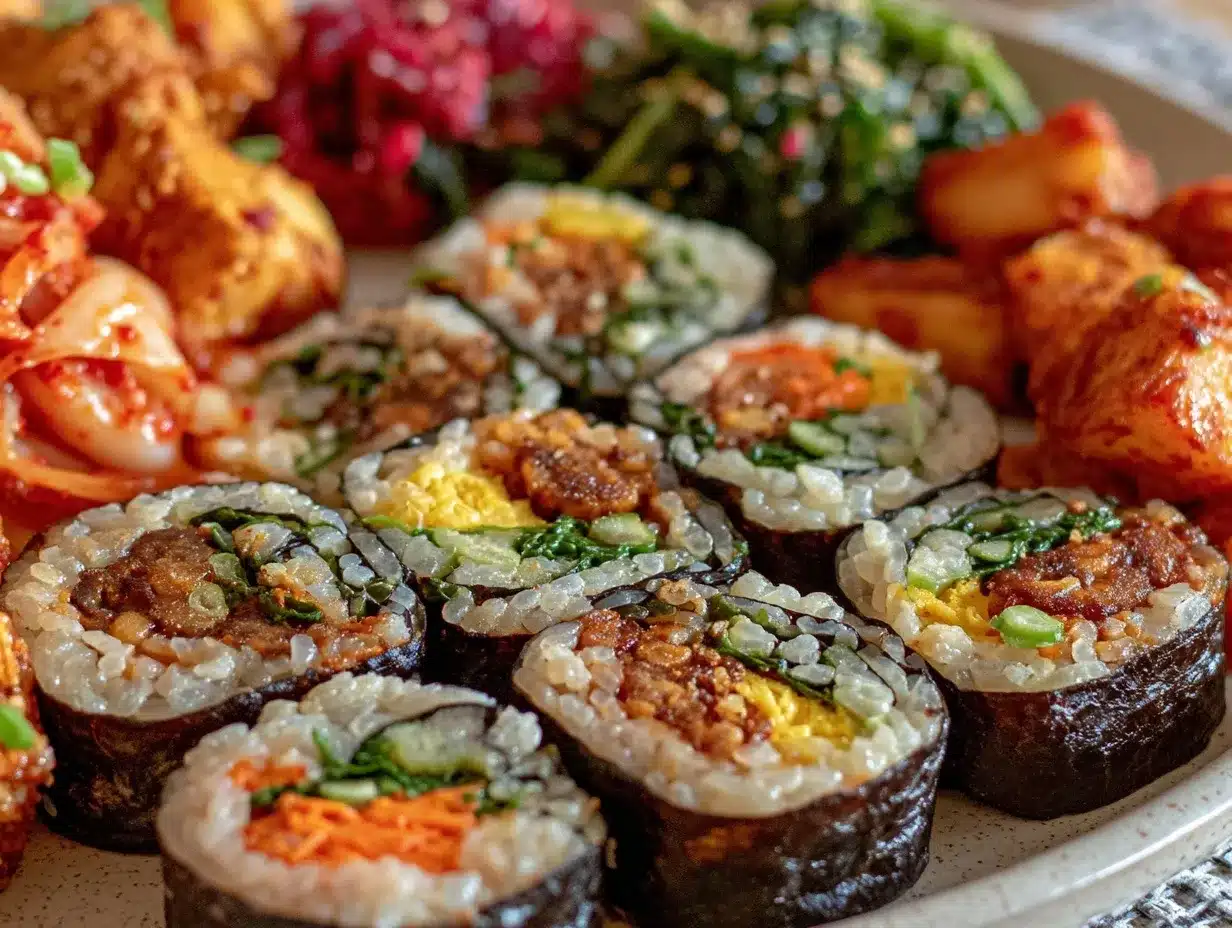
- Cook the Rice: Rinse 2 cups (360g) of short-grain rice until water runs clear. Cook in a rice cooker or pot with 2 1/4 cups (540ml) water. Let rest 10 minutes after cooking.
- Season the Rice: Transfer rice to a large bowl. Add 2 tablespoons sesame oil and 1/2 teaspoon salt. Gently fold with a wooden spoon to mix without mashing. Set aside to cool slightly (about 15 minutes).
- Prepare Fillings:
- Beat 3 large eggs, cook into a thin omelet in a non-stick pan, then slice into long strips.
- Sauté julienned carrots in a bit of oil until just tender, about 3 minutes.
- Blanch 2 cups (60g) of spinach in boiling water for 30 seconds, drain, then toss with a pinch of salt and 1 teaspoon sesame oil.
- Slice pickled radish (danmuji), crab sticks, or ham into matching strips.
- Assemble Gimbap Rolls:
- Place a seaweed sheet shiny side down on the bamboo mat.
- Spread about 1/2 cup (90g) of rice evenly over the seaweed, leaving a 1-inch (2.5cm) border at the top.
- Arrange strips of egg, carrot, spinach, pickled radish, and crab sticks in lines across the bottom third of the rice.
- Lift the mat and roll tightly away from you, pressing gently but firmly, sealing the edge with a little water.
- Use a sharp knife to slice into 1-inch (2.5cm) pieces. Wipe the knife with a damp cloth between cuts to keep slices neat.
- Prepare Banchan Sides:
- Blanch bean sprouts for 2 minutes, then drain and toss with minced garlic, soy sauce (or tamari), sesame oil, and toasted sesame seeds.
- Pan-fry tofu cubes in a lightly oiled pan until golden, season with soy sauce and sprinkle sesame seeds on top.
- Serve kimchi as is for a spicy, tangy contrast.
- Pack the Lunchbox: Arrange gimbap pieces neatly alongside banchan in a lunch container. Garnish with chopped green onions and an extra sprinkle of sesame seeds.
Pro tip: Don’t overfill the rolls; it makes rolling tricky and the slices messy. Also, if your rice feels sticky, wet your hands slightly to prevent it from sticking while spreading.
Cooking Tips & Techniques
Rolling perfect gimbap takes a bit of practice, honestly. One thing I learned early on is to keep your rice slightly warm but not hot; this makes it easier to spread without tearing the seaweed.
When cooking eggs for the filling, make the omelet as thin as possible—this ensures you get that delicate texture without overpowering the roll.
Another tip is to blanch the spinach and bean sprouts just long enough to soften but retain their bright color and slight crunch. Overcooked veggies can turn mushy, which is a bummer in a lunchbox situation.
Be mindful of salt levels, especially if you’re including salty banchan like kimchi. Balancing flavors keeps every bite enjoyable and not overwhelming.
Finally, multitasking is key: while your rice cooks, prep the veggies and eggs so you’re ready to assemble right after. It saves time and keeps everything fresh.
Variations & Adaptations
This Korean school lunchbox gimbap recipe is super adaptable. Here are a few twists you might like:
- Vegetarian Version: Skip crab sticks or ham and add grilled mushrooms or avocado slices for extra creaminess.
- Spicy Kick: Mix a little gochujang (Korean chili paste) into the rice for subtle heat throughout the roll.
- Gluten-Free: Use tamari instead of soy sauce in banchan and check that all seasonings are gluten-free certified.
- Alternate Fillings: Try adding cooked bulgogi beef strips or spicy pork for a heartier lunchbox.
- Seasonal Veggies: Swap carrots and spinach for cucumber and bell peppers in summer for a fresher feel.
Once, I tried adding roasted sweet potato cubes—sounds odd, but it gave the rolls a nice touch of sweetness. My kids loved it, so don’t be afraid to experiment!
Serving & Storage Suggestions
Gimbap is best served at room temperature, which is perfect for school lunches or on-the-go meals. If you’re packing ahead, wrap the rolls tightly in plastic wrap to keep them fresh and prevent drying out.
Banchan should be stored in airtight containers separately and kept refrigerated. Bean sprouts and tofu stay good for up to 2 days, while kimchi can last much longer and actually tastes better after a day or two.
To reheat, warm the tofu lightly in a pan or microwave. Gimbap generally doesn’t need reheating, but if you prefer warm rolls, a quick 10-second zap in the microwave works wonders without making the seaweed soggy.
Flavors in the banchan deepen over time, so packing the night before can make the meal even tastier by lunchtime.
Nutritional Information & Benefits
This Korean school lunchbox gimbap recipe offers a balanced meal with carbohydrates from rice, protein from eggs and optional crab or ham, and fiber plus vitamins from fresh vegetables. The sesame oil adds healthy fats and a rich flavor without too many calories.
Typical serving provides about 350-400 calories, depending on fillings, making it a satisfying yet light lunch option.
Spinach and bean sprouts are packed with iron and vitamin C, while kimchi offers probiotics that support digestion. If you’re watching sodium, adjust soy sauce quantities or rinse kimchi to reduce saltiness.
Gluten-free and adaptable for vegetarian diets, this recipe suits many lifestyles and preferences.
Conclusion
If you’ve been looking for a flavorful, fuss-free lunch solution that feels special, these Korean school lunchbox gimbap and banchan ideas are a perfect fit. They bring together simple ingredients in a way that’s both nostalgic and exciting, with textures and flavors that keep you coming back for more.
Honestly, I keep coming back to this recipe because it’s reliable, delicious, and reminds me of that chilly morning with Mrs. Kim—a little moment of kindness wrapped up in seaweed and rice. I encourage you to tweak the fillings or banchan to suit your taste and make it your own.
Give it a try, and I’d love to hear how it turns out or what variations you discover. Your lunch might just become the highlight of your day!
FAQs
- Can I use brown rice instead of white rice for gimbap? Yes, but brown rice is less sticky, so it can be trickier to roll. Mixing it with a bit of sticky white rice helps.
- How long can I store gimbap in the fridge? Store wrapped tightly in the fridge for up to 24 hours to maintain freshness and prevent sogginess.
- What if I don’t have a bamboo rolling mat? You can use clean parchment paper or even roll with your hands, but a mat helps keep the roll tight and even.
- Can I freeze gimbap? Freezing isn’t recommended because the texture of the rice and veggies changes and can get mushy upon thawing.
- What’s a good dipping sauce for gimbap? While gimbap is often eaten plain, a simple soy sauce mixed with a dash of sesame oil and a sprinkle of chili flakes makes a nice dip.
Pin This Recipe!

Flavorful Korean School Lunchbox Gimbap Ideas for Easy Banchan Meals

A quick and easy Korean gimbap recipe paired with colorful banchan side dishes, perfect for school lunches and picnics. This recipe offers a flavorful, fuss-free meal that combines savory rice rolls with vibrant sides.
- Prep Time: 15 minutes
- Cook Time: 15 minutes
- Total Time: 30 minutes
- Yield: 4 servings 1x
- Category: Main Course
- Cuisine: Korean
Ingredients
- 2 cups (360g) short-grain white rice, cooked and slightly cooled
- 2 tablespoons sesame oil
- 1/2 teaspoon salt
- 4–5 roasted seaweed sheets (Korean-style gim)
- 3 large eggs, beaten and cooked into thin sheets
- 1 medium carrot, julienned and sautéed lightly
- 2 cups (60g) spinach, blanched and seasoned with sesame oil and salt
- Pickled radish (danmuji), thinly sliced
- Crab sticks or cooked ham (optional), sliced into strips
- 1 cup kimchi (homemade or store-bought)
- 1 cup seasoned bean sprouts, blanched and tossed with garlic, sesame oil, and soy sauce
- 1 cup pan-fried tofu cubes, lightly seasoned with soy sauce and sesame seeds
- 1 tablespoon toasted sesame seeds
- 2 stalks green onions, chopped
Instructions
- Rinse 2 cups (360g) of short-grain rice until water runs clear. Cook in a rice cooker or pot with 2 1/4 cups (540ml) water. Let rest 10 minutes after cooking.
- Transfer rice to a large bowl. Add 2 tablespoons sesame oil and 1/2 teaspoon salt. Gently fold with a wooden spoon to mix without mashing. Set aside to cool slightly (about 15 minutes).
- Beat 3 large eggs, cook into a thin omelet in a non-stick pan, then slice into long strips.
- Sauté julienned carrots in a bit of oil until just tender, about 3 minutes.
- Blanch 2 cups (60g) of spinach in boiling water for 30 seconds, drain, then toss with a pinch of salt and 1 teaspoon sesame oil.
- Slice pickled radish (danmuji), crab sticks, or ham into matching strips.
- Place a seaweed sheet shiny side down on the bamboo mat.
- Spread about 1/2 cup (90g) of rice evenly over the seaweed, leaving a 1-inch (2.5cm) border at the top.
- Arrange strips of egg, carrot, spinach, pickled radish, and crab sticks in lines across the bottom third of the rice.
- Lift the mat and roll tightly away from you, pressing gently but firmly, sealing the edge with a little water.
- Use a sharp knife to slice into 1-inch (2.5cm) pieces. Wipe the knife with a damp cloth between cuts to keep slices neat.
- Blanch bean sprouts for 2 minutes, then drain and toss with minced garlic, soy sauce (or tamari), sesame oil, and toasted sesame seeds.
- Pan-fry tofu cubes in a lightly oiled pan until golden, season with soy sauce and sprinkle sesame seeds on top.
- Serve kimchi as is for a spicy, tangy contrast.
- Arrange gimbap pieces neatly alongside banchan in a lunch container. Garnish with chopped green onions and an extra sprinkle of sesame seeds.
Notes
Do not overfill the rolls to avoid messy slices. Wet your hands slightly when spreading rice to prevent sticking. Keep rice slightly warm but not hot for easier spreading. Make the egg omelet as thin as possible. Blanch vegetables just enough to retain color and crunch. Use tamari for gluten-free option. Store gimbap wrapped tightly in fridge up to 24 hours. Banchan can be stored separately in airtight containers and refrigerated.
Nutrition
- Serving Size: 1 serving (approx. 1
- Calories: 350400
- Sugar: 4
- Sodium: 600
- Fat: 12
- Saturated Fat: 2.5
- Carbohydrates: 50
- Fiber: 3
- Protein: 12
Keywords: gimbap, Korean lunchbox, banchan, school lunch, easy Korean recipe, seaweed rice rolls, Korean side dishes, quick lunch, healthy lunch