Love this? Save it for later!
Share the inspiration with your friends
“You know, I never thought a simple veal cutlet could spark such a kitchen commotion,” my friend Lukas chuckled one crisp autumn evening as he flipped the golden crust of his Wiener schnitzel. It was a random Thursday, and I had stopped by his apartment in Vienna, drawn in by the unmistakable sizzling sound coming from his stove. Lukas, an accountant by day but a passionate home cook by night, had just pulled off a perfectly crispy classic Austrian Wiener schnitzel veal cutlet — and honestly, it was a revelation.
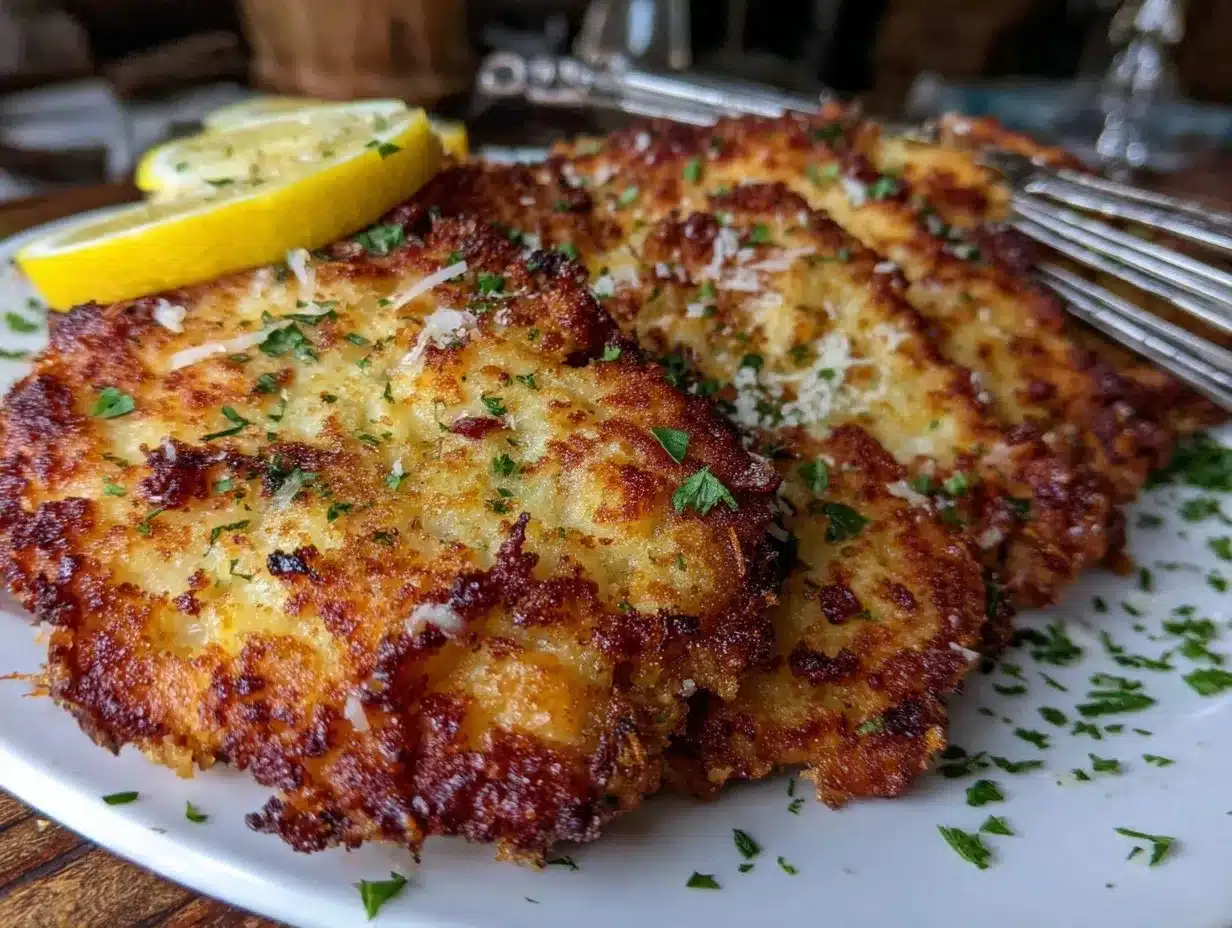
I wasn’t expecting much, to be honest. Veal schnitzel seemed like one of those dishes reserved for fancy restaurants or Sunday family dinners. But as Lukas carefully laid the cutlets on a plate, the aroma hit me — a warm, inviting scent of browned butter and lemon that instantly transported me to a cozy Viennese bistro. The cutlets were thin, golden, and had this delicate crunch that made me forget all about my usual weeknight meals.
Funny thing is, Lukas had almost skipped making schnitzel that night. He told me he forgot the eggs and had to improvise with a quick mustard dip before breading. The result? Even better than the last time he tried, he swore. Maybe you’ve been there — the kitchen chaos that turns into a happy accident. That night, over crisp schnitzel and a glass of Grüner Veltliner, I realized this recipe wasn’t just about veal and breadcrumbs. It was about simplicity meeting precision, tradition wrapped in a golden crust, and a little touch of luck.
Since then, the crispy classic Austrian Wiener schnitzel veal cutlet has become my go-to for impressing guests without the fuss — and trust me, it never disappoints.
Why You’ll Love This Recipe
This crispy classic Austrian Wiener schnitzel veal cutlet recipe has been tested in kitchens from cozy apartments to bustling family dinners, earning its place as a beloved comfort classic. Honestly, it’s the kind of dish that brings everyone to the table, no questions asked.
- Quick & Easy: Ready in just about 30 minutes, perfect for busy weeknights or unexpected guests.
- Simple Ingredients: You probably have most of these in your pantry already—no need for exotic groceries.
- Perfect for Special Occasions: Whether it’s a casual Sunday brunch or a celebratory dinner, this schnitzel fits right in.
- Crowd-Pleaser: Kids, adults, picky eaters—everyone loves the crispy, tender bite.
- Unbelievably Delicious: The balance of the veal’s tenderness with the crunchy breadcrumb crust is downright addictive.
What sets this recipe apart? It’s all about the technique — pounding the veal thin enough for that delicate crisp, the triple-layer breading for extra crunch, and frying in clarified butter for the authentic flavor. I’ve tried versions with olive oil or regular butter, but nothing matches the golden, nutty finish of clarified butter. Plus, a squeeze of fresh lemon right before serving brightens the whole experience.
This isn’t just schnitzel; it’s a little slice of Austrian tradition you can whip up at home and savor like you’re sitting at a café in Vienna.
What Ingredients You Will Need
This recipe uses straightforward, wholesome ingredients to create that signature crispy Wiener schnitzel veal cutlet. Most are pantry staples, and a few tips on selecting quality veal will make all the difference.
- Veal Cutlets: 4 pieces, about 5 oz (140 g) each, thinly sliced and pounded (you want them about 1/4 inch or 6 mm thick). If unavailable, substitute with thin pork cutlets.
- All-Purpose Flour: 1 cup (120 g) for dredging — this helps the egg wash stick better.
- Large Eggs: 2, beaten with a pinch of salt and pepper.
- Plain Breadcrumbs: 1 1/2 cups (150 g), preferably fresh or panko for extra crunch. I usually grab Paniermehl, a fine German breadcrumb, for the authentic texture.
- Clarified Butter or Ghee: About 1 cup (240 ml) for frying. Clarified butter withstands higher heat without burning, giving that perfect golden crust.
- Lemon Wedges: 1 or 2 lemons, cut into wedges for serving — nothing beats the bright zing they add.
- Salt and Pepper: To taste, for seasoning the veal and egg wash.
If you want to keep it gluten-free, almond flour can replace all-purpose flour, and gluten-free breadcrumbs work well too. For a dairy-free version, use vegetable oil instead of clarified butter, but keep an eye on the heat to avoid burning.
Choosing fresh, thin veal cutlets from a trusted butcher will transform this dish. I like to ask for small, tender slices — it makes pounding easier and the schnitzel more delicate.
Equipment Needed
- Meat Mallet or Rolling Pin: Essential for pounding veal to an even thinness. If you don’t have a meat mallet, a heavy rolling pin works just fine.
- Shallow Bowls or Plates: For dredging the flour, eggs, and breadcrumbs separately — makes the breading process smooth and organized.
- Large Skillet or Frying Pan: A heavy-bottomed pan (cast iron or stainless steel) is best for even heat distribution during frying.
- Tongs or Slotted Spoon: For flipping and removing schnitzel from the hot fat without damaging the crust.
- Paper Towels: To drain excess oil and keep the schnitzel crispy.
- Thermometer (Optional): To monitor oil temperature, aiming for around 350°F (175°C). I’ve managed without one many times, but it helps prevent soggy or burnt schnitzel.
For budget-friendly options, you can pound the meat on a sturdy cutting board covered with plastic wrap to avoid mess. Also, I recommend cleaning your frying pan immediately after use to keep it in great shape for the next schnitzel night.
Preparation Method
- Prepare the Veal Cutlets: Place the veal between two sheets of plastic wrap or parchment paper. Using a meat mallet or rolling pin, gently pound each cutlet to about 1/4 inch (6 mm) thickness. Be careful not to tear the meat. This ensures even cooking and that signature delicate texture. (Approx. 5 minutes)
- Season and Set Up Breading Stations: Lightly season the veal cutlets with salt and pepper on both sides. Arrange three shallow dishes: one with 1 cup (120 g) all-purpose flour, one with 2 beaten eggs seasoned with a pinch of salt and pepper, and one with 1 1/2 cups (150 g) plain breadcrumbs.
- Bread the Cutlets: Dredge each cutlet first in the flour, shaking off the excess, then dip into the egg wash, and finally coat evenly with breadcrumbs. Press gently but don’t compact the crumbs too much — you want a light, airy crust. Set the breaded cutlets aside on a wire rack or plate. (Approx. 10 minutes)
- Heat the Clarified Butter: In a large skillet, pour in about 1 cup (240 ml) of clarified butter. Heat over medium heat until shimmering but not smoking (about 350°F or 175°C). You can test by dropping a few breadcrumbs in — they should sizzle immediately without burning.
- Fry the Schnitzels: Carefully place 2 cutlets at a time into the hot butter (do not overcrowd). Fry each side for about 2-3 minutes, or until golden brown and crispy. Use tongs to flip gently. Adjust heat as needed to maintain even browning without burning. (Approx. 6 minutes per batch)
- Drain and Keep Warm: Remove schnitzels and place on paper towels to drain excess fat. Keep warm by placing them in a low oven (about 200°F or 95°C) if frying in batches.
- Serve: Plate the schnitzels with fresh lemon wedges. A squeeze of lemon right before eating adds that bright, classic touch that balances the richness.
Pro tip: If the schnitzel crust feels soggy, your oil is likely too cool; crank it up slightly next time. And honestly, don’t rush the breading step — patience here means that perfect crunch. Also, I’ve learned that letting the breaded cutlets rest for a few minutes before frying helps the coating stick better.
Cooking Tips & Techniques
Cooking schnitzel sounds simple, but a few tricks make all the difference. First, pounding the veal evenly is key. I once smashed a cutlet too hard and ended up with uneven thickness that cooked poorly—lesson learned the hard way!
Keep your frying fat hot but controlled. Too hot, and the crust burns before the meat cooks through; too cool, and you’ll get greasy, soggy schnitzel. Using clarified butter helps because it has a higher smoke point than regular butter, giving that golden crust without bitterness.
When breading, I like to keep each station separate and clean to prevent clumping. Also, avoid pressing breadcrumbs too hard; you want them to stay airy for crunchiness.
Timing-wise, multitasking is your friend. While frying one batch, bread the next to keep things moving smoothly. Don’t forget to drain schnitzels on paper towels to keep the crust crisp—no one wants oily breading!
One last tip: always serve schnitzel immediately. The crunch is at its best right out of the pan. Leftovers can get soggy, but reheating in a hot oven on a wire rack helps revive the crispness a bit.
Variations & Adaptations
Though the classic Wiener schnitzel is traditionally veal, you can mix things up without losing that delicious spirit.
- Chicken Schnitzel: Swap veal for thin chicken breast cutlets. The cooking method remains the same, and it’s a great budget-friendly alternative.
- Gluten-Free Version: Use almond flour or gluten-free flour blend instead of all-purpose flour, and gluten-free breadcrumbs. Just be sure to check your frying oil is safe for gluten-free cooking.
- Herb-Infused Crust: Add finely chopped fresh parsley or thyme to the breadcrumbs for a subtle fresh twist. I tried this once with dill and it gave a lovely unexpected flavor.
- Oven-Baked Schnitzel: For a lighter option, bake the breaded veal cutlets at 425°F (220°C) on a wire rack for about 15 minutes, flipping halfway. It won’t be as crispy as frying but still tasty.
- Dairy-Free Frying: Substitute clarified butter with a high smoke point oil like avocado oil if you need to avoid dairy.
Serving & Storage Suggestions
The schnitzel shines best when served hot and fresh, with a generous squeeze of lemon. Traditionally, it pairs beautifully with simple sides like potato salad, cucumber salad, or buttered noodles. A light green salad with a tangy vinaigrette also complements the rich crust nicely.
Leftovers should be stored in an airtight container in the refrigerator for up to 2 days. To reheat, place schnitzel on a wire rack in a preheated oven at 375°F (190°C) for 8-10 minutes to bring back some crispness.
While reheated schnitzel is good, it’s honestly never quite the same as fresh. The flavors mellow a bit overnight, which some find adds a comforting depth. Serving schnitzel with fresh lemon wedges again after reheating helps brighten the flavors.
Nutritional Information & Benefits
Each crispy classic Austrian Wiener schnitzel veal cutlet (about 5 oz/140 g) contains approximately:
| Calories | 350-400 kcal |
|---|---|
| Protein | 30-35 g |
| Fat | 20-25 g (mostly from frying fat) |
| Carbohydrates | 15-20 g (from breadcrumbs and flour) |
Veal is a great source of high-quality protein and essential vitamins like B12 and zinc. Using clarified butter adds healthy fats but keep portion sizes in mind. This recipe can fit nicely into a balanced diet when paired with veggies or salad.
For those with gluten sensitivities, simple substitutions make this recipe accessible. Just remember to check all ingredient labels carefully.
Conclusion
If you’ve been searching for a recipe that’s both impressive and straightforward, this crispy classic Austrian Wiener schnitzel veal cutlet hits the spot. It’s a dish that combines tradition, texture, and flavor into something memorable without a long list of complicated steps.
Feel free to tweak the seasoning, try different sides, or experiment with the variations to make it your own. Personally, this schnitzel brings me back to that cozy night in Vienna with Lukas — a reminder that sometimes the simplest meals create the best memories.
Give it a try, and don’t hesitate to share your experiences or adaptations in the comments. I’d love to hear your schnitzel stories!
FAQs
What cut of veal is best for Wiener schnitzel?
Thinly sliced veal leg or veal escalope works best because it’s tender and easy to pound thin. You want a lean cut without too much connective tissue.
Can I use pork or chicken instead of veal?
Absolutely! Pork or chicken cutlets make great alternatives and are often used in schnitzel recipes worldwide.
How do I keep the breading from falling off during frying?
Make sure to dredge in flour, then egg, then breadcrumbs in separate steps, and don’t press the breadcrumbs too hard. Also, let the breaded cutlets rest for a few minutes before frying.
Is clarified butter necessary for frying?
It’s recommended because it has a higher smoke point than regular butter, giving a clean, nutty flavor without burning. If unavailable, a neutral oil with a high smoke point works too.
Can I prepare schnitzel ahead of time?
You can bread the cutlets in advance and refrigerate them for a few hours before frying. However, it’s best to fry and serve fresh for the crispiest results.
Pin This Recipe!
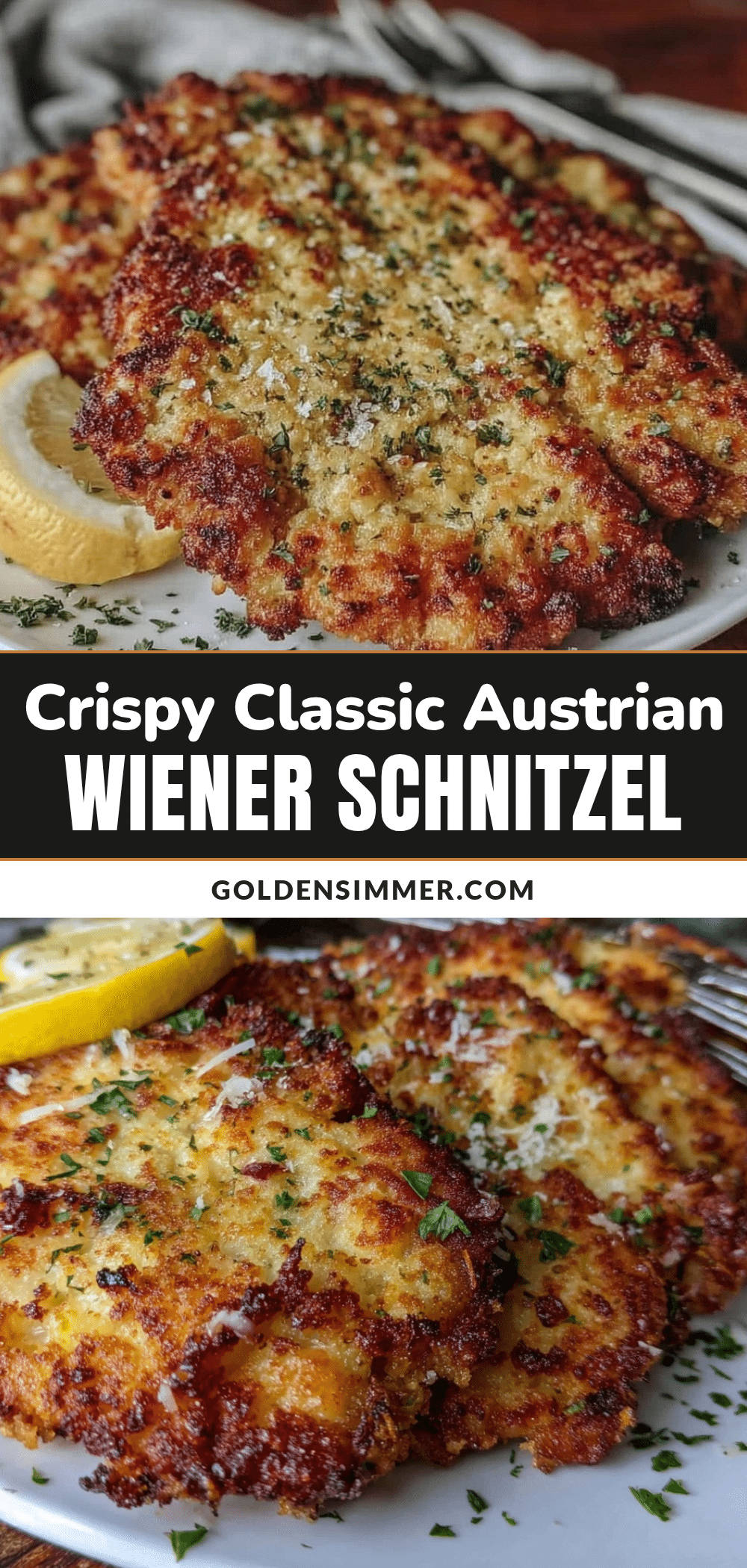
Crispy Classic Austrian Wiener Schnitzel Veal Cutlet Recipe Easy and Perfect
A traditional Austrian recipe for crispy, golden veal cutlets breaded and fried to perfection, served with fresh lemon wedges. Perfect for quick weeknight dinners or special occasions.
- Prep Time: 15 minutes
- Cook Time: 15 minutes
- Total Time: 30 minutes
- Yield: 4 servings 1x
- Category: Main Course
- Cuisine: Austrian
Ingredients
- 4 veal cutlets, about 5 oz (140 g) each, thinly sliced and pounded to 1/4 inch (6 mm) thickness
- 1 cup (120 g) all-purpose flour
- 2 large eggs, beaten with a pinch of salt and pepper
- 1 1/2 cups (150 g) plain breadcrumbs (preferably fresh or panko)
- 1 cup (240 ml) clarified butter or ghee for frying
- 1–2 lemons, cut into wedges for serving
- Salt and pepper to taste
Instructions
- Place the veal between two sheets of plastic wrap or parchment paper. Using a meat mallet or rolling pin, gently pound each cutlet to about 1/4 inch (6 mm) thickness without tearing the meat. (Approx. 5 minutes)
- Lightly season the veal cutlets with salt and pepper on both sides. Arrange three shallow dishes: one with flour, one with beaten eggs seasoned with salt and pepper, and one with breadcrumbs.
- Dredge each cutlet first in the flour, shaking off excess, then dip into the egg wash, and finally coat evenly with breadcrumbs. Press gently to keep the crust light and airy. Set aside on a wire rack or plate. (Approx. 10 minutes)
- Heat the clarified butter in a large skillet over medium heat until shimmering but not smoking (about 350°F or 175°C). Test by dropping a few breadcrumbs in; they should sizzle immediately without burning.
- Fry 2 cutlets at a time in the hot butter, about 2-3 minutes per side, until golden brown and crispy. Use tongs to flip gently. Adjust heat as needed to maintain even browning. (Approx. 6 minutes per batch)
- Remove schnitzels and drain on paper towels to remove excess fat. Keep warm in a low oven (about 200°F or 95°C) if frying in batches.
- Serve immediately with fresh lemon wedges, squeezing lemon over schnitzel before eating.
Notes
For gluten-free, substitute all-purpose flour with almond flour and use gluten-free breadcrumbs. For dairy-free, use a high smoke point oil like avocado oil instead of clarified butter. Let breaded cutlets rest a few minutes before frying to help coating stick. Maintain oil temperature around 350°F (175°C) to avoid soggy or burnt crust. Serve immediately for best crispness. Leftovers can be reheated on a wire rack in a 375°F oven for 8-10 minutes.
Nutrition
- Serving Size: 1 veal cutlet (about
- Calories: 350400
- Fat: 2025
- Carbohydrates: 1520
- Protein: 3035
Keywords: Wiener schnitzel, veal cutlet, Austrian recipe, crispy schnitzel, breaded veal, classic schnitzel, easy schnitzel recipe