Love this? Save it for later!
Share the inspiration with your friends
I used to think charcuterie boards were for fancy parties, not football Sundays. For years, I’d show up to game day gatherings with a store-bought veggie tray and a bag of chips, feeling a little embarrassed but stubbornly clinging to my belief that arranging meat and cheese on a board was something you did when you wanted to impress people, not feed hungry fans. Then last October, my brother-in-law texted me a photo of his “game day spread” — it was a sad paper plate with three slices of pepperoni and a block of cheddar. Something snapped. I decided right then that the next game at my place would be different.
Honestly, the first attempt was a mess. I bought way too many types of cheese, forgot to take anything out of the fridge to soften, and arranged everything in neat little rows like a cafeteria line. My friends ate it, but nobody raved. The second time, I got smarter. I started thinking about what people actually reach for during a game — salty, crunchy, cheesy, and easy to grab without looking away from the screen. That’s when this Ultimate Loaded Football Charcuterie Board was born.
This isn’t your typical fancy cheese board with figs and honey. This is a board built for hungry crowds, messy fingers, and halftime refills. It’s got the dips, the meats, the cheeses, and all the crunchy, pickled, and spicy extras that make people hover around the coffee table instead of sitting on the couch. Maybe you’ve been stuck in that same rut of boring game day snacks. Let me tell you, this board changes everything. I keep making it because it disappears every single time, and honestly, watching a room full of people happily graze while the game plays is pure satisfaction.
Why You’ll Love This Recipe
This isn’t just another snack board thrown together at the last minute. After testing this setup for three different game day crowds (and one very competitive Super Bowl party), I can tell you exactly why this version works when others fall flat.
- Feeds a Crowd with Zero Stress: Everything is served at room temperature, so you’re not juggling oven timers or worrying about food getting cold. Just arrange and let people dig in.
- No Fancy Ingredients Required: You can find everything at your regular grocery store. No specialty cheese shops or trips to three different markets. I’ve built this board with items from Aldi, Costco, and my local Kroger with equal success.
- Perfect for Game Day Grazing: This board is designed for people who want to eat while watching the game. Everything is grab-and-go, no plates or forks needed (though I do provide small plates for the messier dips).
- Customizable for Any Crowd: Whether your group loves spicy foods, prefers mild cheeses, or has dietary restrictions, this board adapts easily. I’ve made versions for vegetarian friends and gluten-free guests without losing the spirit of the board.
- Looks Impressive with Minimal Effort: Let’s be honest — a big board of beautifully arranged food makes you look like a hosting pro. But the secret is that it takes about 20 minutes to assemble. The visual payoff is huge for the time invested.
What makes this board different from the standard meat-and-cheese platter is the balance. I’ve learned through trial and error that the best game day boards have a mix of temperatures, textures, and flavors. You need something creamy (the dips), something salty (the cured meats), something crunchy (the crackers and nuts), something fresh (the veggies), and something tangy (the pickles and olives). When all five elements come together, people keep coming back for just one more bite — and then another.
This is the kind of board that makes you close your eyes after that first perfect bite of salami, soft brie, and a cornichon all at once. It’s comfort food reimagined as a shared experience — easier than a full meal, but infinitely more satisfying than a bag of chips.
What Ingredients You Will Need
This recipe uses a combination of store-bought shortcuts and fresh elements to deliver maximum flavor with minimal cooking. I’ve organized the ingredients by category so you can shop efficiently and customize based on what your crowd loves.
For the Cheeses
- 8 ounces aged cheddar, sliced or cubed (I prefer sharp white cheddar from Cabot or Tillamook — it holds up well at room temperature)
- 8 ounces brie or camembert, left whole with the rind on (soft cheeses need to sit out for 30 minutes before serving)
- 6 ounces manchego, sliced into thin triangles (or use a hard cheese like gouda or asiago)
- 4 ounces blue cheese crumbles (optional but highly recommended for bold flavor lovers)
- 8 ounces spreadable cheese, like Boursin or a garlic herb goat cheese (this becomes the surprise favorite every time)
For the Meats
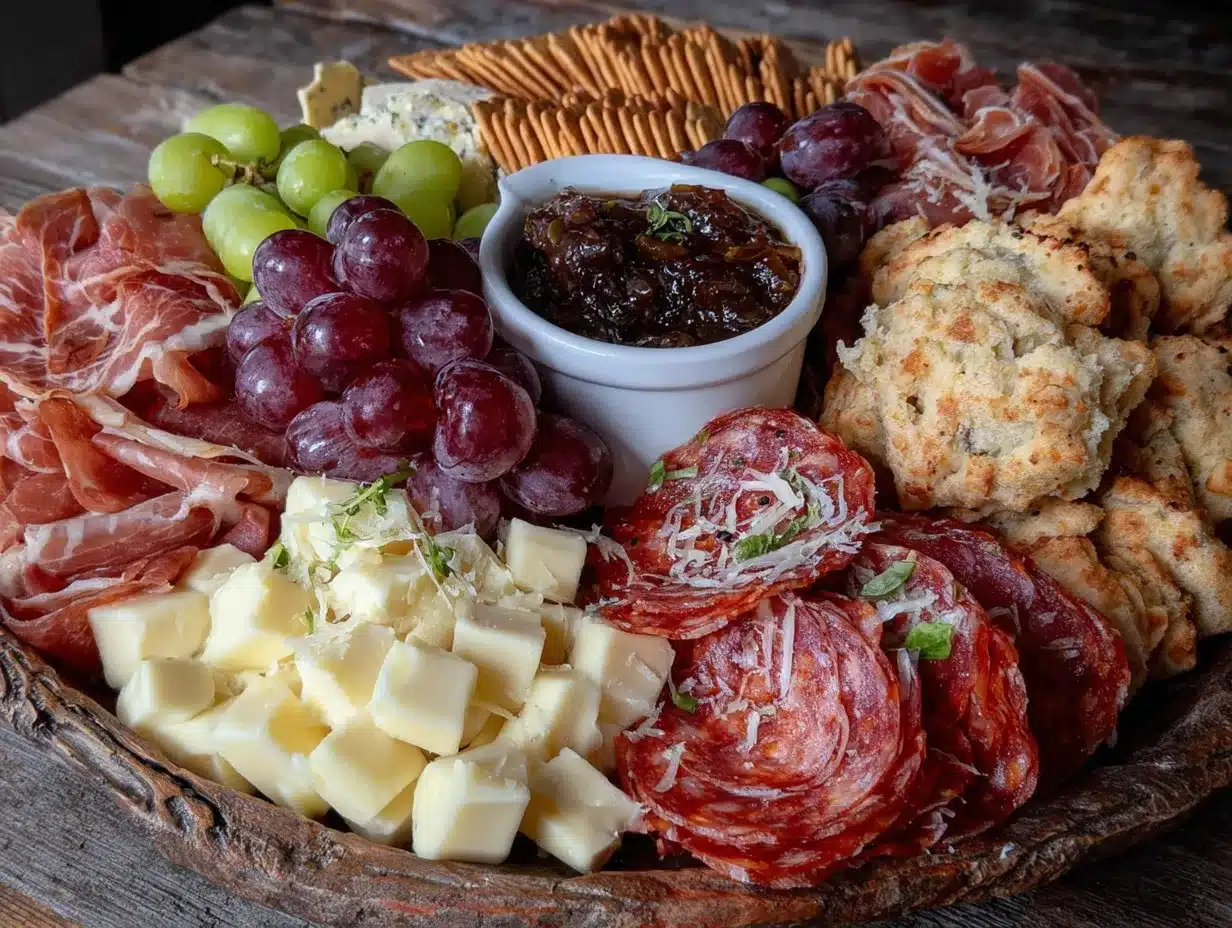
- 6 ounces prosciutto, thinly sliced and separated into ribbons
- 6 ounces genoa salami, sliced (I prefer Columbus brand for the right balance of fat and spice)
- 6 ounces soppressata or spicy capicola (adds a nice heat that cuts through the cheese)
- 4 ounces pepperoni slices (a non-negotiable for football crowds — it just feels right)
For the Dips and Spreads
- 1 cup hummus (plain or roasted red pepper flavor works well)
- 1⁄2 cup honey (for drizzling over brie or manchego)
- 1⁄3 cup whole grain mustard or spicy brown mustard (adds tang and cuts richness)
- 1⁄2 cup olive tapenade or marinated artichoke hearts (optional, but adds a briny pop)
For the Crunchy Elements
- 1 box (about 10 ounces) assorted crackers — include a mix of buttery, seedy, and sturdy varieties (I like a combination of water crackers, wheat thins, and rosemary crackers)
- 1 baguette, sliced into thin rounds and lightly toasted (or left fresh for softer texture)
- 1 cup mixed nuts (roasted salted almonds, cashews, or a fancy mixed nut blend)
- 1 cup pretzel sticks or mini pretzels (great for scooping dips)
For the Fresh and Pickled Elements
- 1 cup red grapes, washed and left in small clusters
- 1 cup cherry tomatoes, halved or left whole if small
- 1⁄2 cup cornichons or small dill pickles
- 1⁄2 cup marinated olives (mixed green and kalamata olives work well)
- 1 small apple or pear, sliced thin and tossed with lemon juice to prevent browning
- 1⁄2 cup dried apricots or figs (adds sweetness and chewy texture)
For Garnish (Optional but Recommended)
- Fresh rosemary sprigs (for visual appeal and a subtle aroma)
- Flaky sea salt, like Maldon (sprinkle over brie or sliced apple)
- Edible flowers or fresh thyme (only if you want to get fancy)
Equipment Needed
The beauty of this recipe is that you don’t need much special equipment. Here’s what I use and what you can substitute if you’re improvising.
- Large wooden board or platter — at least 18 inches by 12 inches. I use a reclaimed wood board I found at a flea market, but a large cutting board, baking sheet, or even a clean pizza pan works perfectly. If you’re feeding a really big crowd, use two boards side by side.
- Small bowls or ramekins — you’ll need 3 to 5 small bowls for dips, honey, mustard, and olives. I use a set of mismatched ceramic ramekins I’ve collected over the years. Small glass prep bowls work great too.
- Cheese knives — at least two: one for soft cheese and one for hard cheese. If you don’t have cheese knives, a butter knife and a paring knife will do the job.
- Small spoons for the dips and spreads.
- Napkins or small plates — trust me, people will need somewhere to put messy items. I always set out a stack of small cocktail napkins plus a few small plates for the messier items.
- Parchment paper or cheese paper (optional) — if you want to line the board for easier cleanup.
I learned the hard way that a board that’s too small leads to a jumbled mess where everything slides together. Give yourself room to spread things out. And don’t stress about having matching bowls — the mismatched look actually adds to the casual, inviting vibe.
Preparation Method
This board comes together in about 25 minutes of active time. The key is to think about the flow of how people will eat — what’s easy to grab, what needs a plate, and what looks most inviting.
- Start with the cheese — the anchors of your board. Take all cheeses out of the refrigerator 30 to 45 minutes before you plan to serve. Cold cheese doesn’t have the same flavor or creamy texture. Arrange the larger cheese pieces first on the board, spacing them out so there’s a cheese option in every quadrant. I place the brie whole in the center-left, the cheddar cubes in a small pile on the upper right, the manchego fanning out like a deck of cards on the lower left, and the blue cheese crumbles in a small bowl on the upper left. This creates a visual guide for where people should start grabbing.
- Add the meats — fold and layer for texture. Prosciutto should be separated into thin ribbons and loosely draped, not stacked flat. Salami and soppressata slices can be folded in half and arranged in overlapping rows or rolled into small cylinders. Pepperoni can be left in a casual pile. Place the meats near the cheeses they pair best with — prosciutto near the brie, salami near the cheddar, and soppressata near the manchego. This makes it easy for guests to build their perfect bite without hunting around.
- Set out the dips and spreads in small bowls. Place the hummus in a bowl on the lower right quadrant. Put the honey in a small ramekin near the brie. Mustard goes near the salami and prosciutto. Olive tapenade or artichokes can go in a bowl near the center. Position these bowls so they’re not crowded by other items — people need room to dip without knocking things over.
- Fill in the gaps with crackers and bread. Arrange crackers in small clusters around the board, fanning them out slightly so they look intentional but not too perfect. Place the baguette slices in a small stack or overlapping row near the soft cheeses. Pretzels can go in a little pile on the upper left corner. Don’t put all the crackers in one spot — spread them out so there’s always something to scoop with within arm’s reach.
- Add the fresh and pickled elements — color and crunch. Scatter the grapes in small clusters around the board. Place cherry tomatoes near the hummus. Tuck cornichons and olives into small gaps between larger items. Arrange apple or pear slices in a fan pattern near the blue cheese (the sweetness balances the tang). Dried apricots or figs can go in a small pile near the manchego. The goal here is to fill every empty space with something colorful and edible — a full board looks more inviting than one with bare wood showing.
- Finish with nuts and garnishes. Sprinkle the mixed nuts into any remaining gaps. Tuck small sprigs of rosemary around the board for color and fragrance. If you’re using flaky sea salt, sprinkle a tiny pinch over the brie and the apple slices. Step back and look at your board — if you see a bare spot, fill it with a few extra grapes or crackers. The final board should look abundant, almost overflowing, but not messy.
- Serve immediately or let it sit for up to 30 minutes. This board is designed to be served at room temperature, so it’s fine to let it sit out for a while. Just keep an eye on any items that might dry out (like sliced apple or fresh bread) and cover them with a damp paper towel if you’re making the board ahead of time.
Cooking Tips & Techniques
After building this board about a dozen times for different groups, I’ve picked up a few tricks that make the process smoother and the final result more impressive.
Don’t overthink the arrangement. My first few boards looked stiff because I tried to make everything perfectly symmetrical. A good charcuterie board should look abundant and slightly chaotic — like you just threw it together (even though you didn’t). Start with the big items and fill in the gaps. Trust me, it’ll look great.
Temperature matters more than you think. I once served a board where the brie was still cold from the fridge, and nobody touched it until halftime. Now I always set the soft cheeses out at least 30 minutes before guests arrive. The difference in texture and flavor is night and day — soft cheese should be spreadable, not firm.
Watch out for the moisture problem. Fresh fruit and pickles can release liquid that makes crackers soggy. I learned this the hard way when a pile of cherry tomatoes turned the crackers underneath into a mushy mess. Now I always put wetter items in small bowls or on a separate section of the board, and I keep crackers and bread away from anything juicy.
Prep everything before guests arrive. This board comes together fast, but it’s stressful to do while people are standing in your kitchen asking questions. I slice the cheese, arrange the meats, and portion out the dips about an hour before game time. Then I just need to add the fresh elements and crackers right before serving. Your future self will thank you.
Have backup snacks ready. No matter how much you put on the board, someone will eat the last piece of prosciutto and look around for more. I always keep a backup bag of crackers and an extra block of cheese in the fridge. If the board starts looking sparse, I can refresh it in two minutes.
Variations & Adaptations
This board is endlessly customizable. Here are a few variations I’ve tried and loved.
Vegetarian Football Board: Skip the cured meats entirely and double up on the cheeses. Add extra roasted vegetables like red pepper strips, grilled zucchini, and marinated mushrooms. Roasted chickpeas make a great crunchy replacement for meat. I made this version for a friend who doesn’t eat meat, and she said it was the best board she’d ever had — the roasted vegetables added so much flavor that nobody missed the salami.
Spicy Game Day Board: For crowds that love heat, swap the mild soppressata for spicy capicola or nduja (a spreadable spicy salami). Add jalapeño-stuffed olives, pickled jalapeños, and a spicy chipotle hummus. Include pepper jack cheese instead of some of the milder options. My brother-in-law’s football crew devoured this version in under 20 minutes — and then asked for more.
Gluten-Free Adaptation: Replace crackers and baguette with gluten-free crackers, rice cakes, or cucumber rounds (which are surprisingly good for scooping dips). Most cured meats and cheeses are naturally gluten-free, but always check labels on any pre-seasoned or flavored items. I’ve served this version to gluten-free guests and they were thrilled to have so many options.
Sweet and Savory Board: Add a small bowl of dark chocolate chips or chunks, some dried cherries, and a wedge of honeycomb alongside the cheese. The sweet elements balance the salty meats and tangy pickles beautifully. This is my personal favorite variation — that bite of dark chocolate with a slice of manchego is unforgettable.
Budget-Friendly Version: Skip the expensive prosciutto and manchego. Use extra salami, pepperoni, and block cheddar instead. Replace the fancy crackers with a large box of Wheat Thins or Triscuits. Substitute dried cranberries for dried figs. This version still looks impressive and tastes great, but costs about half as much. I’ve made this for casual get-togethers and nobody has ever complained.
Serving & Storage Suggestions
This board is best served at room temperature, so take it out of the fridge about 20 to 30 minutes before guests arrive. Arrange everything on the board and let it sit on the counter — the flavors will meld beautifully as it warms up.
For presentation, I like to set the board on a coffee table or kitchen island where people can gather around it. Put out a stack of small plates and napkins, plus a few extra cheese knives. If you’re serving a large crowd, consider making two smaller boards instead of one giant one — it reduces crowding and gives people more access points.
Storage: Leftovers can be tricky because different items have different shelf lives. Hard cheeses and cured meats will keep for several days in the refrigerator. Soft cheeses should be eaten within 2 to 3 days. Fresh fruit and vegetables will get soggy quickly, so remove them from the board and store separately. Crackers and bread should be stored in an airtight container to keep them crisp. I usually pick through the leftovers within an hour of the party ending and separate everything into different containers.
Reheating: Nothing on this board really needs reheating, but if you have leftover baguette slices, you can toast them in the oven at 350°F for 5 minutes to crisp them back up. Soft cheeses that have been sitting out can be warmed slightly in the microwave for 10 to 15 seconds if you want to serve them again.
Flavor development: Some items actually taste better the next day. Marinated olives, pickles, and even some cheeses develop deeper flavor after sitting in the fridge overnight. The hummus might thicken a bit, but it’s still perfectly good. Just bring everything back to room temperature before serving again.
Nutritional Information & Benefits
This board is indulgent, no doubt about it, but it also offers some surprising nutritional benefits if you choose wisely.
Estimated values per serving (based on 12 servings): Approximately 450-550 calories, 30-35g fat, 15-20g protein, 25-30g carbohydrates, 3-5g fiber. These numbers vary significantly based on what you include and how much people eat — and let’s be honest, most people eat more than one serving during a game.
Health benefits: Cheese provides calcium and protein, while cured meats offer iron and B vitamins. Nuts add healthy fats and fiber. Grapes and apples contribute antioxidants and vitamin C. Olives are rich in healthy monounsaturated fats. If you’re concerned about sodium (which is high in cured meats and cheeses), balance the board with plenty of fresh fruits and vegetables.
Dietary considerations: This board is naturally gluten-free if you choose gluten-free crackers. It’s also low-carb friendly if you focus on meats, cheeses, and vegetables. For dairy-free guests, include plenty of hummus, olives, nuts, and fresh produce. Always label any potentially allergenic items clearly if you’re serving a mixed crowd.
My personal perspective: I don’t believe in guilt around food, especially on game day. This board is about celebration and sharing good food with people you enjoy. One afternoon of indulgent eating isn’t going to derail anyone’s health goals. Enjoy it, savor it, and get back to your routine tomorrow.
Conclusion
This Ultimate Loaded Football Charcuterie Board has become my go-to for every game day gathering, and I honestly can’t imagine going back to the days of sad veggie trays and bagged chips. It’s the kind of food that brings people together — everyone hovers around the board, reaching for this and that, discovering new flavor combinations, and talking about the game between bites.
The best part? You can customize it endlessly based on what your crowd loves. Maybe your group goes crazy for spicy foods, or maybe they prefer classic flavors. Maybe you want to go all out with expensive cheeses, or maybe you’re working with a tighter budget. This board adapts to all of it. That’s the beauty of a good charcuterie board — it’s less about following a strict recipe and more about understanding the balance of flavors and textures.
I’d love to hear how your board turns out! Drop a comment below and tell me what combinations your crowd loved best. Did anyone discover a new favorite cheese? Did the spicy version disappear faster than the classic? Share your photos and tag me — I’m always looking for new inspiration. And if you’re hosting a game day party soon, trust me, this board will make you look like a hero without spending all day in the kitchen.
Now go build that board and enjoy the game!
Frequently Asked Questions
How far in advance can I assemble this board?
You can prep all the components up to 24 hours ahead of time. Slice the cheeses, portion out the dips, and arrange the meats on a tray covered with plastic wrap. Store everything in the refrigerator. About 30 minutes before serving, arrange everything on your board and add the fresh elements like grapes and crackers. This keeps everything fresh and prevents the crackers from getting soggy.
How many people does this board serve?
This recipe is designed for a crowd of 10 to 15 people as a main snack before or during the game. If you’re serving it as a light meal alongside other dishes, it can stretch to 20 people. For smaller groups, simply reduce the quantities by half — the proportions still work beautifully.
Can I make this board dairy-free or vegan?
Absolutely! Replace the cheeses with vegan cheese options, hummus, and roasted vegetables. Use vegan-friendly crackers and skip the honey (use agave or maple syrup instead). For protein, include marinated tofu, roasted chickpeas, and plenty of nuts. The board will look different but still be delicious and satisfying.
What’s the best way to keep crackers from getting soggy?
Keep crackers and bread away from any wet ingredients like cherry tomatoes, pickles, or marinated olives. Place these items in small bowls or on a separate section of the board. Add crackers to the board just before serving rather than letting them sit out for hours. If you’re making the board ahead of time, store crackers separately and add them at the last minute.
How do I handle leftovers from the board?
Within an hour of serving, separate the components into different containers. Hard cheeses and cured meats will keep for 5 to 7 days in the refrigerator. Soft cheeses should be eaten within 2 to 3 days. Fresh fruit and vegetables will start to soften, so use them within a day or two. Crackers and bread should go into an airtight container to stay crisp. Leftover dips like hummus will keep for about a week.
Pin This Recipe!
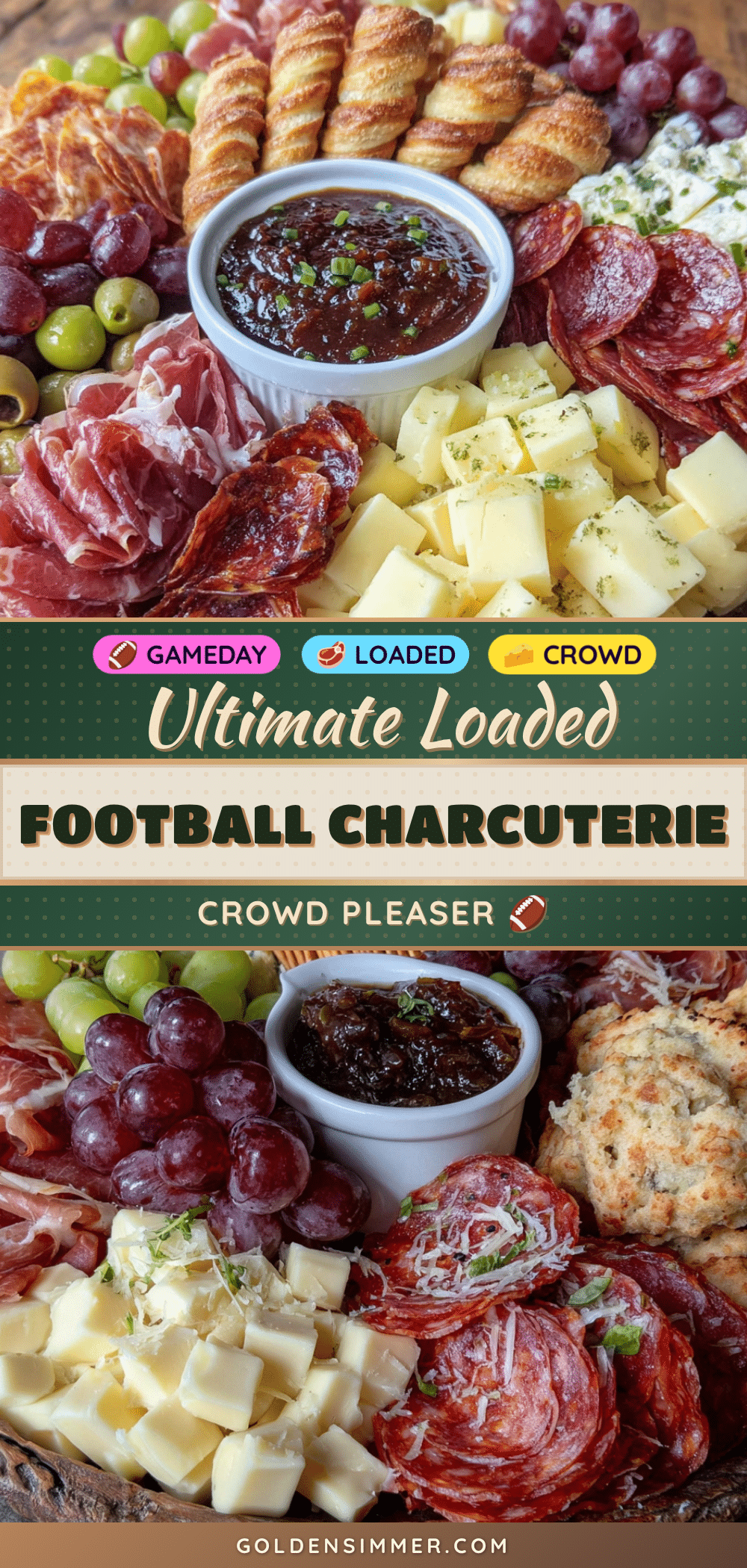
Ultimate Loaded Football Charcuterie Board for a Crowd
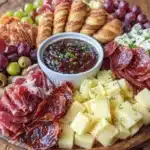
This isn’t your typical fancy cheese board with figs and honey. This is a board built for hungry crowds, messy fingers, and halftime refills, featuring dips, meats, cheeses, and all the crunchy, pickled, and spicy extras that make people hover around the coffee table.
- Prep Time: 25 minutes
- Cook Time: 0 minutes
- Total Time: 25 minutes
- Yield: 12 servings 1x
- Category: Appetizer
- Cuisine: American
Ingredients
- 8 ounces aged cheddar, sliced or cubed
- 8 ounces brie or camembert, left whole with the rind on
- 6 ounces manchego, sliced into thin triangles
- 4 ounces blue cheese crumbles (optional)
- 8 ounces spreadable cheese, like Boursin or garlic herb goat cheese
- 6 ounces prosciutto, thinly sliced and separated into ribbons
- 6 ounces genoa salami, sliced
- 6 ounces soppressata or spicy capicola
- 4 ounces pepperoni slices
- 1 cup hummus (plain or roasted red pepper flavor)
- 1/2 cup honey
- 1/3 cup whole grain mustard or spicy brown mustard
- 1/2 cup olive tapenade or marinated artichoke hearts (optional)
- 1 box (about 10 ounces) assorted crackers
- 1 baguette, sliced into thin rounds and lightly toasted
- 1 cup mixed nuts (roasted salted almonds, cashews, or a fancy mixed nut blend)
- 1 cup pretzel sticks or mini pretzels
- 1 cup red grapes, washed and left in small clusters
- 1 cup cherry tomatoes, halved or left whole if small
- 1/2 cup cornichons or small dill pickles
- 1/2 cup marinated olives (mixed green and kalamata olives)
- 1 small apple or pear, sliced thin and tossed with lemon juice
- 1/2 cup dried apricots or figs
- Fresh rosemary sprigs (for garnish)
- Flaky sea salt, like Maldon (for garnish)
- Edible flowers or fresh thyme (optional garnish)
Instructions
- Start with the cheese — the anchors of your board. Take all cheeses out of the refrigerator 30 to 45 minutes before you plan to serve. Arrange the larger cheese pieces first on the board, spacing them out so there’s a cheese option in every quadrant. Place the brie whole in the center-left, the cheddar cubes in a small pile on the upper right, the manchego fanning out like a deck of cards on the lower left, and the blue cheese crumbles in a small bowl on the upper left.
- Add the meats — fold and layer for texture. Prosciutto should be separated into thin ribbons and loosely draped. Salami and soppressata slices can be folded in half and arranged in overlapping rows or rolled into small cylinders. Pepperoni can be left in a casual pile. Place the meats near the cheeses they pair best with — prosciutto near the brie, salami near the cheddar, and soppressata near the manchego.
- Set out the dips and spreads in small bowls. Place the hummus in a bowl on the lower right quadrant. Put the honey in a small ramekin near the brie. Mustard goes near the salami and prosciutto. Olive tapenade or artichokes can go in a bowl near the center. Position these bowls so they’re not crowded by other items.
- Fill in the gaps with crackers and bread. Arrange crackers in small clusters around the board, fanning them out slightly. Place the baguette slices in a small stack or overlapping row near the soft cheeses. Pretzels can go in a little pile on the upper left corner. Spread crackers out so there’s always something to scoop with within arm’s reach.
- Add the fresh and pickled elements — color and crunch. Scatter the grapes in small clusters around the board. Place cherry tomatoes near the hummus. Tuck cornichons and olives into small gaps between larger items. Arrange apple or pear slices in a fan pattern near the blue cheese. Dried apricots or figs can go in a small pile near the manchego. Fill every empty space with something colorful and edible.
- Finish with nuts and garnishes. Sprinkle the mixed nuts into any remaining gaps. Tuck small sprigs of rosemary around the board for color and fragrance. If you’re using flaky sea salt, sprinkle a tiny pinch over the brie and the apple slices. Step back and look at your board — if you see a bare spot, fill it with a few extra grapes or crackers.
- Serve immediately or let it sit for up to 30 minutes. This board is designed to be served at room temperature. Keep an eye on any items that might dry out (like sliced apple or fresh bread) and cover them with a damp paper towel if you’re making the board ahead of time.
Notes
Temperature matters: set soft cheeses out at least 30 minutes before serving. Keep wet items (like cherry tomatoes and pickles) in small bowls or separate sections to prevent soggy crackers. Prep everything an hour before guests arrive, then add fresh elements and crackers just before serving. Have backup snacks ready to refresh the board if it starts looking sparse.
Nutrition
- Serving Size: 1 serving (approxima
- Calories: 500
- Sugar: 12
- Sodium: 900
- Fat: 32
- Saturated Fat: 14
- Carbohydrates: 28
- Fiber: 4
- Protein: 18
Keywords: charcuterie board, football party, game day snacks, appetizer, cheese board, party platter, crowd-pleasing