Love this? Save it for later!
Share the inspiration with your friends
The church potluck was in six hours and I’d completely forgotten. I mean, who does that? Everyone else would be bringing their grandmother’s famous casseroles and those perfectly decorated pies that look like they belong on a magazine cover. I had a chuck roast that needed cooking, a bag of sad-looking carrots, and about three potatoes that were starting to sprout eyes. Honestly, I almost just ordered pizza and called it a day.
But then I remembered my slow cooker, sitting in the back of the cabinet like an old friend waiting for a call. I figured, what’s the worst that could happen? I tossed everything in, added some broth and a few spices I hoped were right, and crossed my fingers. I didn’t even brown the meat first—a cardinal sin in stew-making, I know. But I was in full panic mode, running late, and honestly, nobody had time for that.
Fast forward to the potluck. My slow cooker beef stew was the first empty dish on the table. People were scraping the bottom with pieces of bread, asking for the recipe, and one sweet older lady named Martha told me it reminded her of her mother’s cooking. Let me tell you, that moment caught me off guard. I just stood there with my plastic fork, kind of embarrassed and proud at the same time. That’s the thing about this recipe—it doesn’t try hard, but it delivers every single time. Maybe you’ve been there, scrambling at the last minute and somehow stumbling onto something magical. That’s how this cozy slow cooker beef stew became my go-to, and why I keep coming back to it year after year.
Why You’ll Love This Recipe
This isn’t just another beef stew recipe you’ll find floating around the internet. I’ve tested this version more times than I can count, tweaking the ratios and timing until it was just right. Here’s why this one stands out from the crowd:
- Set It and Forget It: This cozy slow cooker beef stew does all the hard work for you. About 15 minutes of prep in the morning, and dinner is ready when you walk through the door. Perfect for those busy fall days when you want something warm and satisfying without hovering over the stove.
- Simple, Honest Ingredients: No fancy grocery store trips or obscure spices. You probably have most of these on hand right now. The magic happens when these humble ingredients spend hours mingling in the slow cooker, creating something far greater than the sum of its parts.
- Fall Comfort at Its Finest: This recipe was made for crisp autumn evenings. The combination of tender beef and root vegetables simmered in a rich, savory broth is basically a hug in a bowl. It’s the kind of meal that makes you want to light a candle and put on a cozy sweater.
- Crowd-Pleaser Guaranteed: I’ve served this at family dinners, neighborhood gatherings, and even a casual date night. It never fails to get compliments. Kids love the tender vegetables, and adults appreciate the deep, developed flavor that tastes like it simmered all day—because it did.
- Leftovers Get Even Better: This is one of those rare dishes that tastes even better the next day. The flavors continue to meld and deepen overnight, making tomorrow’s lunch something to actually look forward to.
What makes this recipe different from the rest? It’s the layering of flavors without extra work. Most stew recipes have you browning meat in batches, deglazing pans, and dirtying multiple dishes. This version skips all that fuss while still delivering that rich, slow-cooked taste. The secret is in how the vegetables release their natural sweetness and how the beef breaks down into buttery tenderness over those long, slow hours. It’s comfort food at its most forgiving—and honestly, isn’t that what we all need sometimes?
What Ingredients You Will Need
This recipe relies on simple, wholesome ingredients that work together to create something truly special. Most of these are fall pantry staples, so you might not even need a shopping trip.
For the Stew Base
- 2 pounds beef chuck roast, cut into 1.5-inch cubes (look for good marbling—it breaks down into tenderness)
- 3 tablespoons all-purpose flour (for coating the beef, helps thicken the stew naturally)
- 1 teaspoon salt, plus more to taste
- 1/2 teaspoon black pepper, freshly ground
- 2 tablespoons olive oil (optional, for browning—but we’ll talk about skipping this)
For the Vegetables
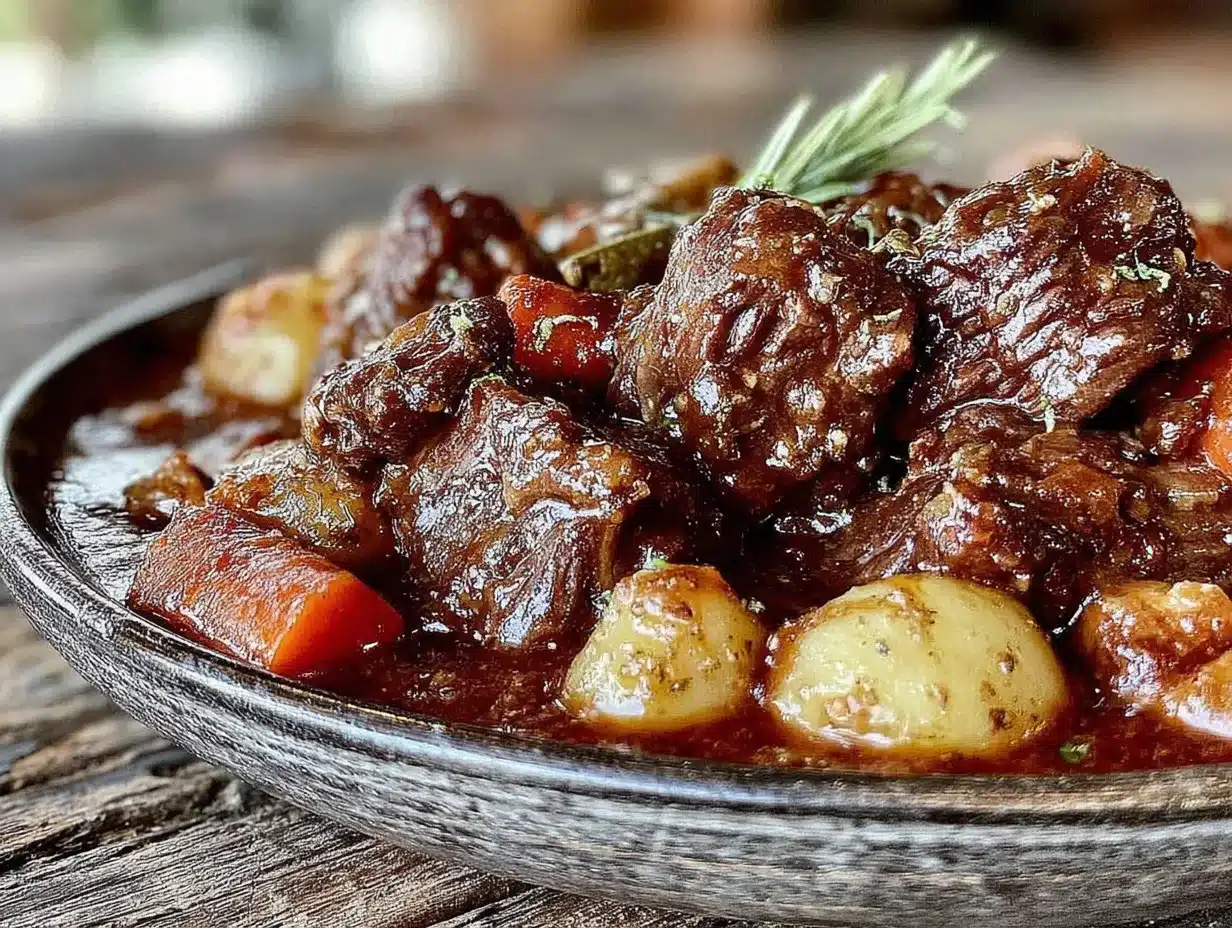
- 4 medium carrots, peeled and cut into 1-inch chunks
- 3 stalks celery, sliced into 1/2-inch pieces
- 1 large yellow onion, diced
- 3 cloves garlic, minced (don’t skimp—it adds depth)
- 1 pound Yukon Gold potatoes, cut into 1-inch cubes (they hold their shape better than russets)
- 2 medium parsnips, peeled and sliced (these add a subtle sweetness that’s incredible)
- 1 large sweet potato, peeled and cubed (optional, but I love the color and flavor it brings)
For the Broth and Seasoning
- 4 cups beef broth, low-sodium (I prefer Kitchen Basics or Swanson—they have good flavor without being too salty)
- 1 can (14.5 ounces) diced tomatoes, with their juices
- 2 tablespoons tomato paste (adds richness and color)
- 2 bay leaves
- 1 teaspoon dried thyme
- 1 teaspoon dried rosemary
- 1/2 teaspoon smoked paprika (trust me on this one—it adds a subtle warmth)
- 1 tablespoon Worcestershire sauce (for that umami boost)
- 1 cup frozen peas, added at the end (for a pop of green and sweetness)
Ingredient Tips and Substitutions
If you don’t have parsnips, just use extra carrots and potatoes. No sweet potato on hand? Leave it out or swap in a turnip for a more earthy flavor. For a gluten-free version, use cornstarch mixed with cold water instead of flour to thicken the stew at the end. I’ve made this with both, and honestly, they both work beautifully. Just remember to add the cornstarch slurry during the last 30 minutes of cooking.
Equipment Needed
The beauty of this recipe is that it doesn’t require a ton of fancy gadgets. Here’s what you’ll need:
- A 6-quart slow cooker – This is the sweet spot size for this recipe. If yours is smaller, just reduce the vegetables slightly. If it’s larger, no worries—it’ll still work fine.
- A sharp chef’s knife – You’ll be doing a fair amount of chopping, so a good knife makes the job faster and safer. I use a 8-inch Wusthof, but any sharp knife will do.
- A cutting board – Preferably one with a groove to catch juices. I learned this the hard way after cleaning up beef juice from my counter.
- A large mixing bowl – For tossing the beef with flour and seasonings.
- Measuring cups and spoons – Nothing fancy, just the basics.
- A wooden spoon or spatula – For stirring and scraping.
- A ladle – For serving.
If you don’t have a slow cooker, you can absolutely make this in a Dutch oven on the stovetop or in the oven at 325°F for about 2.5 to 3 hours. I’ve done it both ways, and while the slow cooker version is more hands-off, the oven method gives you a slightly richer flavor from the evaporation. Both are delicious, so use what you have.
Preparation Method
Let’s walk through this step by step. I’ll include all the little details I’ve learned from making this stew more times than I can count.
- Prep your vegetables first. Chop all your carrots, celery, onion, potatoes, parsnips, and sweet potato. Mince the garlic. This makes the rest of the process so much smoother. I like to do this the night before if I’m making the stew in the morning. Store the chopped veggies in separate bags in the fridge.
- Prepare the beef. Pat the beef cubes dry with paper towels. This is important—wet meat won’t brown properly, and even though we’re skipping the browning step here, dry meat helps the flour stick better. In a large bowl, toss the beef with the flour, salt, and pepper until each piece is lightly coated.
- Layer the vegetables in the slow cooker. Start with the onion and garlic on the bottom. Then add the carrots, celery, potatoes, parsnips, and sweet potato. This layering helps the vegetables cook evenly and prevents the softer ones from turning to mush.
- Add the beef on top. Place the floured beef cubes over the vegetables. Don’t stir yet—just let everything sit in its layers. Trust me on this.
- Mix the liquid ingredients. In a separate bowl or large measuring cup, whisk together the beef broth, diced tomatoes with their juices, tomato paste, Worcestershire sauce, thyme, rosemary, and smoked paprika. Stir until the tomato paste is mostly dissolved.
- Pour the liquid over everything. Gently pour the broth mixture over the beef and vegetables. Tuck the bay leaves into the liquid. Don’t stir—the liquid will find its way down as it cooks.
- Set and forget. Cover the slow cooker and cook on LOW for 8 hours or on HIGH for 4-5 hours. I strongly recommend LOW for this recipe. The longer, gentler cooking breaks down the beef’s connective tissue and allows the flavors to develop fully. If you’re in a hurry, HIGH works, but the texture won’t be quite as tender.
- Add the peas at the end. About 15 minutes before serving, stir in the frozen peas. They only need to warm through, and this keeps their bright color and sweet flavor intact.
- Check the seasoning. Taste the broth and adjust salt and pepper as needed. Remember that the flavors will have concentrated during cooking, so you might need less salt than you think.
- Thicken if desired. If you prefer a thicker stew, mix 2 tablespoons of cornstarch with 2 tablespoons of cold water to make a slurry. Stir it into the stew during the last 30 minutes of cooking. Let it cook uncovered to help it thicken.
A note on timing: Your slow cooker may run hotter or cooler than mine. The first time you make this, check the beef at the 7-hour mark on LOW. It should be fork-tender but not falling apart completely. If it’s still tough, give it another hour.
Cooking Tips & Techniques
Over the years, I’ve made every mistake you can imagine with this recipe. Here’s what I’ve learned so you don’t have to repeat my failures.
The biggest mistake I made? Not drying the beef before flouring it. The first time I made this, I just tossed wet, raw beef in flour and ended up with a gummy, pasty coating that never quite cooked off. Now I always pat the beef dry first, and the difference is night and day. The flour creates a light coating that helps thicken the stew naturally as it cooks.
Another lesson learned the hard way: Overcrowding the slow cooker. I once tried to double this recipe in a standard 6-quart slow cooker, and it was a disaster. The liquid didn’t circulate properly, the vegetables cooked unevenly, and the whole thing took almost 11 hours. Stick to the recipe amounts for your first time, and if you need to double it, use two slow cookers or make it in batches.
Timing is everything with root vegetables. I’ve found that cutting the potatoes and sweet potatoes into slightly larger chunks than the carrots and parsnips helps everything cook evenly. The denser root vegetables take longer to soften, so giving them a head start in size makes a difference. Also, don’t cut your vegetables too small—they’ll turn to mush over 8 hours. One-inch chunks are perfect.
Here’s a pro tip: If you have the time, browning the beef in a hot skillet before adding it to the slow cooker adds an incredible depth of flavor. I know I said this recipe skips that step, and it does—but on days when I have an extra 10 minutes, I’ll sear the beef in batches. That browned crust, called the Maillard reaction, adds a savory complexity that’s hard to beat. But honestly? The stew is still fantastic without it. So don’t stress if you’re short on time.
Multitasking strategy: While the stew cooks, make a batch of crusty bread or drop biscuits. There’s nothing better than sopping up that rich broth with a piece of warm, buttered bread. I’ll often start my bread dough in the morning when I’m prepping the stew, and by dinner time, I just pop it in the oven.
Variations & Adaptations
This recipe is wonderfully flexible. Here are some ways I’ve adapted it over the years:
Dietary Variations
- Gluten-Free: Skip the flour coating on the beef. Instead, toss the beef cubes in a mixture of 2 tablespoons cornstarch, salt, and pepper. At the end of cooking, if you want a thicker stew, mix another tablespoon of cornstarch with cold water and stir it in.
- Low-Carb/Keto: Swap the potatoes and sweet potatoes for cauliflower florets and chopped turnips. Add them during the last 2 hours of cooking so they don’t get too soft. The broth will be a bit thinner, but the flavor is still amazing.
- Dairy-Free: This recipe is naturally dairy-free, so no changes needed. Just double-check your Worcestershire sauce—some brands contain anchovies, but most are fine.
Seasonal Adaptations
- Spring Version: Swap the root vegetables for asparagus, baby carrots, and new potatoes. Add a handful of fresh herbs like parsley and dill at the end for brightness.
- Summer Version: Use zucchini, yellow squash, and bell peppers instead of the root vegetables. Reduce the cooking time to 6 hours on LOW since summer vegetables cook faster.
- Winter Hearty Version: Add a cup of pearl barley or farro along with the broth. These grains absorb the flavorful liquid and add wonderful texture. Just make sure to adjust the liquid—add an extra cup of broth if using grains.
Flavor Twists I’ve Tried
One of my favorite variations is adding a tablespoon of balsamic vinegar and a teaspoon of brown sugar to the broth. It adds a subtle sweetness and tang that complements the beef beautifully. I also sometimes stir in a splash of red wine—about half a cup—if I have an open bottle. Just reduce the broth by the same amount to keep the liquid ratio balanced.
Serving & Storage Suggestions
This cozy slow cooker beef stew is best served hot, straight from the slow cooker. Ladle it into deep bowls and garnish with a sprinkle of fresh parsley if you’re feeling fancy. The rich, aromatic broth deserves to be soaked up with something crusty—a warm baguette, sourdough bread, or even a pile of fluffy mashed potatoes.
What to serve alongside:
- Crusty bread with butter (my personal favorite—the contrast of textures is perfect)
- A simple green salad with a tangy vinaigrette to cut through the richness
- Roasted Brussels sprouts or steamed green beans for extra vegetables
- A glass of full-bodied red wine, like a Cabernet Sauvignon or Merlot
Storage instructions:
- Refrigerator: Let the stew cool completely, then transfer it to an airtight container. It will keep in the fridge for up to 4 days. The flavors actually get better on day two and three as they continue to meld.
- Freezer: This stew freezes beautifully. Portion it into freezer-safe containers or zip-top bags, leaving about an inch of headroom for expansion. It will keep for up to 3 months. Thaw overnight in the refrigerator before reheating.
- Reheating: Reheat gently on the stovetop over medium-low heat, stirring occasionally. If the stew has thickened too much in the fridge, add a splash of beef broth or water to loosen it up. You can also reheat individual portions in the microwave—just cover the bowl and heat in 1-minute intervals, stirring between each.
How flavors develop over time: I’ve noticed that this stew is at its peak on day two. The beef continues to absorb the broth’s flavors, the vegetables soften further, and everything becomes more cohesive. If you can plan ahead, making this a day before you want to serve it is actually a great strategy. Just reheat it gently, and nobody will know it wasn’t made fresh that day.
Nutritional Information & Benefits
This hearty stew is not just delicious—it’s packed with nutrients that make it a wholesome meal choice. Here’s a rough estimate per serving (based on 8 servings):
- Calories: Approximately 380-420 per serving
- Protein: 32g
- Carbohydrates: 35g
- Fiber: 7g
- Fat: 14g
- Iron: 25% of daily value
- Vitamin A: 120% of daily value (thanks to all those carrots and sweet potatoes!)
- Vitamin C: 30% of daily value
Health benefits of key ingredients:
- Beef chuck is an excellent source of high-quality protein, iron, and B vitamins, which support energy metabolism and red blood cell production.
- Carrots and sweet potatoes are loaded with beta-carotene, which your body converts to vitamin A for healthy vision and immune function.
- Garlic and onions contain compounds that support heart health and have anti-inflammatory properties.
- Celery provides fiber and antioxidants, plus it’s low in calories.
Dietary considerations: This recipe is naturally dairy-free and can be made gluten-free with a simple substitution. It’s also relatively low in added sugars and contains no artificial ingredients. If you’re watching your sodium intake, use low-sodium broth and go easy on the added salt—the Worcestershire sauce and tomatoes provide plenty of flavor on their own.
From a personal wellness perspective, I love that this stew is a complete meal in one bowl. It’s satisfying without being heavy, and the balance of protein, complex carbohydrates, and vegetables keeps me full for hours. Plus, knowing exactly what went into it gives me peace of mind that I’m feeding my family something nourishing and real.
Conclusion
This cozy slow cooker beef stew has earned its place in my regular rotation, and I have a feeling it will in yours too. It’s the kind of recipe that proves you don’t need fancy techniques or exotic ingredients to create something truly memorable. Just good, honest food cooked with a little patience and a lot of love.
What I love most about this stew is how forgiving it is. Maybe you’ll brown the beef first, or maybe you’ll skip it like I did that first time. Maybe you’ll add extra garlic or throw in a parsnip because it looked lonely at the store. It’ll still be delicious. That’s the beauty of a recipe like this—it invites you to make it your own.
So here’s my challenge to you: Make this stew on a crisp fall Sunday. Invite some people over, or just curl up on the couch with a bowl and a good book. Let the smell fill your kitchen and remind you why slow cooking is worth the wait. And when you take that first bite, close your eyes and savor it. You’ve earned it.
I’d love to hear how yours turns out! Drop a comment below and let me know what variations you tried, or tag me in your photos on social media. Happy cooking, friends.
Frequently Asked Questions
Can I use a different cut of beef for this stew?
Absolutely. While chuck roast is ideal because of its marbling and tenderness after slow cooking, you can also use beef stew meat, bottom round, or even brisket. Just avoid lean cuts like sirloin—they’ll turn out tough and dry. If you’re using a leaner cut, consider adding an extra tablespoon of oil or butter to keep things moist.
Do I really need to skip browning the beef?
No, you don’t have to. Browning adds flavor, but it’s not essential. If you have the time, sear the beef in batches in a hot skillet with a little oil before adding it to the slow cooker. If you’re in a rush or just want to keep things simple, the stew will still be delicious without it. I’ve done it both ways, and honestly, I can’t always tell the difference once everything’s cooked down.
Can I add other vegetables to this stew?
Of course! This recipe is very adaptable. Try adding mushrooms, turnips, rutabaga, or even butternut squash. Just be mindful of cooking times—add delicate vegetables like zucchini or bell peppers during the last hour of cooking so they don’t turn to mush. Root vegetables can go in from the start.
How do I prevent the potatoes from getting mushy?
The key is cutting them into larger chunks—about 1.5 inches—and using waxy potatoes like Yukon Golds or red potatoes. Russet potatoes tend to fall apart more easily. Also, make sure you’re layering the potatoes on top of the denser vegetables, not at the very bottom of the slow cooker where they’ll cook faster.
Can I make this stew in an Instant Pot?
Yes! To make this in a pressure cooker, use the sauté function to brown the beef if desired. Then add the vegetables, broth, and seasonings. Cook on high pressure for 35 minutes, then let the pressure release naturally for 15 minutes before quick-releasing the rest. Add the peas after pressure cooking and let them warm through with the residual heat. The flavor won’t be quite as deep as the slow cooker version, but it’s a great option when you’re short on time.
Pin This Recipe!
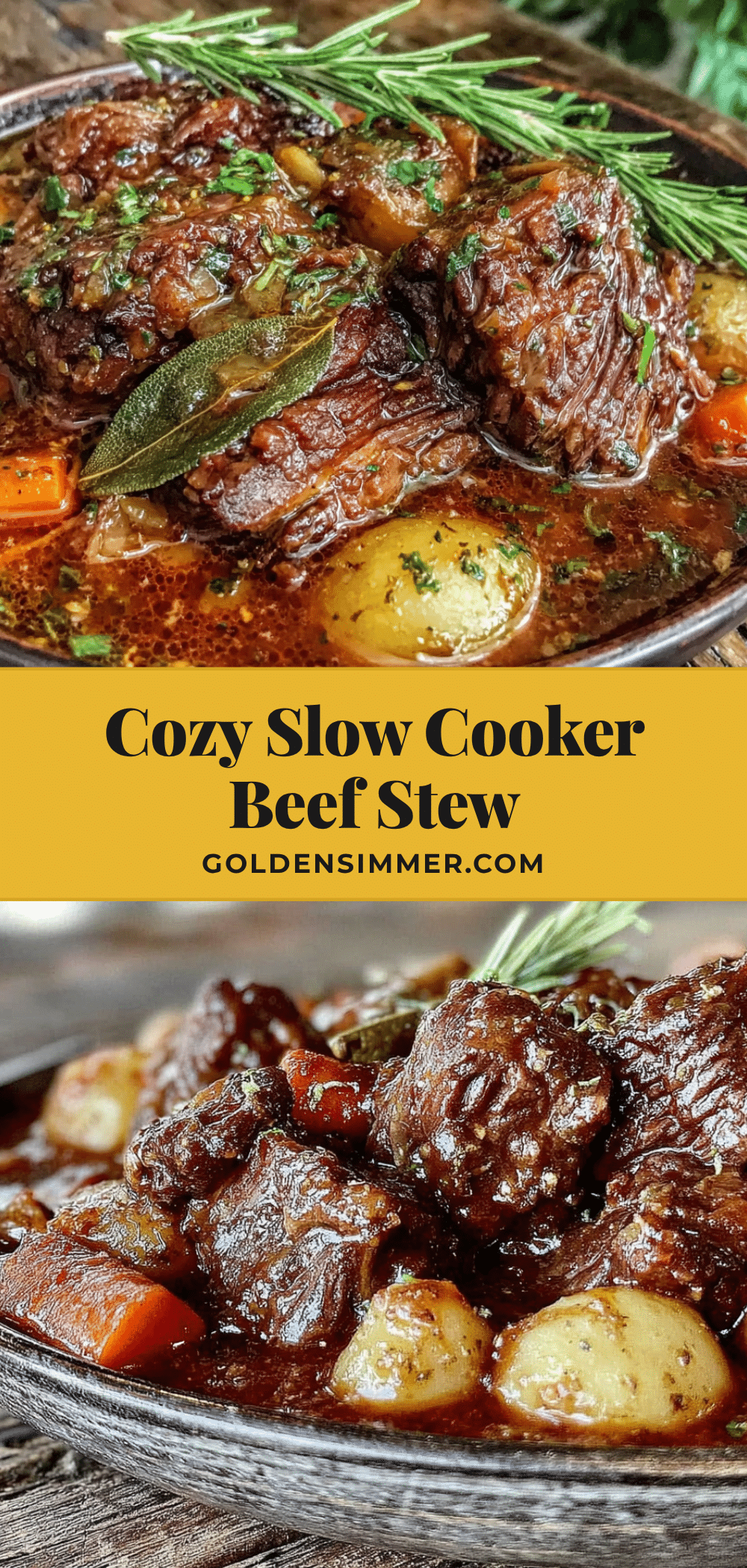
Easy Cozy Slow Cooker Beef Stew with Fall Vegetables
A hearty, comforting beef stew made in the slow cooker with tender beef, root vegetables, and a rich savory broth. Perfect for busy fall days, this set-it-and-forget-it recipe delivers deep flavor with minimal effort.
- Prep Time: 15 minutes
- Cook Time: 8 hours (LOW) or 4-5 hours (HIGH)
- Total Time: 8 hours 15 minutes (LOW) or 4 hours 15 minutes (HIGH)
- Yield: 8 servings 1x
- Category: Main Course
- Cuisine: American
Ingredients
- 2 pounds beef chuck roast, cut into 1.5-inch cubes
- 3 tablespoons all-purpose flour
- 1 teaspoon salt, plus more to taste
- 1/2 teaspoon black pepper, freshly ground
- 2 tablespoons olive oil (optional, for browning)
- 4 medium carrots, peeled and cut into 1-inch chunks
- 3 stalks celery, sliced into 1/2-inch pieces
- 1 large yellow onion, diced
- 3 cloves garlic, minced
- 1 pound Yukon Gold potatoes, cut into 1-inch cubes
- 2 medium parsnips, peeled and sliced
- 1 large sweet potato, peeled and cubed (optional)
- 4 cups beef broth, low-sodium
- 1 can (14.5 ounces) diced tomatoes, with their juices
- 2 tablespoons tomato paste
- 2 bay leaves
- 1 teaspoon dried thyme
- 1 teaspoon dried rosemary
- 1/2 teaspoon smoked paprika
- 1 tablespoon Worcestershire sauce
- 1 cup frozen peas
Instructions
- Prep your vegetables first. Chop all carrots, celery, onion, potatoes, parsnips, and sweet potato. Mince the garlic.
- Pat the beef cubes dry with paper towels. In a large bowl, toss the beef with the flour, salt, and pepper until each piece is lightly coated.
- Layer the vegetables in the slow cooker. Start with the onion and garlic on the bottom. Then add the carrots, celery, potatoes, parsnips, and sweet potato.
- Place the floured beef cubes over the vegetables. Do not stir.
- In a separate bowl or large measuring cup, whisk together the beef broth, diced tomatoes with their juices, tomato paste, Worcestershire sauce, thyme, rosemary, and smoked paprika until the tomato paste is mostly dissolved.
- Pour the broth mixture over the beef and vegetables. Tuck the bay leaves into the liquid. Do not stir.
- Cover the slow cooker and cook on LOW for 8 hours or on HIGH for 4-5 hours. LOW is recommended for best texture.
- About 15 minutes before serving, stir in the frozen peas. Let them warm through.
- Taste the broth and adjust salt and pepper as needed.
- If a thicker stew is desired, mix 2 tablespoons cornstarch with 2 tablespoons cold water to make a slurry. Stir into the stew during the last 30 minutes of cooking and let cook uncovered to thicken.
Notes
For a gluten-free version, skip the flour coating and toss beef in 2 tablespoons cornstarch mixed with salt and pepper. Add a cornstarch slurry at the end if needed. For a richer flavor, brown the beef in a hot skillet before adding to the slow cooker. Leftovers taste even better the next day. Store in the refrigerator for up to 4 days or freeze for up to 3 months.
Nutrition
- Serving Size: 1 bowl (about 1.5 cu
- Calories: 400
- Sugar: 10
- Sodium: 800
- Fat: 14
- Saturated Fat: 5
- Carbohydrates: 35
- Fiber: 7
- Protein: 32
Keywords: slow cooker beef stew, fall vegetables, comfort food, easy stew, cozy dinner, potluck recipe