Love this? Save it for later!
Share the inspiration with your friends
This was supposed to be a roasted chicken. I know, right? Thanksgiving, the biggest food holiday of the year, and I had a chicken in the oven. It was my first time hosting, I was twenty-three, and I had about forty-five dollars to my name. The plan was simple: a small, manageable bird with some basic herbs. But I grabbed the wrong thing at the grocery store — a small, pre-cooked ham instead of a raw chicken. I didn’t even realize it until I was home, the packaging was off, and the ham was sitting there, all pink and glossy, looking back at me like, “Well, now what?” I was already panicking about the lumpy gravy and the undercooked potatoes, and this was just the cherry on top. I mean, who serves ham for Thanksgiving? That’s an Easter thing, right?
Honestly, I almost cried. I didn’t have a backup plan, and the store was closed. So, I did what any desperate, broke twenty-something would do: I grabbed some brown sugar, a little mustard, and some cloves I found in the back of the spice cabinet. I figured I’d just glaze it and hope for the best. I remember thinking, “This is going to be a disaster, but at least it’s edible.” I didn’t even score the ham properly — the cuts were uneven, and the glaze was a little thin. But you know that feeling when you’re expecting the worst, and then something completely unexpected happens? That was this ham. The glaze caramelized into this sticky, sweet, salty crust that was honestly better than anything I’d planned. The chicken I’d wanted would have been fine. This ham? It was a revelation.
What came out of that oven was nothing like the plan — and better. It was the dish everyone talked about. My dad, who is a notoriously quiet eater, asked for seconds. Then thirds. That ham became the star of a Thanksgiving I thought was ruined. I’ve made it every year since, and it’s never not the first thing to disappear from the table. It taught me that sometimes the best recipes come from the moments when everything goes wrong. So, if you’re nervous about your Thanksgiving main course, let me tell you — this best brown sugar glazed ham is the one that will save your dinner and make you look like a hero. Maybe you’ve been there, standing in front of an open oven, wondering how you got into this mess. This recipe is for you.
Why You’ll Love This Recipe
Let’s be real — Thanksgiving is stressful enough without worrying about a dry, flavorless ham. This recipe is the opposite of that. It’s the kind of dish that makes people lean back in their chairs and sigh with contentment. I’ve tested this glaze more times than I can count, tweaking the ratios until it was absolutely perfect. It’s not just another ham recipe — it’s the one that will get you asked to bring the main dish every single year.
- Incredibly Easy: Despite looking like a showstopper, this ham is almost foolproof. You’re mostly just heating it up and brushing on a simple glaze. It frees you up to focus on the sides and the chaos of the day.
- Simple Ingredients: You probably have brown sugar, mustard, and butter in your kitchen right now. No weird, hard-to-find ingredients that require a special trip to a gourmet store.
- Perfect for Thanksgiving: It’s the ultimate centerpiece. It looks gorgeous on a platter, it carves beautifully, and it feeds a crowd without the last-minute panic of a turkey that’s not quite done.
- Unbelievably Delicious: The crust is the star here. It’s a sticky, caramelized shell that gives way to tender, juicy ham. The sweet and salty combination is next-level comfort food — it’s the kind of bite that makes you close your eyes for a second.
- Crowd-Pleaser: I’ve served this to picky kids, skeptical in-laws, and full-on food snobs. It gets rave reviews every single time. There are never leftovers.
What makes this different from the other recipes out there is the technique. Most people just dump brown sugar on top, and it slides right off. I use a method that creates a real crust — a thick, candied shell that sticks to the ham and shatters when you slice into it. It’s the difference between a good ham and a legendary one. This isn’t just a recipe; it’s a memory in the making.
What Ingredients You Will Need
This recipe uses simple, pantry-friendly ingredients to deliver a flavor that tastes anything but basic. The magic is in how they work together to create that perfect, glossy crust. You don’t need a long list of exotic spices — just a few key players that do the heavy lifting.
- 1 (8-10 pound) bone-in, spiral-cut ham, fully cooked: I prefer a spiral-cut ham because it’s already sliced, making serving a breeze. The bone adds flavor and helps keep the meat moist. Look for one that’s not pre-glazed, so you have a blank canvas. I usually grab a brand like Hormel or Cook’s — they’re reliable and widely available.
- 1 ½ cups packed light brown sugar: This is the base of our glaze. The molasses in the brown sugar gives it that deep, rich flavor and helps it caramelize into that perfect crust. Don’t use dark brown sugar here — it can be a little too intense and overpower the ham.
- ¼ cup honey: This adds a floral sweetness and helps the glaze get sticky and glossy. It also helps the sugar adhere to the ham. If you’re out of honey, you can substitute maple syrup, but the flavor will be a little different.
- 2 tablespoons Dijon mustard: Don’t skip this! The mustard cuts through the sweetness and adds a subtle tang that balances the whole dish. It’s the secret to making the glaze not just sweet, but complex. I use Grey Poupon — it has a nice, sharp bite.
- 2 tablespoons whole-grain mustard: This is my little trick. The whole grains add texture and little pops of flavor that make the glaze more interesting. It’s a small detail that makes a big difference.
- ¼ cup unsalted butter: Butter adds richness and helps the glaze become a thick, spreadable paste. It also helps the sugar caramelize evenly without burning. Use unsalted so you can control the salt level.
- 1 teaspoon ground cloves: Cloves are a classic pairing with ham. They add a warm, slightly spicy note that smells like the holidays. A little goes a long way, so don’t overdo it.
- ½ teaspoon ground cinnamon: This adds a gentle warmth that rounds out the flavor. It’s not a “cinnamon roll” level of cinnamon — just a subtle hint that makes the glaze feel cozy.
- ¼ cup apple cider vinegar: This is the secret weapon. The acidity cuts through the sweetness and keeps the glaze from being cloying. It also helps the sugar dissolve and creates a more balanced flavor. I’ve tried it without, and it’s just not the same.
Equipment Needed
You don’t need a ton of fancy equipment for this recipe, which is part of its beauty. Most of these are things you probably already have in your kitchen.
- Large roasting pan with a rack: You need a pan big enough to hold the ham comfortably. The rack is important — it lifts the ham off the bottom of the pan, allowing the heat to circulate and the fat to render. If you don’t have a rack, you can use a few crumpled balls of aluminum foil as a makeshift one. I’ve done it in a pinch, and it works fine.
- Small saucepan: For making the glaze. You want something with a heavy bottom to prevent the sugar from burning.
- Basting brush: A silicone brush is ideal because it doesn’t shed bristles into your glaze. A pastry brush works too, but just be gentle.
- Sharp carving knife: Even with a spiral-cut ham, you’ll need a good knife to cut around the bone and separate the slices. A long, thin blade is best.
- Meat thermometer: This is non-negotiable. You need to make sure the ham is heated through to 140°F. An instant-read thermometer is perfect and cheap.
- Aluminum foil: You’ll use this to tent the ham while it rests and to cover it if the glaze starts to brown too quickly.
Preparation Method
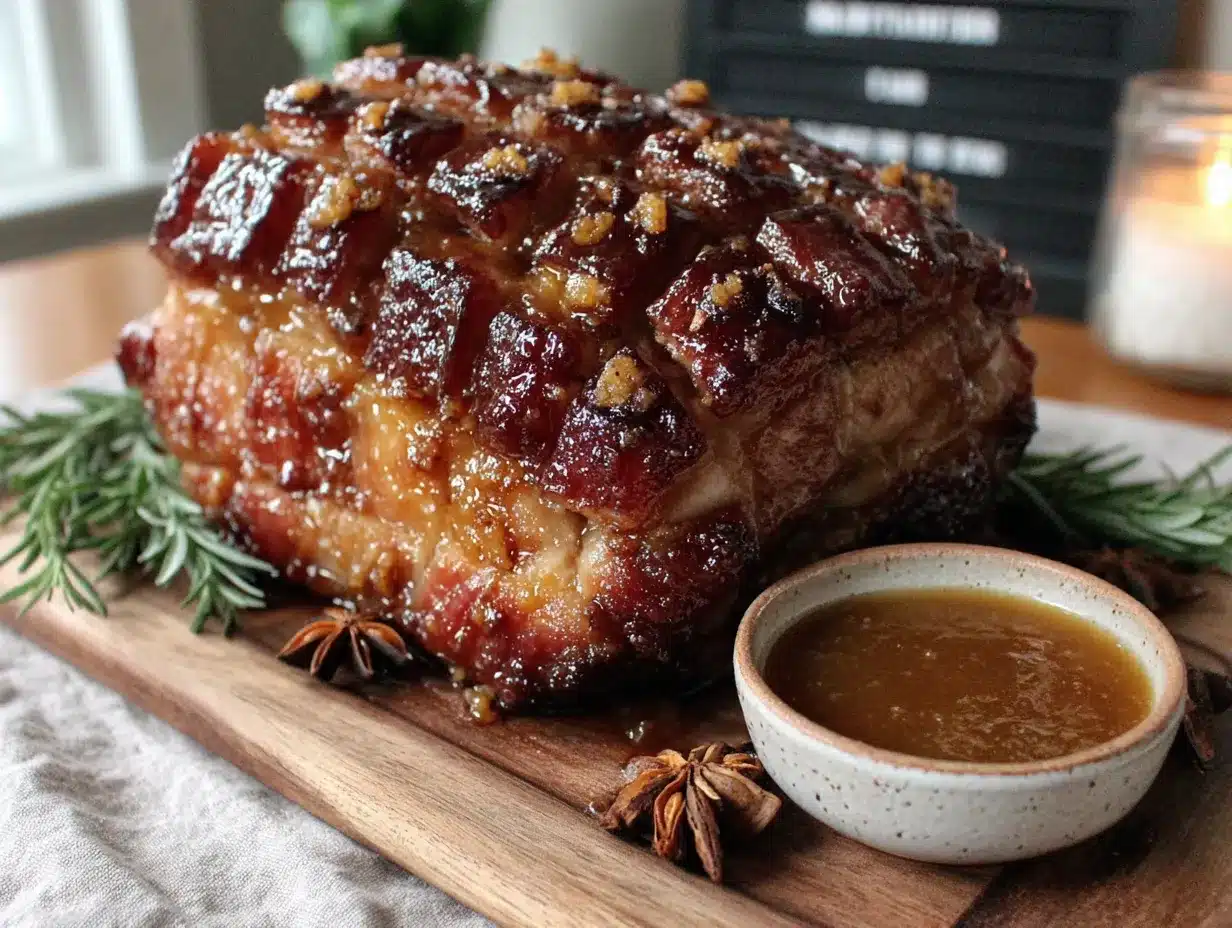
Alright, let’s get to the good part. This is where the magic happens. Follow these steps, and you’ll have a ham that looks like it came from a fancy restaurant, but tastes like it was made with love.
- Preheat and Prep: Preheat your oven to 325°F (163°C). Take the ham out of its packaging and pat it completely dry with paper towels. This is a crucial step — a wet ham won’t form a good crust. Place the ham, cut side down, on the rack in your roasting pan. If it’s a shank end, the flat side should be down. Add about 1 cup of water to the bottom of the pan to create steam and keep the ham moist.
- Score the Ham (If Needed): If your ham isn’t spiral-cut, use a sharp knife to score the fat in a diamond pattern, about ¼-inch deep. This helps the fat render and creates those beautiful little pockets for the glaze to sink into. If it’s spiral-cut, you can skip this step.
- First Roast: Cover the ham loosely with aluminum foil and place it in the oven. Roast for about 10 minutes per pound, or until the internal temperature reaches 130°F (54°C). For an 8-pound ham, that’s about 1 hour and 20 minutes. Don’t rush this part — the slow heating ensures the ham stays juicy.
- Make the Glaze: While the ham is roasting, make the glaze. In a small saucepan over medium heat, combine the brown sugar, honey, Dijon mustard, whole-grain mustard, butter, ground cloves, cinnamon, and apple cider vinegar. Whisk everything together until the butter is melted and the sugar is dissolved. Bring it to a gentle simmer, then reduce the heat to low. Let it cook for 3-5 minutes, stirring occasionally, until it thickens slightly. It should look like a thick, syrupy paste. Remove from heat and set aside.
- Glaze and Roast: After the first roast, remove the ham from the oven and increase the oven temperature to 400°F (204°C). Carefully brush about half of the glaze all over the ham, making sure to get it into the cuts between the slices. Don’t be shy — really slather it on. Return the ham to the oven, uncovered, and roast for another 15-20 minutes.
- Second Glaze: After 15-20 minutes, take the ham out again and brush on the remaining glaze. The first layer should be starting to set and caramelize. This second layer is what builds that thick, candy-like crust. Pop it back in the oven for another 15-20 minutes, until the glaze is bubbling, dark, and sticky.
- Check Temperature: The ham is done when the internal temperature reaches 140°F (60°C). Use your meat thermometer to check in the thickest part of the meat, away from the bone. If it’s not there yet, give it another 5-10 minutes. The glaze can burn quickly at this high temperature, so keep an eye on it. If it’s getting too dark, tent it loosely with foil.
- Rest and Serve: Once the ham is done, remove it from the oven and let it rest for 15-20 minutes. This is a hard wait, I know. But it’s essential — it lets the juices redistribute so the ham is tender, not dry. The glaze will also set up a bit more during this time. Carve around the bone, arrange the slices on a platter, and spoon any pan juices over the top. Watch it disappear.
Cooking Tips & Techniques
After making this ham for over a decade, I’ve learned a few things the hard way. Here are my best tips to make sure yours is perfect every time.
- Don’t Overcook It: The biggest mistake people make with a pre-cooked ham is cooking it too long. You’re not cooking raw meat — you’re just heating it through. Overcooking will dry it out, and all that beautiful glaze won’t save it. Use your thermometer and pull it at 140°F.
- Pat It Dry: I cannot stress this enough. A wet ham will steam instead of roast, and your glaze will slide right off. You want the surface to be dry so the glaze can adhere and caramelize. Take an extra minute with the paper towels.
- Watch the Sugar: Brown sugar burns easily at high temperatures. That’s why we do the first roast at 325°F and only crank it up to 400°F for the final glazing. Keep a close eye on it during those last 30 minutes. If the glaze looks like it’s turning black, cover it with foil immediately.
- Let It Rest: I know you’re hungry, and the house smells amazing. But cutting into a ham right out of the oven is a rookie mistake. The juices need time to settle. I once carved a ham too early, and it was noticeably drier. The 15-minute rest is non-negotiable.
- Use the Pan Juices: After the ham is done, you’ll have all this sticky, sweet goodness in the bottom of the pan. Don’t throw it away! Spoon it over the sliced ham before serving. It’s like a built-in sauce. If it’s too thick, you can deglaze the pan with a splash of water or apple cider.
Variations & Adaptations
One of the best things about this recipe is how easily you can tweak it to fit your taste or what you have on hand. Here are a few of my favorite variations.
- Spicy Brown Sugar Glaze: Add 1-2 teaspoons of chipotle powder or a pinch of cayenne pepper to the glaze. The heat cuts through the sweetness beautifully and gives it a little kick. I did this one year when I was craving something different, and it was a huge hit with the adults.
- Maple Dijon Glaze: Swap the honey for ¼ cup of pure maple syrup. It gives the glaze a more earthy, woodsy sweetness that pairs perfectly with the ham. It’s a little less sweet than the original, but just as sticky and delicious.
- Pineapple Brown Sugar Glaze: Replace the apple cider vinegar with ¼ cup of pineapple juice. Add a few rings of pineapple to the roasting pan for the last 30 minutes. The acidity of the pineapple helps tenderize the ham, and the flavor is a classic pairing. It’s a little retro, but in the best way.
- Herb-Infused Glaze: Add 1 tablespoon of fresh, chopped rosemary or thyme to the glaze. The herbs add a savory note that balances the sweetness and makes the ham feel a little more sophisticated. I like to sprinkle a few fresh herb sprigs over the platter for presentation.
- Gluten-Free Option: This recipe is naturally gluten-free, but always double-check your mustard and other ingredients. Some mustards can contain trace amounts of gluten. I use Grey Poupon and Maille, which are both safe.
Serving & Storage Suggestions
This ham is the star of the show, but it plays well with others. Here’s how to serve it up and handle the leftovers.
Serving: Serve the ham warm, right after its rest. Arrange the slices on a large platter, slightly overlapping, and spoon some of the pan juices over the top. It’s beautiful on its own, but I love to garnish it with fresh rosemary sprigs and a few orange slices for color. It pairs perfectly with classic Thanksgiving sides like mashed potatoes, green bean casserole, and dinner rolls. For a drink, a crisp white wine like a Riesling or a dry sparkling cider cuts through the richness nicely.
Storage: Leftover ham is a gift. Let it cool completely, then wrap it tightly in plastic wrap or aluminum foil, or store it in an airtight container. It will keep in the refrigerator for up to 5 days. The flavors actually meld together even more over time, so day-old ham is often even better.
Reheating: To reheat, place the slices in a baking dish with a splash of water or apple juice. Cover with foil and warm in a 300°F oven for 10-15 minutes, until heated through. You can also microwave individual slices for 30-45 seconds, but the texture won’t be as good. For a quick meal, I love chopping up leftover ham and adding it to scrambled eggs, omelets, or a simple pasta dish.
Freezing: Ham freezes surprisingly well. Wrap the leftover ham tightly in plastic wrap, then in a layer of foil, and place it in a freezer-safe bag. It will keep for up to 2 months. Thaw it in the refrigerator overnight before reheating.
Nutritional Information & Benefits
Let’s be honest — this is a special occasion dish, not a health food. But that doesn’t mean it can’t fit into a balanced diet. Here’s a rough breakdown of what you’re looking at per 4-ounce serving of the ham with glaze.
| Nutrient | Amount |
|---|---|
| Calories | 350-400 |
| Protein | 25-30g |
| Fat | 15-20g |
| Saturated Fat | 6-8g |
| Carbohydrates | 25-30g |
| Sugar | 22-26g |
| Sodium | 1200-1500mg |
Pin This Recipe!
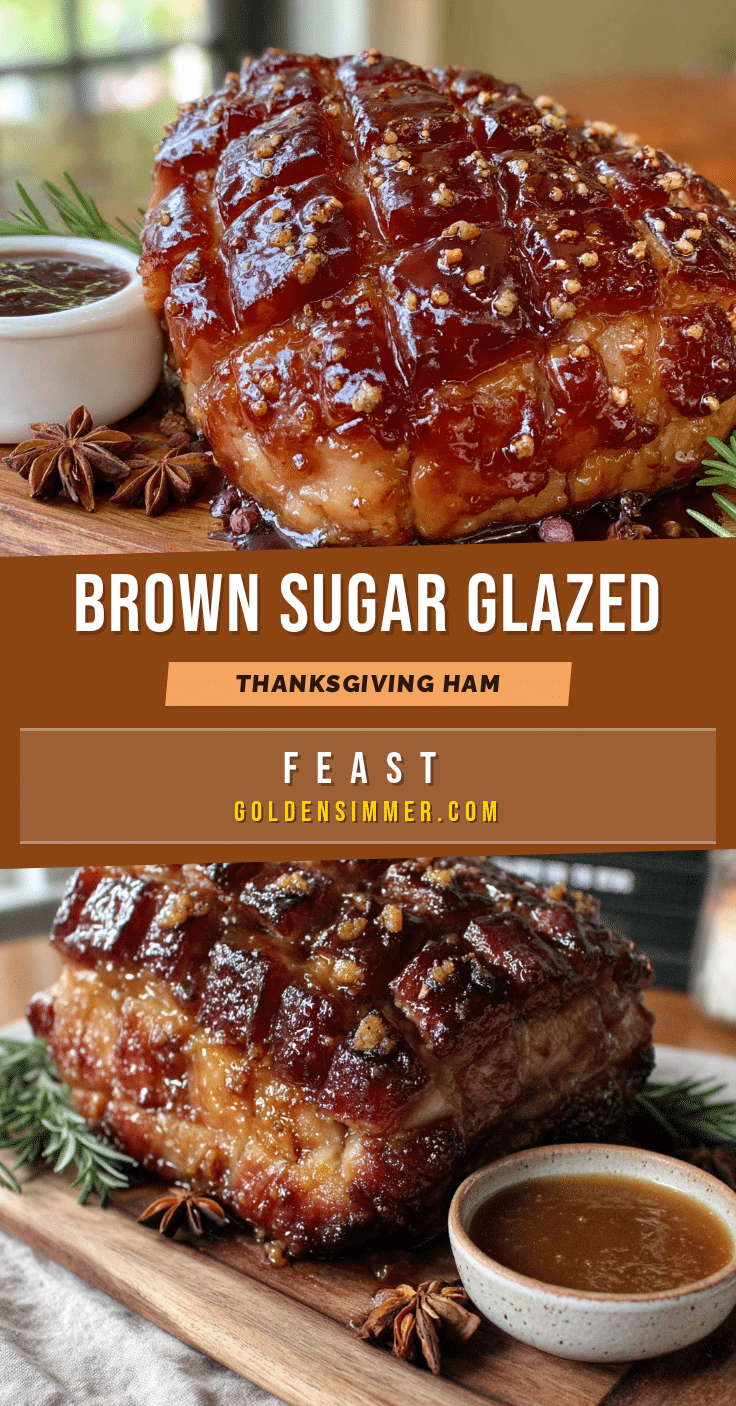
Best Brown Sugar Glazed Ham for Thanksgiving Dinner
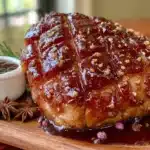
A sticky, sweet, and salty brown sugar glazed ham that turns a potential Thanksgiving disaster into a legendary centerpiece. This foolproof recipe creates a caramelized crust that will have everyone asking for seconds.
- Prep Time: 15 minutes
- Cook Time: 1 hour 50 minutes
- Total Time: 2 hours 5 minutes
- Yield: 12-16 servings 1x
- Category: Main Course
- Cuisine: American
Ingredients
- 1 (8-10 pound) bone-in, spiral-cut ham, fully cooked
- 1 ½ cups packed light brown sugar
- ¼ cup honey
- 2 tablespoons Dijon mustard
- 2 tablespoons whole-grain mustard
- ¼ cup unsalted butter
- 1 teaspoon ground cloves
- ½ teaspoon ground cinnamon
- ¼ cup apple cider vinegar
Instructions
- Preheat your oven to 325°F (163°C). Take the ham out of its packaging and pat it completely dry with paper towels. Place the ham, cut side down, on the rack in your roasting pan. Add about 1 cup of water to the bottom of the pan.
- If your ham isn’t spiral-cut, use a sharp knife to score the fat in a diamond pattern, about ¼-inch deep. If it’s spiral-cut, skip this step.
- Cover the ham loosely with aluminum foil and place it in the oven. Roast for about 10 minutes per pound, or until the internal temperature reaches 130°F (54°C). For an 8-pound ham, that’s about 1 hour and 20 minutes.
- While the ham is roasting, make the glaze. In a small saucepan over medium heat, combine the brown sugar, honey, Dijon mustard, whole-grain mustard, butter, ground cloves, cinnamon, and apple cider vinegar. Whisk until the butter is melted and the sugar is dissolved. Bring to a gentle simmer, then reduce heat to low. Cook for 3-5 minutes, stirring occasionally, until it thickens slightly. Remove from heat and set aside.
- After the first roast, remove the ham from the oven and increase the oven temperature to 400°F (204°C). Carefully brush about half of the glaze all over the ham, making sure to get it into the cuts between the slices. Return the ham to the oven, uncovered, and roast for another 15-20 minutes.
- After 15-20 minutes, take the ham out again and brush on the remaining glaze. Pop it back in the oven for another 15-20 minutes, until the glaze is bubbling, dark, and sticky.
- The ham is done when the internal temperature reaches 140°F (60°C). Use your meat thermometer to check in the thickest part of the meat, away from the bone. If it’s not there yet, give it another 5-10 minutes. If the glaze is getting too dark, tent it loosely with foil.
- Once the ham is done, remove it from the oven and let it rest for 15-20 minutes. Carve around the bone, arrange the slices on a platter, and spoon any pan juices over the top.
Notes
Pat the ham completely dry before glazing to ensure the glaze adheres. Apply the glaze in two layers for a thick, candy-like crust. Watch the sugar carefully during the final roasting to prevent burning. Let the ham rest for 15-20 minutes before carving to allow juices to redistribute. Spoon pan juices over sliced ham before serving.
Nutrition
- Serving Size: 4 ounces
- Calories: 375
- Sugar: 24
- Sodium: 1350
- Fat: 17.5
- Saturated Fat: 7
- Carbohydrates: 27.5
- Protein: 27.5
Keywords: brown sugar glazed ham, Thanksgiving ham, holiday ham, glazed ham, spiral ham, Easter ham