Love this? Save it for later!
Share the inspiration with your friends
There used to be a tiny Italian place tucked between a laundromat and a dusty antiques shop on the corner of 12th and Pine that made a pasta I still dream about. When they closed—suddenly, with a hand-written sign taped to the door—I actually felt a little hollow. That pasta, with its velvety squash and the haunting warmth of sage, became a ghost dish I chased for months. After twelve tries—twelve, including one where I accidentally used pumpkin pie spice because I grabbed the wrong jar—I finally got it. This Quick Fall Harvest Pasta is that exact memory, and honestly, it tastes even better than I remembered.
The first time I nailed it, I actually texted my friend Jen a photo with the caption “We’re back.” She didn’t get it, but you might. You know that feeling when a flavor just hits you right in the chest? That’s this dish. It’s not complicated—it’s a weeknight miracle that tastes like you spent hours stirring and simmering, when really, you just wanted dinner on the table before your kid’s homework meltdown or your own brain fog kicked in. I mean, I’ve made this while half-watching a Zoom meeting, and it still came out perfect. The key is letting the squash get those caramelized edges and letting the sage do its thing in hot butter—that’s where the magic lives. So grab a big pot, and let’s bring that little restaurant back to life in your kitchen.
Why You’ll Love This Recipe
Look, I’ve tested this one about a dozen times, tweaking the squash size, the sage amount, even the pasta shape. I wanted a fall pasta that felt special but didn’t demand a whole afternoon. This is it. Here’s why it works for real life:
- Quick & Easy: From cutting board to bowl in 20 minutes flat. Seriously, set a timer.
- Simple Ingredients: You probably have butter, pasta, and sage already. Just grab a butternut squash on the way home.
- Perfect for Weeknights: It’s cozy enough for a Tuesday but pretty enough for company. No stress either way.
- Crowd-Pleaser: My picky eater nephew asked for seconds. That never happens.
- Unbelievably Delicious: The creamy texture from the squash—without any actual cream—is pure fall comfort.
What makes this different from every other butternut squash pasta out there? It’s the technique. I roast the squash in a hot skillet instead of the oven, which saves time and builds deeper flavor. Plus, I toss the sage in at the very end so it stays fragrant, not burnt. This isn’t just another recipe—it’s the one you’ll actually make on a Wednesday when you’re tired and hungry and need something good fast.
What Ingredients You Will Need
This recipe uses simple, wholesome ingredients that come together fast. Most of these are pantry staples, and the fresh ones are easy to find at any grocery store. Here’s what you’ll need:
- Butternut squash, peeled and cut into ½-inch cubes (about 3 cups) – look for a squash that feels heavy for its size; that means it’s fresh and moist inside
- Olive oil, 2 tablespoons – I like California Olive Ranch for everyday cooking; it has a nice, mild flavor
- Unsalted butter, 3 tablespoons – using unsalted lets you control the salt level better
- Fresh sage leaves, 10-12 leaves, roughly chopped – don’t use dried here; fresh sage has that earthy, slightly peppery kick that makes this dish sing
- Garlic, 3 cloves, minced – fresh is best; skip the jarred stuff for this one
- Pasta, 8 ounces – I recommend short shapes like orecchiette, fusilli, or farfalle; they catch the squash pieces nicely
- Vegetable broth, ½ cup – keeps the pasta saucy without heavy cream; use low-sodium if you can
- Parmesan cheese, ½ cup grated, plus more for serving – Parmigiano-Reggiano if you’re feeling fancy; it melts like a dream
- Salt and black pepper, to taste – use flaky sea salt for finishing if you have it
- Red pepper flakes, optional, for a little heat – I add a pinch because I like the contrast with the sweet squash
If you’re out of fresh sage, you can use 1 teaspoon of dried rubbed sage, but honestly, fresh makes a big difference here. For a dairy-free version, swap the butter for vegan butter and use nutritional yeast instead of Parmesan. And if butternut squash feels like too much work, grab pre-cut cubes from the produce section—no judgment. I do it all the time when I’m in a hurry.
Equipment Needed
You don’t need fancy gear for this one. Here’s what I use:
- Large pot for boiling pasta – any 4- to 6-quart pot works
- Large skillet – a 12-inch non-stick or stainless steel skillet is perfect; cast iron works too, just watch the heat
- Sharp chef’s knife and cutting board – a good knife makes quick work of the squash
- Vegetable peeler – for peeling the squash; a Y-peeler is faster than a standard one
- Colander – for draining pasta
- Measuring spoons and cups
- Wooden spoon or spatula for stirring
If you don’t have a large skillet, use a wide saucepan instead. And if you’re short on time, buy pre-cut squash—it saves about 10 minutes of prep. I keep a good peeler handy because squash skin is tough, and a dull one just makes you mad.
Preparation Method
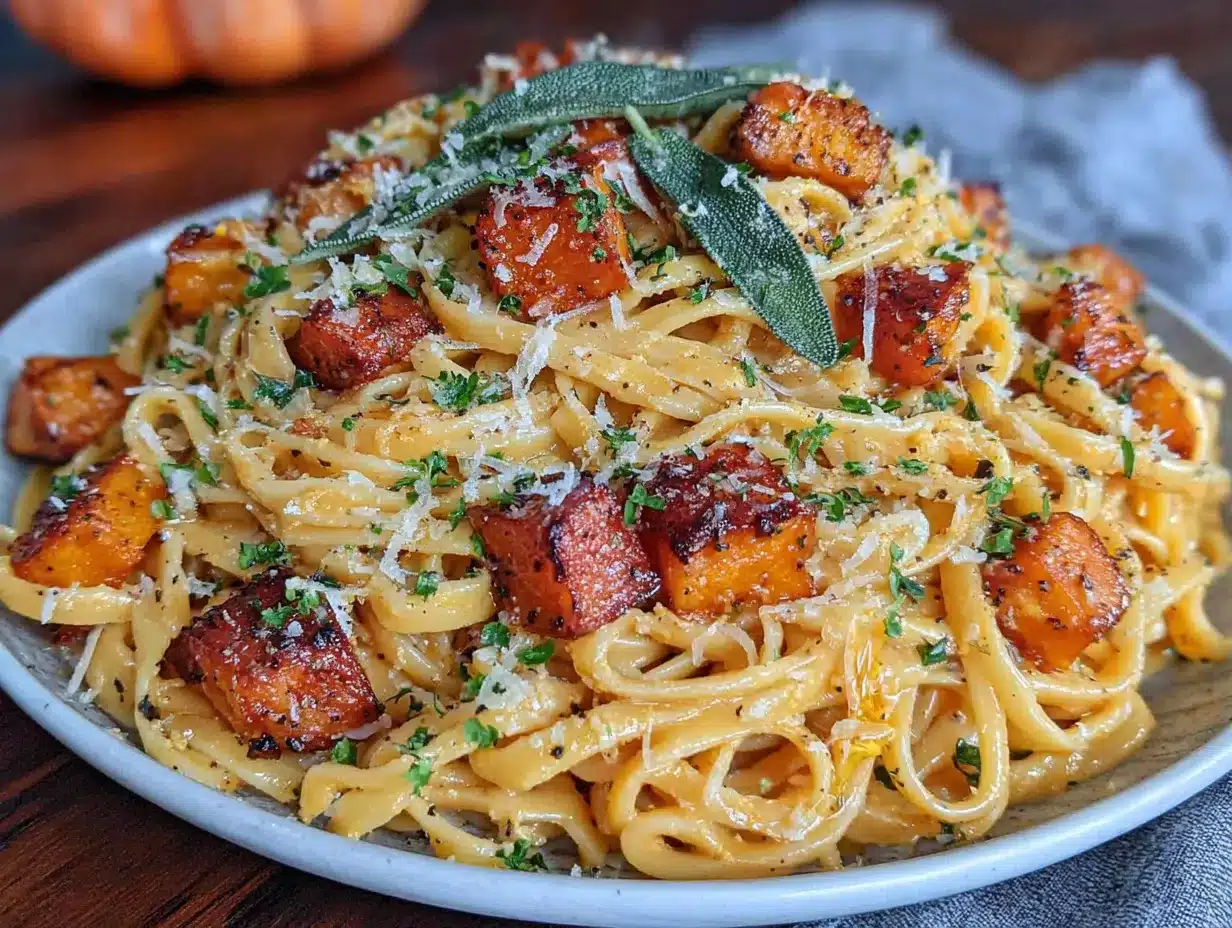
- Start the pasta water. Fill your large pot with water, add a generous pinch of salt, and bring it to a boil over high heat. While it heats, move on to the squash.
- Prep the squash. Peel the butternut squash with your vegetable peeler. Cut off the top and bottom, then slice it in half lengthwise. Scoop out the seeds with a spoon (save them for roasting later if you want). Cut the squash into ½-inch cubes. Aim for uniform pieces so they cook evenly.
- Cook the pasta. Once the water is boiling, add your pasta and cook according to package directions until al dente. Reserve about 1 cup of pasta water before draining, then drain the pasta and set it aside.
- Start the squash. While the pasta cooks, heat 2 tablespoons of olive oil in your large skillet over medium-high heat. Add the squash cubes in a single layer—don’t overcrowd the pan. Let them cook undisturbed for 4-5 minutes until they get golden brown on one side. Toss them and cook another 3-4 minutes. You want caramelized edges, not mushy pieces.
- Add the aromatics. Reduce the heat to medium. Add the butter to the skillet. Once it melts, toss in the chopped sage and minced garlic. Stir constantly for about 30 seconds until the garlic smells amazing and the sage is fragrant. Don’t let the garlic burn—it turns bitter fast.
- Make the sauce. Pour in the ½ cup of vegetable broth and scrape up any browned bits from the bottom of the pan. Let it simmer for 1-2 minutes until slightly reduced. The squash should be tender enough to mash lightly with a fork.
- Combine everything. Add the drained pasta to the skillet along with the grated Parmesan. Toss everything together gently. If the sauce seems too thick, add a splash of reserved pasta water—about ¼ cup—to loosen it up. Season with salt and pepper to taste.
- Finish and serve. Sprinkle with red pepper flakes if you like heat, and extra Parmesan on top. Serve immediately while it’s hot and creamy.
One thing I learned the hard way: don’t skip the pasta water. It’s liquid gold for making the sauce cling to every noodle. And if your squash isn’t browning, your pan might not be hot enough—give it another minute before you toss it.
Cooking Tips & Techniques
After all those test batches, here’s what I know for sure. First, cut your squash into even pieces. I know it’s tedious, but uneven cubes mean some turn to mush while others stay crunchy. Nobody wants that. Second, don’t crowd the pan. If you dump all the squash in at once, it steams instead of browning. Cook it in two batches if you have to—it’s worth the extra 2 minutes.
Here’s a mistake I made twice: adding the sage too early. Sage gets bitter when it burns, and it burns fast. Always add it with the butter and garlic, and keep stirring. The heat should be medium, not high. You want the butter to foam gently around the leaves. That’s when you know it’s right.
For multitasking, start your pasta water first, then prep the squash while it heats. By the time the water boils, your squash should be ready to go. If you’re really in a rush, use pre-cut squash and skip the peeling step entirely. I keep a bag in my freezer for nights when I just can’t.
Oh, and taste as you go. I know it sounds basic, but I’ve ruined dishes by oversalting at the end. Season the squash while it cooks, then adjust after you add the Parmesan (which is already salty). Your taste buds will thank you.
Variations & Adaptations
This recipe is flexible, and I’ve tried a few twists myself. Here are some ideas:
- Make it vegetarian (it already is!) or vegan: Use vegan butter and nutritional yeast or a plant-based Parmesan. The squash still gets creamy, and the sage carries the flavor.
- Add protein: Toss in some cooked Italian sausage or shredded rotisserie chicken at the end. I’ve done this on nights when I need more staying power, and it works great.
- Swap the squash: No butternut? Use sweet potato, acorn squash, or even pumpkin. Just cut them the same size and adjust cooking time slightly—sweet potatoes cook a little faster.
- Try different pasta shapes: I’ve used penne, rigatoni, and even spaghetti. Short shapes are best, but honestly, any pasta works. Just adjust the cooking time.
- Add greens: Stir in a handful of spinach or kale right at the end. It wilts in about 30 seconds and adds color and nutrients.
- Gluten-free option: Use your favorite gluten-free pasta. I like brown rice pasta for this—it holds up well and doesn’t get mushy.
One variation I love: swap half the butter for brown butter. It takes an extra 2 minutes, but the nutty flavor is incredible with the sage. Just watch it carefully so it doesn’t burn.
Serving & Storage Suggestions
Serve this pasta hot, straight from the skillet. I like it in wide, shallow bowls with extra Parmesan on top and a sprinkle of fresh sage if I have it. It’s perfect on its own, but a simple green salad with lemon vinaigrette balances the richness nicely. A glass of crisp white wine—like a Sauvignon Blanc—or even a hard cider pairs beautifully.
For leftovers, let the pasta cool completely, then transfer it to an airtight container. It keeps in the fridge for up to 4 days. The flavors actually meld together overnight, so it might taste even better the next day. To reheat, add a splash of water or broth to a skillet and warm it over medium heat, stirring gently. You can also microwave it in 30-second bursts, but the texture is better on the stovetop.
I don’t recommend freezing this one—the squash gets watery when thawed, and the pasta turns mushy. But if you have a huge batch, freeze the sauce separately and cook fresh pasta later. That works fine.
Nutritional Information & Benefits
Per serving (about 1.5 cups), this recipe delivers roughly:
- Calories: 420
- Protein: 12g
- Carbohydrates: 55g
- Fat: 18g
- Fiber: 6g
- Sugar: 8g
Butternut squash is packed with vitamin A (great for your eyes and immune system) and fiber, which keeps you full. Sage has anti-inflammatory properties, and olive oil provides healthy fats. This dish is naturally vegetarian and can be made vegan or gluten-free with simple swaps. It’s also nut-free and egg-free, making it safe for most allergies. I love that it feels indulgent but is actually pretty balanced—comfort food that doesn’t weigh you down.
Conclusion
This Quick Fall Harvest Pasta is the kind of recipe you’ll come back to all season long. It’s fast enough for a frantic Tuesday, but it tastes like something you’d order at that little restaurant you miss. The caramelized squash, the fragrant sage, the creamy sauce without any cream—it all comes together in 20 minutes, and that’s no small thing on a busy night.
I hope you make it your own. Add a little heat, toss in some greens, or double the sage if you’re bold. Cooking should feel like play, not pressure. And if you try it, I’d love to hear how it goes. Leave a comment below or tag me in your photos—I genuinely get excited when someone makes one of my recipes. Now go grab that squash and get cooking. Your weeknight dinner just got a whole lot cozier.
Frequently Asked Questions
Can I use frozen butternut squash for this recipe?
Yes, but thaw it first and pat it dry with paper towels. Frozen squash holds more water, so it won’t brown as well, but it still tastes great. Just cook it a few minutes longer to evaporate the extra moisture.
What if I don’t have fresh sage?
You can use 1 teaspoon of dried rubbed sage, but the flavor will be milder. Fresh sage really makes this dish shine, so I recommend grabbing a bunch if you can. It keeps in the fridge for over a week.
Can I make this ahead of time?
You can prep the squash up to 2 days ahead and store it in the fridge. Cook the pasta and sauce just before serving for the best texture. Leftovers reheat well, though, so don’t worry if you have extra.
Is this recipe gluten-free?
It can be! Just use your favorite gluten-free pasta. I’ve tried brown rice pasta and chickpea pasta—both work well. The rest of the ingredients are naturally gluten-free.
How do I prevent the squash from getting mushy?
Cut the squash into even ½-inch cubes and cook it in a single layer over medium-high heat. Don’t stir it too much—let it sit and develop those caramelized edges. Overcrowding the pan is the main culprit for mushy squash.
Pin This Recipe!
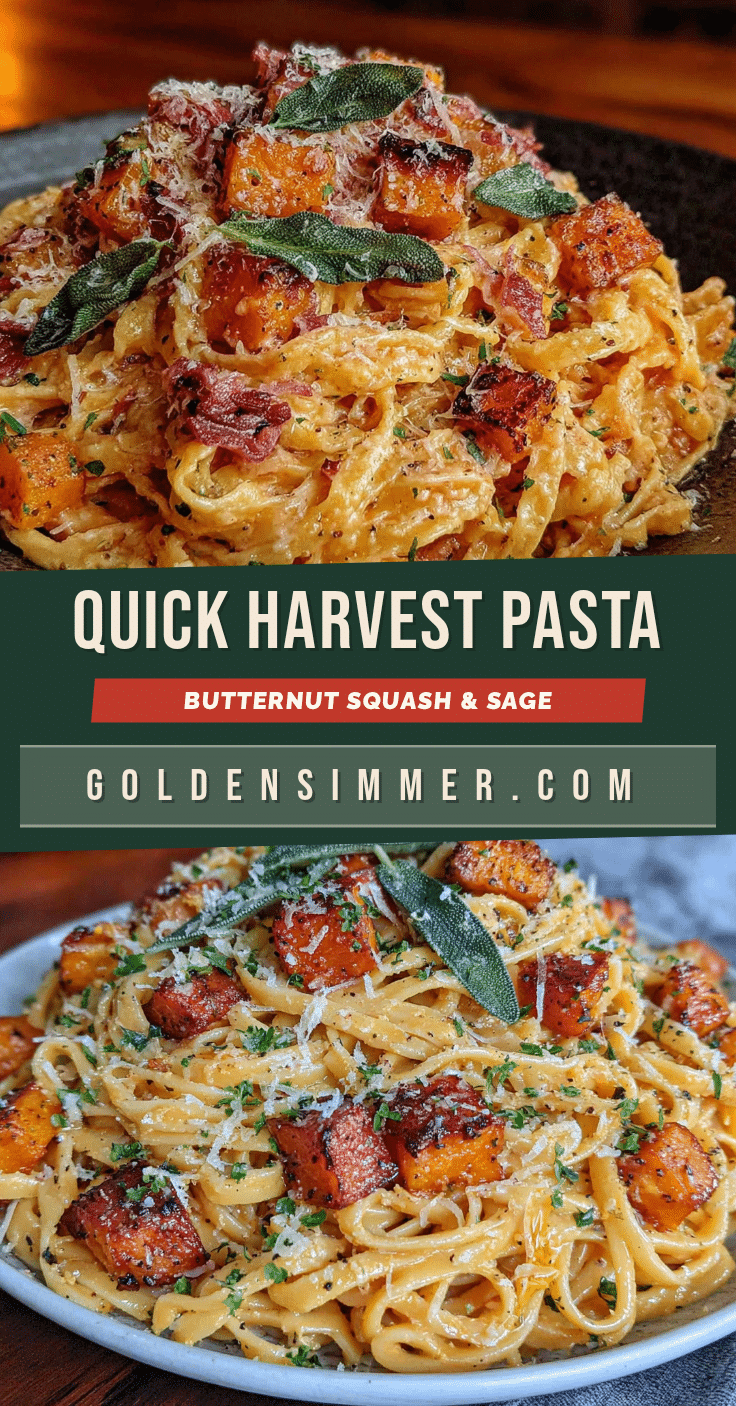
Easy Fall Harvest Pasta: Butternut Squash & Sage in 20 Min
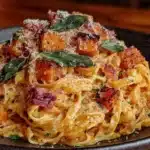
A quick and easy fall pasta featuring caramelized butternut squash and fragrant sage, ready in just 20 minutes. This weeknight miracle tastes like it took hours, with a creamy texture from the squash without any cream.
- Prep Time: 10 minutes
- Cook Time: 10 minutes
- Total Time: 20 minutes
- Yield: 4 servings
- Category: Main Course
- Cuisine: Italian
Ingredients
- Butternut squash, peeled and cut into ½-inch cubes (about 3 cups)
- Olive oil, 2 tablespoons
- Unsalted butter, 3 tablespoons
- Fresh sage leaves, 10-12 leaves, roughly chopped
- Garlic, 3 cloves, minced
- Pasta (short shapes like orecchiette, fusilli, or farfalle), 8 ounces
- Vegetable broth, ½ cup
- Parmesan cheese, ½ cup grated, plus more for serving
- Salt and black pepper, to taste
- Red pepper flakes, optional, for a little heat
Instructions
- Start the pasta water. Fill your large pot with water, add a generous pinch of salt, and bring it to a boil over high heat.
- Prep the squash. Peel the butternut squash with your vegetable peeler. Cut off the top and bottom, then slice it in half lengthwise. Scoop out the seeds with a spoon. Cut the squash into ½-inch cubes.
- Cook the pasta. Once the water is boiling, add your pasta and cook according to package directions until al dente. Reserve about 1 cup of pasta water before draining, then drain the pasta and set it aside.
- Start the squash. While the pasta cooks, heat 2 tablespoons of olive oil in your large skillet over medium-high heat. Add the squash cubes in a single layer. Let them cook undisturbed for 4-5 minutes until they get golden brown on one side. Toss them and cook another 3-4 minutes.
- Add the aromatics. Reduce the heat to medium. Add the butter to the skillet. Once it melts, toss in the chopped sage and minced garlic. Stir constantly for about 30 seconds until fragrant.
- Make the sauce. Pour in the ½ cup of vegetable broth and scrape up any browned bits from the bottom of the pan. Let it simmer for 1-2 minutes until slightly reduced.
- Combine everything. Add the drained pasta to the skillet along with the grated Parmesan. Toss everything together gently. If the sauce seems too thick, add a splash of reserved pasta water—about ¼ cup—to loosen it up. Season with salt and pepper to taste.
- Finish and serve. Sprinkle with red pepper flakes if you like heat, and extra Parmesan on top. Serve immediately.
Notes
Don’t skip the pasta water—it helps the sauce cling to the pasta. For best results, cut squash into even pieces and don’t crowd the pan. Add sage at the end to prevent bitterness. Season squash while cooking, then adjust after adding Parmesan.
Nutrition
- Serving Size: 1.5 cups
- Calories: 420
- Sugar: 8
- Sodium: 480
- Fat: 18
- Saturated Fat: 8
- Carbohydrates: 55
- Fiber: 6
- Protein: 12
Keywords: butternut squash pasta, fall pasta, quick pasta, sage pasta, weeknight dinner, harvest pasta