Love this? Save it for later!
Share the inspiration with your friends
My sister swore she hated salmon for a solid decade. Ten years. She’d make that face—you know the one—every time someone mentioned it at the dinner table. Then last April, I showed up at her place with this spring honey garlic salmon, claiming I was just “testing a recipe for the blog” and needed a taste tester. She ate two servings. I caught her scraping the garlic butter sauce off the pan with a piece of bread when she thought I wasn’t looking. I didn’t say a word. Some victories are best enjoyed quietly.
Honestly, I get the salmon skepticism. I’ve had my share of dry, fishy fillets that made me question why anyone bothered. But this version? It’s different. The honey garlic glaze caramelizes into this sticky, sweet-savory coating that locks in moisture while the asparagus roasts right alongside, soaking up all those juices. It’s the kind of meal that makes you wonder why you ever complicated dinner in the first place.
The best part? This whole thing comes together on a single sheet pan. No juggling multiple pots, no standing over a hot stove, no mountain of dishes afterward. It’s spring on a pan—bright, fresh, and ridiculously easy. Maybe you’ve been burned by bad salmon before. I get it. But let me tell you, this one has converted more skeptics than I can count. My sister’s just the latest.
Why You’ll Love This Recipe
I’ve tested this spring honey garlic salmon at least a dozen times over the past two years, tweaking the glaze ratio, adjusting the oven temperature, and figuring out the exact moment to add the asparagus so everything finishes perfectly together. This is the version I keep coming back to, and here’s why it works:
- Ready in 30 Minutes : From fridge to table in half an hour, which means it’s absolutely doable on a busy Tuesday when you’re tempted to order takeout.
- Simple Pantry Ingredients : Honey, garlic, soy sauce, and salmon—you probably have most of this already. No specialty grocery runs required.
- Perfect for Spring Entertaining : Whether it’s Easter brunch, a Mother’s Day lunch, or just a dinner that celebrates the season, this dish looks impressive without the stress.
- One Pan, Zero Fuss : Sheet pan dinners are my secret weapon for entertaining. You get restaurant-quality results with dishwasher-level cleanup.
- Crowd-Pleasing Flavor : The honey garlic combo is universally loved, and even self-proclaimed salmon haters (like my sister) come back for seconds.
This recipe isn’t just good—it’s the kind that makes you close your eyes after the first bite. The salmon stays buttery and tender, the asparagus gets those gorgeous caramelized edges, and the sauce reduces into something that belongs on everything you eat for the rest of the week. It’s comfort food reimagined for spring, and honestly, it’s the best version of sheet pan salmon I’ve ever made.
Ingredients Needed
This recipe uses simple, fresh ingredients that work together to create something genuinely special. Here’s what you’ll need:
For the Salmon & Glaze
- 4 salmon fillets (6 oz each) , skin on or off—your preference (I leave the skin on for extra crispiness and moisture retention)
- 1/4 cup honey , preferably local and runny (adds natural sweetness and helps the glaze caramelize beautifully)
- 3 tablespoons low-sodium soy sauce (I use Tamari for a gluten-free option—works perfectly)
- 4 cloves garlic , minced fresh (don’t use jarred here—fresh makes a noticeable difference in the glaze)
- 2 tablespoons olive oil , plus extra for drizzling
- 1 tablespoon fresh lemon juice (about half a lemon—bottled won’t give you the same brightness)
- 1 teaspoon grated fresh ginger (optional but highly recommended—adds warmth that balances the honey)
- Salt and black pepper , to taste
For the Asparagus
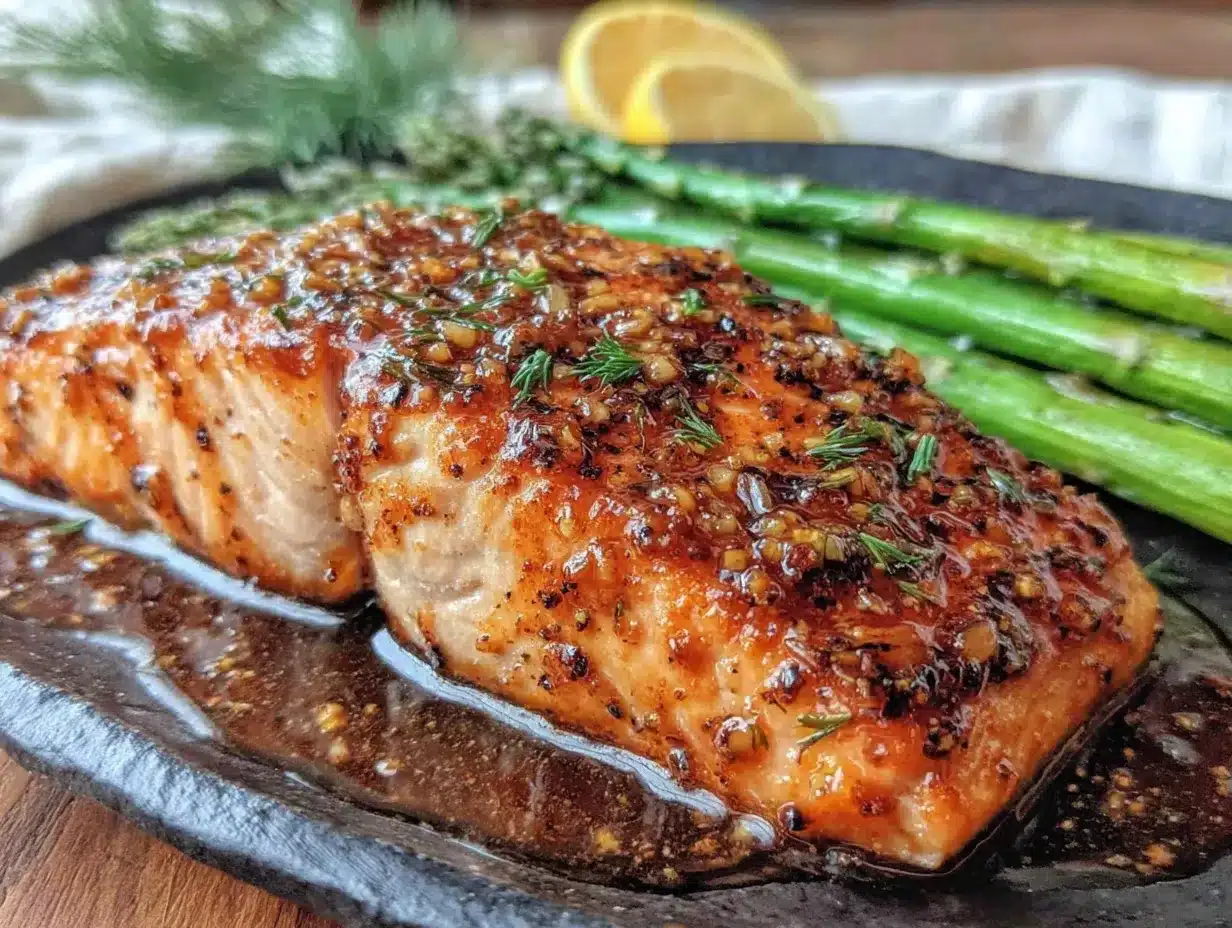
- 1 bunch asparagus (about 1 pound), woody ends trimmed (snap off the ends naturally—they’ll break where the tough part ends)
- 1 tablespoon olive oil
- Salt and black pepper , to taste
- Optional: red pepper flakes for a tiny kick of heat
For Garnish (Optional but Pretty)
- Sesame seeds , toasted
- Fresh parsley or chives , chopped
- Lemon wedges , for squeezing at the table
I recommend using wild-caught salmon if your budget allows—it has a firmer texture and cleaner flavor that really shines here. But honestly, good-quality farmed salmon works beautifully too. Just look for fillets that are bright in color and smell fresh, not fishy. For the asparagus, thicker spears hold up better to roasting and won’t turn mushy.
Equipment Needed
You don’t need much for this recipe, which is part of the beauty:
- Large sheet pan (half-sheet size, about 18×13 inches—rimmed edges are important to catch the glaze)
- Parchment paper or aluminum foil (parchment makes cleanup even easier and prevents sticking)
- Small bowl for whisking the glaze together
- Chef’s knife and cutting board for trimming asparagus and mincing garlic
- Measuring spoons (honestly, I eyeball the honey and soy sauce now, but measuring helps the first time)
- Fish spatula (if you have one—it makes flipping or serving salmon much easier without breaking the fillets)
If you don’t have a fish spatula, a thin metal spatula works fine. And if your sheet pan is smaller than recommended, just use two pans or work in batches—crowding the pan leads to steaming instead of roasting.
Preparation Method
Let me walk you through this step by step. I’ve made this more times than I can count, so I’ll share the little tricks I’ve picked up along the way.
Step 1: Preheat and Prep
Preheat your oven to 400°F (200°C). Line your sheet pan with parchment paper or foil for easy cleanup. While the oven heats, pat your salmon fillets dry with paper towels—this helps the glaze stick and promotes better caramelization. Season both sides lightly with salt and pepper.
Step 2: Make the Honey Garlic Glaze
In a small bowl, whisk together the honey, soy sauce, minced garlic, olive oil, lemon juice, and grated ginger (if using). Taste it. You want a balance of sweet, salty, and tangy—adjust with a little more lemon if it feels too sweet, or more honey if it’s too sharp. Set aside about 2 tablespoons of the glaze for brushing later.
Step 3: Prep the Asparagus
Trim the woody ends off the asparagus—just bend each spear near the bottom until it snaps naturally; that’s where the tough part ends. Toss the asparagus with 1 tablespoon olive oil, a pinch of salt, and some black pepper. Spread them on one side of the prepared sheet pan.
Step 4: Arrange the Salmon
Place the salmon fillets on the other side of the sheet pan, skin-side down if you left the skin on. Brush each fillet generously with the honey garlic glaze, reserving the extra for later basting.
Step 5: Roast Everything Together
Roast for 12-15 minutes, depending on the thickness of your salmon. At the 8-minute mark, brush the salmon with the reserved glaze and give the asparagus a quick toss. The salmon is done when it flakes easily with a fork and the internal temperature reaches 145°F (63°C). The asparagus should be tender-crisp with lightly browned edges.
Step 6: Broil for Extra Caramelization (Optional)
If you want that gorgeous, sticky glaze with slightly charred edges, switch the oven to broil for the last 1-2 minutes. Watch it carefully—honey burns fast. I learned this the hard way when I walked away to answer the phone and came back to smoky kitchen. Trust me, keep an eye on it.
Step 7: Garnish and Serve
Remove from the oven, sprinkle with sesame seeds and fresh herbs, and squeeze a lemon wedge over everything. The brightness really wakes up the dish. Serve immediately while the salmon is still warm and the glaze is sticky.
Cooking Tips & Techniques
After making this spring honey garlic salmon more times than I care to count, I’ve collected a few hard-won lessons:
Don’t Overcook the Salmon. This is the number one mistake I see people make. Salmon continues cooking for a minute or two after you pull it from the oven, so take it out when it’s just barely flaking at the thickest part. A slightly undercooked center is way better than dry, chalky fish. I’ve ruined plenty of expensive fillets learning this lesson.
Space Everything Out. If your asparagus and salmon are crowded together on the pan, they’ll steam instead of roast. Give them room to breathe. If you have to use two pans, do it—it’s worth the extra minute of cleanup.
Watch the Broiler Like a Hawk. I cannot stress this enough. Honey-based glazes go from perfectly caramelized to burnt in about 30 seconds. Set a timer, pull up a chair, and don’t wander off. I lost a beautiful batch to a phone call last spring and still haven’t fully recovered.
Room Temperature Ingredients Help. Let your salmon sit out for 10-15 minutes before cooking. Cold fish straight from the fridge cooks unevenly—the outside can overcook while the center stays raw. This little step makes a bigger difference than you’d think.
Double the Glaze if You Love Sauce. The recipe as written gives you just enough for brushing. If you’re like me and want extra to drizzle over rice or quinoa at the table, make a second batch. Just don’t use the raw glaze that touched the raw salmon as a finishing sauce—set aside some before brushing.
Variations & Adaptations
This recipe is wonderfully flexible. Here are some ways I’ve adapted it over the years:
Gluten-Free Version: Swap the soy sauce for tamari or coconut aminos. The flavor profile stays almost identical, and it works beautifully. I make this version for my friend who has celiac, and she never feels like she’s missing out.
Spicy Honey Garlic Salmon: Add 1/2 teaspoon of red pepper flakes or a tablespoon of sriracha to the glaze. The heat cuts through the sweetness and adds a lovely warmth. My husband requests this version every time spring rolls around.
Low-Carb/Keto Adaptation: Replace the honey with a sugar-free honey alternative or use monk fruit sweetener. The texture changes slightly, but the flavor is still excellent. Serve with extra asparagus or a side salad instead of rice.
Different Vegetables: Asparagus is perfect for spring, but this glaze works with almost any roasted vegetable. Try broccoli, green beans, snap peas, or even thinly sliced zucchini. Adjust roasting times based on the vegetable you choose.
Air Fryer Method: Cook the salmon in an air fryer at 375°F (190°C) for 8-10 minutes. Cook the asparagus separately for 5-7 minutes. The glaze gets even stickier and more caramelized in the air fryer—it’s my go-to when I don’t want to heat up the whole kitchen.
Maple Garlic Variation: Substitute maple syrup for honey for a slightly earthier sweetness. It’s especially good in late spring when you’re transitioning into summer flavors. I tried this on a whim when I ran out of honey, and honestly, it might be my new favorite.
Serving & Storage Suggestions
This spring honey garlic salmon is best served warm, straight from the oven, when the glaze is still glossy and the asparagus is tender-crisp. I love plating it over a bed of fluffy rice, quinoa, or even creamy mashed potatoes to soak up all that extra sauce. A simple side salad with a lemon vinaigrette completes the meal beautifully.
For a spring brunch or dinner party, arrange the salmon and asparagus on a large platter, garnish generously with sesame seeds and fresh herbs, and let guests serve themselves. It’s one of those dishes that looks far more complicated than it actually is—your guests will think you spent hours in the kitchen.
Storage: Leftovers keep well in an airtight container in the refrigerator for up to 3 days. The asparagus will soften over time, but the flavor remains delicious. I actually love cold leftovers flaked over a salad the next day for lunch.
Reheating: The best way to reheat is in a 300°F (150°C) oven for about 5-7 minutes, just until warmed through. The microwave works in a pinch, but it can dry out the salmon and make the asparagus mushy. If you’re in a hurry, flake the cold salmon into a warm pan with a little butter and heat gently—it’s not pretty, but it tastes great.
Freezing: I don’t recommend freezing the fully cooked dish, as the texture of both the salmon and asparagus will suffer. However, you can freeze the raw salmon in the glaze for up to 3 months. Thaw overnight in the refrigerator and roast as directed.
Nutritional Information & Benefits
Each serving of this spring honey garlic salmon (one fillet plus asparagus) contains approximately:
- Calories: 420-450
- Protein: 38-40g
- Fat: 18-20g (mostly healthy omega-3s from the salmon)
- Carbohydrates: 22-25g (from honey and natural sugars)
- Fiber: 3-4g
- Sugar: 18-20g (mostly from honey)
Salmon is one of the best sources of omega-3 fatty acids, which support heart health and reduce inflammation. Asparagus is packed with folate, vitamin K, and antioxidants—it’s basically spring’s multivitamin. The honey provides quick energy and natural sweetness without refined sugar, while garlic and ginger offer immune-boosting properties.
This recipe is naturally gluten-free (with tamari), dairy-free, and can be adapted for low-carb diets. It’s also relatively low in saturated fat and high in protein, making it a satisfying, nutrient-dense meal that fits into most balanced eating patterns.
Conclusion
This spring honey garlic salmon has become my go-to for so many reasons. It’s quick enough for a weeknight, impressive enough for company, and flexible enough to adapt to whatever’s in your fridge. But more than that, it’s the recipe that proved me wrong about what sheet pan dinners could be—and converted my sister in the process.
I love that it celebrates the best of spring produce without demanding hours in the kitchen. The honey garlic glaze is the kind of simple magic that makes you feel like a real chef, even on a Tuesday night when you’re tired and hungry. And honestly? Watching someone take that first bite and realize salmon doesn’t have to be dry or boring—that never gets old.
I’d love to hear how this turns out for you. Did you try a variation? Did your own salmon skeptic come around? Drop a comment below and let me know—I read every single one. And if you share a photo on Pinterest or Instagram, tag me so I can see your beautiful spring creation. Happy cooking, friends!
Frequently Asked Questions
Can I use frozen salmon for this recipe?
Yes, but thaw it completely in the refrigerator first (overnight is best). Pat it very dry before glazing, as frozen salmon tends to release more water during cooking. You may need to add 2-3 minutes to the roasting time.
How do I know when the salmon is perfectly cooked?
The easiest test is to gently press the top of the fillet with a fork—it should flake apart easily but still look slightly translucent in the center. For accuracy, use an instant-read thermometer: 145°F (63°C) at the thickest part. Remember, it will continue cooking for a minute after you take it out.
Can I make this recipe dairy-free?
Absolutely. The recipe as written is already dairy-free—there’s no butter or cream involved. Just double-check your soy sauce (some brands add dairy) or use tamari to be safe.
What can I serve with this besides rice?
So many options! Try quinoa, couscous, mashed potatoes, cauliflower rice, or a simple green salad. Crusty bread is also amazing for soaking up the extra honey garlic sauce. In spring, I love serving it with roasted new potatoes or a light orzo salad.
Can I prep this ahead of time?
You can whisk the glaze up to 3 days ahead and store it in the fridge. You can also trim the asparagus and portion the salmon the night before. However, I don’t recommend glazing the salmon more than 30 minutes before cooking, as the acid in the lemon juice can start to “cook” the fish and change its texture.
Pin This Recipe!
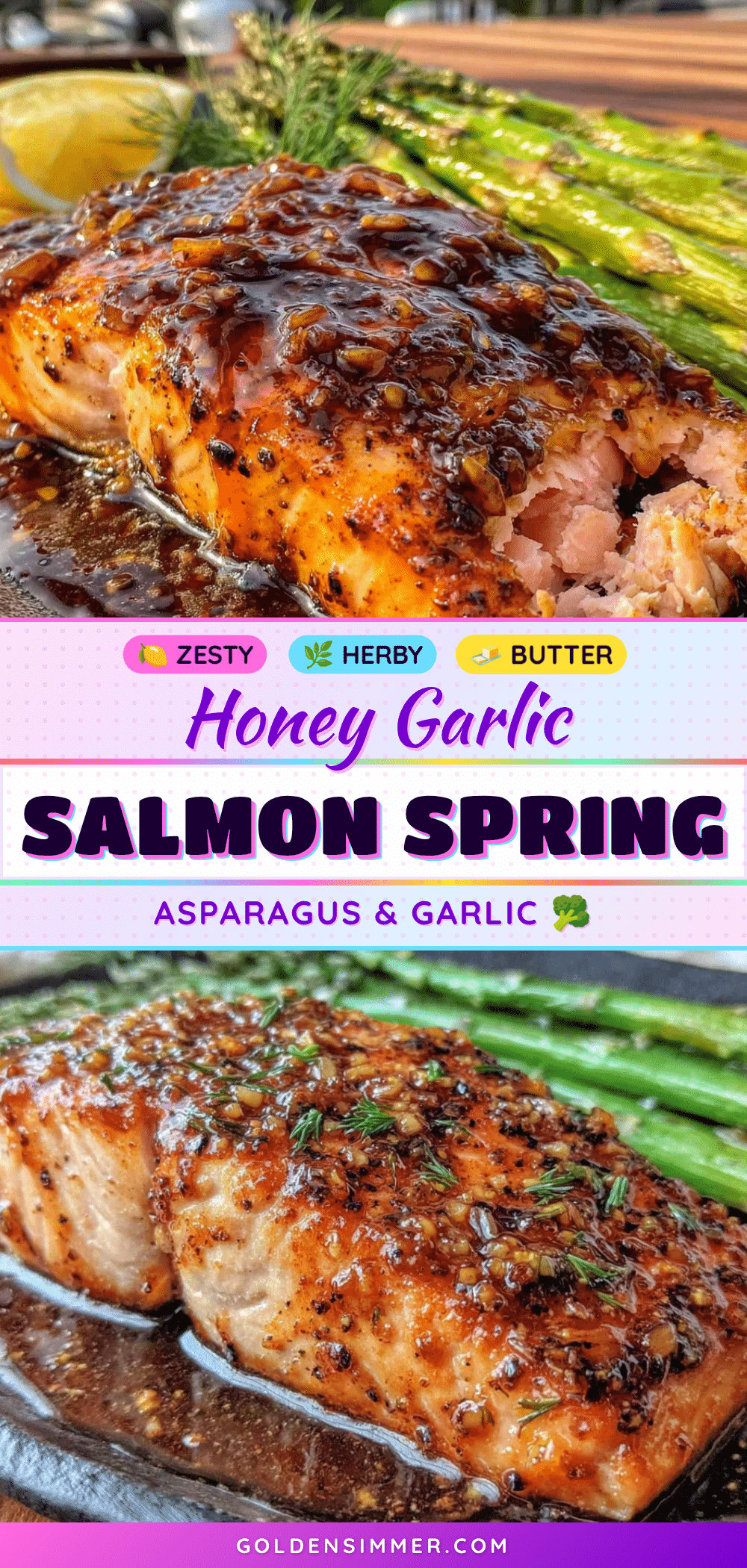
Spring Honey Garlic Salmon Easy Sheet Pan Dinner
A quick and easy sheet pan dinner featuring honey garlic glazed salmon and roasted asparagus, ready in 30 minutes. Perfect for busy weeknights or spring entertaining, this dish converts even the most skeptical salmon haters.
- Prep Time: 10 minutes
- Cook Time: 15 minutes
- Total Time: 25 minutes
- Yield: 4 servings 1x
- Category: Main Course
- Cuisine: American
Ingredients
- 4 salmon fillets (6 oz each), skin on or off
- 1/4 cup honey
- 3 tablespoons low-sodium soy sauce (or tamari for gluten-free)
- 4 cloves garlic, minced
- 2 tablespoons olive oil, plus extra for drizzling
- 1 tablespoon fresh lemon juice
- 1 teaspoon grated fresh ginger (optional)
- Salt and black pepper, to taste
- 1 bunch asparagus (about 1 pound), woody ends trimmed
- 1 tablespoon olive oil
- Salt and black pepper, to taste
- Optional: red pepper flakes
- Sesame seeds, toasted (for garnish)
- Fresh parsley or chives, chopped (for garnish)
- Lemon wedges (for serving)
Instructions
- Preheat oven to 400°F (200°C). Line a large sheet pan with parchment paper or foil.
- Pat salmon fillets dry with paper towels. Season both sides lightly with salt and pepper.
- In a small bowl, whisk together honey, soy sauce, minced garlic, olive oil, lemon juice, and grated ginger (if using). Set aside about 2 tablespoons of the glaze for later basting.
- Trim woody ends off asparagus by bending each spear near the bottom until it snaps naturally. Toss asparagus with 1 tablespoon olive oil, salt, and pepper. Spread on one side of the prepared sheet pan.
- Place salmon fillets on the other side of the sheet pan, skin-side down if skin is on. Brush each fillet generously with the honey garlic glaze.
- Roast for 12-15 minutes, depending on thickness. At the 8-minute mark, brush salmon with reserved glaze and toss asparagus. Salmon is done when it flakes easily with a fork and internal temperature reaches 145°F (63°C).
- Optional: Switch oven to broil for the last 1-2 minutes for extra caramelization. Watch carefully to prevent burning.
- Remove from oven. Sprinkle with sesame seeds and fresh herbs. Squeeze lemon wedges over everything. Serve immediately.
Notes
Let salmon sit at room temperature for 10-15 minutes before cooking for even cooking. Double the glaze if you want extra for serving. Watch the broiler carefully as honey burns quickly. Leftovers keep in the refrigerator for up to 3 days. Reheat in a 300°F oven for 5-7 minutes.
Nutrition
- Serving Size: 1 salmon fillet plus
- Calories: 420450
- Sugar: 1820
- Sodium: 600700
- Fat: 1820
- Saturated Fat: 34
- Carbohydrates: 2225
- Fiber: 34
- Protein: 3840
Keywords: honey garlic salmon, sheet pan dinner, spring salmon, easy salmon recipe, roasted asparagus, 30 minute meal