Love this? Save it for later!
Share the inspiration with your friends
“You know that feeling when a simple lunch turns into a small celebration? That’s exactly what happened one rainy Saturday afternoon when I stumbled upon this fresh Danish smørrebrød open-face sandwich recipe. I was wandering through a little European food market in my neighborhood, hoping to find something quick but satisfying. There, at a tiny stall, an elderly vendor was quietly assembling these beautiful open-faced sandwiches with such care and a sparkle in her eyes. It wasn’t a fancy restaurant or a tourist hotspot—just a humble cart with a cracked wooden cutting board and a stack of rye bread.
She shared a few tips as she worked, letting me try a bite of her signature smørrebrød topped with pickled herring, fresh dill, and radishes. Honestly, I wasn’t expecting much at first, but that first taste transported me straight to Copenhagen’s cozy cafés. The way the dense rye bread paired with bright, fresh toppings was unlike anything I’d had before.
Back in my kitchen later that day, I tried to recreate that magic. I made a mess, forgot the mustard dressing the first time, and had to run back to the market for fresh dill, but that fresh Danish smørrebrød recipe stuck with me. It’s easy, colorful, and honestly, it feels like an art form on a slice of bread. Maybe you’ve been there—looking for a meal that’s both simple and sophisticated, that somehow makes you slow down and savor every bite. This recipe does just that, and I’m thrilled to share it with you!
Why You’ll Love This Recipe
Let me tell you why this fresh Danish smørrebrød recipe has become a staple in my kitchen. After testing countless variations, here’s what makes this open-face sandwich truly stand out:
- Quick & Easy: Comes together in under 20 minutes, perfect for busy lunches or spontaneous gatherings.
- Simple Ingredients: Uses pantry and market staples, no exotic items required—you probably already have what you need.
- Perfect for Entertaining: Great for brunches, casual dinners, or impressing guests with minimal effort.
- Crowd-Pleaser: The balance of textures and flavors always gets rave reviews, even from picky eaters.
- Unbelievably Delicious: The combination of hearty rye, fresh veggies, and a tangy dressing delivers that perfect bite every time.
This isn’t just another sandwich. What sets this recipe apart is its respect for tradition with a modern twist—like swapping out heavy mayonnaise for a light mustard dressing that adds zing without weighing you down. And the layering? It’s an artful balance that lets each ingredient shine through. Honestly, it’s comfort food with a bright, fresh personality.
Whether you’re looking to shake up your lunch routine or want a show-stopping dish that’s easy to share, this open-face smørrebrød recipe is your new go-to. Trust me, once you try it, you’ll find yourself making it again and again.
What Ingredients You Will Need
This recipe uses simple, wholesome ingredients to deliver bold flavor and satisfying texture without the fuss. Most of these are pantry staples or easy to find at your local grocery or farmers market.
- Rye Bread: Dense, hearty, and slightly sour—look for Danish-style or pumpernickel for authenticity.
- Butter: Unsalted and softened, for spreading on the bread base to add richness.
- Pickled Herring: Classic topping with a tangy kick. Alternatively, smoked salmon works beautifully.
- Hard-Boiled Eggs: Sliced thinly, adds creamy texture and protein.
- Fresh Dill: Finely chopped, brings a bright herbal note. I prefer fresh from the farmers market.
- Radishes: Thinly sliced for crunch and subtle pepperiness.
- Red Onion: Thinly sliced, soaked briefly in cold water to mellow sharpness.
- Capers: For salty bursts, optional but highly recommended.
- Mustard Sauce: Made with Dijon mustard, a bit of vinegar, and a touch of honey for balancing flavors.
- Fresh Lemon Juice: A squeeze for brightness.
- Sea Salt & Freshly Ground Black Pepper: To taste.
For substitutions, you can swap out the rye bread for gluten-free bread if needed, and use dairy-free butter alternatives to make this recipe vegan-friendly (just replace the herring with marinated roasted vegetables). I personally like Ryvita brand rye crackers for a crisp crunch on busy days, but fresh bread is best for the authentic experience.
Equipment Needed
- A sharp bread knife for slicing rye bread evenly—makes a big difference in presentation.
- A small mixing bowl to whisk together the mustard dressing.
- A cutting board for chopping and assembling ingredients.
- A vegetable peeler or mandoline for thinly slicing radishes and onions—if you don’t have one, a sharp knife works fine too.
- Hard boiling eggs: a medium saucepan with a lid.
- Optional: a small brush for spreading butter evenly.
I once tried assembling smørrebrød without a sharp knife and ended up with a crumbly mess. Lesson learned: good tools make your life easier and your sandwich prettier. If you’re on a budget, these items don’t have to be fancy—just functional. A sturdy cutting board and a decent chef’s knife will serve you well for years.
Preparation Method
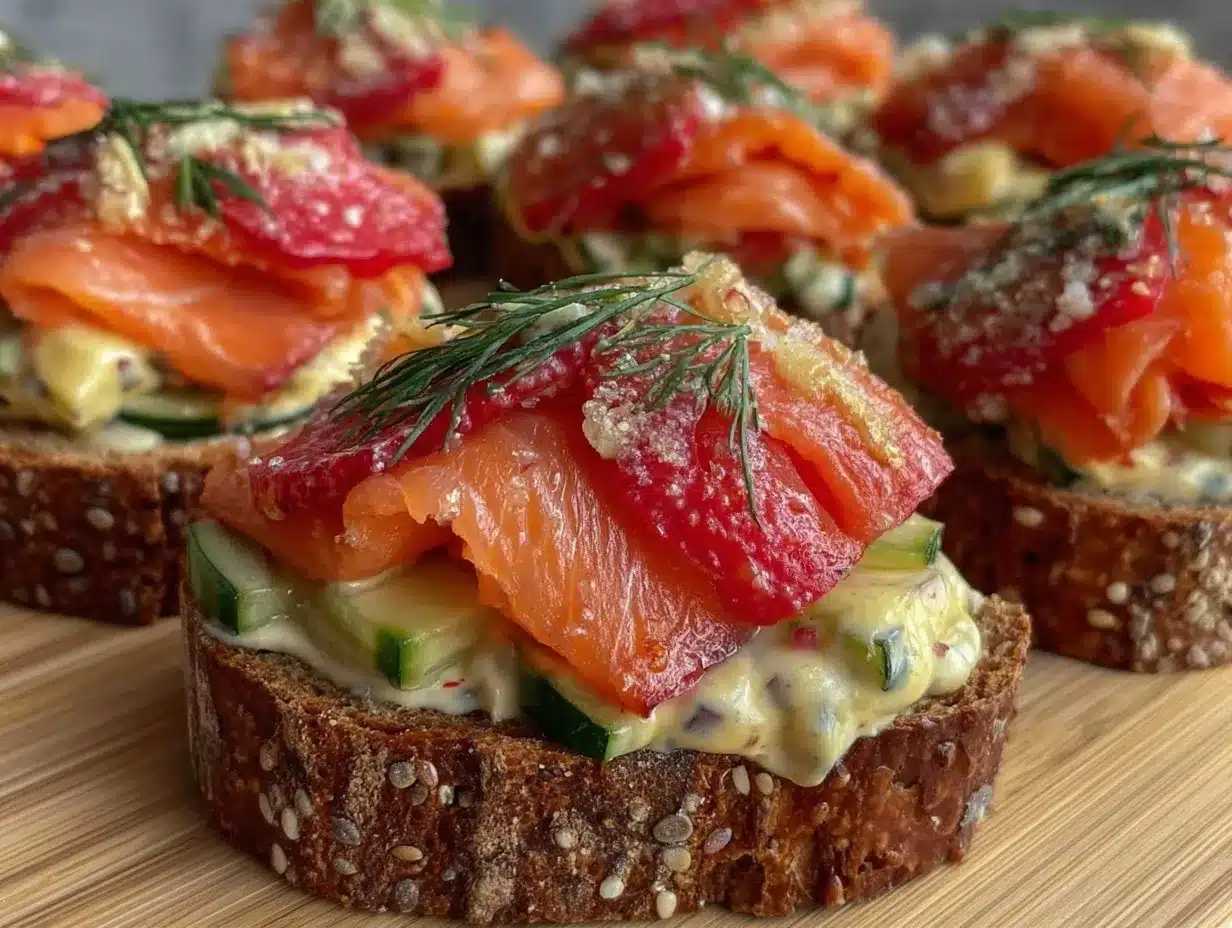
- Prepare the Eggs: Place 4 large eggs in a medium saucepan and cover with cold water (about 1 inch above eggs). Bring to a boil over medium-high heat, then cover and remove from heat. Let sit for 10 minutes. Drain and transfer to ice water to cool. Peel and slice thinly. (Tip: Older eggs peel easier.)
- Slice the Bread: Cut 4 thick slices (about 1-inch thick) of rye bread using a serrated knife. Spread a thin layer of softened unsalted butter on each slice while still fresh to help keep the bread moist.
- Prepare the Mustard Dressing: In a small bowl, whisk together 2 tablespoons Dijon mustard, 1 teaspoon apple cider vinegar, 1 teaspoon honey, and a squeeze of fresh lemon juice. Season with a pinch of salt and pepper.
- Soak the Onions: Thinly slice half a small red onion. Place slices in a bowl of cold water for 5 minutes to reduce sharpness, then drain and pat dry.
- Assemble the Sandwiches: On each slice of buttered rye, layer pickled herring (or smoked salmon), sliced hard-boiled eggs, radish slices, and red onion rings. Drizzle the mustard dressing over the top. Sprinkle with fresh dill and capers for garnish.
- Final Touches: Season lightly with sea salt and freshly ground black pepper. Serve immediately for the freshest flavor.
Remember, the beauty of smørrebrød lies in its layered textures and fresh ingredients. Don’t overload the bread or it will get soggy. Each bite should be a perfect balance of creamy, tangy, crunchy, and savory.
Cooking Tips & Techniques
Making fresh Danish smørrebrød is more about thoughtful assembly than actual cooking, but there are a few insider tips that make a world of difference.
- Choose the Right Bread: Rye bread with a dense crumb holds up well to moist toppings. If it’s too soft, the sandwich will fall apart quickly.
- Don’t Overbutter: A thin, even spread creates a moisture barrier but keeps the bread from tasting greasy.
- Layer Order Matters: Start with protein (herring or salmon), then eggs, then crunchy veggies, and finish with herbs and dressing to ensure each flavor stands out.
- Keep Ingredients Fresh: Use freshly sliced radishes and herbs—they bring brightness and prevent the sandwich from feeling heavy.
- Multitasking: While eggs boil, prep vegetables and mix dressing. Saves time and keeps everything fresh.
Once, I accidentally poured the dressing before layering the ingredients, and my bread turned soggy in minutes. Lesson? Always drizzle dressing at the end! Also, soaking onions is a small step that makes a big difference—no one wants overpowering raw onion in their delicate smørrebrød.
Variations & Adaptations
This fresh Danish smørrebrød recipe is incredibly versatile. Here are some ways to make it your own:
- Vegetarian Version: Replace pickled herring with marinated roasted beets or avocado slices for a creamy, plant-based twist.
- Seasonal Toppings: In summer, add fresh cucumber slices and dill flowers. In fall, swap radishes for thinly sliced apples for a sweet crunch.
- Different Proteins: Smoked trout, cured salmon gravlax, or even cold roast beef all work beautifully with the mustard dressing.
- Gluten-Free Option: Use gluten-free rye-style bread or sturdy gluten-free crackers to keep it light and accessible.
I once made a savory breakfast smørrebrød with scrambled eggs, chives, and smoked salmon that was a huge hit at brunch. Feel free to experiment with your favorite flavors and textures.
Serving & Storage Suggestions
Serve your fresh Danish smørrebrød immediately at room temperature to enjoy the full spectrum of textures and flavors. Pair it with a crisp white wine or a light lager for a classic Danish touch.
If you need to store leftovers, wrap each sandwich tightly in plastic wrap and refrigerate for up to 24 hours. Avoid storing assembled sandwiches longer than that as the bread tends to get soggy. To reheat, let them come to room temperature—smørrebrød is best fresh, but gentle warming can bring back some of the butter’s softness.
Flavors actually deepen slightly if you let the sandwich rest for 10-15 minutes before eating. The mustard dressing seeps into the bread just enough without turning it mushy. Serve with a simple green salad or crispy garlic chicken for a more substantial meal.
Nutritional Information & Benefits
This fresh Danish smørrebrød recipe is a balanced meal with protein, healthy fats, and fiber. Rye bread is a good source of complex carbohydrates and dietary fiber, which helps with digestion and sustained energy. The pickled herring provides omega-3 fatty acids, which are excellent for heart health. Fresh vegetables add vitamins and antioxidants, while the mustard dressing keeps calories moderate compared to heavy mayo-based spreads.
For those watching gluten intake, rye does contain gluten, but there are gluten-free bread alternatives that work well. This recipe is naturally low in added sugars and can be adjusted for different dietary needs by swapping ingredients as discussed.
Conclusion
If you’re looking for a fresh, flavorful, and easy-to-make lunch that feels both traditional and special, this Danish smørrebrød open-face sandwich recipe is a winner. It’s a simple way to bring a touch of Scandinavian charm to your table without fuss or fancy techniques.
I love this recipe because it’s flexible and forgiving—perfect for busy days or when you want to impress without stress. Plus, it’s a chance to slow down and savor every bite.
Give it a try, tweak it to your taste, and let me know how you make it your own! Your feedback and any fun variations you come up with would make my day.
Happy sandwich making!
FAQs
What is smørrebrød?
Smørrebrød is a traditional Danish open-face sandwich, typically made on dense rye bread and topped with a variety of fresh and flavorful ingredients.
Can I use other types of bread for smørrebrød?
Yes, while rye bread is traditional, you can use pumpernickel, whole grain, or even gluten-free bread depending on your preference.
How long can I store prepared smørrebrød?
It’s best eaten fresh, but you can store it wrapped in the refrigerator for up to 24 hours. Avoid longer storage to prevent sogginess.
What can I substitute for pickled herring?
Smoked salmon, trout, or marinated roasted vegetables like beets are great alternatives, especially for those who prefer a milder taste.
Is smørrebrød suitable for a quick lunch?
Absolutely! This recipe comes together quickly and makes a satisfying, nutritious lunch that’s both simple and elegant.
Pin This Recipe!
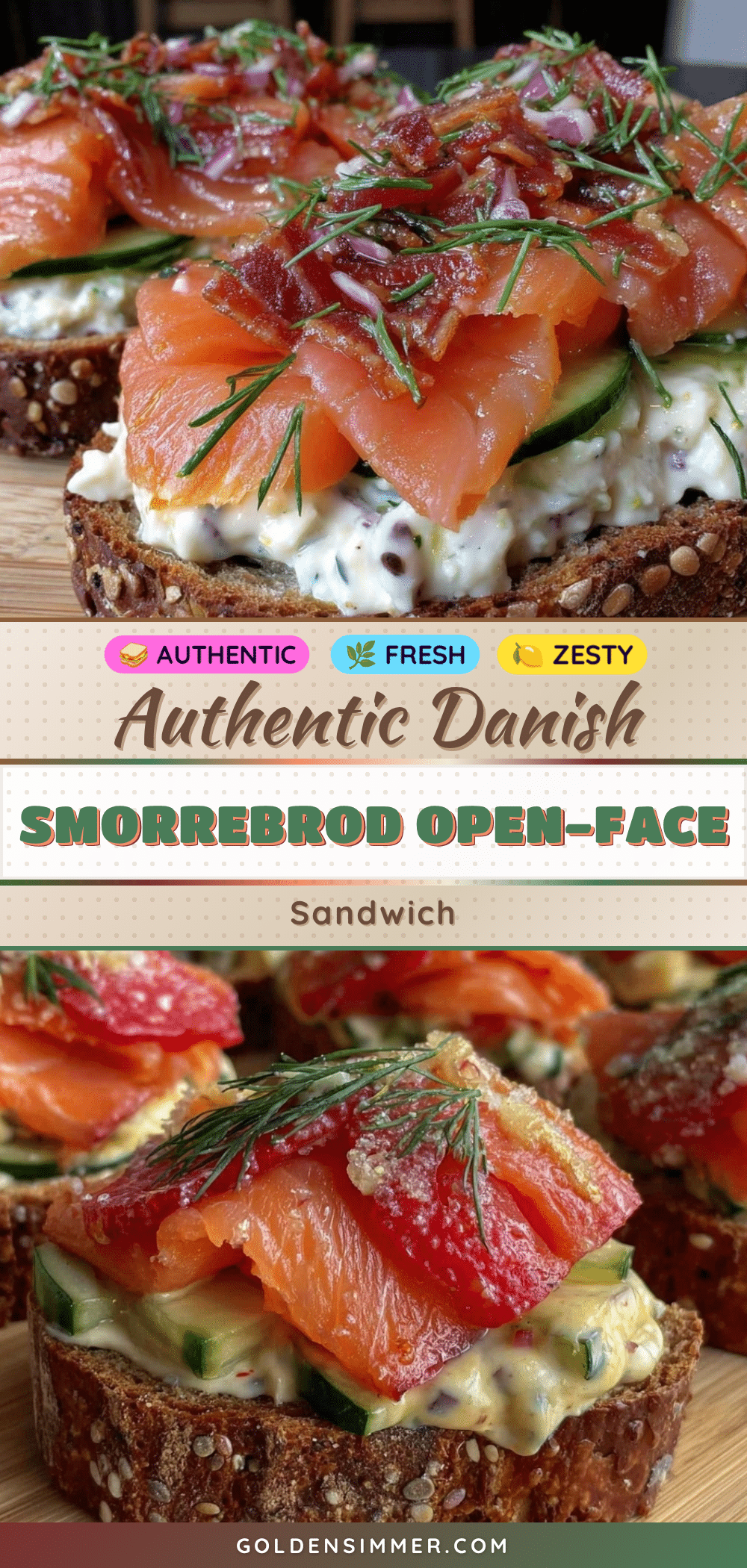
Fresh Danish Smorrebrod Recipe Easy Homemade Open-Face Sandwich Ideas

A simple and elegant Danish open-face sandwich featuring dense rye bread topped with pickled herring, fresh dill, radishes, and a tangy mustard dressing. Perfect for quick lunches or casual entertaining.
- Prep Time: 15 minutes
- Cook Time: 10 minutes
- Total Time: 25 minutes
- Yield: 4 servings 1x
- Category: Main Course
- Cuisine: Danish
Ingredients
- 4 thick slices (about 1 inch thick) rye bread (Danish-style or pumpernickel)
- Unsalted butter, softened, for spreading
- Pickled herring (or smoked salmon as alternative)
- 4 large hard-boiled eggs, sliced thinly
- Fresh dill, finely chopped
- Radishes, thinly sliced
- Half a small red onion, thinly sliced and soaked in cold water
- Capers (optional)
- 2 tablespoons Dijon mustard
- 1 teaspoon apple cider vinegar
- 1 teaspoon honey
- Fresh lemon juice, a squeeze
- Sea salt, to taste
- Freshly ground black pepper, to taste
Instructions
- Place 4 large eggs in a medium saucepan and cover with cold water about 1 inch above eggs. Bring to a boil over medium-high heat, then cover and remove from heat. Let sit for 10 minutes. Drain and transfer to ice water to cool. Peel and slice thinly.
- Cut 4 thick slices (about 1 inch thick) of rye bread using a serrated knife. Spread a thin layer of softened unsalted butter on each slice while still fresh.
- In a small bowl, whisk together 2 tablespoons Dijon mustard, 1 teaspoon apple cider vinegar, 1 teaspoon honey, and a squeeze of fresh lemon juice. Season with a pinch of salt and pepper.
- Thinly slice half a small red onion. Place slices in a bowl of cold water for 5 minutes to reduce sharpness, then drain and pat dry.
- On each slice of buttered rye bread, layer pickled herring (or smoked salmon), sliced hard-boiled eggs, radish slices, and red onion rings.
- Drizzle the mustard dressing over the top. Sprinkle with fresh dill and capers for garnish.
- Season lightly with sea salt and freshly ground black pepper. Serve immediately.
Notes
Use dense rye bread to prevent sogginess. Spread butter thinly to create a moisture barrier. Drizzle mustard dressing last to keep bread crisp. Soak onions to mellow sharpness. For vegan or gluten-free adaptations, substitute bread and toppings accordingly.
Nutrition
- Serving Size: 1 open-face sandwich
- Calories: 320
- Sugar: 4
- Sodium: 600
- Fat: 15
- Saturated Fat: 5
- Carbohydrates: 30
- Fiber: 5
- Protein: 15
Keywords: Danish smorrebrod, open-face sandwich, rye bread sandwich, pickled herring recipe, Scandinavian lunch, easy sandwich recipe, mustard dressing, fresh dill sandwich