Love this? Save it for later!
Share the inspiration with your friends
There used to be a tiny Asian grocery store three blocks from my freshman dorm that had the most incredible smell wafting out of it every evening around six. The owner, a sweet older woman named Mrs. Chen, would make herself a little bowl of noodles before closing up, and the aroma of garlic, soy, and something sizzling would drift right across the street. When she retired and the store closed, I honestly felt a little lost. I mean, I was a broke college student living on dining hall pizza and instant coffee, and that smell had become this weird little anchor in my chaotic first semester.
After maybe eight attempts in my dorm’s sad communal kitchen, I finally cracked the code. I was standing there, staring at a packet of instant ramen and a sad-looking bag of frozen vegetables, when it hit me. I didn’t need fancy wok skills or a pantry full of exotic ingredients. I just needed to treat those cheap noodles with a little respect and a lot of heat. The first successful batch came out on a Tuesday night, and I ate it standing over the stove, grinning like an idiot. The texture was right, the sauce clung perfectly, and for a second, it felt like I had my own little piece of Mrs. Chen’s magic.
This quick one-pan ramen stir fry became my go-to for late-night study sessions, and honestly, it still is. You know that feeling when you need something warm, filling, and fast, but you’re too tired to think? This is that recipe. It’s the meal that saved me from a hundred sad sandwiches, and I keep making it because it’s proof that you don’t need a real kitchen to eat real food. Maybe you’ve been there, staring into an empty fridge, wondering what to throw together. This one-pan ramen stir fry is your answer.
Why You’ll Love This Recipe
I’ve tested this recipe more times than I care to admit, tweaking the sauce ratios and the noodle timing until it was absolutely foolproof. This isn’t just another ramen hack you’ll find on the internet. This is the version that survived college, late-night cravings, and a stove that had exactly two working burners. Here’s why this easy one-pan ramen stir fry will become your new best friend.
- Quick & Easy: Comes together in under 15 minutes, making it perfect for those nights when you have zero time and even less energy.
- Simple Ingredients: No fancy grocery trips needed. You likely already have ramen, frozen veggies, and a few pantry staples in your dorm room.
- Perfect for Dorm Life: Only requires one pan and a microwave or hot plate. It’s designed for the smallest, most basic kitchens.
- Crowd-Pleaser: Every friend who tried this in my dorm asked for the recipe. It’s that good.
- Unbelievably Delicious: The sauce-to-noodle ratio is spot on, and the texture is chewy and satisfying, not mushy or dry.
What makes this recipe different from the rest is the technique. Most people just boil the noodles and dump sauce on top. Not here. You’ll toast the noodles first in the pan for a nutty flavor, then let them soak up the sauce while they cook. It’s a small step that makes a huge difference. This one-pan ramen stir fry is comfort food reimagined for dorm life — faster, easier, but with the same soul-soothing satisfaction you’d get from takeout. Perfect for impressing your roommate without the stress, or turning a simple packet of noodles into something memorable.
What Ingredients You Will Need
This recipe uses simple, budget-friendly ingredients that you can find at any grocery store or even the campus convenience shop. The beauty of this one-pan ramen stir fry is that it’s built on pantry staples, so you can make it whenever the craving hits.
For the Stir Fry Base
- 2 packs instant ramen noodles (discard the seasoning packets, or save them for another use; I prefer Maruchan or Nissin for their consistent texture)
- 1 tablespoon vegetable oil (or any neutral oil like canola or grapeseed; avoid olive oil as it can burn at high heat)
- 1 cup frozen mixed vegetables (peas, carrots, corn, and green beans work perfectly; no need to thaw them first)
- 2 cloves garlic, minced (fresh is best, but 1/2 teaspoon garlic powder works in a pinch)
- 1 teaspoon fresh ginger, grated (optional, but it adds a lovely warmth; use 1/4 teaspoon ground ginger if you don’t have fresh)
For the Sauce
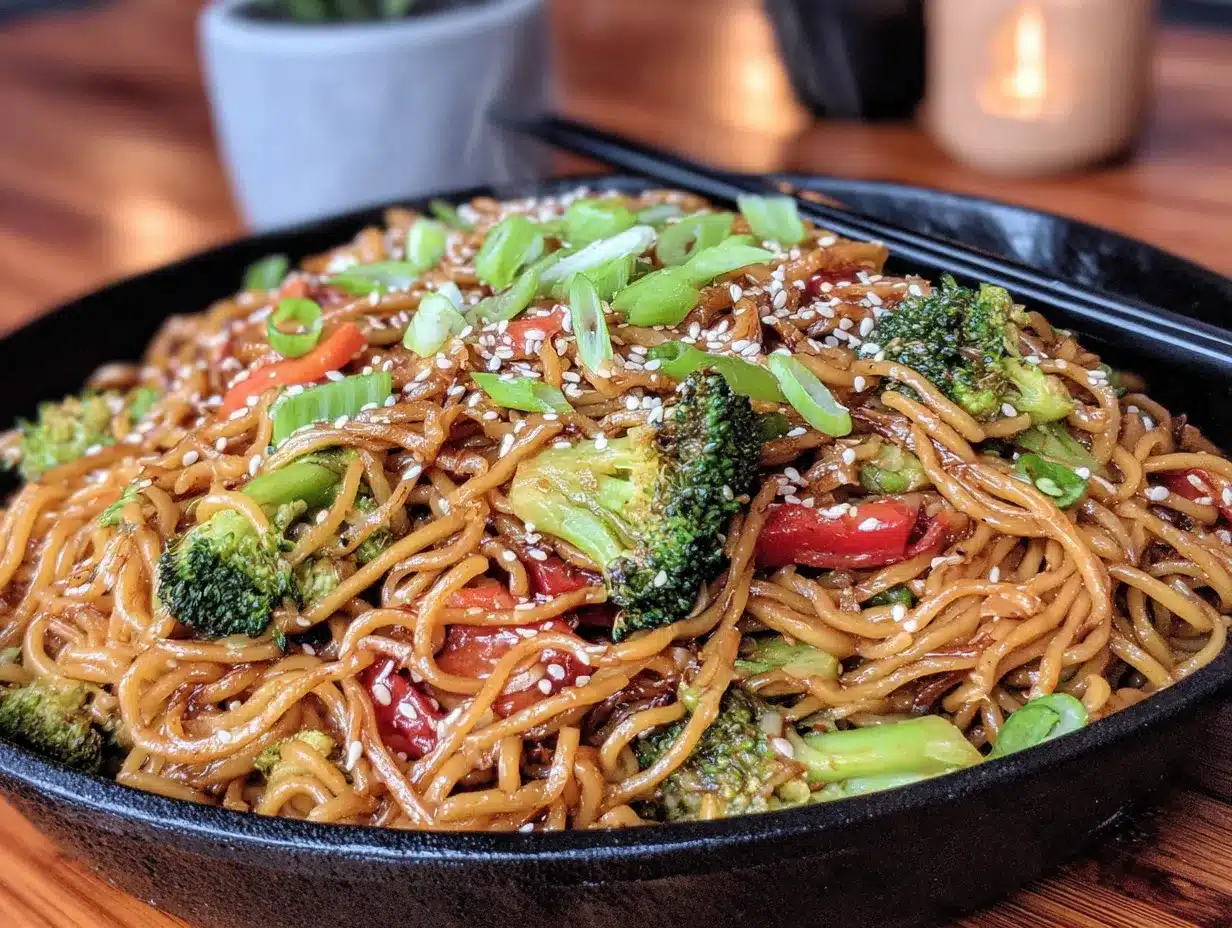
- 3 tablespoons soy sauce (use low-sodium if you prefer less salt; tamari works for gluten-free)
- 1 tablespoon brown sugar (packed; honey or maple syrup are good substitutes)
- 1 tablespoon rice vinegar (or apple cider vinegar in a pinch)
- 1 teaspoon sesame oil (this is key for that authentic stir fry flavor; don’t skip it)
- 1/4 teaspoon red pepper flakes (optional, for a little heat; add more if you like it spicy)
- 2 tablespoons water (to help the sauce spread evenly)
Optional Garnishes
- 1 green onion, sliced (for freshness and color)
- 1 teaspoon sesame seeds (toasted, for a nutty crunch)
- 1 soft-boiled egg (if you have access to a microwave or kettle, this is a game-changer)
When choosing your ramen, look for blocks that are firm and not broken into pieces. The noodles hold up better during stir frying. For the vegetables, I recommend the store-brand frozen mix — it’s cheap and works perfectly. If you’re feeling fancy, you can add a handful of fresh spinach or bell pepper strips. Just remember, this is a flexible recipe, so don’t stress if you’re missing an ingredient. The core components are the noodles, soy sauce, and oil. Everything else is a bonus.
Equipment Needed
One of the best things about this one-pan ramen stir fry is how little equipment it requires. You don’t need a wok or a fancy chef’s knife. Here’s what you’ll actually need.
- One large non-stick skillet or frying pan (12-inch is ideal, but 10-inch works too; non-stick is crucial for dorm cooking to prevent sticking)
- Wooden spoon or silicone spatula (to avoid scratching your pan)
- Small bowl (for mixing the sauce)
- Cutting board and knife (for mincing garlic and slicing green onions)
- Measuring spoons (eyeballing works, but spoons help with consistency)
- Kettle or microwave (to boil water for the noodles)
If you don’t have a non-stick pan, you can use a stainless steel one, but you’ll need to add a bit more oil. I learned this the hard way during my sophomore year when I tried to make this in a scratched-up Teflon pan. The noodles stuck, and I ended up with a mess. A good non-stick pan is worth the investment, and you can find one at a thrift store for under ten bucks. If you’re using a hot plate instead of a stove, make sure it has a flat surface and can reach medium-high heat. Budget tip: a cast iron skillet works beautifully too, but it’s heavy and takes longer to heat up.
Preparation Method
Let me walk you through this step by step. I’ve made this one-pan ramen stir fry so many times that I could do it in my sleep, but I want you to get it right on the first try. Follow these instructions, and you’ll have a perfect bowl of noodles in about 12 minutes.
- Boil the noodles (2 minutes): Bring a kettle of water to a boil, or use the microwave. Place the ramen blocks in a heatproof bowl and pour the boiling water over them. Let them sit for exactly 2 minutes — you want them slightly undercooked. Drain immediately and set aside. Don’t skip this step; it prevents the noodles from becoming mushy later.
- Mix the sauce (1 minute): In your small bowl, whisk together the soy sauce, brown sugar, rice vinegar, sesame oil, red pepper flakes, and water. Set it near the stove so you can grab it quickly. Taste it — it should be salty, sweet, and a little tangy. Adjust the sugar or soy sauce to your preference.
- Heat the pan (1 minute): Place your skillet over medium-high heat and add the vegetable oil. Let it heat for about 30 seconds until it shimmers. If you see smoke, the pan is too hot, so lower the heat slightly.
- Cook the aromatics (1 minute): Add the minced garlic and grated ginger to the hot oil. Stir constantly for about 30 seconds until fragrant. Be careful not to burn the garlic — it turns bitter quickly. The smell at this point is incredible, like a real stir fry joint.
- Add the vegetables (3 minutes): Toss in the frozen vegetables directly from the bag. They will sizzle and steam. Stir fry for 2-3 minutes until they are heated through and starting to brown slightly on the edges. The peas will turn bright green, and the corn will get little char marks.
- Add the noodles and sauce (2 minutes): Add the drained noodles to the pan. Pour the sauce over everything. Use your spatula to toss and combine, making sure every noodle gets coated. Cook for 1-2 minutes, letting the sauce reduce slightly and cling to the noodles. The noodles should look glossy and smell amazing.
- Finish and serve (1 minute): Turn off the heat. Sprinkle with sliced green onions and sesame seeds if using. For an extra touch, add a soft-boiled egg on top. Serve immediately while it’s hot and the noodles are still chewy.
A few important notes: if the noodles start to stick, add a splash of water or soy sauce to loosen them. If you want more sauce, double the sauce recipe. And if you’re using fresh vegetables like bell peppers or broccoli, add them before the frozen ones since they take longer to cook. The key sensory cue here is that the noodles should be slightly chewy and the sauce should be thick enough to coat the back of a spoon. Trust your instincts — you’ll know when it’s right.
Cooking Tips & Techniques
Over the years, I’ve made every mistake possible with this recipe. I’ve overcooked the noodles until they were gluey. I’ve burned the garlic so badly that the whole dorm smelled like a campfire. I’ve even forgotten the sauce entirely and eaten plain noodles with a sad look on my face. But from those failures came some real wisdom. Here are the tips that will save you from my mistakes.
Toast the noodles for extra flavor: After draining the noodles, let them sit in the hot pan for 30 seconds without stirring. They’ll develop a slight toastiness that adds a nutty depth to the dish. I discovered this by accident when I got distracted by a text message, and now I do it every time.
Don’t overcook the noodles: This is the most common mistake. Ramen is delicate, and it continues to cook even after you drain it. By undercooking it slightly in the first step, you ensure it stays chewy and firm after stir frying. If you boil it until it’s fully soft, you’ll end up with mush.
Use high heat: Stir frying needs high heat to work properly. Don’t be afraid to crank up the burner. The high heat creates that slightly charred, smoky flavor that makes stir fry taste authentic. If your pan isn’t hot enough, the vegetables will steam instead of fry, and you’ll lose that texture.
Prep everything before you start: This recipe comes together fast, so have your garlic minced, sauce mixed, and noodles drained before you turn on the heat. Once you start cooking, you won’t have time to chop or measure. I learned this the hard way when I had to scramble for the soy sauce while my garlic was burning.
Adjust the sauce to your taste: The base recipe is a starting point. If you like it sweeter, add more brown sugar. If you want it saltier, add an extra splash of soy sauce. If you love heat, double the red pepper flakes. This is your stir fry, so make it yours.
Variations & Adaptations
This one-pan ramen stir fry is incredibly versatile. I’ve adapted it for different diets, different cravings, and even different seasons. Here are some of my favorite variations that I’ve tested and loved.
Protein-Packed Version: Add 1 cup of cooked chicken, beef, or tofu. If you have leftover rotisserie chicken from the dining hall, shred it and toss it in with the vegetables. For tofu, cube it and pan-fry it separately until golden before adding it to the stir fry. This turns the dish into a complete meal that will keep you full for hours.
Vegetarian or Vegan Version: This recipe is already vegetarian if you use vegetable-based ramen. For a vegan version, swap the brown sugar for maple syrup and skip the egg garnish. Add extra vegetables like mushrooms, snap peas, or bok choy for more texture. I made this for my vegan roommate once, and she asked for the recipe immediately.
Spicy Korean-Inspired Version: Add 1 tablespoon of gochujang (Korean chili paste) to the sauce. It adds a deep, fermented heat that’s completely addictive. Top with kimchi and a sprinkle of nori flakes. This version is my personal favorite when I need something bold and comforting.
Gluten-Free Version: Use rice noodles or gluten-free ramen instead of traditional wheat ramen. Make sure your soy sauce is tamari or a certified gluten-free brand. The cooking time for rice noodles is slightly different, so follow the package instructions and undercook them by about 1 minute.
Budget-Friendly Version: Skip the fresh garlic and ginger and use powdered versions. Use whatever frozen vegetables are on sale. Omit the sesame oil if you don’t have it, and use extra vegetable oil instead. The dish will still be delicious, just slightly less complex. I survived an entire semester on this budget version, and I still crave it.
Serving & Storage Suggestions
This one-pan ramen stir fry is best served immediately, straight from the pan, while the noodles are still hot and the sauce is glossy. But I know dorm life doesn’t always allow for perfect timing. Here’s how to make the most of it.
Serving Temperature: Serve hot, right after cooking. The noodles will start to absorb the sauce and soften as they cool, so eat it while it’s steaming. If you’re eating it later, reheat it in the microwave for 30 seconds, but be aware the texture won’t be quite as good.
Presentation Ideas: For a simple presentation, serve in a bowl and top with sliced green onions and a sprinkle of sesame seeds. If you’re feeling fancy, add a soft-boiled egg cut in half, with the yolk still runny. The yellow yolk against the brown noodles makes for a beautiful, satisfying bowl.
Complementary Dishes: This stir fry pairs well with a simple cucumber salad or a side of edamame. If you have access to a microwave, you can make a quick miso soup to go alongside. For a drink, iced green tea or a cold beer (if you’re of age) cuts through the richness perfectly.
Storage Instructions: Store leftovers in an airtight container in the refrigerator for up to 3 days. The noodles will soften as they sit, so don’t expect the same texture as fresh. To reheat, add a splash of water or soy sauce and microwave for 45-60 seconds, stirring halfway through. You can also reheat in a pan over medium heat with a little oil.
Freezing Notes: I don’t recommend freezing this dish. The noodles become mushy and the vegetables lose their texture. It’s best to make it fresh or eat leftovers within a few days. If you want to meal prep, cook the vegetables and sauce separately, then add fresh noodles when you’re ready to eat.
Nutritional Information & Benefits
This one-pan ramen stir fry is a balanced meal that provides carbohydrates for energy, vegetables for vitamins, and healthy fats from the sesame oil. Here’s a rough breakdown per serving (based on one packet of ramen and the full sauce recipe).
Estimated Nutritional Values (per serving)
- Calories: 380-420
- Protein: 8-10g
- Carbohydrates: 50-55g
- Fat: 15-18g
- Fiber: 4-5g
- Sodium: 900-1100mg (use low-sodium soy sauce to reduce this)
Health Benefits of Key Ingredients
- Frozen vegetables: Packed with vitamins A and C, and fiber. They’re flash-frozen at peak ripeness, so they retain more nutrients than fresh vegetables that have been sitting in a fridge.
- Garlic and ginger: Both have anti-inflammatory properties and can support immune health. During cold season, I double the garlic in this recipe.
- Sesame oil: Contains healthy unsaturated fats and antioxidants. It also adds that unmistakable flavor that makes this dish taste like takeout.
- Ramen noodles: While not a superfood, they provide quick energy from carbohydrates. The key is portion control and balancing them with vegetables and protein.
Dietary Considerations: This recipe can be made gluten-free, vegan, and nut-free with simple substitutions. It is not low-carb due to the noodles, but you can use zucchini noodles or shirataki noodles for a lower-carb version. If you have a soy allergy, use coconut aminos instead of soy sauce. Always check your ramen packaging for allergen information, as some brands contain wheat or traces of nuts.
Conclusion
This one-pan ramen stir fry is more than just a recipe. It’s a survival tool for dorm life, a late-night comfort, and proof that you can eat well even with limited resources. I’ve made it on hot plates, in communal kitchens, and even in a microwave when I was desperate. Every time, it delivers the same satisfaction. The chewy noodles, the savory sauce, the pop of colorful vegetables — it’s a complete meal that comes together in minutes.
I encourage you to make this recipe your own. Add your favorite protein, throw in whatever vegetables you have, or spice it up to your liking. The beauty of this dish is its flexibility. Don’t be afraid to experiment and find your perfect version. And when you do, come back and tell me about it. I love hearing how people adapt this recipe to their own lives.
So grab a pack of ramen, heat up your pan, and give this a try. You deserve a delicious meal that doesn’t require a full kitchen or a culinary degree. Happy cooking, and may your noodles always be perfectly chewy.
Frequently Asked Questions
Can I make this one-pan ramen stir fry without a stove?
Yes, you can! If you only have a microwave, cook the noodles according to the package directions, then mix the sauce and vegetables in a microwave-safe bowl. Microwave for 2-3 minutes, stirring halfway through. The texture won’t be quite the same as pan-frying, but it’s still delicious. A hot plate or electric skillet works even better.
What if I don’t have frozen vegetables?
No problem at all. Use any fresh vegetables you have on hand. Bell peppers, broccoli, carrots, snap peas, or cabbage all work beautifully. Just chop them into small pieces so they cook quickly. If you only have canned vegetables like corn or peas, drain them well and add them at the end to avoid them turning mushy.
Can I use the seasoning packet from the ramen?
You can, but I don’t recommend it. The seasoning packets are very salty and often contain MSG and artificial flavors. The homemade sauce in this recipe is much more balanced and flavorful. If you’re in a pinch, you can use half the packet mixed with a tablespoon of soy sauce, but the result won’t be as good.
How do I prevent the noodles from sticking together?
The key is to undercook the noodles slightly and toss them with a little oil after draining. When you add them to the pan, make sure the sauce is already in the pan so the noodles get coated immediately. If they start sticking, add a splash of water or soy sauce and toss vigorously.
Is this recipe spicy?
The base recipe has a very mild heat from the red pepper flakes. If you’re sensitive to spice, you can omit them entirely. If you love heat, add extra red pepper flakes, a drizzle of sriracha, or a spoonful of gochujang. You can also serve it with chili oil on the side so everyone can adjust their own spice level.
Pin This Recipe!
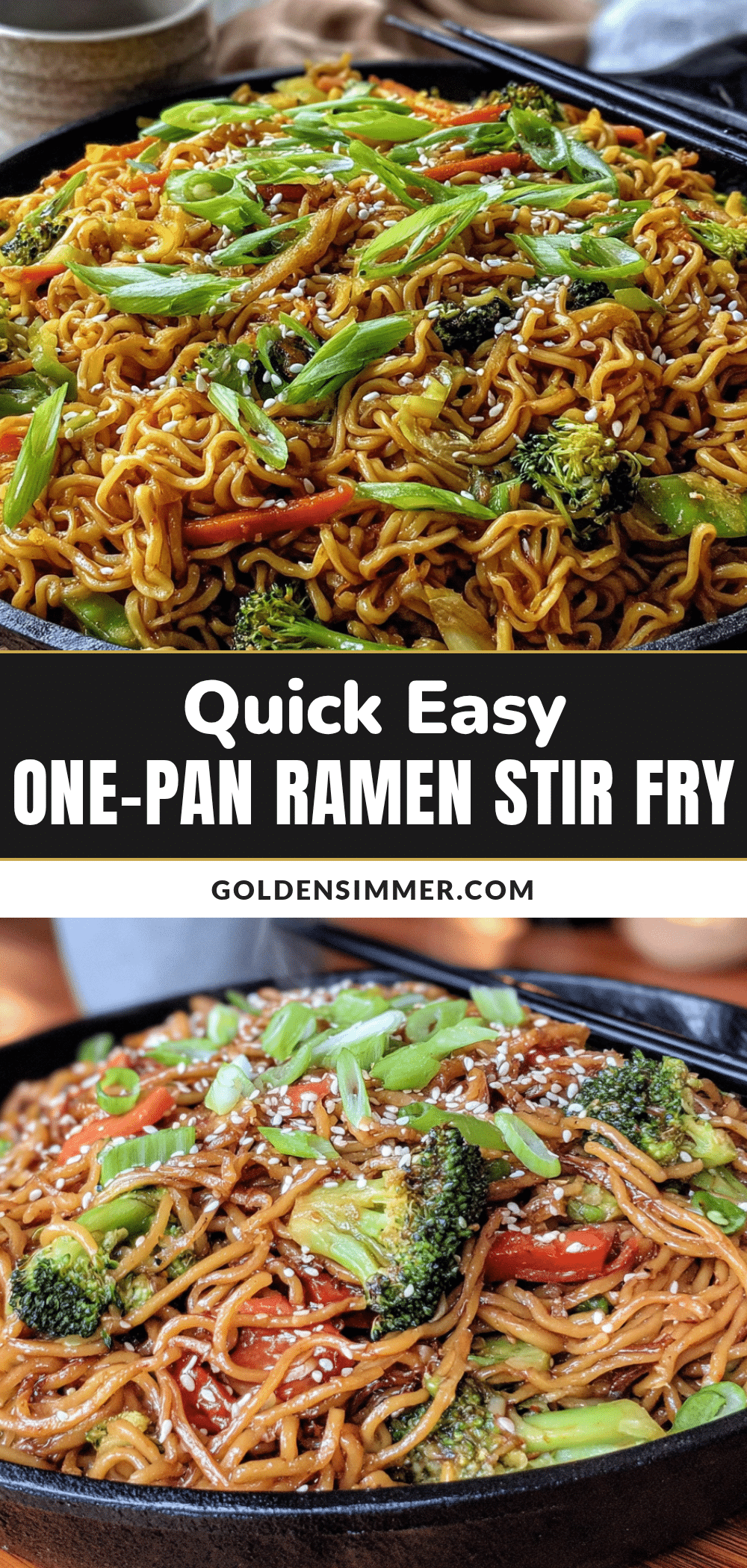
Easy One-Pan Ramen Stir Fry for Dorm Meals
A quick and easy one-pan ramen stir fry that comes together in under 15 minutes using simple ingredients. Perfect for dorm life, late-night study sessions, or when you need a warm, filling meal without a full kitchen.
- Prep Time: 5 minutes
- Cook Time: 10 minutes
- Total Time: 15 minutes
- Yield: 2 servings 1x
- Category: Main Course
- Cuisine: Asian
Ingredients
- 2 packs instant ramen noodles (discard seasoning packets)
- 1 tablespoon vegetable oil
- 1 cup frozen mixed vegetables (peas, carrots, corn, green beans)
- 2 cloves garlic, minced
- 1 teaspoon fresh ginger, grated (optional)
- 3 tablespoons soy sauce (low-sodium if preferred)
- 1 tablespoon brown sugar, packed
- 1 tablespoon rice vinegar
- 1 teaspoon sesame oil
- 1/4 teaspoon red pepper flakes (optional)
- 2 tablespoons water
- 1 green onion, sliced (optional garnish)
- 1 teaspoon sesame seeds, toasted (optional garnish)
- 1 soft-boiled egg (optional garnish)
Instructions
- Boil the noodles: Bring a kettle of water to a boil. Place ramen blocks in a heatproof bowl and pour boiling water over them. Let sit for exactly 2 minutes (slightly undercooked). Drain immediately and set aside.
- Mix the sauce: In a small bowl, whisk together soy sauce, brown sugar, rice vinegar, sesame oil, red pepper flakes, and water. Set aside.
- Heat the pan: Place a large non-stick skillet over medium-high heat and add vegetable oil. Heat until shimmering, about 30 seconds.
- Cook the aromatics: Add minced garlic and grated ginger to the hot oil. Stir constantly for about 30 seconds until fragrant.
- Add the vegetables: Toss in frozen vegetables directly from the bag. Stir fry for 2-3 minutes until heated through and starting to brown slightly.
- Add the noodles and sauce: Add drained noodles to the pan. Pour sauce over everything. Toss to combine, making sure every noodle is coated. Cook for 1-2 minutes until sauce reduces and clings to noodles.
- Finish and serve: Turn off heat. Sprinkle with sliced green onions and sesame seeds if using. Add a soft-boiled egg on top if desired. Serve immediately.
Notes
Toast the drained noodles in the hot pan for 30 seconds before adding sauce for extra nutty flavor. Do not overcook the noodles; they should be slightly undercooked before stir frying. Use high heat for authentic stir fry texture. Prep all ingredients before starting as the recipe comes together quickly. Adjust sauce to taste: add more brown sugar for sweetness, more soy sauce for saltiness, or more red pepper flakes for heat.
Nutrition
- Serving Size: 1 serving
- Calories: 400
- Sugar: 8
- Sodium: 1000
- Fat: 16
- Saturated Fat: 3
- Carbohydrates: 52
- Fiber: 4
- Protein: 9
Keywords: ramen stir fry, one-pan meal, dorm food, quick dinner, easy noodles, college meal, stir fry, ramen noodles, frozen vegetables, budget meal