Love this? Save it for later!
Share the inspiration with your friends
I was half-heartedly folding laundry in my tiny apartment living room last Tuesday, mentally running through my fridge inventory for dinner ideas, when my upstairs neighbor, a retired marine biologist named Frank who I’d only ever exchanged awkward elevator nods with, suddenly appeared at my door holding a dented baking sheet. “You look like you need this,” he said, thrusting the pan into my hands. I blinked at him, confused, as he launched into a surprisingly detailed explanation about how a single sheet pan could solve all my mid-week cooking problems, specifically if I paired it with salmon and asparagus. Honestly, I wasn’t expecting cooking advice from a man whose primary hobby I assumed was complaining about the building’s recycling policy, but there I was, clutching a warped piece of metal, listening to him describe exactly how to make the most perfect, no-fuss dinner I’d ever tried.
He told me the trick was to stop overcomplicating things. “Salmon doesn’t need a spa day, it just needs heat and a little lemon,” he grumbled, before shuffling back upstairs. I mean, I had to try it. I had a frozen fillet, a sad bunch of asparagus, and a lemon that was starting to look a little desperate. So I threw it all together, following his simple instructions, and let me tell you—the result was almost embarrassing in its simplicity and deliciousness. The salmon came out flaky and tender, the asparagus was perfectly crisp-tender, and the whole thing was done before I could even finish folding that basket of laundry.
Maybe you’ve been there, staring into the fridge, feeling that familiar dinner-time dread. This easy sheet-pan salmon with lemon and asparagus is the exact opposite of that feeling. It’s the recipe that makes you feel like you have your life together, even when you’re using a borrowed baking sheet from a neighbor. It’s the reason I keep making it, week after week. It’s reliable, it’s fast, and it tastes like you spent way more effort than you actually did. Honestly, it’s a game-changer for anyone who wants a delicious, healthy meal without the cleanup drama.
Why You’ll Love This Recipe
After testing this sheet-pan salmon more times than I care to admit (including one memorable attempt where I forgot to preheat the oven and ended up with sad, lukewarm fish), I can confidently say this version is the one. It’s not just another recipe—it’s the result of trial and error, a few burnt lemons, and one very specific piece of advice from a marine biologist. Here’s why this one is different and why it will become your new weeknight hero.
- Quick & Easy: This meal comes together in under 20 minutes. Seriously. From the moment you turn on the oven to the moment you’re sitting down with a fork, it’s a 20-minute affair. Perfect for those nights when you’re hangry and need food *now*.
- Simple Ingredients: You likely have everything in your kitchen right now. Salmon, asparagus, a lemon, some olive oil, and a few pantry spices. No fancy grocery trips or obscure ingredients required. It’s the definition of simple.
- Perfect for Busy Weeknights: This isn’t a weekend project. It’s the meal you make on a Tuesday when you’ve got a million things to do. It’s elegant enough for a quiet dinner but fast enough for a chaotic family schedule.
- Crowd-Pleaser: Even my friend who “doesn’t like fish” asked for seconds. The lemon brightens everything up, and the salmon is so tender and not at all fishy. It’s a guaranteed hit with adults and kids alike.
- Unbelievably Delicious: The combination of the zesty lemon, the savory garlic, and the perfectly roasted salmon and asparagus is next-level comfort food. It’s light, fresh, and deeply satisfying without being heavy.
What makes this recipe different from the rest? It’s the technique. By roasting the asparagus separately for a few minutes before adding the salmon, you ensure everything finishes at the same time. No overcooked fish or soggy veggies. It’s a small step that makes a huge difference, and it’s the kind of insider tip you only get from making the mistake yourself a few times. This isn’t just another version—it’s the best, most reliable version I’ve ever made.
What Ingredients You Will Need
This recipe uses a handful of simple, wholesome ingredients to deliver bold flavor and satisfying texture without any fuss. Most of these are pantry staples, but I’ve included a few notes on what to look for to get the best results.
- Salmon Fillets (4, about 6 ounces each): Look for fillets that are similar in thickness so they cook evenly. I prefer wild-caught salmon for its flavor and firmer texture, but farm-raised Atlantic salmon works beautifully too. Pat them dry with a paper towel for the best sear in the oven.
- Fresh Asparagus (1 pound, trimmed): You want asparagus spears that are bright green and firm, not limp or woody. Snap off the tough ends naturally—they’ll break right where the tender part begins. Thicker spears are great for roasting as they hold up better.
- Lemons (2 large): One lemon for juicing and one for slicing. The slices roast on the pan, becoming sweet and caramelized, while the juice adds that essential brightness. Don’t skip the fresh lemon—bottled juice just won’t give you the same zing.
- Olive Oil (3 tablespoons): A good quality extra-virgin olive oil is perfect for coating the salmon and asparagus. It helps everything roast beautifully and adds a subtle fruity flavor.
- Garlic (4 cloves, minced): Fresh garlic is non-negotiable here. It infuses the oil and roasts into sweet, fragrant little pieces. I love using a microplane to mince it finely so it melts into the oil.
- Dried Oregano (1 teaspoon): This adds a lovely earthy, slightly peppery note that pairs beautifully with the lemon and salmon. You can use dried thyme or Italian seasoning if you prefer.
- Salt and Black Pepper (to taste): Use kosher salt for the best flavor. A generous pinch on the salmon and asparagus makes all the difference.
- Optional: Red Pepper Flakes (1/4 teaspoon): For a tiny kick of heat. I love the little warmth it adds, but it’s totally optional.
- Fresh Parsley (for garnish): A sprinkle of fresh, chopped parsley adds a pop of color and freshness right before serving.
Equipment Needed
You don’t need a fancy kitchen to make this recipe work. In fact, the beauty of a sheet-pan meal is its simplicity. Here’s what you’ll need:
- Large Rimmed Baking Sheet (18×13 inches): This is your main tool. A rimmed sheet pan is essential to catch any juices and prevent spills. I love my Nordic Ware half-sheet pans—they’re sturdy, don’t warp, and clean up like a dream. If you don’t have one, any large, rimmed baking dish will work.
- Parchment Paper or Aluminum Foil: For easy cleanup. Lining your pan means you can practically just lift the paper and toss it when you’re done. I prefer parchment paper as it’s non-stick and doesn’t react with the lemon.
- Chef’s Knife and Cutting Board: For trimming the asparagus and mincing the garlic. A sharp knife makes this job quick and safe.
- Small Bowl: For whisking together the olive oil, lemon juice, garlic, and oregano. This is your flavor base.
- Measuring Spoons: For accuracy, especially with the spices. Eyeballing it is fine, but a little precision helps with consistency.
- Instant-Read Thermometer (Optional but Recommended): To check the internal temperature of the salmon. You’re looking for 125°F to 130°F for medium-rare, or 135°F to 140°F for more well-done. It takes the guesswork out of cooking fish.
Preparation Method
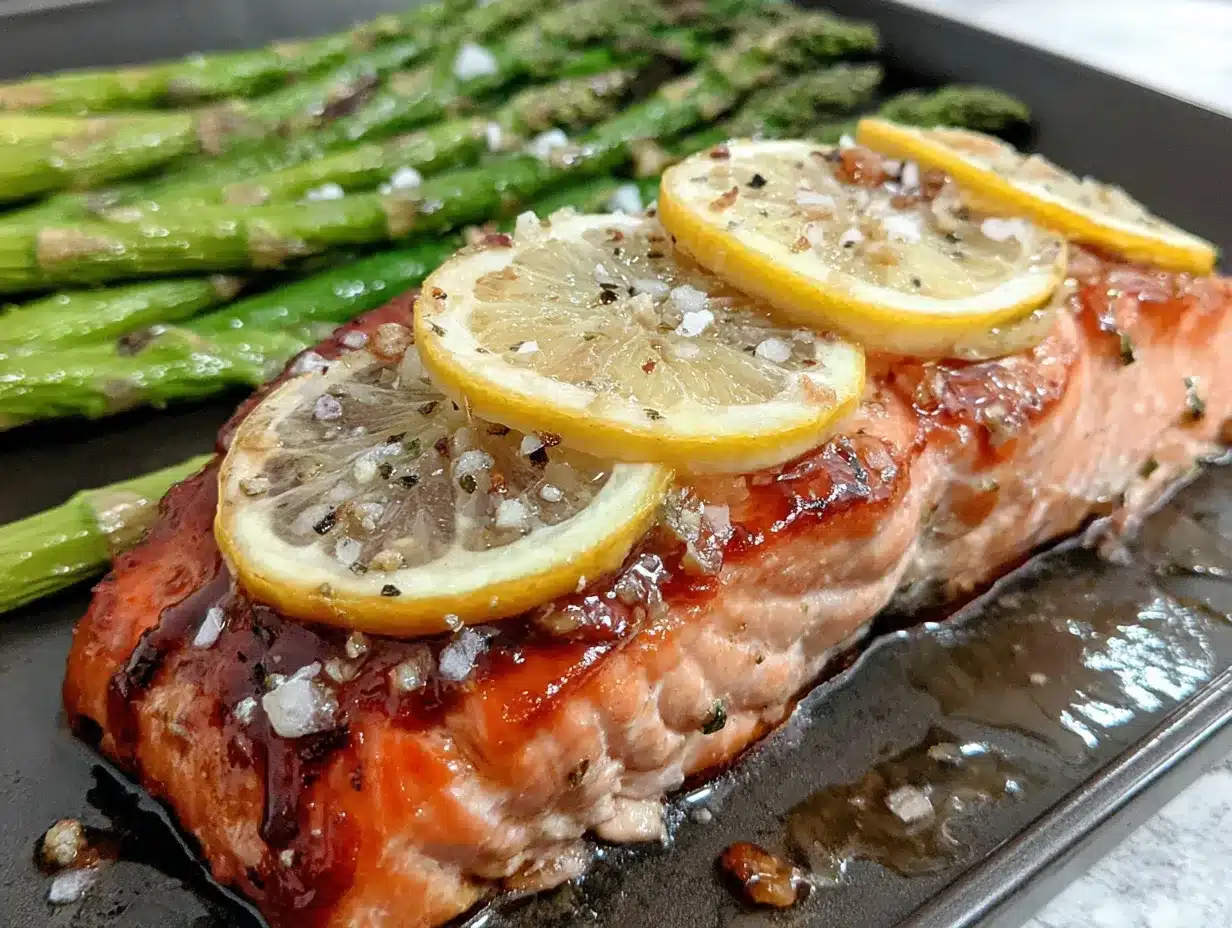
Alright, let’s get cooking. This is the easy part. Follow these steps and you’ll have a gorgeous, restaurant-quality dinner on the table in no time.
- Preheat and Prep (5 minutes): Preheat your oven to 400°F (200°C). While it’s heating up, line your large baking sheet with parchment paper or aluminum foil. This step is non-negotiable for easy cleanup. Trust me on this.
- Prepare the Asparagus (5 minutes): Wash the asparagus and snap off the tough, woody ends. Just hold a spear near the bottom and bend—it will naturally break where it gets tender. Place the trimmed asparagus on one half of the prepared baking sheet. Drizzle with 1 tablespoon of olive oil, a pinch of salt, and a few grinds of black pepper. Toss to coat evenly, then spread them out in a single layer.
- Roast the Asparagus First (5 minutes): Pop the baking sheet with the asparagus into the preheated oven. Roast for 5 minutes. This head start is the secret to perfectly cooked asparagus that isn’t crunchy or mushy. It gives them a head start before the salmon joins the party.
- Prepare the Salmon (5 minutes): While the asparagus is roasting, pat your salmon fillets dry with a paper towel. This is crucial for a nice, flaky texture. Place the fillets on a plate and season both sides generously with salt and pepper. In a small bowl, whisk together the remaining 2 tablespoons of olive oil, the juice of one lemon, the minced garlic, and the dried oregano. Pour this mixture over the salmon fillets, turning to coat them evenly.
- Assemble the Pan (2 minutes): After the asparagus has roasted for 5 minutes, carefully remove the baking sheet from the oven. Push the asparagus to one side to make room for the salmon. Place the seasoned salmon fillets, skin-side down (if they have skin), on the empty side of the pan. Tuck the thin tail ends under if they are very thin to prevent overcooking.
- Add the Lemon Slices (2 minutes): Slice the remaining lemon into thin rounds. Place a few lemon slices on top of each salmon fillet. This not only looks beautiful but also steams the fish with lemon flavor as it roasts. You can also tuck a few slices among the asparagus.
- Final Roast (10-12 minutes): Return the baking sheet to the oven and roast for 10-12 minutes, depending on the thickness of your salmon. The salmon is done when it flakes easily with a fork and is opaque in the center. For the most reliable result, use an instant-read thermometer inserted into the thickest part of the fillet—it should read 125°F (52°C) for medium-rare or 135°F (57°C) for medium. The asparagus should be tender and lightly browned at the tips.
- Garnish and Serve (2 minutes): Remove the pan from the oven. Sprinkle the fresh chopped parsley over the top for a pop of color and freshness. Squeeze a little extra lemon juice over everything if you like things extra bright. Serve immediately directly from the sheet pan for a rustic feel, or transfer to a platter.
Cooking Tips & Techniques
Over the years, I’ve made this recipe more times than I can count, and I’ve definitely learned a few things the hard way. Here are my best tips to ensure your sheet-pan salmon comes out perfect every single time.
- Don’t Overcrowd the Pan: This is the number one mistake. If you pile everything on top of each other, the ingredients will steam instead of roast, leading to soggy asparagus and pale, sad salmon. Give them space! Use a large enough sheet pan so everything is in a single layer.
- Pat the Salmon Dry: I know it seems like a small step, but patting the salmon dry with a paper towel is essential. Excess moisture creates steam, which prevents the fish from developing that beautiful, flaky texture. A dry fillet roasts, a wet one steams.
- Watch the Thickness: Salmon fillets often have a thin tail end that cooks much faster than the thick center. If you have a very uneven fillet, fold the thin tail under itself to create a more even thickness. This simple trick prevents the tail from turning into dry, overcooked fish while the center is still raw.
- Use a Thermometer: I can’t stress this enough. The difference between perfectly cooked salmon and dry, overcooked salmon is just a few degrees. An instant-read thermometer is your best friend. It takes all the anxiety out of cooking fish and guarantees perfect results.
- Don’t Overcook the Asparagus: The head start of 5 minutes is usually just right, but keep an eye on it. You want the asparagus to be tender-crisp, not limp and mushy. If your asparagus spears are very thin, you might even skip the head start and add them at the same time as the salmon.
- Room Temperature Matters: Take your salmon out of the fridge about 15 minutes before cooking. This helps it cook more evenly. A cold fillet straight from the fridge will take longer to cook, throwing off the timing with the asparagus.
Variations & Adaptations
This recipe is incredibly versatile. Once you’ve mastered the basic technique, feel free to play around with different flavors and ingredients. Here are a few of my favorite variations.
- Herb & Garlic Butter Twist: Instead of the olive oil and oregano, melt 3 tablespoons of butter and mix it with the minced garlic and a tablespoon of fresh dill or thyme. Brush this over the salmon and asparagus. The butter adds a rich, decadent flavor that’s absolutely divine.
- Spicy Miso Glaze: For an umami-packed version, whisk together 2 tablespoons of white miso paste, 1 tablespoon of honey, 1 tablespoon of soy sauce, and a teaspoon of sriracha. Brush this glaze over the salmon during the last 5 minutes of roasting. It creates a beautiful, caramelized crust.
- Veggie Swap: Asparagus is classic, but you can easily swap it for other vegetables. Try broccoli florets, green beans, bell pepper strips, or zucchini rounds. Just remember that different vegetables have different roasting times. Hearty veggies like broccoli might need a longer head start, while tender ones like zucchini can go in at the same time as the salmon.
- Lemon-Herb Pesto Version: After roasting, dollop a spoonful of your favorite pesto (store-bought or homemade) over the hot salmon. The heat from the fish melts the pesto slightly, creating an instant, flavorful sauce. It’s a fantastic way to add a burst of fresh basil flavor.
- Add Some Heat: If you like a little kick, add a pinch of cayenne pepper or red pepper flakes to the olive oil mixture. You can also drizzle the finished dish with a little sriracha or chili crisp for a spicy finish.
Serving & Storage Suggestions
This sheet-pan meal is a complete dinner on its own, but it also pairs beautifully with a few simple sides. Here’s how to serve it and store any leftovers.
- Serving Temperature: Serve the salmon and asparagus immediately after roasting, while it’s still hot and fresh. The salmon is at its flakiest and most tender right out of the oven.
- Presentation: For a casual weeknight, just bring the whole sheet pan to the table. It’s rustic and charming. For a more polished look, transfer the salmon and asparagus to a warm platter, garnish with fresh parsley and lemon wedges, and serve.
- Complementary Sides: This dish is incredibly flexible. It’s wonderful alongside a simple fluffy rice pilaf to soak up the lemon-garlic juices. A side of crusty bread is also perfect for mopping up every last bit of flavor. For a low-carb option, serve it over a bed of mixed greens or alongside some roasted baby potatoes.
- Storage: Store any leftovers in an airtight container in the refrigerator for up to 3 days. The asparagus will soften a bit, but the flavor will still be great. I don’t recommend freezing cooked salmon, as the texture can become watery and mushy upon thawing.
- Reheating: The best way to reheat this is in a low oven. Place the leftovers on a baking sheet and warm them at 300°F (150°C) for about 10 minutes, or until just heated through. You can also use the microwave in a pinch, but be aware that the salmon might become a little dry. A quick squeeze of fresh lemon juice after reheating helps revive the flavors.
- Flavor Development: While this dish is best enjoyed fresh, the flavors do meld together nicely overnight. The lemon and garlic infuse the salmon even more. It makes for a fantastic cold lunch the next day, flaked over a salad.
Nutritional Information & Benefits
This sheet-pan salmon is not just delicious—it’s also packed with nutrients that make you feel good about eating it. Here’s a quick look at the health benefits.
- Estimated Nutritional Values (per serving, 1 fillet + asparagus): Calories: 380, Fat: 22g, Carbohydrates: 8g, Fiber: 3g, Sugar: 3g, Protein: 38g. These are estimates and will vary based on the exact ingredients and portion sizes you use.
- Rich in Omega-3s: Salmon is one of the best sources of omega-3 fatty acids, which are essential for heart and brain health. It’s a fantastic way to support your overall well-being.
- Packed with Vitamins: Asparagus is a powerhouse of vitamins A, C, E, and K, as well as folate. It’s also a great source of fiber, which aids digestion.
- Low-Carb & Keto-Friendly: With only 8 grams of carbohydrates per serving, this meal is naturally low-carb and perfect for a keto diet. It’s also naturally gluten-free.
- High in Protein: Each serving provides a whopping 38 grams of protein, making it a satisfying and muscle-building meal. It will keep you full and energized for hours.
- Dietary Considerations: This recipe is naturally gluten-free, dairy-free (if using olive oil), and low-carb. It’s also a great option for those following a paleo or Whole30 diet. The only potential allergen is fish, so be mindful of that.
Conclusion
This easy sheet-pan salmon with lemon and asparagus is more than just a recipe—it’s a solution. It’s the answer to those nights when you want something delicious, healthy, and fast, but you don’t want to spend an hour in the kitchen or create a mountain of dishes. It’s proof that simple ingredients, treated with a little care, can create something truly special. I honestly love this recipe because it makes me feel like a culinary genius with almost zero effort. It’s my go-to for busy weeknights, and it never, ever disappoints.
I encourage you to make this your own. Play with the spices, swap in your favorite veggies, or try one of the variations I shared. The beauty of a sheet-pan meal is its flexibility. Don’t be afraid to experiment and find your perfect version. And when you do, I’d love to hear about it! Drop a comment below and let me know how it turned out. Did you add a special touch? Did your family gobble it up? Share your wins and your tweaks—I read every single comment and I love hearing from you. Now go make that dinner! You’ve got this.
Frequently Asked Questions
Can I use frozen salmon for this recipe?
Yes, you can use frozen salmon, but you must thaw it completely in the refrigerator first. Pat it very dry before seasoning, as frozen fish releases a lot of water. You may also need to add a couple of extra minutes to the roasting time.
How do I know when the salmon is cooked through?
The best way is to use an instant-read thermometer. The salmon is done when it reaches 125°F (52°C) for medium-rare or 135°F (57°C) for medium. You can also check by gently pressing on it with a fork—it should flake easily and be opaque all the way through.
Can I make this recipe with other types of fish?
Absolutely! This method works wonderfully with other firm-fleshed fish like cod, halibut, or sea bass. Just adjust the cooking time based on the thickness of the fillet. Thinner fish like trout will cook faster, so keep a close eye on it.
What if I don’t have fresh asparagus?
No problem! You can substitute with other vegetables like broccoli florets, green beans, or zucchini. Just remember that different veggies have different roasting times. You might need to adjust the head start time in the oven.
Can I add potatoes to the sheet pan?
You can, but potatoes take much longer to roast than salmon and asparagus. If you want to add them, cut them into small, 1/2-inch cubes and roast them for about 15 minutes before adding the asparagus and salmon to the pan. This ensures everything finishes at the same time.
Pin This Recipe!
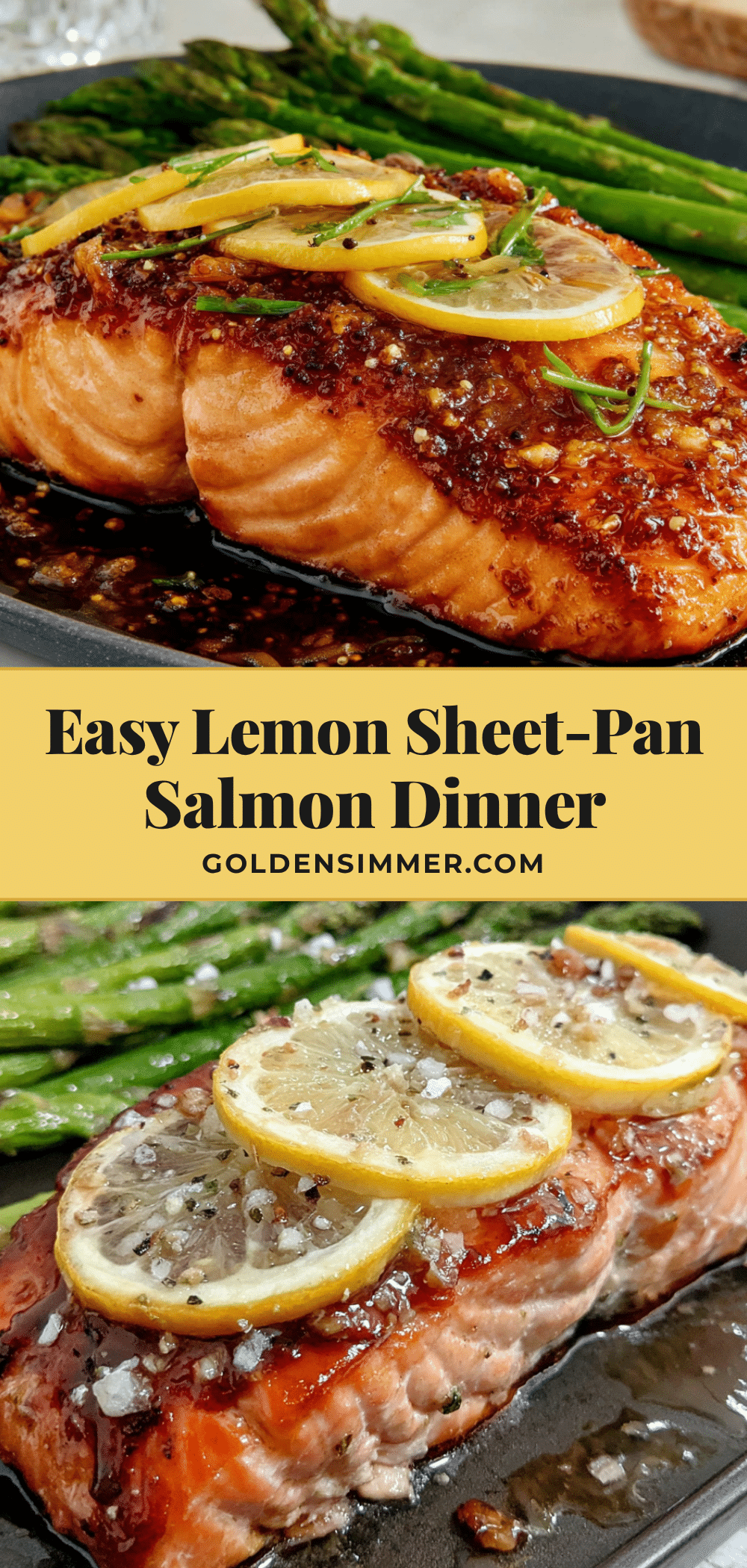
Easy Sheet Pan Salmon with Lemon and Asparagus in 20 Minutes

A quick and easy sheet pan salmon recipe with lemon and asparagus that comes together in under 20 minutes. Perfect for busy weeknights, this meal is healthy, delicious, and requires minimal cleanup.
- Prep Time: 5 minutes
- Cook Time: 15 minutes
- Total Time: 20 minutes
- Yield: 4 servings 1x
- Category: Main Course
- Cuisine: American
Ingredients
- 4 salmon fillets (about 6 ounces each)
- 1 pound fresh asparagus, trimmed
- 2 large lemons (1 juiced, 1 sliced)
- 3 tablespoons olive oil
- 4 cloves garlic, minced
- 1 teaspoon dried oregano
- Salt and black pepper to taste
- 1/4 teaspoon red pepper flakes (optional)
- Fresh parsley for garnish
Instructions
- Preheat oven to 400°F (200°C). Line a large rimmed baking sheet with parchment paper or aluminum foil.
- Wash and trim asparagus by snapping off woody ends. Place on one half of the prepared baking sheet. Drizzle with 1 tablespoon olive oil, salt, and pepper. Toss to coat and spread in a single layer.
- Roast asparagus for 5 minutes.
- While asparagus roasts, pat salmon fillets dry with paper towel. Season both sides with salt and pepper. In a small bowl, whisk together remaining 2 tablespoons olive oil, juice of 1 lemon, minced garlic, and dried oregano. Pour over salmon and turn to coat.
- Remove baking sheet from oven. Push asparagus to one side and place salmon fillets skin-side down on the empty side. Tuck thin tail ends under if needed.
- Slice remaining lemon into thin rounds. Place slices on top of each salmon fillet and tuck some among the asparagus.
- Return to oven and roast for 10-12 minutes, until salmon flakes easily and reaches 125°F (52°C) for medium-rare or 135°F (57°C) for medium. Asparagus should be tender-crisp.
- Remove from oven. Sprinkle with fresh parsley and extra lemon juice if desired. Serve immediately.
Notes
Pat salmon dry for best texture. Don’t overcrowd the pan. Use an instant-read thermometer for perfect doneness. Let salmon sit at room temperature 15 minutes before cooking for even cooking.
Nutrition
- Serving Size: 1 fillet with aspara
- Calories: 380
- Sugar: 3
- Sodium: 450
- Fat: 22
- Saturated Fat: 4
- Carbohydrates: 8
- Fiber: 3
- Protein: 38
Keywords: sheet pan salmon, lemon asparagus salmon, easy salmon recipe, quick weeknight dinner, healthy salmon, one pan meal