Love this? Save it for later!
Share the inspiration with your friends
My grandmother’s neighbor, Mrs. Gable, was the stuffing queen of our block. Every Thanksgiving, she’d bring over a massive Pyrex dish of her famous sausage and sage stuffing, and it would disappear before the turkey even hit the table. When she moved to Florida three years ago, I felt a genuine panic—who would bring the stuffing now? After seven attempts—including one that was so dry it could have doubled as packing material—I finally cracked the code. This classic sausage and sage stuffing from scratch is the real deal, the kind that makes you close your eyes after the first bite. Honestly, I think Mrs. Gable would approve, even if her secret ingredient was probably just a little more butter than anyone should admit.
I remember the first time I tried to recreate it. I was standing in my kitchen, surrounded by bags of stale bread and feeling completely lost. The stuffing I grew up with was never soggy or bland—it was perfectly moist, with crispy edges and that unmistakable savory-sweet flavor from the sausage and fresh sage. Maybe you’ve been there, trying to chase a taste from your past. It took me a while, but I learned that the magic isn’t just in the ingredients—it’s in the technique. Getting the bread-to-broth ratio right, browning the sausage properly, and not over-mixing are the secrets that make this stuffing stand out. And now, I’m sharing everything I’ve learned so you can make the best classic sausage and sage stuffing from scratch right in your own kitchen.
Why You’ll Love This Recipe
This isn’t just another stuffing recipe—it’s the one you’ll come back to year after year. I’ve tested it in different ovens, with different breads, and even with different sausages, and it always delivers. Here’s why this classic sausage and sage stuffing from scratch deserves a spot on your holiday table:
- Simple Ingredients: You probably already have most of these pantry staples. No fancy grocery trips needed—just good bread, fresh herbs, and quality sausage.
- Perfect for Thanksgiving: This stuffing is the ultimate side dish for your holiday spread. It pairs beautifully with turkey, mashed potatoes, and cranberry sauce.
- Crowd-Pleaser: I’ve served this at potlucks, family dinners, and even a Friendsgiving, and it always gets rave reviews. Kids and adults alike go back for seconds.
- Make-Ahead Friendly: You can prep this stuffing a day in advance, which is a lifesaver when you’re juggling multiple dishes on the big day.
- Unbelievably Delicious: The combination of savory sausage, aromatic sage, and perfectly toasted bread is pure comfort food. The crispy top and moist center are a textural dream.
What makes this recipe different from the rest? It’s the technique. I brown the sausage until it’s deeply caramelized, which adds a layer of flavor you can’t get from just mixing raw meat into the bread. I also toast the bread cubes properly—not just leaving them out to stale—which ensures they absorb the broth without turning into mush. This is the best classic sausage and sage stuffing from scratch because it’s been tested, tweaked, and perfected over several Thanksgivings. It’s comfort food reimagined—faster than you think, but with the same soul-soothing satisfaction.
What Ingredients You Will Need
This recipe uses simple, wholesome ingredients to deliver bold flavor and satisfying texture without the fuss. Most of these are pantry staples, and the fresh herbs make all the difference. Here’s what you’ll need for the best classic sausage and sage stuffing from scratch:
For the Bread Base
- 1 loaf (about 1 pound) day-old French bread or sourdough, cut into 1-inch cubes (about 10 cups) — I prefer sourdough for its tangy flavor, but French bread works beautifully too
- 3 tablespoons unsalted butter, melted (for toasting the bread)
For the Sausage and Vegetable Mixture
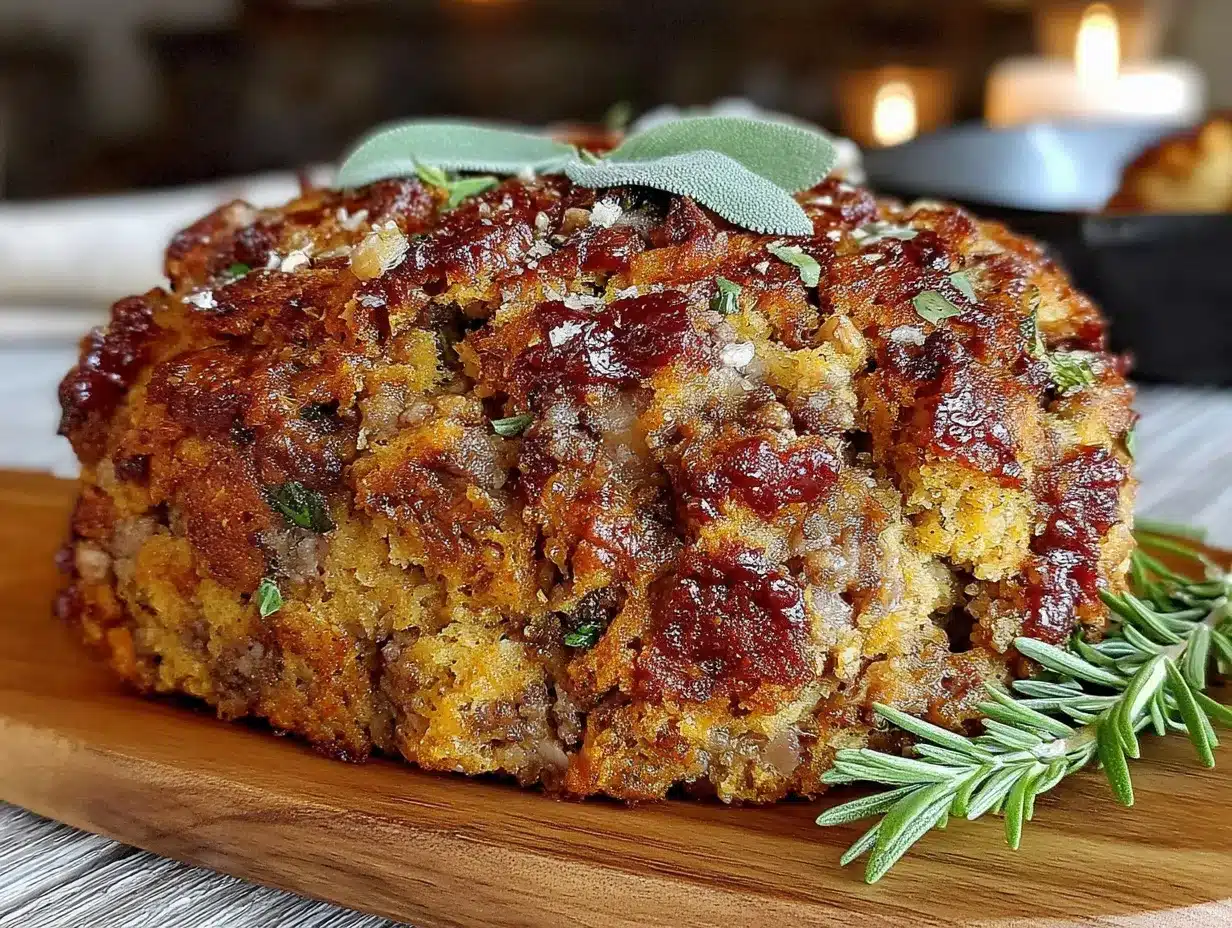
- 1 pound bulk pork sausage (mild or spicy) — I recommend using a high-quality brand like Jimmy Dean or a local butcher’s blend for the best flavor
- 2 tablespoons unsalted butter
- 1 large yellow onion, finely diced (about 1 ½ cups)
- 3 celery stalks, finely diced (about 1 cup)
- 4 cloves garlic, minced
For the Herb and Broth Mixture
- 3 tablespoons fresh sage leaves, finely chopped (or 1 tablespoon dried sage) — fresh sage is non-negotiable for the best flavor; it has a peppery, slightly lemony note that dried just can’t replicate
- 2 teaspoons fresh thyme leaves (or 1 teaspoon dried thyme)
- 1 tablespoon fresh parsley, chopped
- 1 ½ cups low-sodium chicken broth (plus more if needed) — use turkey broth for an even richer flavor
- 1 large egg, lightly beaten
- Salt and freshly ground black pepper, to taste
Ingredient Selection Tips
For the best classic sausage and sage stuffing from scratch, pay attention to your bread. It should be slightly stale—if it’s too fresh, it will turn mushy. I usually buy the bread a day or two ahead and leave it uncovered on the counter. For the sausage, look for one that’s not too lean; the fat adds moisture and flavor. If you can’t find bulk sausage, just remove the casings from Italian sausage links. And please, use fresh sage. It’s the star of this dish, and dried sage just doesn’t have the same punch.
Substitution Guidance
If you need a gluten-free option, use a good quality gluten-free bread—just be sure to toast it well so it holds its shape. For a dairy-free version, substitute the butter with olive oil or a plant-based butter. You can also swap the pork sausage with turkey sausage for a lighter option, though you may need to add a little extra olive oil to keep it moist.
Equipment Needed
You don’t need any fancy gadgets to make this classic sausage and sage stuffing from scratch. Here’s what you’ll need:
- Large baking dish: A 9×13-inch dish works perfectly. I use a ceramic one because it heats evenly and gives those beautiful crispy edges.
- Large skillet or sauté pan: For browning the sausage and cooking the vegetables. A cast-iron skillet is ideal for even browning.
- Large mixing bowl: To combine all the ingredients. You’ll need a big one—trust me.
- Sharp knife and cutting board: For dicing the vegetables and chopping the herbs.
- Wooden spoon or spatula: For stirring the sausage mixture.
- Measuring cups and spoons: For accurate ingredient measurements.
- Whisk: To beat the egg and broth together.
- Aluminum foil: For covering the dish during part of the baking time.
If you don’t have a large baking dish, you can use a cast-iron skillet or even a disposable aluminum pan. I’ve used both, and they work fine—just keep an eye on the cooking time. For the bread, if you don’t have a day-old loaf, you can cube fresh bread and toast it in a 300°F oven for about 10 minutes. That’s actually my preferred method because it gives you more control over the texture.
Preparation Method
Making the best classic sausage and sage stuffing from scratch is easier than you think. Follow these steps, and you’ll have a dish that steals the show. Total time: about 1 hour and 15 minutes.
- Preheat your oven to 350°F (175°C). Spread the bread cubes on a large baking sheet and drizzle with the melted butter. Toss to coat evenly. Bake for 10-12 minutes, stirring halfway through, until the cubes are lightly golden and crisp. This step is crucial—toasting the bread ensures it won’t turn into a soggy mess when you add the broth. Set aside to cool slightly.
- While the bread toasts, cook the sausage. Heat a large skillet over medium-high heat. Add the sausage and cook, breaking it up with a wooden spoon, until it’s deeply browned and cooked through—about 6-8 minutes. Don’t rush this step; the caramelization adds incredible flavor. Use a slotted spoon to transfer the sausage to a plate, leaving the rendered fat in the skillet.
- Cook the vegetables. Reduce the heat to medium and add the 2 tablespoons of butter to the same skillet. Once melted, add the diced onion and celery. Cook, stirring occasionally, until softened and translucent—about 5-7 minutes. Add the minced garlic and cook for another minute until fragrant. The smell at this point is absolutely intoxicating.
- Combine the base ingredients. In a large mixing bowl, combine the toasted bread cubes, cooked sausage, and the sautéed vegetable mixture. Toss gently to distribute everything evenly. Be careful not to overmix—you want the ingredients to be well combined, but you don’t want to break up the bread cubes too much.
- Prepare the broth mixture. In a small bowl or measuring cup, whisk together the chicken broth, beaten egg, fresh sage, thyme, parsley, and a generous pinch of salt and pepper. The egg helps bind the stuffing and gives it that perfect, custard-like texture.
- Combine and soak. Pour the broth mixture over the bread mixture. Use a spatula to gently fold everything together until the bread cubes are evenly moistened. The mixture should be moist but not swimming in liquid. If it looks dry, add a splash more broth. If it looks too wet, don’t worry—the bread will absorb it as it bakes.
- Transfer to the baking dish. Pour the stuffing into a greased 9×13-inch baking dish and spread it into an even layer. Don’t press it down too firmly—you want some air pockets for those crispy bits.
- Bake covered. Cover the dish with aluminum foil and bake for 30 minutes. This allows the stuffing to steam and cook through without drying out.
- Bake uncovered for crispy top. Remove the foil and bake for another 15-20 minutes, until the top is golden brown and crispy. The edges should be nicely caramelized. Let it rest for 5 minutes before serving—this helps it set and makes it easier to scoop.
Cooking Tips & Techniques
Over the years, I’ve made this classic sausage and sage stuffing from scratch more times than I can count, and I’ve learned a few things the hard way. Here are my best tips for stuffing success:
Don’t skip toasting the bread. I know it’s an extra step, but it’s the difference between perfect stuffing and a soggy mess. Toasted bread absorbs the broth without falling apart. If you’re short on time, you can cube the bread and leave it out overnight to dry, but toasting gives you more consistent results.
Brown the sausage well. I used to just cook the sausage until it was no longer pink, but that was a mistake. Let it get deeply browned—almost crispy in spots. That browning is where the flavor lives. It’s called the Maillard reaction, and it’s your best friend in this recipe.
Season carefully. Sausage is already seasoned, so go easy on the salt. I always taste the sausage mixture before adding the broth and adjust from there. Remember, you can always add more salt later, but you can’t take it out.
Use low-sodium broth. This gives you control over the salt level. If you use regular broth, the stuffing can end up overly salty, especially with the sausage and butter.
Don’t overmix. Once you add the broth, fold gently. Overmixing will break down the bread cubes and give you a dense, pasty texture. You want some chunks of bread to remain intact.
Let it rest. I know it’s tempting to dig in right away, but letting the stuffing rest for 5-10 minutes allows it to set and makes serving much easier. Plus, the flavors continue to meld during that time.
Variations & Adaptations
The beauty of this classic sausage and sage stuffing from scratch is how adaptable it is. Here are some of my favorite variations:
Apple and Sausage Stuffing
Add 1 cup of diced Granny Smith apple to the vegetable mixture. The tartness of the apple cuts through the richness of the sausage and adds a lovely sweetness. I tried this on a whim one year when I had an extra apple lying around, and it’s been a staple ever since.
Wild Mushroom and Sage Stuffing
Swap half the sausage for 8 ounces of sautéed wild mushrooms—cremini, shiitake, or oyster mushrooms work beautifully. This version is a hit with vegetarians (just use vegetable broth) and adds an earthy, umami depth that’s absolutely stunning.
Cornbread Sausage Stuffing
Replace half the French bread with crumbled cornbread. This Southern-style twist adds a subtle sweetness and a wonderful crumbly texture. I use my grandmother’s cornbread recipe, but any good cornbread will do.
Gluten-Free Version
Use a high-quality gluten-free bread, preferably one that’s sturdy and not too sweet. Toast it well, and add an extra tablespoon of broth to compensate for the drier texture. I’ve tested this with several brands, and it works beautifully.
Spicy Sausage Version
Use hot Italian sausage or add a pinch of red pepper flakes to the vegetable mixture. The heat pairs wonderfully with the cool, herbal notes of the sage. This is my husband’s favorite version.
Serving & Storage Suggestions
This classic sausage and sage stuffing from scratch is best served warm, straight from the oven. I love to scoop it onto plates alongside roast turkey, mashed potatoes, and a dollop of cranberry sauce. The contrast of the crispy top and the moist, savory interior is pure magic.
If you’re making it for a big holiday meal, you can assemble the stuffing up to 24 hours in advance. Just follow the recipe through step 6, cover the dish tightly with foil, and refrigerate. When you’re ready to bake, add about 10-15 minutes to the covered baking time to account for the cold start. This is a huge time-saver on Thanksgiving morning.
For leftovers, store the stuffing in an airtight container in the refrigerator for up to 4 days. The flavors actually deepen overnight, so it’s even better the next day. To reheat, place it in a 350°F oven for about 15 minutes, or until warmed through. You can also microwave individual portions, but the oven gives you back some of that crispy top.
This stuffing freezes beautifully. Place it in a freezer-safe container and freeze for up to 3 months. Thaw overnight in the refrigerator before reheating. I’ve done this several times, and it’s a lifesaver when you want a taste of Thanksgiving in the middle of January.
Nutritional Information & Benefits
While this classic sausage and sage stuffing from scratch is definitely a comfort food, it does offer some nutritional benefits. Here’s an approximate breakdown per serving (based on 10 servings):
| Nutrient | Amount per Serving |
|---|---|
| Calories | 320 |
| Total Fat | 18g |
| Saturated Fat | 7g |
| Cholesterol | 55mg |
| Sodium | 680mg |
| Total Carbohydrates | 30g |
| Dietary Fiber | 2g |
| Sugars | 3g |
| Protein | 12g |
The pork sausage provides a good source of protein and B vitamins, while the celery and onion add fiber and antioxidants. Fresh sage is rich in vitamin K and has anti-inflammatory properties. The butter and bread provide energy, making this a satisfying dish that will keep you full. If you’re watching your sodium, use low-sodium broth and go easy on the added salt. This stuffing is not gluten-free or dairy-free in its classic form, but I’ve included substitutions above.
FAQs
Can I make this stuffing ahead of time?
Yes! You can assemble the stuffing up to 24 hours in advance. Just cover it tightly and refrigerate. Add about 10-15 minutes to the covered baking time when you’re ready to cook it.
Can I stuff the turkey with this recipe?
Technically yes, but I don’t recommend it. Stuffing cooked inside the turkey can be a food safety risk because it might not reach a safe internal temperature. Plus, it tends to be greasy and soggy. Baking it separately gives you that crispy top and perfectly moist interior.
What kind of bread is best for stuffing?
A sturdy, day-old bread like French bread, sourdough, or Italian bread works best. Avoid soft sandwich bread, which will turn into mush. The bread should be able to hold its shape after absorbing the broth.
Can I freeze leftover stuffing?
Absolutely. Place it in a freezer-safe container and freeze for up to 3 months. Thaw overnight in the refrigerator and reheat in a 350°F oven until warmed through. The texture will be slightly softer, but the flavor is still fantastic.
How do I make this stuffing vegetarian?
Simply omit the sausage and add an extra cup of sautéed mushrooms or diced apples. Use vegetable broth instead of chicken broth, and add a little extra butter or olive oil to make up for the fat from the sausage.
Conclusion
This classic sausage and sage stuffing from scratch is more than just a side dish—it’s the heart of the holiday table. It’s the recipe that brings people back for seconds, the one that sparks memories of Thanksgivings past, and the one that makes you feel like a kitchen hero. I’ve made it for friends, family, and even a few skeptical in-laws, and it never fails to earn a spot in the “make again” file.
I hope you give this recipe a try and make it your own. Maybe you’ll add a little more sage, or swap in a different sausage, or sneak in some dried cranberries for sweetness. That’s the beauty of cooking—you can always tweak and adjust until it’s exactly what you want. If you do make it, I’d love to hear how it turns out. Leave a comment below, share a photo, or tag me on social media. And if you’re looking for more holiday inspiration, be sure to check out my classic roast turkey recipe and homemade cranberry sauce—they make the perfect trio. Happy cooking, and here’s to a table full of love and good food!
Pin This Recipe!
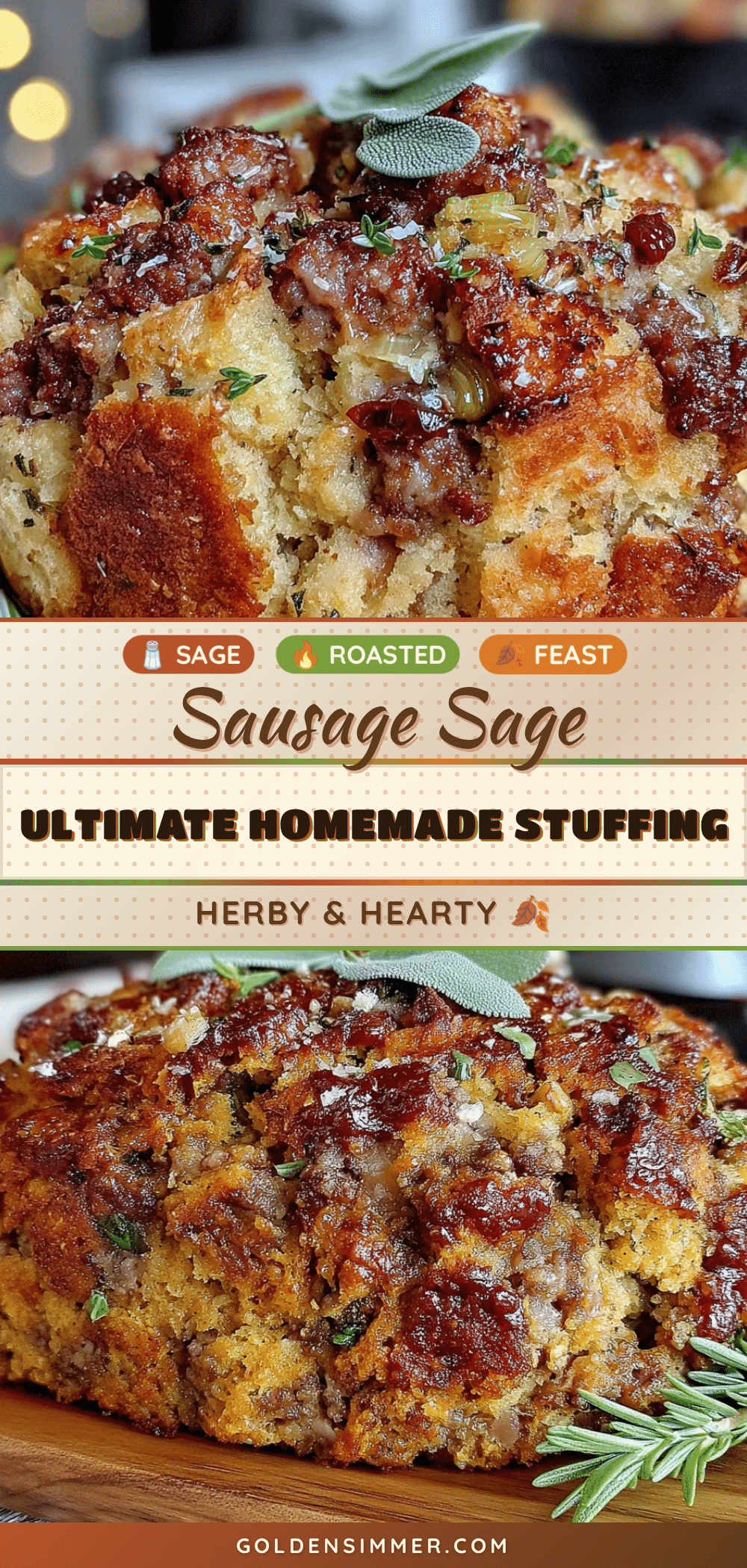
Best Classic Sausage and Sage Stuffing Recipe from Scratch

This classic sausage and sage stuffing from scratch is perfectly moist with crispy edges and savory-sweet flavor from the sausage and fresh sage. It’s the ultimate holiday side dish that will earn rave reviews.
- Prep Time: 20 minutes
- Cook Time: 55 minutes
- Total Time: 1 hour 15 minutes
- Yield: 10 servings 1x
- Category: Side Dish
- Cuisine: American
Ingredients
- 1 loaf (about 1 pound) day-old French bread or sourdough, cut into 1-inch cubes (about 10 cups)
- 3 tablespoons unsalted butter, melted
- 1 pound bulk pork sausage (mild or spicy)
- 2 tablespoons unsalted butter
- 1 large yellow onion, finely diced (about 1 ½ cups)
- 3 celery stalks, finely diced (about 1 cup)
- 4 cloves garlic, minced
- 3 tablespoons fresh sage leaves, finely chopped (or 1 tablespoon dried sage)
- 2 teaspoons fresh thyme leaves (or 1 teaspoon dried thyme)
- 1 tablespoon fresh parsley, chopped
- 1 ½ cups low-sodium chicken broth (plus more if needed)
- 1 large egg, lightly beaten
- Salt and freshly ground black pepper, to taste
Instructions
- Preheat your oven to 350°F (175°C). Spread the bread cubes on a large baking sheet and drizzle with the melted butter. Toss to coat evenly. Bake for 10-12 minutes, stirring halfway through, until the cubes are lightly golden and crisp. Set aside to cool slightly.
- While the bread toasts, cook the sausage. Heat a large skillet over medium-high heat. Add the sausage and cook, breaking it up with a wooden spoon, until it’s deeply browned and cooked through—about 6-8 minutes. Use a slotted spoon to transfer the sausage to a plate, leaving the rendered fat in the skillet.
- Reduce the heat to medium and add the 2 tablespoons of butter to the same skillet. Once melted, add the diced onion and celery. Cook, stirring occasionally, until softened and translucent—about 5-7 minutes. Add the minced garlic and cook for another minute until fragrant.
- In a large mixing bowl, combine the toasted bread cubes, cooked sausage, and the sautéed vegetable mixture. Toss gently to distribute everything evenly.
- In a small bowl or measuring cup, whisk together the chicken broth, beaten egg, fresh sage, thyme, parsley, and a generous pinch of salt and pepper.
- Pour the broth mixture over the bread mixture. Use a spatula to gently fold everything together until the bread cubes are evenly moistened. The mixture should be moist but not swimming in liquid. If it looks dry, add a splash more broth.
- Pour the stuffing into a greased 9×13-inch baking dish and spread it into an even layer. Don’t press it down too firmly.
- Cover the dish with aluminum foil and bake for 30 minutes.
- Remove the foil and bake for another 15-20 minutes, until the top is golden brown and crispy. Let it rest for 5 minutes before serving.
Notes
For best results, use day-old bread and fresh sage. Brown the sausage well for maximum flavor. Do not overmix the stuffing. Let it rest before serving. Can be assembled up to 24 hours in advance.
Nutrition
- Serving Size: 1 serving
- Calories: 320
- Sugar: 3
- Sodium: 680
- Fat: 18
- Saturated Fat: 7
- Carbohydrates: 30
- Fiber: 2
- Protein: 12
Keywords: stuffing, sausage stuffing, sage stuffing, Thanksgiving stuffing, classic stuffing, holiday side dish