Love this? Save it for later!
Share the inspiration with your friends
My neighbor Karen wasn’t trying to impress me. I’d stopped by to borrow a screwdriver—my kitchen cabinet door had come loose again—and this warm, almost nutty sweetness hit me before she even opened the screen door. It was a Tuesday afternoon in November, gray and damp outside, and her kitchen glowed like a little sanctuary. There she was, in her faded sweater, tossing root vegetables on a sheet pan like it was nothing special.
“Oh, those? Just carrots and parsnips,” she said when I asked what smelled so amazing. She even shrugged. A shrug! I was practically drooling on her counter, and she was acting like she’d boiled water. She let me try one straight from the pan—burned my tongue, honestly, and it was worth every second of that tiny pain. The carrots were sticky and sweet at the edges, the parsnips had this almost buttery tenderness, and there was this tangy kick underneath it all that I couldn’t quite place.
She finally admitted it was maple syrup and Dijon mustard, plus a splash of something she called “fancy vinegar” (her words, not mine). I scribbled the rough idea on a napkin before I left, screwdriver completely forgotten. Maybe you’ve been there—where a completely ordinary moment turns into a recipe you just have to recreate. That’s exactly how these Roasted Maple Dijon Carrots and Parsnips came into my life. I’ve made them at least a dozen times since, tweaking and testing, and they’ve become my go-to side dish for everything from weeknight dinners to holiday tables.
Why You’ll Love This Recipe
These aren’t your average roasted vegetables. Honestly, I’ve tested this recipe more times than I can count, tweaking the glaze ratio and roasting times until everything hit just right. Here’s why this version stands out:
- Quick & Easy: Comes together in about 35 minutes, with only 10 minutes of active prep. Perfect for busy weeknights when you want something that feels special without the fuss.
- Simple Ingredients: No fancy grocery trips needed. Carrots, parsnips, maple syrup, Dijon mustard—you probably have most of these in your kitchen right now.
- Perfect for Any Occasion: Great for Sunday dinners, holiday feasts, meal prep lunches, or even as a side for your Easter ham. It’s versatile like that.
- Crowd-Pleaser: I’ve served these to picky kids, vegetable-skeptical friends, and hard-to-please in-laws. Empty pan every single time.
- Unbelievably Delicious: The combination of sweet maple, tangy Dijon, and earthy roasted root vegetables is pure comfort food magic. You’ll find yourself making extra just for leftovers.
What makes this recipe different from the rest? It’s the balance. So many roasted vegetable recipes go too sweet or too tangy, but this one nails that perfect middle ground. The maple syrup caramelizes beautifully without making things cloying, and the Dijon cuts through with just enough sharpness. Plus, roasting at the right temperature gives you those gorgeous caramelized edges while keeping the insides tender. It’s comfort food reimagined—healthier, faster, but with the same soul-soothing satisfaction that makes you close your eyes after the first bite.
What Ingredients You Will Need
This recipe uses simple, wholesome ingredients to deliver big flavor without the fuss. Most of these are pantry staples or easy to find at any grocery store.
- Carrots – 1 pound, peeled and cut into 3-inch sticks. Look for medium-sized carrots that aren’t too thick; they roast more evenly. I prefer organic carrots for the best flavor, but regular ones work great too.
- Parsnips – 1 pound, peeled and cut into 3-inch sticks. Choose parsnips that are firm and not too large—bigger ones can have woody cores. If you find a thick one, just cut out the tough center before roasting.
- Pure Maple Syrup – 3 tablespoons. Use the real stuff, not pancake syrup. Grade A dark amber works beautifully here. The maple flavor really shines through after roasting.
- Dijon Mustard – 2 tablespoons. I recommend Grey Poupon for its smooth texture and balanced heat, but any good-quality Dijon works. Avoid yellow mustard here—it’s just not the same.
- Extra-Virgin Olive Oil – 2 tablespoons. Adds richness and helps everything caramelize. You can substitute avocado oil if needed.
- Apple Cider Vinegar – 1 tablespoon. This is the “fancy vinegar” Karen used! It brightens up the glaze and balances the sweetness perfectly.
- Garlic – 2 cloves, minced. Fresh garlic is non-negotiable here. The pre-minced stuff in a jar won’t give you the same depth of flavor.
- Fresh Thyme – 1 tablespoon, chopped (or 1 teaspoon dried). Adds an earthy, slightly floral note that pairs beautifully with the root vegetables.
- Salt – 1 teaspoon, or to taste. I use kosher salt for its clean flavor.
- Black Pepper – ½ teaspoon, freshly ground. Always fresh-ground if you can—it makes a difference.
- Optional garnish – Fresh parsley, chopped, for a pop of color before serving.
Substitution guidance: For a lower-sugar option, reduce maple syrup to 2 tablespoons and add an extra splash of apple cider vinegar. If you’re avoiding nightshades, these vegetables are naturally nightshade-free. For a vegan version, this recipe is already plant-based—just double-check your Dijon mustard doesn’t contain honey.
Equipment Needed
You don’t need a fancy kitchen to pull this off. Here’s what I use:
- Large Baking Sheet – A half-sheet pan (18×13 inches) works perfectly. Avoid overcrowding—use two pans if needed. I learned this the hard way after a soggy batch.
- Parchment Paper or Silicone Mat – Makes cleanup a breeze and prevents sticking. I prefer parchment for the crispiest edges.
- Chef’s Knife – A sharp 8-inch knife makes quick work of peeling and cutting. Dull knives are dangerous—trust me, I’ve got the band-aids to prove it.
- Vegetable Peeler – A Y-shaped peeler is my favorite for root vegetables. It’s faster and gives you more control.
- Mixing Bowl – Medium-sized, for tossing the vegetables with the glaze.
- Small Whisk or Fork – For mixing the maple Dijon glaze together.
- Measuring Spoons – For accurate measurements. I’m usually a “pinch of this” cook, but this recipe benefits from precision.
- Cutting Board – A sturdy wooden or plastic board. Nothing fancy needed.
Budget-friendly tip: Don’t have a silicone mat? Parchment paper is cheap and works just as well. No pastry brush? Just use a spoon to drizzle the glaze.
Preparation Method
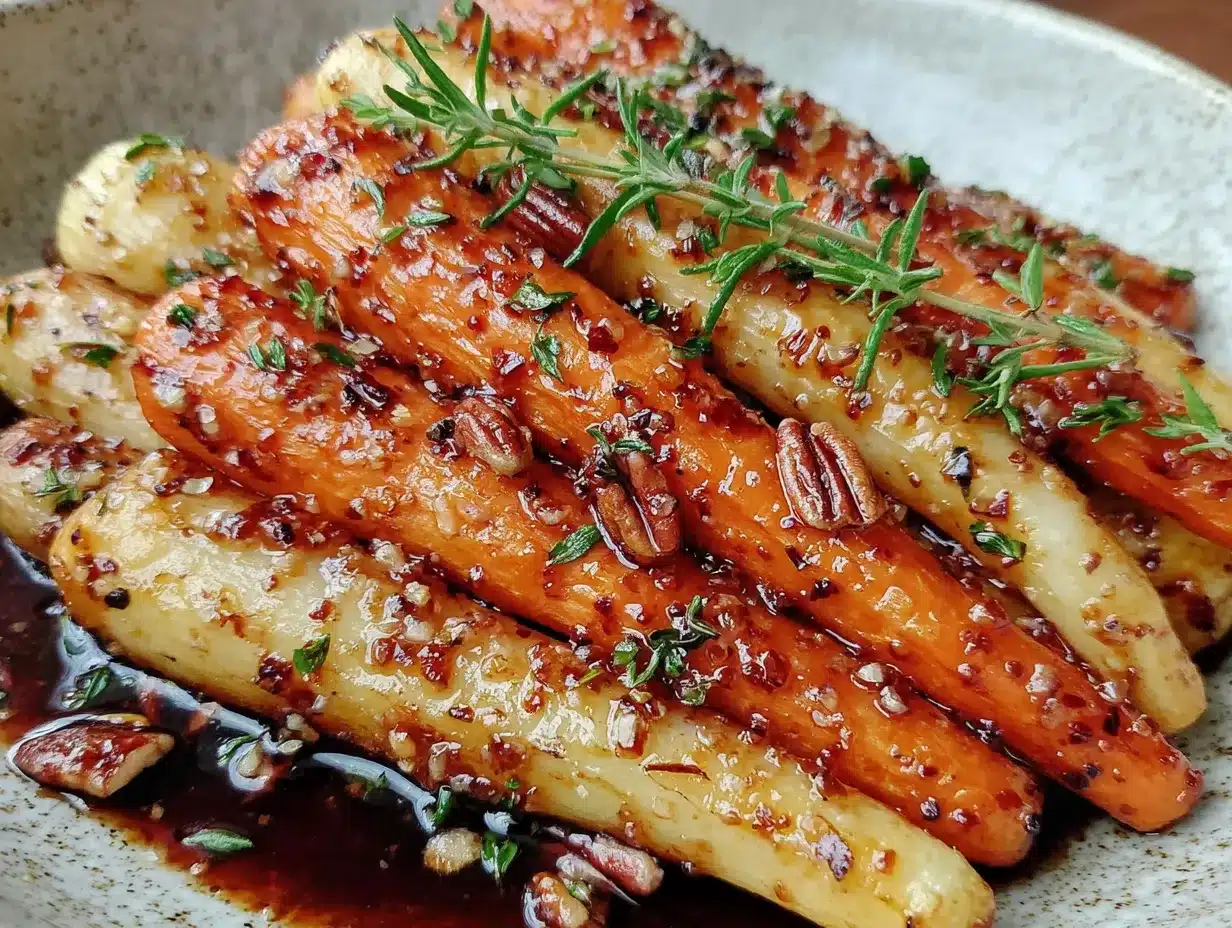
Let me walk you through this step by step. I’ve included all the little details I wish someone had told me the first time.
- Preheat your oven to 400°F (200°C). Get this going first—it takes a while to heat up, and you want it screaming hot when the vegetables go in. Position the rack in the middle of the oven for even roasting.
- Prepare the vegetables. Peel the carrots and parsnips, then cut off the tops and tails. Cut them into sticks about 3 inches long and ½ inch thick. Try to keep them roughly the same size—this is the secret to even cooking. If some pieces are much thinner, they’ll burn before the thicker ones are done. I learned this after a particularly sad batch where half the pan was charcoal and the other half was raw.
- Make the glaze. In your mixing bowl, whisk together the maple syrup, Dijon mustard, olive oil, apple cider vinegar, minced garlic, chopped thyme, salt, and pepper. Taste it—it should be sweet, tangy, and slightly sharp from the mustard. Adjust salt if needed. This glaze is liquid gold, honestly.
- Toss the vegetables. Add the carrot and parsnip sticks to the bowl with the glaze. Use your hands (or a spatula if you’re not into sticky fingers) to toss everything until every piece is evenly coated. Don’t skip this step—coating matters more than you think. The glaze should cling to the vegetables, not pool at the bottom of the bowl.
- Arrange on the baking sheet. Line your sheet pan with parchment paper. Spread the vegetables in a single layer, making sure they’re not touching too much. Give them some breathing room—crowding leads to steaming instead of roasting, and you want those caramelized edges. If your pan is too small, use two pans or roast in batches.
- Roast for 20 minutes. Place the pan in the preheated oven and set a timer. Don’t open the oven door during this time—you’ll let out all the heat. Go wash the dishes or prep the rest of your meal.
- Flip and glaze again. After 20 minutes, remove the pan from the oven. Use a spatula to flip each piece over. Here’s a tip I picked up from Karen: brush any remaining glaze from the bowl over the vegetables at this point. It adds an extra layer of flavor. Return the pan to the oven.
- Roast for another 10-15 minutes. Keep a close eye on them during this last stretch. The vegetables are done when they’re tender enough to pierce easily with a fork and the edges are golden brown and slightly caramelized. Some darker spots are fine—that’s where the flavor lives. If you like them extra crispy, give them 5 more minutes.
- Rest and garnish. Remove the pan from the oven and let the vegetables rest for 2-3 minutes. This allows the glaze to set slightly. Transfer to a serving platter and sprinkle with fresh chopped parsley if you’re using it. The parsley isn’t just for looks—it adds a fresh contrast to the rich, caramelized vegetables.
Sensory cues to watch for: When the vegetables are perfectly roasted, they should look glossy and slightly wrinkled at the edges. The smell will be intoxicating—sweet maple mingling with earthy roasted roots and that subtle tang from the mustard. If you hear a gentle sizzle when you take the pan out, you’re doing it right.
Cooking Tips & Techniques
After making these Roasted Maple Dijon Carrots and Parsnips more times than I can count, I’ve picked up a few tricks that make a real difference.
Don’t skip the parsnip peeling. Parsnip skins can be tough and fibrous, even after roasting. Take the extra minute to peel them thoroughly. I once left the skins on, thinking it would be rustic and charming. It was not. My guests spent more time chewing than chatting.
Cut vegetables uniformly. I cannot stress this enough. Uneven pieces mean uneven cooking. The thin bits burn while the thick ones stay crunchy. Take the extra minute to match up your pieces. Your future self will thank you.
Use room-temperature maple syrup. Cold maple syrup is thick and stubborn, making it hard to whisk into a smooth glaze. Let it sit on the counter for 10 minutes before starting. Or, if you’re impatient like me, microwave it for 10 seconds.
Don’t overcrowd the pan. This is probably the most common mistake people make with roasted vegetables. If everything is crammed together, they steam instead of roast. You’ll end up with sad, soggy vegetables instead of beautiful caramelized ones. Use two pans if you need to.
Flip halfway through. That flip at the 20-minute mark isn’t optional—it ensures even browning and caramelization. I’ve forgotten this step before, and the bottom of the vegetables got all the color while the tops stayed pale. Learn from my mistakes.
Timing strategy: While the vegetables are roasting, you can prep the rest of your meal. These go great with a simple protein like roasted chicken or grilled salmon. The total cooking time is about 35 minutes, which gives you plenty of time to whip up a quick salad or steam some rice.
Variations & Adaptations
One of the best things about this recipe is how adaptable it is. I’ve tried several variations over the years, and they’ve all been delicious in their own way.
Herb Swap: Not a fan of thyme? Try rosemary or sage instead. Rosemary adds a piney, aromatic quality that pairs beautifully with the maple. Sage gives it an almost Thanksgiving-like warmth. Use the same amount—1 tablespoon fresh or 1 teaspoon dried.
Add Some Heat: For a spicy kick, add ¼ teaspoon of red pepper flakes to the glaze. The heat cuts through the sweetness and adds a whole new dimension. I tried this on a whim one night and ended up making it three times that week.
Vegetable Variations: This glaze works beautifully on other root vegetables too. Try swapping half the parsnips for sweet potatoes, or add some chopped butternut squash. In the summer, I’ve even used it on zucchini and bell peppers—just reduce the roasting time to about 20 minutes total since they cook faster.
Balsamic Twist: Substitute the apple cider vinegar with balsamic vinegar for a deeper, more complex sweetness. The balsamic adds a richness that’s incredible with the maple. This version is my go-to for holiday dinners.
Garlic-Free Version: If you’re sensitive to garlic or just don’t have any on hand, you can skip it. Add an extra teaspoon of Dijon mustard to compensate for the lost flavor complexity.
Maple-Free Option: For a lower-sugar version, replace the maple syrup with 2 tablespoons of honey or agave nectar. The flavor profile will shift slightly, but it’s still delicious. Alternatively, you can use a sugar-free maple syrup substitute.
Serving & Storage Suggestions
These Roasted Maple Dijon Carrots and Parsnips are incredibly versatile when it comes to serving. I’ve enjoyed them in so many different contexts.
Serving temperature: Serve them hot, straight from the oven, when the glaze is still glossy and the edges are crispy. They’re also delicious at room temperature—perfect for potlucks or buffets where timing is tricky.
Presentation: Arrange the vegetables on a white platter for maximum visual impact. The orange and cream colors pop beautifully against a light background. Sprinkle with fresh parsley or chives for a touch of green. If you’re feeling fancy, add a drizzle of extra maple syrup right before serving.
Perfect pairings: These vegetables are a natural side for roasted chicken, grilled steak, baked salmon, or pork tenderloin. They’re also fantastic alongside a simple green salad and crusty bread for a lighter meal. For holidays, they fit right in next to mashed potatoes and stuffing.
Storage: Store leftovers in an airtight container in the refrigerator for up to 4 days. The flavors actually deepen overnight, so leftovers can be even better the next day. I often make a double batch just for this reason.
Reheating: The best way to reheat is in a 350°F oven for 5-7 minutes, which restores some of the crispy edges. You can also use an air fryer at 350°F for 3-4 minutes. Avoid the microwave—it makes them soggy and sad. I learned this the hard way when I tried to reheat leftovers for lunch and ended up with limp, watery vegetables.
Freezing: These vegetables freeze surprisingly well. Spread them on a baking sheet and freeze until solid, then transfer to a freezer bag. They’ll keep for up to 3 months. Reheat directly from frozen in a 400°F oven for 10-12 minutes.
Nutritional Information & Benefits
These Roasted Maple Dijon Carrots and Parsnips aren’t just delicious—they’re packed with nutrients too. Here’s the estimated breakdown per serving (about 1 cup):
- Calories: 180
- Total Fat: 7g
- Carbohydrates: 30g
- Fiber: 6g
- Sugar: 18g (natural plus added maple syrup)
- Protein: 2g
- Vitamin A: 380% of daily value (from carrots)
- Vitamin C: 25% of daily value
- Potassium: 600mg
Health highlights: Carrots are famous for their beta-carotene content, which supports eye health and immune function. Parsnips are rich in fiber, folate, and vitamin C. The olive oil provides healthy monounsaturated fats that help your body absorb the fat-soluble vitamins from the vegetables. Even the maple syrup offers small amounts of zinc and manganese.
Dietary considerations: This recipe is naturally gluten-free, dairy-free, and vegan. It’s also nut-free and soy-free, making it safe for most common allergies. If you’re watching your sugar intake, you can reduce the maple syrup to 2 tablespoons without sacrificing too much flavor.
I love that this recipe lets me enjoy a side dish that feels indulgent while still being packed with wholesome ingredients. It’s the kind of food that makes you feel good from the inside out.
Conclusion
These Roasted Maple Dijon Carrots and Parsnips have become a staple in my kitchen, and I honestly think they deserve a spot in yours too. They’re simple enough for a Tuesday night, special enough for a holiday table, and adaptable enough to fit almost any dietary need. The combination of sweet maple, tangy Dijon, and caramelized root vegetables is something you have to taste to believe.
I love that this recipe came from such an ordinary moment—borrowing a screwdriver from a neighbor who didn’t think twice about what she was making. It reminds me that the best recipes often come from the most unexpected places. Maybe you’ll have your own story to tell after you make these.
I’d love to hear how yours turn out! Did you try any of the variations? Did you discover a new favorite pairing? Drop a comment below and let me know. And if you’re looking for another simple side dish, you might enjoy my honey balsamic roasted Brussels sprouts or this garlic herb roasted potatoes recipe.
Go ahead, give these a try. Your kitchen is about to smell amazing.
Frequently Asked Questions
Can I make these ahead of time?
Absolutely! You can prep the vegetables and glaze up to 24 hours in advance. Store them separately in the refrigerator, then toss and roast when you’re ready. You can also fully roast them and reheat in a 350°F oven for 5-7 minutes before serving.
Why are my roasted vegetables soggy instead of caramelized?
The most common culprit is overcrowding the pan. If the vegetables are too close together, they steam instead of roast. Make sure they’re in a single layer with space between each piece. Also, ensure your oven is fully preheated to 400°F before the vegetables go in.
Can I use baby carrots instead of whole carrots?
You can, but the texture will be slightly different. Baby carrots are already peeled and uniform in size, which is convenient. However, they tend to be sweeter and less sturdy, so reduce the roasting time by 5-10 minutes and keep a close eye on them.
Is there a substitute for maple syrup?
Yes! Honey, agave nectar, or brown sugar dissolved in a tablespoon of warm water all work as substitutes. Keep in mind that each will change the flavor profile slightly. Honey adds floral notes, agave is milder, and brown sugar gives a deeper, molasses-like sweetness.
How do I know when parsnips are past their prime?
Fresh parsnips should be firm, cream-colored, and free of soft spots. If they feel rubbery or have developed dark spots, they’re past their best. Also, very large parsnips often have woody cores—if you cut into one and see a tough center, just trim it out before roasting.
Pin This Recipe!
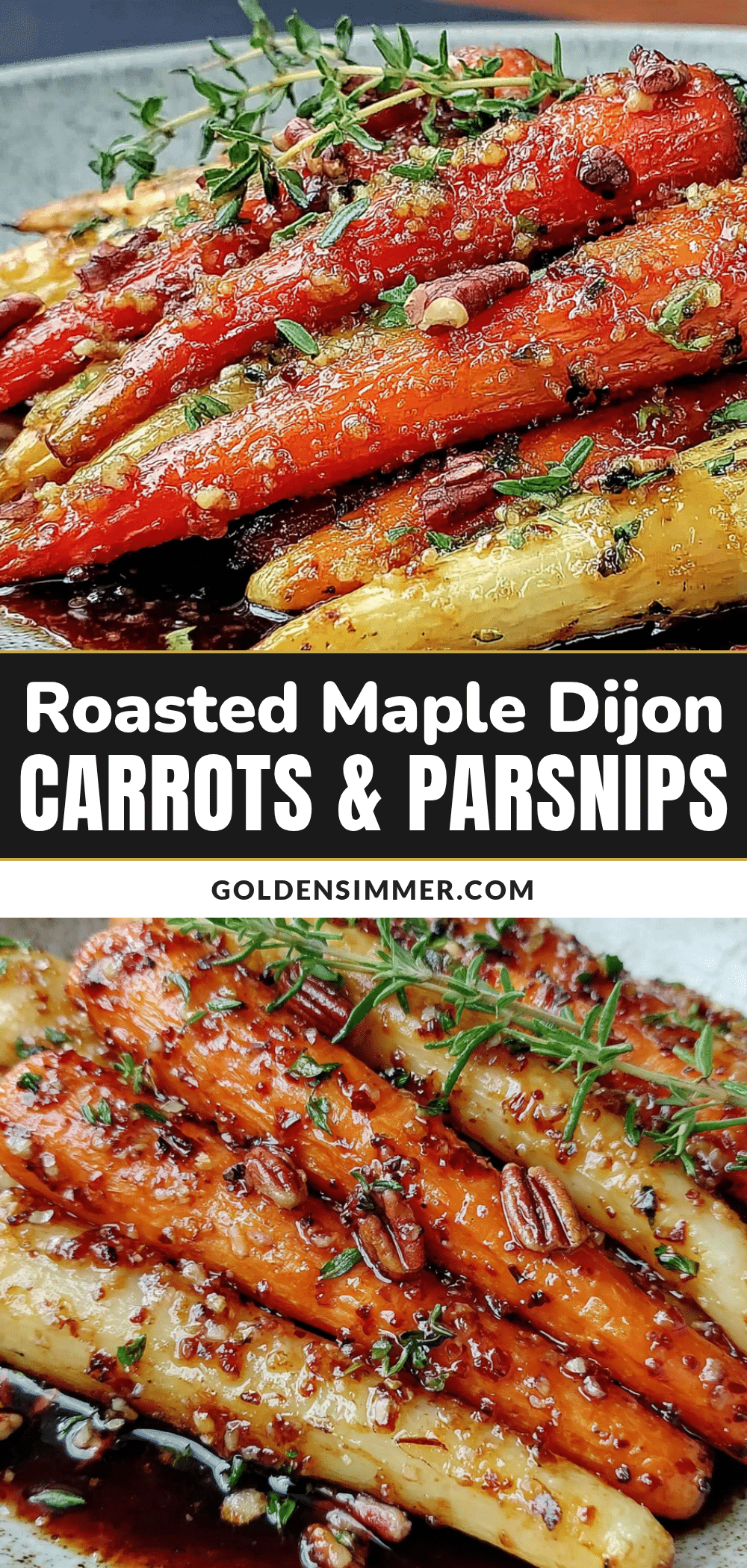
Best Easy Roasted Maple Dijon Carrots and Parsnips
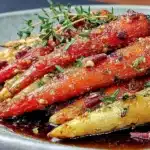
These roasted carrots and parsnips are coated in a sweet and tangy maple Dijon glaze, then roasted until caramelized and tender. An easy, crowd-pleasing side dish perfect for weeknights or holiday feasts.
- Prep Time: 10 minutes
- Cook Time: 30-35 minutes
- Total Time: 40-45 minutes
- Yield: 4 servings 1x
- Category: Side Dish
- Cuisine: American
Ingredients
- 1 pound carrots, peeled and cut into 3-inch sticks
- 1 pound parsnips, peeled and cut into 3-inch sticks
- 3 tablespoons pure maple syrup
- 2 tablespoons Dijon mustard
- 2 tablespoons extra-virgin olive oil
- 1 tablespoon apple cider vinegar
- 2 cloves garlic, minced
- 1 tablespoon fresh thyme, chopped (or 1 teaspoon dried)
- 1 teaspoon kosher salt
- ½ teaspoon freshly ground black pepper
- Fresh parsley, chopped (optional garnish)
Instructions
- Preheat oven to 400°F (200°C). Position rack in the middle.
- Peel carrots and parsnips, cut off tops and tails, then cut into sticks about 3 inches long and ½ inch thick. Try to keep pieces uniform for even cooking.
- In a mixing bowl, whisk together maple syrup, Dijon mustard, olive oil, apple cider vinegar, minced garlic, chopped thyme, salt, and pepper. Taste and adjust salt if needed.
- Add carrot and parsnip sticks to the bowl with the glaze. Toss with your hands or a spatula until every piece is evenly coated.
- Line a large baking sheet with parchment paper. Spread vegetables in a single layer, ensuring they are not overcrowded (use two pans if necessary).
- Roast for 20 minutes. Do not open the oven door during this time.
- Remove pan from oven. Flip each piece with a spatula. Brush any remaining glaze from the bowl over the vegetables. Return to oven.
- Roast for another 10-15 minutes, until vegetables are tender and edges are golden brown and caramelized. For extra crispiness, add 5 more minutes.
- Remove from oven and let rest for 2-3 minutes. Transfer to a serving platter and sprinkle with fresh parsley if desired.
Notes
For a lower-sugar option, reduce maple syrup to 2 tablespoons and add extra apple cider vinegar. To reheat leftovers, use a 350°F oven for 5-7 minutes or an air fryer at 350°F for 3-4 minutes. Avoid the microwave. Vegetables can be prepped and glazed up to 24 hours in advance. Store leftovers in an airtight container in the refrigerator for up to 4 days, or freeze for up to 3 months.
Nutrition
- Serving Size: 1 cup
- Calories: 180
- Sugar: 18
- Sodium: 480
- Fat: 7
- Saturated Fat: 1
- Carbohydrates: 30
- Fiber: 6
- Protein: 2
Keywords: roasted carrots, roasted parsnips, maple Dijon, easy side dish, holiday side, gluten-free, vegan, root vegetables