Love this? Save it for later!
Share the inspiration with your friends
I was getting my car’s oil changed—a Tuesday, I think—when the guy behind the counter, a man named Earl with a name tag that said “35 Years of Service,” started telling me about prime rib. Not his own, but his grandmother’s. He was wiping a dipstick and describing how she’d rub a whole roast with garlic and herbs until it looked like “a mossy log from the forest floor.” I wasn’t expecting cooking advice from a mechanic named Earl, but there I was, sitting in a plastic chair next to a stack of tires, listening to him describe exactly how to make the best garlic herb prime rib roast with red wine jus. Honestly, I almost didn’t write it down. I mean, who takes roast beef tips from a guy named after a country singer? But something about the way he said “the jus should be so dark it looks like midnight” made me grab a pen from my glove compartment. I scribbled his grandmother’s method on the back of a receipt for a new air filter. That crumpled piece of paper sat in my car for three months before I tried it. Let me tell you, I have never looked back. That first bite—the crusty, herby exterior giving way to butter-soft meat—it was the kind of thing you close your eyes for. You know that feeling when a recipe just works? This is that recipe. You might have been searching for a showstopper for your next dinner party, and honestly, this is it. It’s the dish that makes everyone at the table go quiet for a second. I keep making it because it feels like a secret I’m finally allowed to share.
Why You’ll Love This Recipe
This isn’t just another roast recipe you find online. I’ve tested this method about seven times now—burned my forearm on the oven rack once, forgot to take the meat out of the fridge early another time (rookie mistake)—and each time, it came out better than the last. This is the version that works every single time.
- Foolproof for Hosting: This method is designed for people who have guests arriving and a million things to do. You sear it, rub it, and let the oven do the heavy lifting. No basting, no flipping, no stress.
- Simple Ingredients, Big Flavor: You don’t need a pantry full of fancy spices. Garlic, fresh rosemary, thyme, and a good bottle of red wine. That’s it. Stuff you can grab at any grocery store.
- The Ultimate Crowd-Pleaser: I’ve served this at a Christmas dinner, a birthday party, and a random Tuesday night when a neighbor stopped by. Every single person asked for seconds. It’s one of those dishes that makes people think you spent all day in the kitchen.
- Perfect for Impressing: Let’s face it, a prime rib roast looks like a centerpiece from a fancy steakhouse. When you bring that thing to the table, everyone’s jaw drops. You get to be the hero of the dinner party.
- Make-Ahead Friendly: The rub can be made days in advance. The jus can be prepped while the roast rests. You can actually enjoy your own party instead of being stuck in the kitchen.
What makes this one different from the rest? It’s the slow-roast method. Most recipes blast it at high heat the whole time, which dries out the edges. This one starts low and slow, then finishes with a blast of heat for that perfect crust. And that red wine jus? It’s not a watery afterthought. It’s rich, velvety, and tastes like you reduced it for hours (spoiler: you don’t). This recipe is comfort food reimagined—faster, simpler, but with the same soul-soothing satisfaction that makes a holiday meal unforgettable.
What Ingredients You Will Need
This recipe uses simple, high-quality ingredients to deliver bold flavor and satisfying texture without the fuss. Most of these are pantry staples or easy to find at your local market.
- For the Roast:
- 1 (6-8 pound) bone-in prime rib roast (ask your butcher for a “first cut” for the most tender meat)
- 2 tablespoons olive oil (use a good quality one, it’s the base of the rub)
- 8 cloves garlic, minced (fresh only, please—the jarred stuff won’t give you the same punch)
- 2 tablespoons fresh rosemary, finely chopped
- 2 tablespoons fresh thyme leaves
- 1 tablespoon kosher salt (I use Diamond Crystal; it’s less salty by volume, so adjust if using Morton’s)
- 2 teaspoons black pepper, freshly cracked
- 1 teaspoon smoked paprika (adds a subtle smokiness, not heat)
- For the Red Wine Jus:
- 2 tablespoons unsalted butter
- 1 shallot, finely diced
- 2 cloves garlic, smashed
- 1 cup dry red wine (Cabernet Sauvignon or Merlot works great—don’t use cooking wine)
- 1 cup beef broth (low-sodium, so you control the salt)
- 1 tablespoon all-purpose flour (for thickening)
- 1 teaspoon Dijon mustard
- Fresh thyme sprigs, for garnish
Ingredient Selection Tips: For the prime rib, look for a roast with good marbling—those little white flecks of fat running through the meat. That’s where the flavor and tenderness come from. I recommend asking your butcher for a “first cut” (from the rib side closest to the loin). It’s a bit pricier, but for a dinner party, it’s worth it. For the red wine, don’t use something you wouldn’t drink. I’ve used a $12 bottle of Cabernet with great results. Just avoid “cooking wine” which has added salt and preservatives. If you’re in a pinch, you can swap the fresh herbs for dried—use about 1 teaspoon each of dried rosemary and thyme. The flavor won’t be as bright, but it’ll still be good.
Equipment Needed
You don’t need a professional kitchen for this, but having the right tools makes a big difference.
- Large Roasting Pan with a Rack: The rack lifts the roast off the bottom so it cooks evenly. If you don’t have a rack, you can use a few carrots or celery stalks as a makeshift rack. I’ve done it. It works.
- Instant-Read Meat Thermometer: This is non-negotiable. Prime rib is expensive, and guessing the doneness is a gamble. A $15 thermometer will save you a lot of heartache (and money).
- Chef’s Knife: A sharp one. You’ll be slicing through that beautiful crust, and a dull knife will just squish the meat.
- Small Saucepan: For making the jus. A heavy-bottomed one is best to prevent scorching.
- Mixing Bowl: For combining the herb rub.
- Kitchen Twine: Optional, but helpful if you want to tie the roast between the bones for a more uniform shape. I usually skip it, but it looks pretty.
- Aluminum Foil: For tenting the roast while it rests. This step is crucial, so don’t skip it.
Budget-Friendly Options: If you don’t have a roasting rack, a wire cooling rack set inside a sheet pan works perfectly. I’ve used that setup for years before I finally bought a proper roasting pan. Also, skip the fancy carving knife—a sharp chef’s knife does the job just fine.
Preparation Method
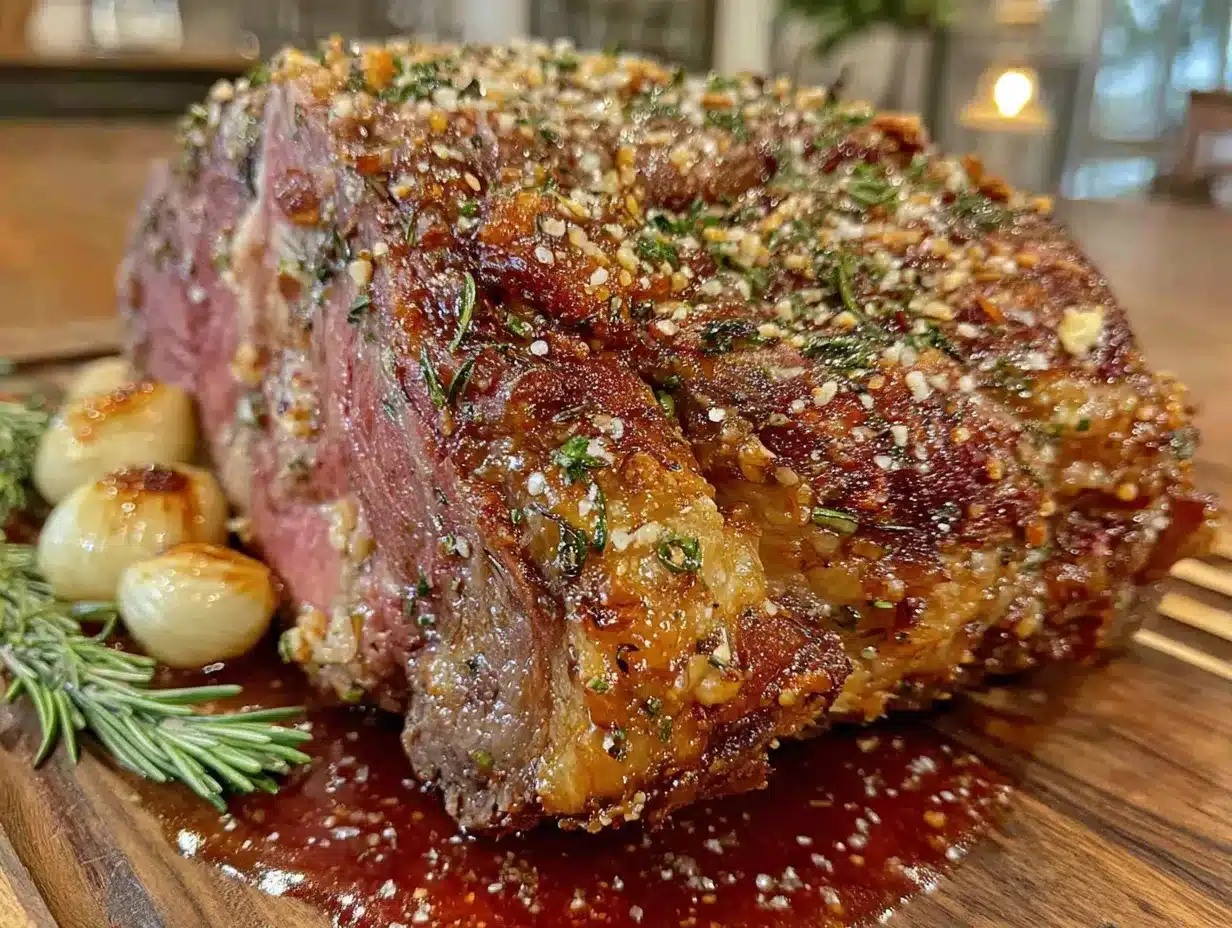
This method is broken down into simple steps. Take your time, and don’t rush the resting periods. Your patience will be rewarded.
- Take the Roast Out Early (2 hours before cooking): This is the most important step. Remove the prime rib from the refrigerator and let it sit on the counter, still wrapped, for at least 2 hours. You want the meat to come to room temperature. If you put a cold roast in the oven, the outside will overcook before the inside is even warm. Trust me on this—I once skipped this step and ended up with a grey ring around the outside of an otherwise perfect medium-rare center. It was sad.
- Preheat the Oven (45 minutes before cooking): Preheat your oven to 450°F (230°C). Yes, this seems high, but we’re going to sear it first at high heat, then drop the temperature. Place your oven rack in the middle position.
- Make the Herb Rub: In a small bowl, combine the minced garlic, chopped rosemary, thyme, kosher salt, black pepper, and smoked paprika. Add the olive oil and stir until it forms a thick, fragrant paste. It should smell like an Italian garden. Set it aside.
- Season the Roast: Pat the prime rib dry with paper towels. This is crucial—a wet roast won’t form a good crust. Rub the entire roast all over with the herb paste. Don’t be shy. Get it into every nook and cranny, especially around the bones. The bones add flavor, so don’t ignore them.
- Initial High-Heat Sear (15 minutes): Place the roast, bone-side down, on the rack in your roasting pan. Put it in the preheated 450°F (230°C) oven and roast for 15 minutes. This high heat creates that beautiful, golden-brown crust. Your kitchen will smell incredible at this point.
- Lower the Temperature (3-4 hours): Without opening the oven door (I know, it’s hard), reduce the oven temperature to 325°F (160°C). Continue roasting until the internal temperature reaches your desired doneness. For medium-rare (my favorite), aim for 120-125°F (49-52°C) in the thickest part of the meat, away from the bone. This usually takes about 15-18 minutes per pound. For a 7-pound roast, expect about 2 to 2.5 hours total cooking time. Start checking the temperature about 30 minutes before you think it’ll be done.
- Rest the Roast (30 minutes, minimum): This is not optional. Remove the roast from the oven and transfer it to a cutting board. Tent it loosely with aluminum foil. Let it rest for at least 30 minutes. The internal temperature will continue to rise by about 5-10 degrees (called “carryover cooking”), so if you pull it at 125°F, it’ll land at a perfect 130°F for medium-rare. During this time, the juices redistribute throughout the meat. If you cut into it too soon, all those beautiful juices will run out onto your cutting board instead of staying in the meat. I learned this the hard way at a Christmas dinner. Never again.
- Make the Red Wine Jus (while the roast rests): While the roast is resting, place the roasting pan on the stovetop over medium heat. There should be some drippings left in the pan. Add the butter and let it melt, scraping up all the browned bits from the bottom of the pan (this is called “deglazing”). Add the diced shallot and smashed garlic cloves. Cook for 2-3 minutes until softened. Sprinkle the flour over the shallots and stir constantly for 1 minute—this cooks out the raw flour taste. Slowly pour in the red wine, stirring continuously to prevent lumps. Let it simmer for 2 minutes, then add the beef broth and Dijon mustard. Bring to a gentle boil, then reduce the heat and let it simmer for 5-7 minutes, until the jus has thickened slightly and reduced by about a third. It should coat the back of a spoon. Strain the jus through a fine-mesh sieve into a serving bowl or gravy boat. Discard the solids. Season with a pinch of salt and pepper if needed.
- Carve and Serve: After the roast has rested, remove the twine (if you used it). Using a sharp knife, cut the bones away from the roast in one piece. Then slice the meat against the grain into 1/2-inch thick slices. The crust should crackle a little as you cut through it. Arrange the slices on a warm platter, spoon some of the red wine jus over the top, and garnish with fresh thyme sprigs. Serve the remaining jus on the side.
Sensory Cues: When you take the roast out of the oven after the initial sear, the crust should be deep brown and smell intensely of garlic and herbs. During the slow roast, you’ll hear a gentle sizzle. When you insert the thermometer, it should slide in like butter when it’s done. The jus should look like dark, glossy mahogany when it’s ready.
Cooking Tips & Techniques
Here are the things I wish someone had told me the first time I made this.
The Secret to a Perfect Crust: Don’t skip the initial high-heat sear. That blast of 450°F (230°C) is what creates that incredible crust. If you’re worried about smoke, open a window. The smell is worth it.
Why Resting Matters: I cannot stress this enough. A 30-minute rest is the difference between a juicy roast and a dry one. I once had a friend who was in a hurry and cut into his roast after 10 minutes. The entire cutting board flooded with juice. It was heartbreaking. Don’t be that person.
The Thermometer is Your Best Friend: Guessing doneness by touch is a skill that takes years to develop. Just use a thermometer. For medium-rare, pull it at 120-125°F (49-52°C). For medium, pull at 130-135°F (54-57°C). Anything above 140°F (60°C) and you’re entering well-done territory, which is a shame for such a beautiful cut of meat.
Multitasking Strategy: While the roast is resting, make the jus. While the jus is simmering, set the table and pour the wine. This way, everything is ready at the same time. I usually make the herb rub the night before to save time. You can also season the roast the night before and leave it uncovered in the fridge—this dries out the surface even more, leading to an even better crust.
Common Mistake to Avoid: Don’t open the oven door repeatedly. Every time you open it, you lose heat and extend the cooking time. Trust your thermometer and check it only when you think it’s close.
Variations & Adaptations
This recipe is flexible. Here are a few ways to make it your own.
- Herb Swap: Not a fan of rosemary? Use tarragon or oregano instead. I once made this with a mix of sage and parsley when I ran out of thyme. It was different, but still delicious. The key is to stick with fresh herbs.
- Spicy Kick: Add 1/2 teaspoon of red pepper flakes to the herb rub. It gives the crust a subtle warmth that pairs beautifully with the red wine jus. I tried this for a New Year’s Eve dinner and it was a hit.
- Dairy-Free Jus: Skip the butter in the jus and use olive oil instead. The flavor will be slightly different, but still rich and savory. You can also use a gluten-free flour blend if you need it to be gluten-free.
- Different Wine: If you don’t have red wine, you can make the jus with a dry white wine like Chardonnay. It won’t be as dark, but it’ll still be tasty. I’ve also used a splash of balsamic vinegar in a pinch when I had no wine at all. It worked surprisingly well.
- Smoked Version: If you have a smoker, you can smoke the prime rib at 225°F (107°C) for about 4-5 hours until it reaches 125°F (52°C), then sear it on a hot grill for 2 minutes per side. The smokiness adds another layer of flavor. I did this for a summer barbecue and people lost their minds.
Serving & Storage Suggestions
This roast is the star of the show, so let it shine.
Serving Temperature and Presentation: Serve the prime rib warm, not hot. After resting, it should be about 130-135°F (54-57°C). Arrange the slices on a large platter, slightly overlapping. Spoon a little jus over the top, and serve the rest in a gravy boat. Garnish with fresh thyme sprigs and maybe a few sprigs of rosemary. It looks stunning on a holiday table.
What to Serve Alongside: This roast pairs beautifully with creamy mashed potatoes, roasted asparagus, or a simple arugula salad with lemon vinaigrette. The richness of the meat calls for something bright and acidic on the side. I also love serving it with Yorkshire puddings or crusty bread to soak up the jus. For wine, pour the same red you used in the jus—a Cabernet Sauvignon or Merlot is perfect.
Storage Instructions: Leftover prime rib is a gift. Store slices in an airtight container in the refrigerator for up to 4 days. The flavor actually gets better as it sits. For longer storage, wrap tightly in plastic wrap and then foil, and freeze for up to 3 months. Thaw overnight in the refrigerator before reheating.
Reheating Methods: The best way to reheat is in a low oven. Place slices in a baking dish, add a splash of beef broth or jus, cover with foil, and warm at 300°F (150°C) for about 10-15 minutes. This prevents the meat from drying out. You can also reheat slices in a skillet over medium-low heat with a little butter. Avoid the microwave—it will turn your beautiful prime rib into rubber.
How Flavors Develop Over Time: The jus will thicken as it cools and the flavors will meld together. Leftover prime rib makes amazing sandwiches the next day—thinly sliced on a crusty roll with a smear of horseradish cream and a drizzle of the leftover jus. Honestly, that sandwich is sometimes better than the original dinner.
Nutritional Information & Benefits
This is an indulgence, but it comes with some surprising benefits.
Estimated Nutritional Values (per serving, about 6 ounces of meat with 2 tablespoons of jus):
- Calories: 450
- Protein: 38g
- Fat: 32g
- Saturated Fat: 13g
- Carbohydrates: 3g
- Fiber: 0g
- Sugar: 1g
- Sodium: 480mg
Health Benefits of Key Ingredients: Prime rib is a fantastic source of high-quality protein, iron, and B vitamins, especially B12, which is essential for energy and brain function. Garlic is known for its immune-boosting properties, and fresh herbs like rosemary and thyme are packed with antioxidants. The red wine in the jus contains resveratrol, which is good for heart health in moderation. Of course, this is a rich dish, so enjoy it in moderation as part of a balanced diet.
Dietary Considerations: This recipe is naturally gluten-free if you use a gluten-free flour blend for the jus. It’s also low-carb and keto-friendly (just skip the flour in the jus or use a keto-friendly thickener like xanthan gum). It contains dairy from the butter, but you can easily swap it for olive oil. Potential allergens include dairy and sulfites from the wine.
Personal Wellness Perspective: I believe in balance. A meal like this is meant to be shared with people you love. It’s not an everyday thing—it’s a celebration. So go ahead, enjoy that second slice. Your body knows how to handle it.
Conclusion
This best garlic herb prime rib roast with red wine jus is more than just a recipe—it’s the centerpiece of a memorable gathering. It’s the dish that makes people stop talking and start eating. It’s the one your friends will ask you to make again for the next holiday. And honestly, it’s easier than you think. The key is simple: take your time, trust your thermometer, and don’t skip the rest. Whether you’re hosting Christmas dinner, a birthday party, or just a fancy Tuesday night, this roast delivers every single time.
I’d love to hear how yours turns out. Did you try a different herb combo? Did you smoke it instead? Drop a comment below and let me know. And if you’re looking for another showstopper, check out our garlic butter roasted potatoes—they’re the perfect side dish for this roast. Share this recipe with a friend who loves to cook, and save it for your next big dinner party. You’ve got this. Happy cooking!
Frequently Asked Questions
Can I use a boneless prime rib roast for this recipe?
Yes, absolutely. A boneless roast will cook slightly faster because there’s no bone to conduct heat. Start checking the temperature about 30 minutes earlier than you would for a bone-in roast. The flavor will still be incredible, and it’s easier to carve.
Do I have to use fresh herbs, or can I use dried?
Fresh herbs are best for the rub because they have a brighter, more aromatic flavor. However, if all you have is dried, use about 1 teaspoon each of dried rosemary and dried thyme instead of the 2 tablespoons of fresh. The flavor won’t be as vibrant, but it will still work.
What if I don’t have a meat thermometer?
You really should get one—it’s the only way to guarantee perfect doneness. But in a pinch, you can use the “touch test.” Press the center of the roast with your finger. If it feels soft and squishy, it’s rare. If it feels springy, it’s medium-rare. If it feels firm, it’s well-done. This method takes practice, so don’t be discouraged if it’s not perfect the first time.
Can I make the red wine jus ahead of time?
Yes! You can make the jus up to 3 days in advance. Store it in an airtight container in the refrigerator. When you’re ready to serve, reheat it gently in a saucepan over low heat, adding a splash of beef broth if it’s too thick. The flavors will actually meld together and taste even better the next day.
What’s the best way to reheat leftover prime rib without drying it out?
The oven method is your best bet. Place slices in a baking dish, add a splash of beef broth or jus, cover with foil, and warm at 300°F (150°C) for 10-15 minutes. You can also reheat slices in a skillet over medium-low heat with a little butter. Avoid the microwave at all costs—it will turn your beautiful prime rib into tough, rubbery meat.
Pin This Recipe!
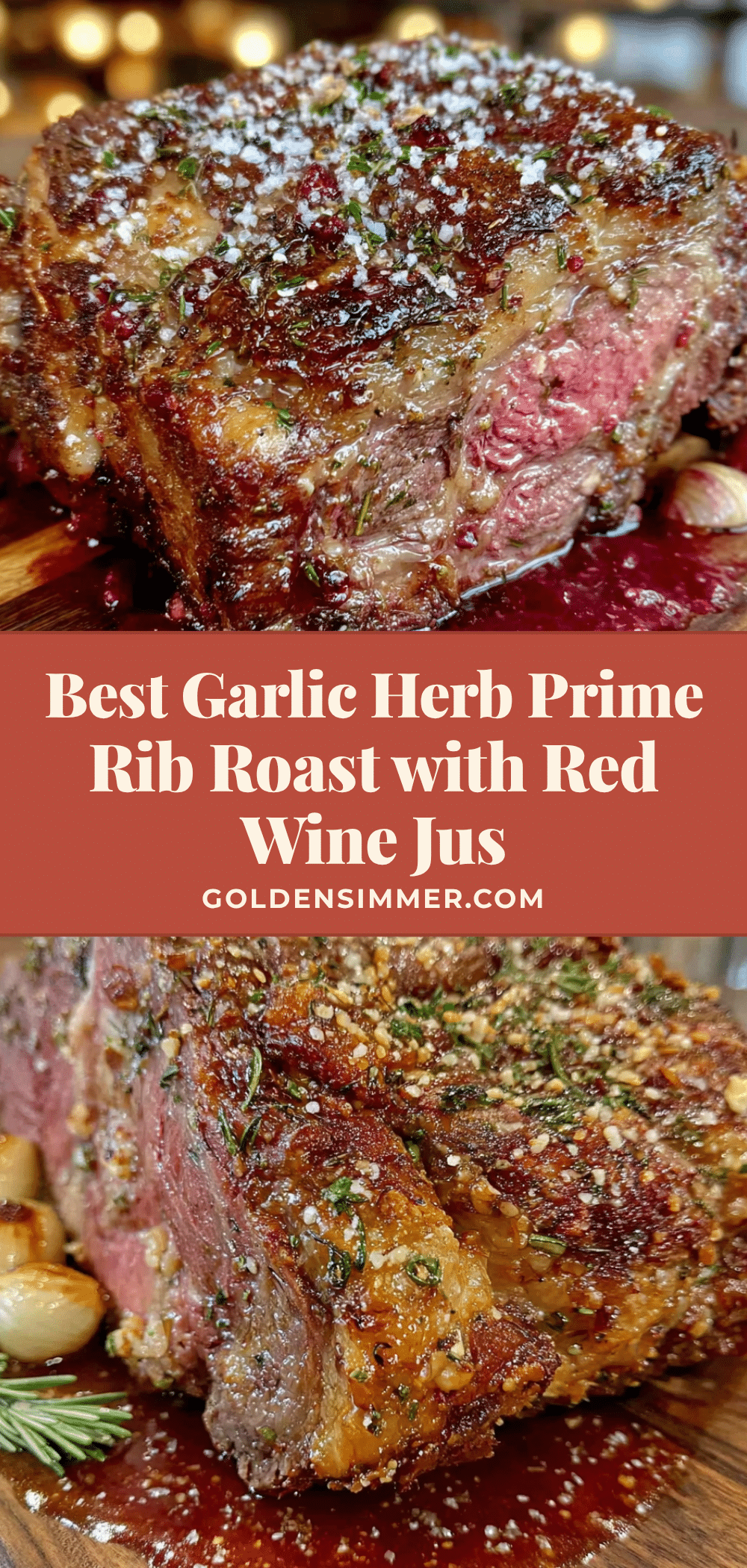
Best Garlic Herb Prime Rib Roast with Red Wine Jus
This foolproof prime rib roast is slow-roasted to perfection with a garlic herb crust and served with a rich red wine jus. It’s the ultimate showstopper for holiday dinners and special occasions.
- Prep Time: 20 minutes
- Cook Time: 2 hours 30 minutes
- Total Time: 3 hours 20 minutes
- Yield: 8 servings 1x
- Category: Main Course
- Cuisine: American
Ingredients
- 1 (6-8 pound) bone-in prime rib roast (first cut recommended)
- 2 tablespoons olive oil
- 8 cloves garlic, minced
- 2 tablespoons fresh rosemary, finely chopped
- 2 tablespoons fresh thyme leaves
- 1 tablespoon kosher salt (Diamond Crystal preferred)
- 2 teaspoons black pepper, freshly cracked
- 1 teaspoon smoked paprika
- 2 tablespoons unsalted butter
- 1 shallot, finely diced
- 2 cloves garlic, smashed
- 1 cup dry red wine (Cabernet Sauvignon or Merlot)
- 1 cup low-sodium beef broth
- 1 tablespoon all-purpose flour
- 1 teaspoon Dijon mustard
- Fresh thyme sprigs for garnish
Instructions
- Take the roast out of the refrigerator 2 hours before cooking to bring to room temperature.
- Preheat oven to 450°F (230°C) 45 minutes before cooking.
- In a small bowl, combine minced garlic, chopped rosemary, thyme, kosher salt, black pepper, smoked paprika, and olive oil to form a paste.
- Pat the prime rib dry with paper towels. Rub the herb paste all over the roast, including around the bones.
- Place the roast bone-side down on a rack in a roasting pan. Roast at 450°F (230°C) for 15 minutes to sear.
- Without opening the oven, reduce temperature to 325°F (160°C). Continue roasting until internal temperature reaches 120-125°F (49-52°C) for medium-rare, about 15-18 minutes per pound (2 to 2.5 hours for a 7-pound roast).
- Remove roast from oven, transfer to a cutting board, and tent loosely with aluminum foil. Rest for at least 30 minutes.
- While roast rests, place roasting pan on stovetop over medium heat. Add butter and scrape up browned bits. Add shallot and smashed garlic; cook 2-3 minutes until softened.
- Sprinkle flour over shallots and stir constantly for 1 minute. Slowly pour in red wine, stirring continuously. Simmer 2 minutes.
- Add beef broth and Dijon mustard. Bring to a gentle boil, then reduce heat and simmer 5-7 minutes until thickened and reduced by about a third.
- Strain jus through a fine-mesh sieve into a serving bowl. Season with salt and pepper if needed.
- Carve roast by cutting bones away, then slicing meat against the grain into 1/2-inch thick slices. Arrange on a platter, spoon some jus over the top, and garnish with fresh thyme sprigs. Serve remaining jus on the side.
Notes
For best results, bring roast to room temperature before cooking. Use a meat thermometer for perfect doneness. Resting is crucial for juicy meat. The jus can be made ahead and reheated.
Nutrition
- Serving Size: 6 ounces of meat wit
- Calories: 450
- Sugar: 1
- Sodium: 480
- Fat: 32
- Saturated Fat: 13
- Carbohydrates: 3
- Protein: 38
Keywords: prime rib, garlic herb prime rib, red wine jus, holiday roast, beef roast, Christmas dinner, special occasion