Love this? Save it for later!
Share the inspiration with your friends
The summer I turned thirty, I found myself in the back of a dusty antique shop in a town I’d never heard of, holding a cake plate that had seen better days. I wasn’t looking for kitchen stuff—honestly, I was hiding from the heat and hoping they had a fan. That’s when the shop owner, an older woman named Pearl who moved like she had all the time in the world, started talking about birthday cake. She wasn’t selling one. She was just… telling me about it. “My grandmother’s recipe,” she said, wiping the plate with her apron. “She used yogurt instead of sour cream. Said it made the crumb friendlier.” I had no idea what that meant, but I bought the plate and asked her to write down the recipe on a scrap of brown paper. It sat in my wallet for two years before I actually tried it. And let me tell you—Pearl’s grandmother knew what she was doing. That cake became the version I’ve made for every birthday since, including my own. Maybe you’ve been there, holding onto a recipe you weren’t sure about, only to find out it’s exactly what you needed. This classic birthday cake with perfect vanilla buttercream is that recipe. It’s wholesome enough to feel good about eating, but indulgent enough that nobody will guess it’s got a lighter side.
Why You’ll Love This Recipe
This isn’t just another birthday cake recipe. It’s the one I’ve tested more times than I can count, tweaking the balance of butter and yogurt until the crumb was just right—tender, moist, and sturdy enough to hold a generous layer of frosting. I’ve brought this cake to potlucks, birthday dinners, and quiet Tuesday nights when we needed something sweet. Every single time, someone asks for the recipe. Here’s why it works so well:
- Quick & Easy: The batter comes together in about 15 minutes. No complicated techniques, no fussy steps. Just a bowl, a whisk, and a little patience while it bakes.
- Simple Ingredients: You probably have most of these in your pantry right now. Yogurt, butter, sugar, eggs, flour—nothing exotic, nothing hard to find.
- Perfect for Birthdays and Beyond: Obviously it’s great for birthdays, but I’ve also made it for anniversaries, housewarmings, and “just because” Sundays. It’s versatile like that.
- Crowd-Pleaser: Kids love the vanilla buttercream. Adults love that it’s not cloyingly sweet. Everyone loves the soft, tender crumb.
- Unbelievably Delicious: The yogurt adds a subtle tang that balances the sweetness, and the buttercream is silky without being heavy. It’s the kind of cake that makes you close your eyes after the first bite.
What makes this recipe different from the rest is the yogurt. I’ve tried cakes with sour cream, buttermilk, and even mayo (don’t ask), but yogurt gives you that same moisture with a lighter, fresher finish. It’s a small swap that makes a big difference, especially if you’re someone who wants a treat that doesn’t leave you feeling sluggish afterward. This cake is comfort food reimagined—healthier, faster, but with the same soul-soothing satisfaction.
What Ingredients You Will Need
This recipe uses simple, wholesome ingredients to deliver bold vanilla flavor and a tender, moist crumb without any fuss. Most of these are pantry staples, and the yogurt is the secret star here—it adds moisture and a gentle tang that makes the cake feel lighter.
- All-purpose flour (2 ½ cups / 315g) — I like King Arthur for consistent results, but any standard brand works. Spoon and level for accuracy.
- Baking powder (2 ½ teaspoons) — Make sure it’s fresh. Old baking powder can make your cake dense.
- Baking soda (½ teaspoon) — Helps the cake rise and balances the acidity of the yogurt.
- Salt (½ teaspoon) — Fine sea salt or table salt. Don’t skip it—it balances the sweetness.
- Unsalted butter (½ cup / 113g, softened) — I use salted butter in a pinch and just reduce the added salt by a pinch. Let it come to room temperature naturally—don’t microwave it.
- Granulated sugar (1 cup / 200g) — Regular white sugar works best here. Coconut sugar will change the flavor and texture.
- Large eggs (2, room temperature) — Cold eggs can seize the butter. Let them sit on the counter for 30 minutes or place them in warm water for 5 minutes.
- Vanilla extract (2 teaspoons) — Pure vanilla, not imitation. It makes a noticeable difference in flavor.
- Plain yogurt (1 cup / 240g, full-fat or 2%) — Greek yogurt works too, but thin it with a tablespoon of milk first. I’ve used Fage and Stonyfield with great results.
- Whole milk (½ cup / 120ml) — Helps loosen the batter. Any milk works, including oat or almond, but whole milk gives the richest crumb.
For the Vanilla Buttercream:
- Unsalted butter (1 cup / 226g, softened) — The base of the frosting. Use good-quality butter—it’s the main flavor here.
- Powdered sugar (3 ½ cups / 420g, sifted) — Sifting prevents lumps. Trust me on this one.
- Vanilla extract (1 tablespoon) — Yes, a full tablespoon. This is vanilla buttercream, after all.
- Heavy cream (2-3 tablespoons) — Adjust for consistency. Milk works, but cream makes it silkier.
- Salt (a pinch) — Balances the sweetness and brings out the vanilla.
Equipment Needed
You don’t need a fancy kitchen to make this cake. Here’s what I use every time:
- Two 9-inch round cake pans — I prefer light-colored metal pans for even baking. Dark pans can cause the edges to brown too quickly.
- Parchment paper — Cut rounds to line the bottom of the pans. It’s the easiest way to get clean layers.
- Stand mixer or hand mixer — A stand mixer makes the buttercream easier, but a hand mixer works fine. You can even do it by hand if you’re patient.
- Large mixing bowls — At least two: one for dry ingredients, one for wet.
- Whisk — For combining dry ingredients.
- Rubber spatula — For scraping the bowl and folding the batter.
- Cooling rack — Essential for letting the cakes cool evenly. If you don’t have one, use the wire rack from your oven.
- Offset spatula — Makes frosting the cake so much easier. A butter knife works in a pinch.
- Turntable (optional) — Helpful for smooth frosting, but not necessary. I used a lazy Susan for years.
Preparation Method
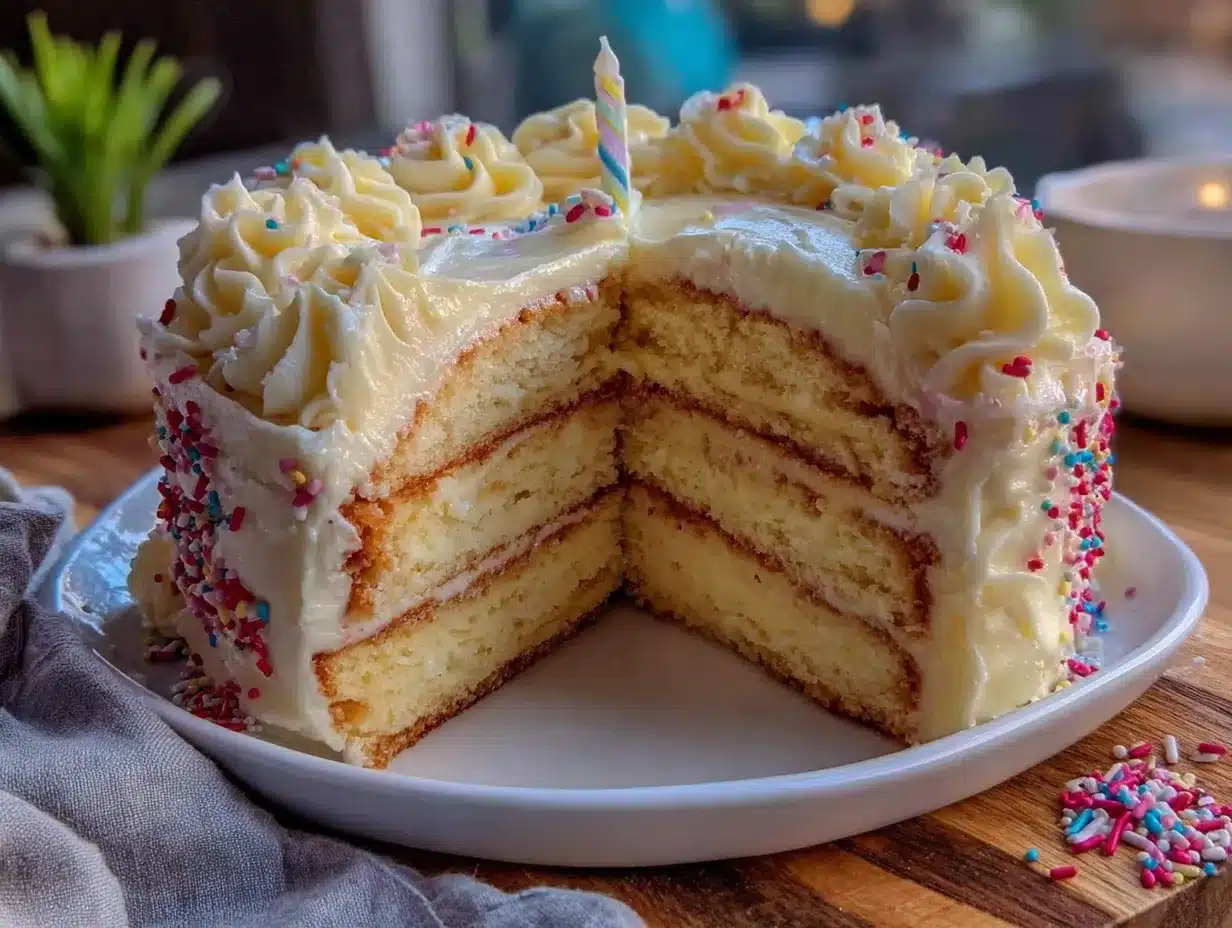
- Preheat your oven to 350°F (175°C). Position the rack in the center of the oven. Grease two 9-inch round cake pans with butter or nonstick spray, then line the bottoms with parchment paper rounds.
- Whisk the dry ingredients together: In a medium bowl, combine 2 ½ cups (315g) all-purpose flour, 2 ½ teaspoons baking powder, ½ teaspoon baking soda, and ½ teaspoon salt. Whisk until evenly distributed. This takes about 30 seconds.
- Cream the butter and sugar: In a large bowl, beat ½ cup (113g) softened unsalted butter and 1 cup (200g) granulated sugar together until light and fluffy, about 3-4 minutes. Scrape the sides of the bowl halfway through. It should look pale and slightly increased in volume.
- Add the eggs one at a time: Beat in 2 room-temperature eggs, one at a time, mixing well after each addition. Add 2 teaspoons vanilla extract and mix until combined. The mixture might look slightly curdled—that’s okay. It will come together when you add the dry ingredients.
- Alternate adding dry ingredients and yogurt: With the mixer on low speed, add about one-third of the flour mixture. Mix until just combined. Add half of the 1 cup (240g) yogurt. Mix. Repeat with another third of flour, the remaining yogurt, and the final third of flour. End with the flour. Be careful not to overmix—stop as soon as you no longer see streaks of flour.
- Add the milk: Pour in ½ cup (120ml) whole milk and fold it in gently with a rubber spatula. The batter should be thick but scoopable, like a thick muffin batter.
- Divide the batter evenly: Divide the batter between the two prepared pans. Use a kitchen scale for accuracy if you have one—each pan should have about 510g of batter. Smooth the tops with a spatula.
- Bake for 28-32 minutes: The cakes are done when a toothpick inserted in the center comes out clean or with a few moist crumbs. The tops should be golden and spring back when lightly touched. Let them cool in the pans for 10 minutes, then turn them out onto a cooling rack. Remove the parchment paper and let them cool completely—at least 1 hour.
For the Vanilla Buttercream:
- Beat the butter: In a large bowl, beat 1 cup (226g) softened unsalted butter on medium speed for 5-7 minutes, until it’s pale, fluffy, and almost white. This step is crucial for a silky frosting. Scrape the bowl often.
- Add the powdered sugar gradually: With the mixer on low, add 3 ½ cups (420g) sifted powdered sugar, one cup at a time. The mixture will look dry and crumbly at first—that’s normal. Add 1 tablespoon vanilla extract and 2 tablespoons heavy cream. Increase the speed to medium and beat for 2-3 minutes until smooth and fluffy. If it’s too thick, add another tablespoon of cream. If it’s too thin, add a little more powdered sugar.
- Add a pinch of salt: Beat in a pinch of salt. Taste it. Adjust vanilla or salt as needed.
Assembly:
- Place one cake layer on a serving plate or cake stand. Spread about ¾ cup of buttercream evenly over the top. Place the second layer on top, upside down (flat side up) for a perfectly level top.
- Apply a thin layer of buttercream all over the cake—this is the crumb coat. Don’t worry if it looks messy. Refrigerate for 20 minutes to set.
- Apply the remaining buttercream in a thick, even layer. Use an offset spatula for smooth sides, or leave it rustic with swirls. Decorate as desired.
Cooking Tips & Techniques
I’ve made this cake at least two dozen times, and I’ve learned a few things the hard way. Here’s what I wish someone had told me:
- Room temperature ingredients matter: I know it’s tempting to use cold eggs straight from the fridge, but cold ingredients don’t emulsify properly. The batter can end up lumpy or greasy. Set your eggs and yogurt out 30 minutes before you start.
- Don’t overmix the batter: Once you add the flour, mix just until you don’t see any white streaks. Overmixing develops gluten, which makes the cake tough. I’ve done it. It’s sad. Learn from my mistake.
- Use a kitchen scale for the flour: Measuring flour by volume is notoriously inconsistent. If you don’t have a scale, spoon the flour into your measuring cup and level it off with a knife. Don’t scoop directly from the bag—that packs the flour and gives you too much.
- Let the cakes cool completely before frosting: I’ve frosted a slightly warm cake out of impatience, and the buttercream slid right off. Wait the full hour. Your patience will be rewarded.
- Sift your powdered sugar: I know it’s an extra step, but lumps in powdered sugar turn into lumps in your frosting. Sifting takes 30 seconds and saves you from picking out hard bits later.
- Timing strategy: Bake the cakes a day ahead. Wrap them tightly in plastic wrap once cool and store at room temperature. Make the frosting the day of serving. This breaks up the work and makes assembly less stressful.
Variations & Adaptations
This cake is a great base for all kinds of tweaks. Here are a few I’ve tried and loved:
- Lemon Blueberry: Add the zest of one lemon to the batter. Fold in 1 cup of fresh or frozen blueberries (toss them in a tablespoon of flour first to prevent sinking). Replace the vanilla in the buttercream with 2 tablespoons of lemon juice for a tangy twist.
- Chocolate Chip: Fold ¾ cup of mini chocolate chips into the batter. Use the same vanilla buttercream—the contrast of rich chocolate and sweet vanilla is perfect.
- Gluten-Free: Substitute the all-purpose flour with a 1:1 gluten-free baking flour blend (I like Bob’s Red Mill). Add an extra tablespoon of yogurt to help with moisture. The texture will be slightly more delicate, but still delicious.
- Dairy-Free: Use a plant-based butter (like Miyoko’s) and a dairy-free yogurt (coconut or soy based). Swap the milk for oat milk. The buttercream will be softer, so refrigerate the cake before serving.
- Strawberry Swirl: Puree ½ cup of strawberries and swirl it into the batter before baking. Add a few drops of pink food coloring to the buttercream for a pretty look.
My personal favorite variation is the lemon blueberry. I made it for a friend’s baby shower last spring, and people were scraping the plate. The lemon cuts through the sweetness, and the blueberries burst in the oven. It feels fancy without any extra work.
Serving & Storage Suggestions
This cake is best served at room temperature. Take it out of the fridge about 30 minutes before you plan to cut it. The buttercream softens slightly, and the crumb becomes more tender. Slice with a sharp, thin-bladed knife, wiping it clean between cuts for neat slices.
For presentation, I like to keep it simple—just the buttercream, maybe a few fresh flowers on top (make sure they’re food-safe), or a sprinkle of rainbow sprinkles for a classic birthday look. It pairs beautifully with a glass of cold milk, a cup of black coffee, or even a scoop of vanilla ice cream on the side.
Storage: Store leftover cake in an airtight container at room temperature for up to 2 days. If your kitchen is warm, refrigerate it—the buttercream can get soft. For longer storage, wrap individual slices in plastic wrap and freeze for up to 3 months. Thaw at room temperature for about an hour before eating.
The flavors actually develop overnight. I’ve found the cake tastes even better the next day—the moisture from the yogurt settles in, and the vanilla becomes more pronounced. So if you can, make it a day ahead.
Nutritional Information & Benefits
This cake is a treat, no doubt about it. But it’s made with real ingredients, and that counts for something. Here’s the estimated nutrition per slice (based on 12 servings):
| Nutrient | Amount per Slice |
|---|---|
| Calories | 410 |
| Fat | 20g |
| Saturated Fat | 12g |
| Carbohydrates | 55g |
| Sugar | 40g |
| Protein | 5g |
The yogurt adds protein and calcium, and using butter instead of shortening means you’re getting real dairy fat, which is more satisfying. This cake is also free of artificial flavors and preservatives—just simple, whole ingredients. If you’re watching your sugar intake, you can reduce the sugar in the buttercream to 3 cups instead of 3 ½. It will still be sweet, just a little less so.
From a wellness perspective, I believe in balance. This cake is meant for celebration, not everyday eating. But knowing it’s made with yogurt and real butter makes me feel better about that second slice.
Conclusion
This classic birthday cake with perfect vanilla buttercream is more than just a recipe—it’s the one I turn to again and again, for birthdays and ordinary Tuesdays alike. It’s foolproof enough for a beginner baker, but good enough to impress anyone. The yogurt keeps it moist without weighing it down, and the buttercream is everything you want it to be: creamy, sweet, and full of vanilla flavor.
I hope you make it your own. Add sprinkles, swap in lemon, or keep it classic. Whatever you do, don’t skip the step where you let the cakes cool completely—trust me on that one. And if you make it, I’d love to hear how it turned out. Drop a comment below or tag me in your photos. There’s something special about sharing a cake that started as a scribble on a piece of brown paper in a dusty antique shop. Now it’s yours, too.
Frequently Asked Questions
Can I use Greek yogurt instead of plain yogurt?
Yes, but thin it with a tablespoon of milk first. Greek yogurt is thicker than regular yogurt, so it can make the batter too stiff. Stir in a splash of milk until it reaches the consistency of regular yogurt before adding it to the batter.
Can I make this cake into cupcakes?
Absolutely. Divide the batter evenly into a lined 12-cup muffin tin. Bake at 350°F (175°C) for 18-22 minutes, or until a toothpick comes out clean. You’ll get about 18-20 cupcakes. The buttercream recipe will frost them generously.
Why did my cake sink in the middle?
This usually happens if the oven door is opened too early, or if the baking powder is old. Make sure your oven is fully preheated, and resist the urge to peek for the first 20 minutes. Also check that your baking powder is less than 6 months old.
Can I freeze the cake layers before frosting?
Yes, and I actually recommend it. Wrap the completely cooled layers tightly in plastic wrap, then foil. Freeze for up to 3 months. Thaw at room temperature before frosting. Frozen layers are easier to handle and produce less crumbs when you’re frosting.
How do I get smooth buttercream?
The key is patience. Beat the butter for a full 5-7 minutes before adding sugar. Sift the powdered sugar. And once the frosting is made, beat it on low speed for another minute to push out air bubbles. A hot offset spatula (dipped in warm water and dried) also helps smooth the sides.
Pin This Recipe!
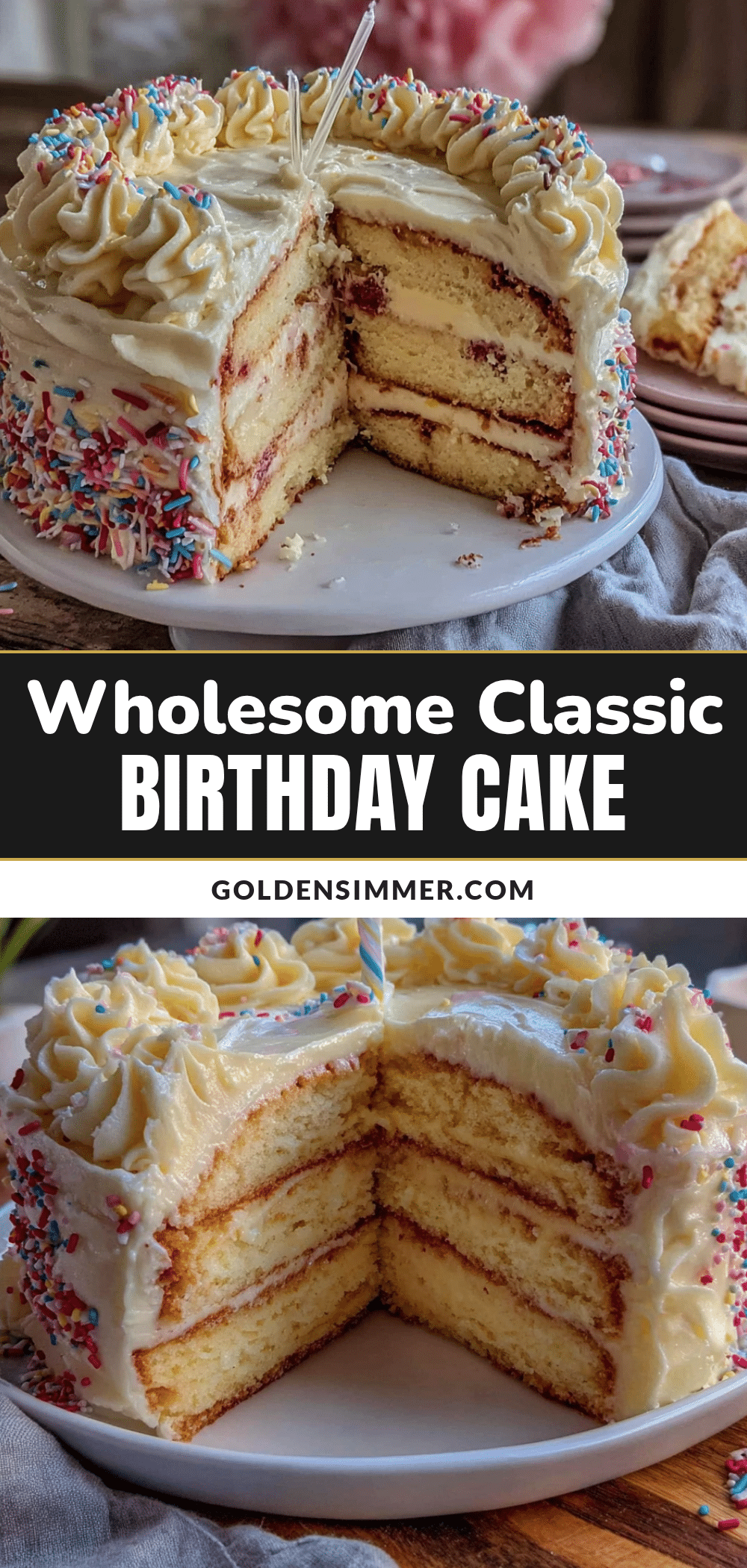
Classic Birthday Cake with Perfect Vanilla Buttercream
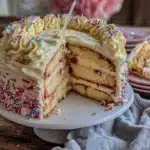
This classic birthday cake with perfect vanilla buttercream is the one I’ve tested more times than I can count. It’s wholesome enough to feel good about eating, but indulgent enough that nobody will guess it’s got a lighter side.
- Prep Time: 15 minutes
- Cook Time: 30 minutes
- Total Time: 1 hour 45 minutes
- Yield: 12 servings 1x
- Category: Dessert
- Cuisine: American
Ingredients
- 2 ½ cups (315g) all-purpose flour
- 2 ½ teaspoons baking powder
- ½ teaspoon baking soda
- ½ teaspoon salt
- ½ cup (113g) unsalted butter, softened
- 1 cup (200g) granulated sugar
- 2 large eggs, room temperature
- 2 teaspoons vanilla extract
- 1 cup (240g) plain yogurt (full-fat or 2%)
- ½ cup (120ml) whole milk
- 1 cup (226g) unsalted butter, softened (for buttercream)
- 3 ½ cups (420g) powdered sugar, sifted (for buttercream)
- 1 tablespoon vanilla extract (for buttercream)
- 2–3 tablespoons heavy cream (for buttercream)
- a pinch of salt (for buttercream)
Instructions
- Preheat your oven to 350°F (175°C). Position the rack in the center of the oven. Grease two 9-inch round cake pans with butter or nonstick spray, then line the bottoms with parchment paper rounds.
- Whisk the dry ingredients together: In a medium bowl, combine 2 ½ cups (315g) all-purpose flour, 2 ½ teaspoons baking powder, ½ teaspoon baking soda, and ½ teaspoon salt. Whisk until evenly distributed.
- Cream the butter and sugar: In a large bowl, beat ½ cup (113g) softened unsalted butter and 1 cup (200g) granulated sugar together until light and fluffy, about 3-4 minutes. Scrape the sides of the bowl halfway through.
- Add the eggs one at a time: Beat in 2 room-temperature eggs, one at a time, mixing well after each addition. Add 2 teaspoons vanilla extract and mix until combined.
- Alternate adding dry ingredients and yogurt: With the mixer on low speed, add about one-third of the flour mixture. Mix until just combined. Add half of the 1 cup (240g) yogurt. Mix. Repeat with another third of flour, the remaining yogurt, and the final third of flour. End with the flour. Be careful not to overmix.
- Add the milk: Pour in ½ cup (120ml) whole milk and fold it in gently with a rubber spatula. The batter should be thick but scoopable.
- Divide the batter evenly between the two prepared pans. Smooth the tops with a spatula.
- Bake for 28-32 minutes. The cakes are done when a toothpick inserted in the center comes out clean or with a few moist crumbs. Let them cool in the pans for 10 minutes, then turn them out onto a cooling rack. Remove the parchment paper and let them cool completely—at least 1 hour.
- For the Vanilla Buttercream: In a large bowl, beat 1 cup (226g) softened unsalted butter on medium speed for 5-7 minutes, until pale, fluffy, and almost white.
- With the mixer on low, add 3 ½ cups (420g) sifted powdered sugar, one cup at a time. Add 1 tablespoon vanilla extract and 2 tablespoons heavy cream. Increase speed to medium and beat for 2-3 minutes until smooth and fluffy. Add another tablespoon of cream if needed. Beat in a pinch of salt.
- Assembly: Place one cake layer on a serving plate. Spread about ¾ cup of buttercream evenly over the top. Place the second layer on top, upside down.
- Apply a thin layer of buttercream all over the cake (crumb coat). Refrigerate for 20 minutes to set.
- Apply the remaining buttercream in a thick, even layer. Decorate as desired.
Notes
Room temperature ingredients matter. Don’t overmix the batter. Use a kitchen scale for the flour. Let the cakes cool completely before frosting. Sift your powdered sugar. Bake the cakes a day ahead for best results.
Nutrition
- Serving Size: 1 slice
- Calories: 410
- Sugar: 40
- Fat: 20
- Saturated Fat: 12
- Carbohydrates: 55
- Protein: 5
Keywords: birthday cake, vanilla buttercream, classic cake, yogurt cake, easy cake recipe