Love this? Save it for later!
Share the inspiration with your friends
The woman at the farmers market stall watched me circle back three times before she finally said something. I was holding a bag of pomegranates, then putting them back, then picking them up again—completely unable to decide if I wanted to deal with the mess of seeding them on a Tuesday afternoon. She didn’t laugh at me, though she definitely could have. Instead, she just reached under her table, pulled out a little wooden bowl of already-seeded arils, and handed them over. “For the New Year,” she said, like that explained everything.
I didn’t know her name. I still don’t. But I remember the way she talked about pomegranates like they were old friends—how her grandmother used to say the seeds brought luck, how the color reminded her of the rugs back home, how you should never rush the seeding process because that’s when you lose the good ones to the sink drain. I stood there for probably ten minutes, just listening. And when I finally walked away with that little bowl of ruby-red arils, I had no idea what I was going to make with them. I just knew it had to be something that felt like what she’d given me—warm, unhurried, and a little bit magical.
That was three New Year’s Eves ago, and honestly, I haven’t made a cocktail for December 31st without pomegranates since. This cozy New Year’s Eve pomegranate champagne cocktail came together after a few failed attempts—the first one was too sweet, the second one was too tart, and the third one I accidentally made with flat prosecco (don’t ask). But this version? This one finally felt right. It’s the kind of drink you sip slowly while the clock ticks down, the kind that doesn’t need a fancy party or a crowded room to feel special. Maybe you’ve been there—wanting something celebratory but not over-the-top, something that feels like a hug in a glass rather than a sugar bomb. That’s exactly what this is.
Why You’ll Love This Recipe
I’ve tested this cozy New Year’s Eve pomegranate champagne cocktail more times than I care to admit—through different champagnes, different sweeteners, even different ways of muddling the herbs. And after all that trial and error, here’s what I can tell you: this is the version that works every single time.
- Quick & Easy : You’re looking at about five minutes from start to sip. No complicated syrups, no shaking, no straining. Just assemble and enjoy.
- Simple Ingredients : Pomegranate juice, champagne or prosecco, a splash of orange liqueur, and some fresh rosemary. That’s it. You probably have most of this already if you’re hosting anything this week.
- Perfect for a Cozy Night In : This isn’t the drink you make for a packed party. This is the drink you make when you’re wearing fuzzy socks, the fire is going, and you want to feel fancy without leaving your couch.
- Crowd-Pleaser : I’ve served this to friends who “don’t like champagne” and watched them go back for seconds. The pomegranate juice cuts the dryness beautifully.
- Unbelievably Beautiful : The color alone is worth making this—deep ruby red with little bubbles rising through it. It photographs like a dream, if you’re into that sort of thing.
What makes this different from every other champagne cocktail out there? It’s the balance. Most bubbly cocktails lean way too sweet or way too tart, but this one hits that perfect middle ground. The pomegranate juice adds richness without being cloying, the orange liqueur brings warmth, and the rosemary gives it this unexpected herbal note that makes you want to keep sipping. I’m not exaggerating when I say this is comfort food in cocktail form—cozy, celebratory, and completely stress-free.
What Ingredients You Will Need
This cozy New Year’s Eve pomegranate champagne cocktail uses simple, everyday ingredients that come together to create something genuinely special. No fancy mixology skills required—just good ingredients and a little bit of love.
- Champagne or Prosecco : You don’t need the expensive stuff here. A good-quality brut champagne or prosecco works beautifully because the dryness balances the sweetness of the pomegranate juice. I personally prefer prosecco for this—it’s a little fruitier and tends to be gentler on the wallet. (Look for one labeled “extra brut” or “brut” for the best balance.)
- Pomegranate Juice : This is the star of the show, so don’t skimp. I recommend POM Wonderful for its deep, rich flavor and vibrant color—it’s consistently good and widely available. If you can find fresh-pressed pomegranate juice at a farmers market or specialty store, even better. Avoid pomegranate juice blends that have apple or grape juice added; they’ll make the cocktail too sweet.
- Orange Liqueur : A small splash of Grand Marnier or Cointreau adds warmth and depth. Grand Marnier has a slightly richer, cognac-based flavor that I love in this, while Cointreau is cleaner and more citrus-forward. Both work great—use what you have. For a non-alcoholic version, you can skip this entirely and add a splash of fresh orange juice instead.
- Fresh Rosemary Sprigs : This is the secret ingredient that makes the cocktail feel cozy rather than just fruity. The piney, herbal aroma of rosemary pairs surprisingly well with pomegranate and champagne. Use one sprig per glass for garnish, and if you’re feeling fancy, lightly bruise it between your fingers before adding to release the oils.
- Pomegranate Arils : Fresh pomegranate seeds add texture and visual pop. You can buy them pre-seeded at most grocery stores (look in the refrigerated produce section), or seed a pomegranate yourself. If you’re seeding your own, do it in a bowl of water—the seeds sink and the white pith floats, making it much easier to separate them.
- Honey or Simple Syrup (Optional) : Depending on how sweet your pomegranate juice is and how dry your champagne is, you might want a tiny drizzle of honey or a splash of simple syrup. I usually don’t need it, but if you have a sweet tooth, go ahead and add it to taste.
Pro Tip : If you’re making these for a crowd, pre-mix the pomegranate juice and orange liqueur in a pitcher and refrigerate. Then just pour and top with champagne when guests arrive. It saves so much time and nobody will know the difference.
Equipment Needed
You don’t need a fully stocked home bar for this cozy New Year’s Eve pomegranate champagne cocktail. In fact, you probably already have everything you need sitting in your kitchen cabinets.
- Champagne Flutes or Coupe Glasses : Flutes are traditional and help preserve the bubbles longer, but coupe glasses are having a serious moment right now and they look gorgeous. Use whatever you have—I’ve made these in mason jars before and they still tasted amazing.
- Bar Spoon or Long Spoon : For gently stirring the ingredients together without losing too much carbonation. A chopstick works in a pinch, honestly.
- Small Pitcher or Liquid Measuring Cup : For mixing the pomegranate juice and orange liqueur before adding to the glasses. This step isn’t strictly necessary, but it ensures every glass gets the same ratio.
- Cutting Board and Knife : For cutting orange slices or lemon twists if you want to get fancy with your garnish. Nothing sharp is required if you’re just using rosemary sprigs and pomegranate arils.
- Jigger or Measuring Spoon : I use a standard jigger for the orange liqueur, but a tablespoon works perfectly fine. Two tablespoons equals one ounce, which is the standard pour for most cocktails.
Budget-Friendly Tip : Don’t have champagne flutes? Thrift stores always have them for a dollar or two. I picked up a mismatched set of six for three dollars last year, and they add so much charm to the whole experience. Broken glasses happen—don’t invest in expensive stemware if you’re just making drinks at home.
Preparation Method
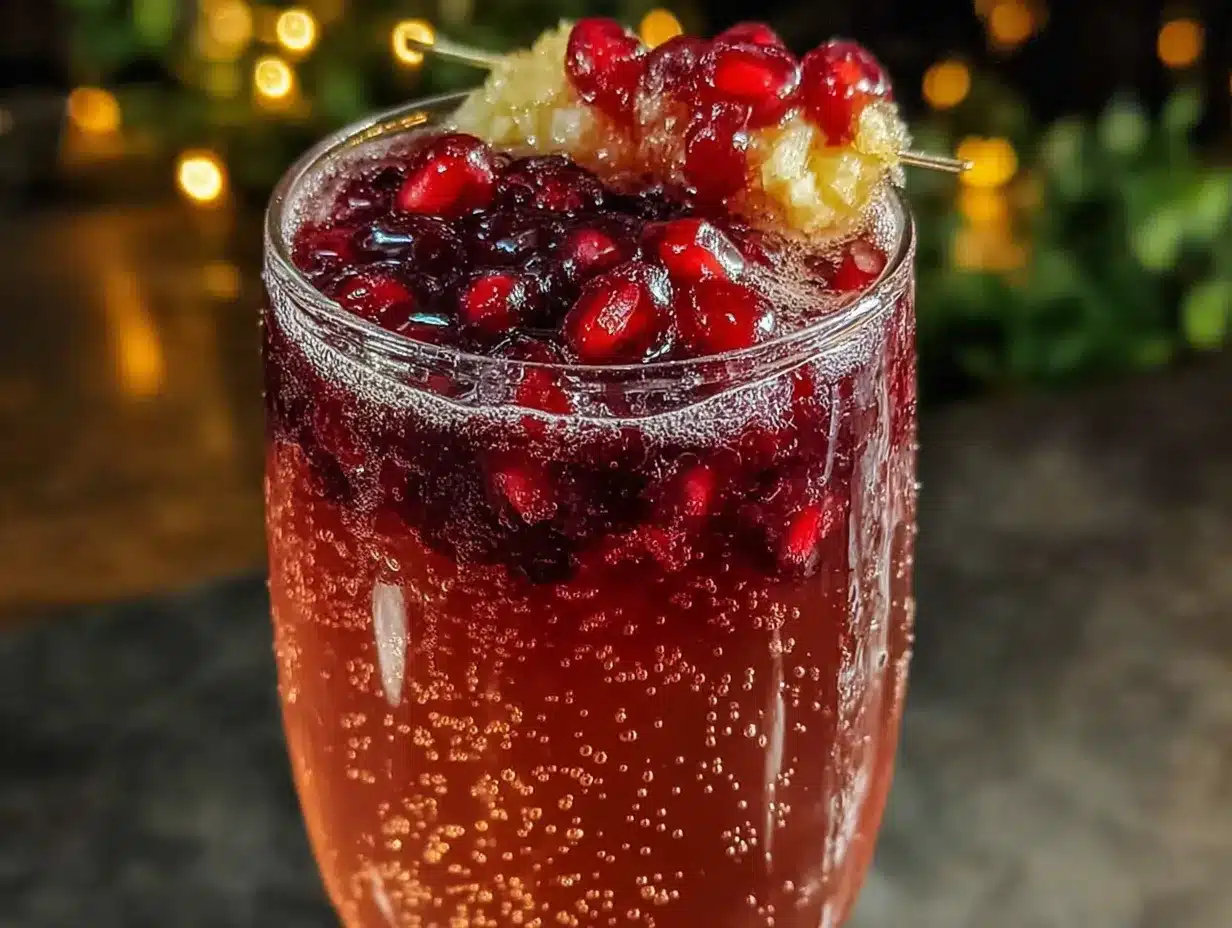
This cozy New Year’s Eve pomegranate champagne cocktail comes together in about five minutes flat. Here’s exactly how to do it so every glass is perfect.
- Chill your glasses (30 minutes before serving). Pop your champagne flutes or coupe glasses in the freezer for at least 30 minutes before you plan to serve. A cold glass keeps the bubbles active longer and makes the whole experience feel more luxurious. If you forget (I forget half the time), just fill them with ice water while you prep everything else, then dump the ice right before pouring.
- Prep your garnishes (2 minutes). Rinse your rosemary sprigs and pat them dry. If you’re using fresh pomegranate arils, measure out about a tablespoon per glass. Lightly bruise the rosemary sprigs between your fingers—this releases the essential oils and makes the herbal aroma much stronger when you sip.
- Mix the base (1 minute). In a small pitcher or liquid measuring cup, combine 1/4 cup (60 ml) pomegranate juice and 1 tablespoon (15 ml) orange liqueur for each cocktail you’re making. Stir gently to combine. If you’re adding honey or simple syrup, stir it in now until fully dissolved.
- Assemble the glasses (1 minute). Divide the pomegranate juice mixture evenly among your chilled glasses. Each glass should get about 1/4 cup of the mixture. Drop a few pomegranate arils into each glass—they’ll slowly sink and create a beautiful gradient effect.
- Top with champagne (30 seconds per glass). Slowly pour chilled champagne or prosecco into each glass, filling to about an inch from the rim. Pour slowly and at an angle to preserve as many bubbles as possible. You want that lively fizz, not a flat drink.
- Garnish and serve (30 seconds). Gently stir each glass once with a bar spoon to combine. Add your bruised rosemary sprig to each glass, letting it rest against the rim or float in the drink. If you want extra visual flair, add a few more pomegranate arils on top—they’ll float beautifully against the bubbles.
Sensory Cue : When you pour the champagne, watch for the color change—it goes from deep ruby to a gorgeous, translucent rose-gold. The bubbles should be tiny and persistent, not large and aggressive. If your champagne is fizzing over like a science experiment, you poured too fast. No worries—just let it settle and wipe the rim with a napkin.
My Personal Tip : I always make an extra glass for myself before guests arrive. Not because I’m being sneaky (okay, maybe a little), but because I want to taste-test the balance. Every batch of pomegranate juice varies in sweetness, and every champagne varies in dryness. Adjusting before serving makes all the difference.
Cooking Tips & Techniques
After making this cozy New Year’s Eve pomegranate champagne cocktail more times than I can count, I’ve collected a few hard-won lessons. Learn from my mistakes, friends.
Don’t use sweet champagne. I learned this the hard way when I grabbed a bottle of “extra dry” prosecco thinking it would be fine. It was not fine. The cocktail ended up tasting like liquid candy—way too sweet and totally unbalanced. Stick with brut or extra brut champagne. The dryness is essential for cutting through the pomegranate juice’s natural sweetness.
Temperature matters more than you think. Warm champagne fizzes aggressively and goes flat fast. Make sure everything—the juice, the liqueur, the champagne, and the glasses—is properly chilled before you start. Room-temperature ingredients will give you a sad, flat cocktail every single time.
Bruise your rosemary. I used to just stick a rosemary sprig in the glass and call it done. But the flavor barely comes through that way. Give the sprig a gentle squeeze or roll it between your palms before adding it to the glass. You’ll smell the difference immediately, and that herbal note makes the whole drink feel more sophisticated.
Don’t over-stir. One gentle stir is all you need. Aggressive stirring will knock out all the carbonation and leave you with a still drink. If you want to be extra careful, skip the stir entirely and just let the ingredients mingle naturally as you sip.
Batch it for parties. If you’re serving more than four people, pre-mix the pomegranate juice and orange liqueur in a large pitcher and refrigerate. When guests arrive, pour the mixture into glasses and top with champagne. This saves so much time and prevents the bottleneck of making drinks one at a time while everyone watches you.
Fix a too-tart cocktail. If your pomegranate juice is particularly tart (some brands are), add a tiny splash of simple syrup or a drizzle of honey. Start with half a teaspoon, stir, and taste. You can always add more, but you can’t take it out.
Variations & Adaptations
One of the things I love most about this cozy New Year’s Eve pomegranate champagne cocktail is how flexible it is. Over the years, I’ve tried all sorts of tweaks—some intentional, some born from a pantry that was missing something.
Non-Alcoholic Version : This is honestly just as good without the booze. Swap the champagne for a good-quality sparkling cider or non-alcoholic sparkling wine. Skip the orange liqueur and use a splash of fresh orange juice instead. The pomegranate juice carries the flavor beautifully, and you still get that celebratory fizz.
Herb Swaps : Not a rosemary fan? Try fresh thyme instead—it’s more subtle but adds a lovely earthy note. Or go with fresh mint for a brighter, more refreshing vibe. I’ve even used fresh basil in a pinch, and while it’s unconventional, it works surprisingly well with the pomegranate.
Winter Spice Version : For extra cozy vibes, add a cinnamon stick to each glass before pouring the champagne. The cinnamon slowly infuses as you sip, and it makes the whole drink smell like the holidays. A star anise pod works beautifully too, though the flavor is stronger—use half a pod per glass.
Berry Twist : Swap the pomegranate juice for a mixed berry juice or cranberry juice for a completely different flavor profile. The tartness of cranberry pairs beautifully with champagne, though you might need a touch more sweetener since cranberry juice is more tart than pomegranate.
Citrus Boost : Add a thin slice of blood orange or a lemon twist to each glass for an extra pop of citrus. The blood orange adds a gorgeous deep color that complements the pomegranate, while lemon brightens everything up without overpowering it.
Frozen Fruit Instead of Ice : Don’t dilute your cocktail with ice cubes. Instead, freeze pomegranate arils or small berries in an ice cube tray and use those to chill the drink. They keep the cocktail cold without watering it down, and they look beautiful floating in the glass.
Serving & Storage Suggestions
This cozy New Year’s Eve pomegranate champagne cocktail is best served immediately—it’s a bubbly drink, after all, and bubbles wait for no one. But there are ways to make the whole experience smoother and more enjoyable.
Serving Temperature : Serve this cocktail ice-cold. The champagne should be chilled to about 40-45°F (4-7°C), and the glasses should be frosty. If you’re serving outdoors or in a warm room, keep the champagne bottle in an ice bucket between pours to maintain the temperature.
Presentation : Arrange your garnishes on a small plate or tray so guests can add their own. This makes the drink feel interactive and allows everyone to customize their glass. I like to set out rosemary sprigs, pomegranate arils, and thin orange slices on a wooden board—it looks gorgeous and encourages conversation.
Pairing Suggestions : This cocktail pairs beautifully with light appetizers like goat cheese crostini, smoked salmon blinis, or bruschetta with tomato and basil. The acidity of the pomegranate cuts through rich, creamy foods, while the bubbles cleanse the palate between bites. For dessert, try it alongside dark chocolate truffles or a simple almond cake.
Storage : You can’t really store an assembled cocktail—the bubbles will die within 15-20 minutes. But you can prep everything else ahead of time. Mix the pomegranate juice and orange liqueur up to 24 hours in advance and keep it in the fridge. Seed your pomegranate up to two days ahead and store the arils in an airtight container. Wash and dry your rosemary sprigs and keep them wrapped in a damp paper towel in the fridge.
Reheating : This is a cold cocktail, so no reheating needed! But if you’re making the non-alcoholic version for kids or designated drivers, you can serve it over ice to keep it cold longer.
Flavor Development : Unlike some cocktails that improve with a little time, this one is best fresh. The magic is in the bubbles and the bright, lively flavors. Make it right before you’re ready to sip, and enjoy every moment of that first cold, fizzy taste.
Nutritional Information & Benefits
I’m not a nutritionist, but I’ve done enough research to know that this cozy New Year’s Eve pomegranate champagne cocktail has some surprising health perks—at least compared to most cocktails.
Estimated Nutritional Values (per serving) :
- Calories: 130-160 (depending on champagne and liqueur brands)
- Carbohydrates: 12-15g
- Sugar: 10-13g (mostly from pomegranate juice)
- Alcohol: Approximately 1 standard drink
Health Benefits : Pomegranate juice is packed with antioxidants called polyphenols, which help fight inflammation and support heart health. Some studies suggest that pomegranate juice may help lower blood pressure and improve cholesterol levels. Plus, it’s a good source of vitamin C and vitamin K. The rosemary adds a small amount of antioxidants too, and it’s been traditionally used to aid digestion and improve memory. Not bad for a cocktail, right?
Dietary Considerations : This cocktail is naturally gluten-free and dairy-free. For a lower-sugar version, use a dry brut champagne (which has minimal residual sugar) and skip the orange liqueur or use a sugar-free orange extract instead. The pomegranate juice itself is relatively low on the glycemic index compared to other fruit juices, so it’s a better choice for blood sugar management than most cocktail mixers.
Potential Allergens : None of the standard ingredients are common allergens, but always check labels if you have specific sensitivities. Some champagnes are fined with egg whites or fish bladder (isinglass), so if you’re vegan, look for vegan-certified sparkling wines. Grand Marnier contains wheat, so if you have celiac disease, use Cointreau instead, which is gluten-free.
My Personal Take : I’m not one to pretend cocktails are health foods, but I do feel better about sipping this than I do about most sugary mixed drinks. The pomegranate juice gives me a little antioxidant boost, and the lower sugar content means I don’t wake up feeling terrible the next morning. Everything in moderation, right?
Conclusion
This cozy New Year’s Eve pomegranate champagne cocktail has become my go-to for celebrating the end of one year and the beginning of another. It’s simple enough to make on a quiet night in, but beautiful enough to serve at a gathering. It’s festive without being fussy, special without being complicated. And honestly, that’s exactly the energy I want to carry into a new year.
I hope you’ll try this recipe and make it your own. Maybe you’ll swap the rosemary for thyme, or add a cinnamon stick, or skip the orange liqueur entirely. That’s the beauty of a simple cocktail—it’s a starting point, not a rulebook. The woman at the farmers market would probably approve. She didn’t give me a recipe that day, just a bowl of seeds and a story. But that’s all I really needed to start creating something of my own.
If you make this cozy New Year’s Eve pomegranate champagne cocktail, I’d love to hear about it. Drop a comment below and tell me how you customized it, what you served it with, or what you’re celebrating. And if you share a photo on Pinterest or Instagram, tag me—I always love seeing your beautiful creations. Here’s to a new year filled with good drinks, good food, and the people who make both better.
Frequently Asked Questions
Can I use sparkling wine instead of champagne?
Absolutely! Prosecco, cava, or any dry sparkling wine works perfectly in this cocktail. The key is to choose a dry (brut) variety so the drink doesn’t end up too sweet. Prosecco is actually my personal favorite for this recipe because it’s a bit fruitier and more affordable.
How do I seed a pomegranate without making a mess?
Cut the pomegranate in half horizontally, then hold it cut-side down over a bowl of water. Hit the back of the pomegranate firmly with a wooden spoon—the seeds will fall into the water while the white pith floats. It’s surprisingly effective and way less messy than picking seeds out by hand.
Can I make a big batch for a party?
Yes! Mix the pomegranate juice and orange liqueur in a large pitcher (scale up the amounts based on how many servings you need) and refrigerate. When guests arrive, pour the mixture into individual glasses and top with champagne. Don’t mix the champagne into the pitcher ahead of time or it’ll go flat.
What can I use instead of orange liqueur?
Fresh orange juice is the easiest substitute—use about a tablespoon per glass. For a non-alcoholic version, skip the liqueur entirely and add a splash of orange juice plus a drop of orange extract for extra flavor. You can also use a splash of amaretto or elderflower liqueur for a different but equally delicious twist.
How far ahead can I prep this cocktail?
You can mix the pomegranate juice and orange liqueur up to 24 hours in advance and keep it in the fridge. Seed the pomegranate up to two days ahead. But don’t assemble the actual cocktail until you’re ready to serve—the champagne will lose its bubbles within 15-20 minutes of being poured.
Pin This Recipe!
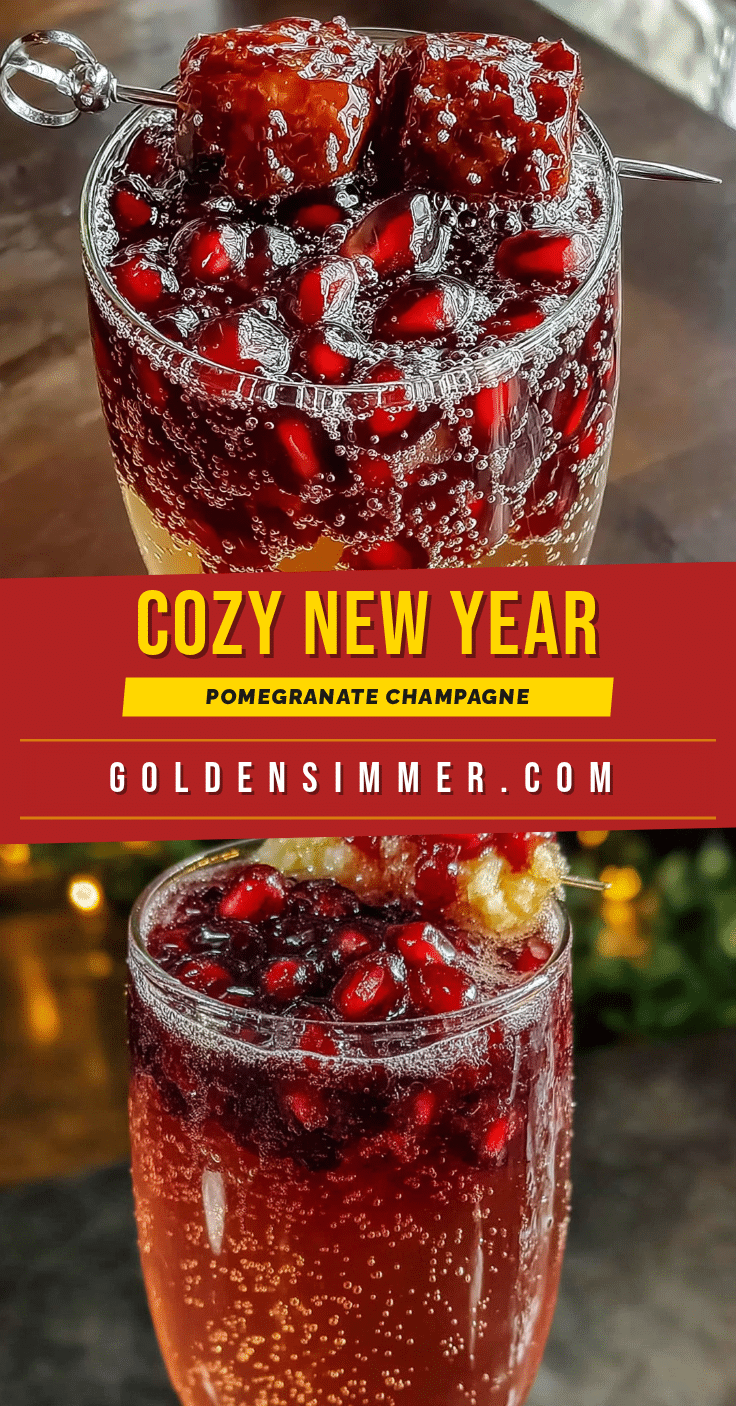
Cozy New Years Eve Pomegranate Champagne Cocktail
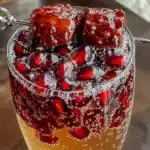
A cozy, celebratory champagne cocktail featuring pomegranate juice, orange liqueur, and fresh rosemary. Perfect for a quiet night in or a festive gathering, this drink balances sweetness and tartness with a touch of herbal warmth.
- Prep Time: 5 minutes
- Cook Time: 0 minutes
- Total Time: 5 minutes
- Yield: 1 serving 1x
- Category: Beverage
- Cuisine: American
Ingredients
- 1/4 cup (60 ml) pomegranate juice (e.g., POM Wonderful)
- 1 tablespoon (15 ml) orange liqueur (Grand Marnier or Cointreau)
- Champagne or prosecco (brut or extra brut), chilled
- 1 sprig fresh rosemary, lightly bruised
- 1 tablespoon pomegranate arils (fresh or pre-seeded)
- Honey or simple syrup (optional, to taste)
Instructions
- Chill your champagne flutes or coupe glasses in the freezer for at least 30 minutes before serving.
- Rinse and pat dry rosemary sprigs. Lightly bruise them between your fingers to release oils.
- In a small pitcher or liquid measuring cup, combine 1/4 cup pomegranate juice and 1 tablespoon orange liqueur per cocktail. Stir gently. If using honey or simple syrup, stir in until dissolved.
- Divide the pomegranate juice mixture evenly among the chilled glasses (about 1/4 cup per glass). Drop a few pomegranate arils into each glass.
- Slowly pour chilled champagne or prosecco into each glass, filling to about an inch from the rim. Pour at an angle to preserve bubbles.
- Gently stir each glass once with a bar spoon. Garnish with a bruised rosemary sprig and additional pomegranate arils. Serve immediately.
Notes
For a non-alcoholic version, swap champagne for sparkling cider or non-alcoholic sparkling wine, and skip the orange liqueur (use fresh orange juice instead). To batch for a party, pre-mix the pomegranate juice and orange liqueur in a pitcher and refrigerate; pour into glasses and top with champagne when serving. Do not assemble more than 15-20 minutes ahead to preserve bubbles.
Nutrition
- Serving Size: 1 cocktail (about 6
- Calories: 130160
- Sugar: 1013
- Sodium: 510
- Carbohydrates: 1215
Keywords: New Year's Eve cocktail, pomegranate champagne cocktail, prosecco cocktail, rosemary cocktail, holiday cocktail, easy cocktail, cozy cocktail