Love this? Save it for later!
Share the inspiration with your friends
The farmer at the Saturday market watched me circle his stall three times before he finally spoke. “You keep coming back to those carrots,” he said, nodding toward the pile of knobby, dirt-crusted roots. “But you keep walking away.” I laughed, embarrassed, and admitted I wasn’t sure what to do with them. They weren’t the perfect, uniform carrots from the grocery store. They looked, honestly, like they’d been dug up by someone who didn’t care about appearances. He picked one up, rubbed the dirt off with his thumb, and handed it to me. “These,” he said, “are for stew. The ugly ones always taste the best.”
That was three winters ago, and I’ve been making some version of this cozy red wine beef stew with root vegetables ever since. That farmer didn’t give me a recipe — he just gave me permission to stop overthinking things. To trust that the ingredients themselves would do the work if I got out of their way. And you know what? He was right. The first time I made this stew, I used whatever root vegetables I had rolling around in my crisper drawer. A parsnip that was starting to look a little sad. Half a celery root. Those ugly carrots. I poured in a bottle of red wine I’d opened the night before and let the whole thing simmer on the stove for a few hours.
Let me tell you, the smell that filled my kitchen that afternoon was something else. It was the kind of deep, savory aroma that makes you want to cancel all your plans and just sit there with a spoon. I almost ruined it by checking on it too much — I kept lifting the lid to peek, letting all that steam escape. My grandmother’s voice popped into my head: “A watched pot never thickens.” I finally forced myself to walk away and fold laundry. When I came back, the stew had transformed. The beef was fall-apart tender. The wine had mellowed into this rich, almost sweet gravy. And those ugly carrots? They were the best part. Sweet, earthy, completely transformed.
This recipe stayed with me because it taught me something about cooking that I keep forgetting: you don’t need fancy techniques or perfect ingredients. You just need time, patience, and the willingness to let things be a little messy. Maybe you’ve been there — standing in your kitchen with a bunch of vegetables that don’t look like much, wondering if you can pull something good out of them. You can. This cozy red wine beef stew with root vegetables is proof.
Why You’ll Love This Recipe
I’ve tested this cozy red wine beef stew with root vegetables more times than I can count. I’ve made it with cheap wine and expensive wine. I’ve rushed it and I’ve let it simmer all afternoon. I’ve burned the bottom of the pot exactly once (that was a sad Tuesday). Through all those trials, I landed on a version that just works — every single time. Here’s why I think you’ll love it too:
- Deep, complex flavor with minimal effort — The red wine does most of the heavy lifting here. It breaks down the beef, infuses the vegetables, and creates a sauce that tastes like you spent all day on it. Spoiler: you mostly just chop and wait.
- Simple, humble ingredients — Nothing fancy. Beef chuck, a bottle of dry red wine, whatever root vegetables look good at the market or are hiding in your fridge. You probably already have garlic, thyme, and bay leaves in your pantry.
- Perfect for cold, lazy weekends — This is the kind of meal you start on a Saturday afternoon when the wind is howling and you have nowhere to be. It fills your house with that cozy, slow-cooked smell and gives you an excuse to open that second bottle of wine.
- Crowd-pleaser that travels well — I’ve brought this to potlucks and family dinners, and it always disappears first. People go quiet when they eat it. That’s how you know it’s good.
- Gets better the next day — Honestly, this stew is even better on day two. The flavors meld together overnight, and the texture thickens beautifully. Make it ahead and thank yourself later.
What makes this recipe different from all the other beef stews out there? It’s the balance. The wine isn’t too sharp, the vegetables aren’t too mushy, and the broth is thick enough to coat a spoon without being gluey. I spent a lot of time figuring out the right ratio of liquid to flour, the right cut of beef, and the right cooking time so you don’t have to. This isn’t just another version of beef stew — it’s the one I keep coming back to, and I think you will too.
There’s something deeply satisfying about a bowl of this stew. It’s the kind of meal that makes you close your eyes after the first bite. It’s comfort food at its most honest — a little rustic, a little messy, and absolutely unforgettable.
What Ingredients You Will Need
This cozy red wine beef stew with root vegetables relies on simple, wholesome ingredients that work together to create something far greater than the sum of their parts. Most of these are pantry staples or easy to find at any grocery store or farmers market. Here’s what you’ll need and why each one matters:
For the Beef and Marinade
- 2 pounds beef chuck, cut into 1.5-inch cubes — Chuck is my go-to for stew. It has enough marbling to stay tender during long cooking, and it breaks down beautifully without getting stringy. Look for pieces with some fat running through them. Avoid lean cuts like sirloin — they’ll turn tough and dry.
- 1 ½ cups dry red wine (like Cabernet Sauvignon or Merlot) — Don’t use cooking wine. Use something you’d actually drink. The wine adds depth, acidity, and a subtle sweetness that balances the savory elements. I usually grab a bottle in the $10-15 range. (I personally like Bogle Merlot for this — it’s affordable and has a nice jammy quality.)
- 3 cloves garlic, smashed — Whole smashed cloves infuse the marinade without burning or becoming bitter. They soften during cooking and practically melt into the broth.
- 2 sprigs fresh thyme — Thyme and beef are a classic pairing. The earthy, slightly floral notes complement the wine beautifully.
- 1 bay leaf — Adds a subtle herbal layer. Don’t skip it — it makes a difference.
- 1 teaspoon salt — For seasoning the meat before browning.
- ½ teaspoon black pepper — Freshly cracked, if you can.
For the Stew Base
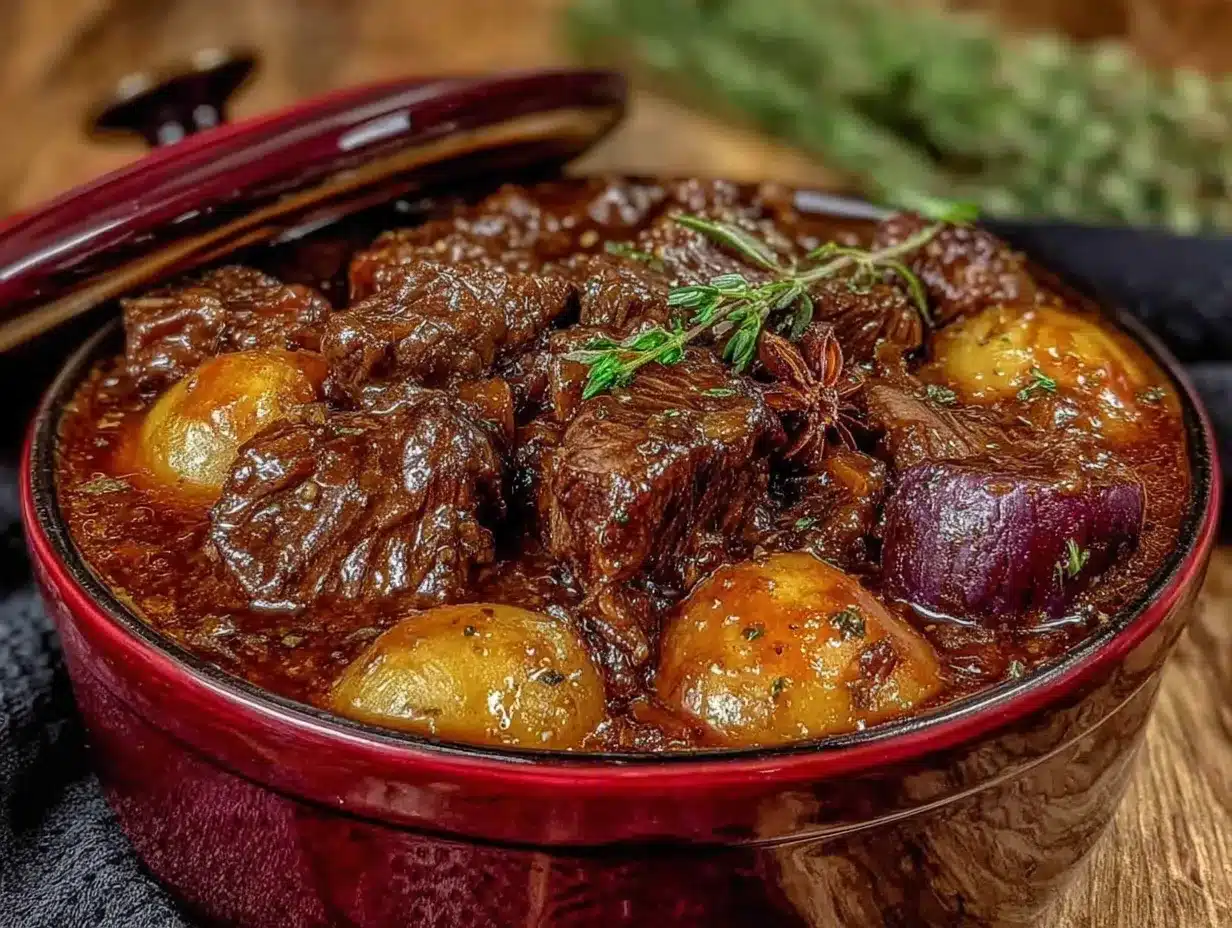
- 3 tablespoons olive oil, divided — You’ll use some for browning the beef and some for sautéing the vegetables. A good extra virgin olive oil works fine here.
- 1 large yellow onion, diced — Onions provide the savory backbone. Yellow onions are ideal because they’re mellow and sweet when cooked slowly.
- 3 carrots, peeled and cut into 1-inch chunks — Carrots add natural sweetness and a tender bite. If you can find the knobby, ugly ones from the farmers market, grab them. They’re sweeter and more flavorful.
- 2 parsnips, peeled and cut into 1-inch chunks — Parsnips have a slightly peppery, nutty flavor that stands up beautifully to the wine. They’re my secret weapon in this stew.
- 2 celery stalks, cut into 1-inch pieces — Celery adds a subtle freshness that cuts through the richness of the beef and wine.
- 1 large russet potato, peeled and cut into 1-inch cubes — The potato breaks down slightly and helps thicken the broth naturally. Yukon Golds also work well and hold their shape a bit better.
- 2 tablespoons tomato paste — Tomato paste adds umami and depth. It also helps the flour brown evenly when you make the roux. (I recommend the tube kind — it’s easier to use a little at a time.)
- 3 tablespoons all-purpose flour — This thickens the stew. You can substitute with gluten-free flour if needed, but the texture will be slightly different.
- 2 cups beef broth, low sodium — Use a good quality broth. I prefer Pacific Foods or homemade if I have it. Low sodium lets you control the salt level.
- 1 cup reserved red wine (from the marinade) — You’ll pour this in after browning the beef. Don’t discard the marinade liquid — it’s liquid gold.
- 1 teaspoon dried rosemary — Rosemary adds a piney, aromatic note that pairs beautifully with root vegetables. Crush it between your fingers before adding to release the oils.
- Salt and pepper to taste — Season as you go, not just at the end.
Optional Add-Ins
- 1 cup frozen peas — Stir these in during the last 5 minutes of cooking for a pop of color and sweetness.
- Fresh parsley, chopped — For garnish. It adds freshness and a bright green contrast.
- Crusty bread — Not technically an ingredient, but essential for sopping up every last drop of that glorious broth.
Substitution notes: If you don’t have parsnips, use an extra carrot and a small turnip. No russet potato? Sweet potato works, but it will make the stew slightly sweeter. For a gluten-free version, use 2 tablespoons cornstarch mixed with 2 tablespoons cold water instead of flour. Stir it in at the end and simmer for 5 minutes to thicken.
Equipment Needed
You don’t need a fancy kitchen to make this cozy red wine beef stew with root vegetables. Here’s what I use and what you can substitute if you’re working with limited tools:
- Large Dutch oven or heavy-bottomed pot (5-6 quart) — This is ideal. The heavy base distributes heat evenly and retains it well, which is crucial for slow braising. I use a Le Creuset that I found at a thrift store for $40 (best day of my life). If you don’t have one, a large stainless steel pot with a thick bottom works fine. Just keep an eye on the heat to prevent sticking.
- Sharp chef’s knife — You’ll be chopping a lot of vegetables. A dull knife makes this miserable. I use a Wusthof, but any sharp knife will do. If you don’t have one, a sharp paring knife works — it’ll just take longer.
- Cutting board — Preferably a large one. Wood or plastic, doesn’t matter. Just make sure it’s stable.
- Wooden spoon or spatula — For stirring and scraping up the browned bits from the bottom of the pot. Metal can scratch your enameled Dutch oven.
- Measuring cups and spoons — For the wine, broth, and seasonings. I use a liquid measuring cup for the wine and broth.
- Tongs — For flipping the beef cubes while browning. They give you better control than a spoon.
- Small bowl — For mixing the flour and tomato paste before adding to the pot.
- Ladle — For serving. A deep ladle works best for getting plenty of broth in each bowl.
Budget-friendly tip: If you don’t own a Dutch oven, a slow cooker or Instant Pot can work. For the slow cooker, brown the beef and sauté the vegetables on the stovetop first, then transfer everything to the slow cooker and cook on low for 8 hours. For the Instant Pot, use the sauté function for browning, then pressure cook on high for 35 minutes with a natural release.
Preparation Method
Making this cozy red wine beef stew with root vegetables is a labor of love, but I promise it’s worth every minute. Take your time with each step — rushing is the enemy of good stew. Here’s how I do it:
Step 1: Marinate the Beef (30 minutes to 2 hours)
Place the beef cubes in a large bowl or resealable plastic bag. Pour 1 ½ cups of red wine over the beef. Add the smashed garlic cloves, thyme sprigs, and bay leaf. Toss everything together, cover, and let it sit at room temperature for at least 30 minutes. If you have more time, pop it in the fridge for up to 2 hours. The wine starts breaking down the meat and infuses it with flavor right from the start. Don’t marinate longer than 2 hours, or the wine can start to make the beef mushy — trust me, I learned that the hard way.
Step 2: Prep Your Vegetables
While the beef marinates, chop all your vegetables. Dice the onion, peel and chunk the carrots and parsnips, slice the celery, and cube the potato. Aim for pieces that are roughly the same size — about 1 inch — so they cook evenly. I like to keep the carrot and parsnip chunks slightly larger than the potato, since they take a little longer to soften. Set them aside in separate piles. This isn’t just for organization — you’ll add them at different times.
Step 3: Brown the Beef (15-20 minutes)
Remove the beef from the marinade, but don’t pat it dry. Reserve the marinade liquid — you’ll use it later. Season the beef generously with salt and pepper. Heat 2 tablespoons of olive oil in your Dutch oven over medium-high heat until it shimmers. Working in batches (don’t crowd the pot!), add the beef cubes in a single layer. Let them brown undisturbed for 3-4 minutes per side. You’re looking for a deep, dark crust — that’s where the flavor lives. Use tongs to flip each piece. Transfer the browned beef to a plate and repeat with the remaining batches. If the pot starts to smoke, lower the heat slightly.
Step 4: Sauté the Aromatics (5-7 minutes)
Reduce the heat to medium. Add the remaining 1 tablespoon of olive oil. Toss in the diced onion and a pinch of salt. Cook, stirring occasionally, until the onion is soft and translucent — about 5 minutes. Scrape up any browned bits from the bottom of the pot with your wooden spoon. Those bits are pure gold. Add the tomato paste and stir for 1 minute until it darkens slightly and smells rich.
Step 5: Build the Roux (2-3 minutes)
Sprinkle the flour over the onion mixture. Stir constantly for 2 minutes. The flour will absorb the oil and turn into a thick paste. This step cooks out the raw flour taste and helps thicken the stew later. Don’t skip it — I once added the flour directly to the liquid and ended up with lumpy gravy. Not cute.
Step 6: Deglaze and Combine (5 minutes)
Pour in the reserved marinade wine (about 1 cup). Stir vigorously, scraping the bottom of the pot to release any stuck bits. Let the wine bubble and reduce slightly for 2-3 minutes. Then add the beef broth, dried rosemary, and the browned beef along with any juices on the plate. Stir everything together. The liquid should just barely cover the beef. If it doesn’t, add a splash more broth or water.
Step 7: Simmer the Beef (1 hour)
Bring the stew to a gentle boil, then reduce the heat to low. Cover the pot with the lid slightly ajar — you want some steam to escape so the liquid reduces and concentrates. Let it simmer gently for 1 hour. Check it occasionally and give it a stir. If the liquid seems too thin, remove the lid completely for the last 15 minutes. You’re looking for the beef to be fork-tender but not falling apart yet.
Step 8: Add the Root Vegetables (45 minutes to 1 hour)
After the beef has simmered for an hour, add the carrots, parsnips, celery, and potato. Stir them into the broth. Cover the pot again and let everything simmer for another 45 minutes to 1 hour. The vegetables should be tender when pierced with a fork but still hold their shape. The broth will have thickened into a rich, silky gravy. Taste and adjust seasoning with salt and pepper.
Step 9: Rest and Serve (10 minutes)
Turn off the heat and let the stew rest for 10 minutes before serving. This allows the flavors to settle and the broth to thicken slightly more. Ladle into deep bowls, garnish with fresh parsley if you like, and serve with crusty bread for sopping. Honestly, the bread is non-negotiable in my house.
Sensory cue: When it’s done, the beef should yield easily to a fork without resistance. The broth should coat the back of a spoon — not too thin, not too thick. The carrots should be tender but not mushy. And the smell? Deep, savory, and slightly sweet from the wine. You’ll know.
Cooking Tips & Techniques
Over the years, I’ve made every mistake in the book with this cozy red wine beef stew with root vegetables. Here’s what I’ve learned so you don’t have to repeat my failures:
Don’t skip the browning step. I know it’s tempting to just dump everything in the pot and walk away. But browning the beef creates the Maillard reaction — that deep, caramelized crust that adds layers of flavor. If you skip it, your stew will taste flat. Take the extra 15 minutes. Your future self will thank you.
Season as you go, not just at the end. Salt the onions when you sauté them. Season the beef before browning. Taste the broth halfway through and adjust. Layering the seasoning throughout the cooking process creates a more complex, well-rounded flavor. I once forgot to salt until the end, and the stew tasted like… well, like nothing. Don’t be me.
Watch your heat. A gentle simmer is what you’re after — small bubbles breaking the surface occasionally. If you boil the stew aggressively, the beef will turn tough and the vegetables will disintegrate into mush. Low and slow is the mantra here. I ruined my second batch by cranking the heat because I was impatient. The beef was like shoe leather.
Let it rest overnight if you can. This stew is one of those magical dishes that tastes better the next day. The flavors meld, the broth thickens, and everything becomes more cohesive. Make it a day ahead, refrigerate it, and reheat gently on the stovetop. The fat will solidify on top, which makes it easy to skim off if you want a leaner broth.
Multitasking strategy: While the beef marinates, chop all your vegetables. While the beef browns, prep your aromatics. While the stew simmers, clean your kitchen and set the table. The active cooking time is only about 30 minutes — the rest is just waiting. Use that time to pour yourself a glass of wine and put your feet up.
One more thing: If your stew is too thin at the end, mix 1 tablespoon of cornstarch with 2 tablespoons of cold water to make a slurry. Stir it in and let it simmer for 5 minutes. If it’s too thick, add a splash of beef broth or water. You can always adjust — that’s the beauty of stew.
Variations & Adaptations
This cozy red wine beef stew with root vegetables is endlessly adaptable. Here are some variations I’ve tried and loved:
Slow Cooker Version: Brown the beef and sauté the onions on the stovetop first, then transfer everything to a slow cooker. Cook on low for 8 hours or high for 4 hours. The texture will be slightly different — the vegetables will be softer — but the flavor is just as good. I do this on busy weeks when I want to come home to dinner ready.
Instant Pot Version: Use the sauté function to brown the beef and cook the onions. Add the remaining ingredients (except the frozen peas, if using) and pressure cook on high for 35 minutes with a natural release. Quick release any remaining steam, then stir in the peas. This version is faster but still delivers deep flavor.
Vegetarian Version: Swap the beef for 2 cups of hearty mushrooms (cremini or portobello) and use vegetable broth instead of beef broth. Add a can of drained chickpeas for protein. The mushrooms provide that umami depth that mimics the beef. I’ve made this for my vegetarian friends, and they always ask for seconds.
Seasonal Root Vegetable Swap: In the fall, add cubed butternut squash or sweet potato. In the spring, use new potatoes and baby carrots. In the winter, try celeriac or rutabaga. The beauty of this stew is that it works with whatever root vegetables are in season. I once made it with kohlrabi and turnips because that’s what my CSA box had. It was surprisingly delicious.
Herb Variations: Swap the rosemary for 2 sprigs of fresh oregano or 1 teaspoon of dried marjoram. Add a Parmesan rind to the pot while it simmers for an extra layer of savory richness. Remove the rind before serving. This is a trick I learned from an Italian friend — it adds incredible depth without being cheesy.
Spicy Twist: Add 1 teaspoon of smoked paprika and a pinch of cayenne pepper with the tomato paste. The smokiness pairs beautifully with the wine and root vegetables. I tried this on a whim one rainy Sunday, and it’s become my go-to variation when I want something a little different.
Serving & Storage Suggestions
This cozy red wine beef stew with root vegetables is a meal in itself, but the right accompaniments can take it to the next level. Here’s how I like to serve and store it:
Serving temperature: Serve the stew piping hot in deep bowls. The broth should be steaming and the vegetables tender. I like to let it cool for 5 minutes after ladling — just enough so I don’t burn my tongue, but still hot enough to warm me from the inside out.
Presentation: Ladle the stew into bowls, making sure each serving gets a good mix of beef, vegetables, and broth. Garnish with a sprinkle of fresh parsley and a crack of black pepper. Serve with a thick slice of crusty sourdough or a hunk of buttered baguette. The bread is essential for sopping up every last drop of that glorious wine broth.
Complementary dishes: A simple green salad with a tangy vinaigrette cuts through the richness of the stew. Roasted Brussels sprouts or steamed green beans also work well. For a heartier meal, serve over mashed potatoes or egg noodles. I’ve even spooned it over creamy polenta — highly recommend.
Beverage pairings: Pour the same red wine you used in the stew — a Cabernet Sauvignon or Merlot. The flavors will harmonize beautifully. A dark beer like a stout or porter also works. For non-alcoholic options, try sparkling water with a squeeze of lemon or a warm mug of apple cider.
Storage instructions: Let the stew cool completely before storing. Transfer to an airtight container and refrigerate for up to 4 days. The flavors actually improve over time, so don’t be afraid to make it ahead. The stew will thicken as it sits, so you may need to add a splash of broth or water when reheating.
Freezing: This stew freezes beautifully. Portion it into freezer-safe containers or zip-top bags, leaving about an inch of headspace for expansion. Freeze for up to 3 months. Thaw overnight in the refrigerator before reheating. I like to freeze individual portions for easy lunches.
Reheating: Reheat gently on the stovetop over medium-low heat, stirring occasionally. Add a splash of broth or water if the stew is too thick. You can also reheat in the microwave in 1-minute intervals, stirring between each. Avoid boiling, which can make the beef tough.
Flavor development note: This stew is one of those rare dishes that genuinely tastes better on day two or three. The wine mellows, the vegetables absorb more flavor, and the broth becomes richer and more complex. I often make it on a Sunday and eat it for lunch all week. Each day, it gets a little better.
Nutritional Information & Benefits
This cozy red wine beef stew with root vegetables is as nourishing as it is delicious. Here’s a rough estimate of what you’re getting in each serving (based on 6 servings):
| Nutrient | Amount Per Serving |
|---|---|
| Calories | ~450-500 |
| Protein | 35g |
| Fat | 18g |
| Carbohydrates | 30g |
| Fiber | 6g |
| Sugar | 8g |
| Sodium | ~700mg (varies with broth and salt) |
| Iron | 4mg (22% DV) |
| Vitamin A | 120% DV (from carrots) |
| Vitamin C | 20% DV (from parsnips and potatoes) |
Health benefits: This stew is packed with nutrients. Beef provides high-quality protein, iron, and B vitamins — essential for energy and muscle health. Root vegetables like carrots, parsnips, and potatoes are rich in fiber, vitamins, and antioxidants. The carrots alone give you a full day’s worth of vitamin A, which supports eye health and immune function. The red wine (in moderation) contains resveratrol, an antioxidant linked to heart health.
Dietary considerations: This recipe is naturally gluten-free if you use cornstarch instead of flour. It’s also dairy-free and nut-free. For a lower-carb version, reduce the potato to ½ cup and add extra parsnips or turnips. The protein content makes it a satisfying meal that keeps you full for hours.
Potential allergens: The flour contains gluten. The wine may contain sulfites. If you have sensitivities, use gluten-free flour and check your wine label.
Personal wellness perspective: I love that this stew feels indulgent but is actually packed with whole, nourishing ingredients. It’s the kind of meal that fills you up without weighing you down. After a bowl of this, I feel warm, satisfied, and ready to tackle the rest of my day — or curl up on the couch with a good book. Both are valid.
Conclusion
This cozy red wine beef stew with root vegetables is more than just a recipe — it’s a reminder that the best meals come from simple ingredients, a little patience, and the willingness to let things unfold in their own time. That farmer at the market was right. The ugly carrots, the cheap wine, the slightly sad parsnip hiding in the back of your fridge — they all have potential. You just have to give them a chance.
What I love most about this stew is how forgiving it is. You can swap vegetables, adjust the wine, add more garlic, or let it simmer an extra hour. It will still be delicious. It will still fill your kitchen with that incredible, soul-warming smell. And it will still make you feel like you’ve accomplished something good — because you have.
I hope you make this stew on a cold day when you need a little comfort. I hope you pour yourself a glass of that wine while it simmers. And I hope you share it with people you love, because good food is meant to be shared. When you do make it, I’d love to hear how it turned out. Did you add your own twist? Use a different vegetable? Forget the bay leaf and panic? (It’s fine — I’ve done that too.) Drop a comment below or tag me in your photos. Let’s keep this conversation going, one bowl of stew at a time.
Happy cooking, friend. You’ve got this.
Frequently Asked Questions
Can I use a different cut of beef?
Yes, but choose wisely. Beef chuck is ideal because of its marbling. You can also use brisket or bottom round. Avoid lean cuts like sirloin or tenderloin — they’ll turn tough and dry during the long simmer. If you’re in a pinch, you can use stew meat from the grocery store, but check that it has some visible fat.
What if I don’t have red wine?
You can substitute with additional beef broth and 2 tablespoons of balsamic vinegar or red wine vinegar. The vinegar adds acidity and depth, though it won’t be exactly the same. For a non-alcoholic version, use 1 cup of red grape juice mixed with ½ cup of beef broth. It will be sweeter, so adjust the seasoning accordingly.
Can I make this in a slow cooker?
Absolutely. Brown the beef and sauté the onions on the stovetop first — this step is crucial for flavor. Then transfer everything to the slow cooker. Cook on low for 8 hours or high for 4 hours. Add the frozen peas (if using) during the last 30 minutes. The texture will be slightly different, but the flavor will still be fantastic.
How do I thicken the stew if it’s too thin?
Mix 1 tablespoon of cornstarch with 2 tablespoons of cold water to make a slurry. Stir it into the simmering stew and cook for 5 minutes until thickened. Alternatively, you can mash a few of the potato cubes against the side of the pot and stir them in — the starch will naturally thicken the broth.
Can I freeze leftovers?
Yes, this stew freezes beautifully. Let it cool completely, then transfer to freezer-safe containers or zip-top bags. Leave about an inch of headspace for expansion. Freeze for up to 3 months. Thaw overnight in the refrigerator and reheat gently on the stovetop. The texture may be slightly softer after freezing, but the flavor will be just as good — if not better.
Pin This Recipe!

Cozy Red Wine Beef Stew with Root Vegetables
A hearty, slow-simmered beef stew with tender chunks of beef chuck, root vegetables, and a rich red wine broth. Perfect for cold weekends, this comforting one-pot meal gets even better the next day.
- Prep Time: 30 minutes
- Cook Time: 2 hours 15 minutes
- Total Time: 2 hours 45 minutes
- Yield: 6 servings 1x
- Category: Main Course
- Cuisine: American
Ingredients
- 2 pounds beef chuck, cut into 1.5-inch cubes
- 1 ½ cups dry red wine (like Cabernet Sauvignon or Merlot)
- 3 cloves garlic, smashed
- 2 sprigs fresh thyme
- 1 bay leaf
- 1 teaspoon salt
- ½ teaspoon black pepper
- 3 tablespoons olive oil, divided
- 1 large yellow onion, diced
- 3 carrots, peeled and cut into 1-inch chunks
- 2 parsnips, peeled and cut into 1-inch chunks
- 2 celery stalks, cut into 1-inch pieces
- 1 large russet potato, peeled and cut into 1-inch cubes
- 2 tablespoons tomato paste
- 3 tablespoons all-purpose flour
- 2 cups beef broth, low sodium
- 1 cup reserved red wine (from the marinade)
- 1 teaspoon dried rosemary
- Salt and pepper to taste
- 1 cup frozen peas (optional)
- Fresh parsley, chopped (for garnish)
- Crusty bread (for serving)
Instructions
- Place the beef cubes in a large bowl or resealable plastic bag. Pour 1 ½ cups of red wine over the beef. Add the smashed garlic cloves, thyme sprigs, and bay leaf. Toss everything together, cover, and let it sit at room temperature for at least 30 minutes (or up to 2 hours in the fridge).
- While the beef marinates, chop all your vegetables: dice the onion, peel and chunk the carrots and parsnips, slice the celery, and cube the potato. Aim for pieces about 1 inch in size.
- Remove the beef from the marinade, reserving the marinade liquid. Season the beef generously with salt and pepper. Heat 2 tablespoons of olive oil in a large Dutch oven over medium-high heat until shimmering. Working in batches, add the beef cubes in a single layer and brown undisturbed for 3-4 minutes per side. Transfer browned beef to a plate and repeat with remaining batches.
- Reduce heat to medium. Add the remaining 1 tablespoon of olive oil. Add the diced onion and a pinch of salt. Cook, stirring occasionally, until the onion is soft and translucent, about 5 minutes. Add the tomato paste and stir for 1 minute until darkened.
- Sprinkle the flour over the onion mixture. Stir constantly for 2 minutes to cook out the raw flour taste.
- Pour in the reserved marinade wine (about 1 cup). Stir vigorously, scraping the bottom of the pot to release any stuck bits. Let the wine bubble and reduce slightly for 2-3 minutes. Then add the beef broth, dried rosemary, and the browned beef along with any juices on the plate. Stir everything together.
- Bring the stew to a gentle boil, then reduce the heat to low. Cover the pot with the lid slightly ajar and let it simmer gently for 1 hour.
- After 1 hour, add the carrots, parsnips, celery, and potato. Stir them into the broth. Cover the pot again and let everything simmer for another 45 minutes to 1 hour, until the vegetables are tender and the broth has thickened.
- Turn off the heat and let the stew rest for 10 minutes before serving. If using frozen peas, stir them in during the last 5 minutes of cooking. Ladle into deep bowls, garnish with fresh parsley, and serve with crusty bread.
Notes
For best results, let the stew rest overnight in the refrigerator and reheat gently the next day—the flavors meld and deepen. If the stew is too thin at the end, mix 1 tablespoon cornstarch with 2 tablespoons cold water and stir in; simmer 5 minutes to thicken. For a gluten-free version, substitute the flour with 2 tablespoons cornstarch mixed with 2 tablespoons cold water, added at the end.
Nutrition
- Serving Size: 1 bowl (about 1.5 cu
- Calories: 475
- Sugar: 8
- Sodium: 700
- Fat: 18
- Saturated Fat: 5
- Carbohydrates: 30
- Fiber: 6
- Protein: 35
Keywords: beef stew, red wine stew, root vegetables, comfort food, winter stew, one-pot meal, slow cooker, Dutch oven