Love this? Save it for later!
Share the inspiration with your friends
I wasn’t supposed to be there that long. I’d stopped by my neighbor Delia’s house to return her pruning shears, and honestly, I was hoping to just hand them over and head home before the rain started. But then I walked into her kitchen, and the smell stopped me cold. It was warm and nutty, with this herbal, almost toasty richness that wrapped around me like a blanket. She was standing at the stove, a stick of butter sizzling in a pan, and she just shrugged when I asked what she was making. “Oh, just some pasta,” she said, like it was nothing. Like she wasn’t about to create the most incredible thing I’d smelled in weeks.
I stood there, dripping from the rain, watching her toss in some fresh sage leaves and a handful of what looked like roasted squash. She wasn’t following a recipe, you know? She was just doing it—tasting, adjusting, throwing in a splash of cream from a carton she’d left on the counter. I was mesmerized. I think I mumbled something about needing to get home, but I didn’t move. I just watched. Maybe you’ve been there—when someone’s cooking something so simple, so unassuming, that you know you’re about to have a core food memory. And I did. She finally slid a bowl across the island toward me, and that first bite? Let me tell you, it was like fall had shown up in a single forkful. That creamy, silky sauce with the crispy sage and the sweet, tender squash? It was perfect.
That was three falls ago, and I’ve been making this creamy fall harvest pasta with sage butter ever since. I’ve tweaked it, of course—added a little this, swapped out a little that—but the heart of it is all Delia. It’s the kind of recipe that feels fancy but takes almost no effort, which, let’s face it, is exactly the kind of recipe I want in my back pocket. I’m so excited to share it with you today.
Why You’ll Love This Recipe
Let me tell you why this creamy fall harvest pasta with sage butter has become my go-to for everything from cozy weeknight dinners to impressing guests who stop by unannounced. I’ve tested this recipe more times than I can count, and every single time, it delivers.
- Quick & Easy: From start to finish, this dish comes together in about 30 minutes. Seriously. The pasta cooks while you roast the squash and brown the butter. It’s efficient, and it’s the perfect solution for those nights when you want something incredible but don’t have hours to spend in the kitchen.
- Simple Ingredients: I bet you already have most of these in your pantry. Butter, garlic, pasta, cream, and sage. The only “special” thing is maybe the butternut squash, but honestly, it’s everywhere in the fall. No fancy grocery store trips required.
- Perfect for Fall Gatherings: This dish is made for cozy dinners, Thanksgiving side dishes, or even a romantic date night in. It screams “autumn” in the best possible way.
- Crowd-Pleaser: I’ve served this to picky eaters, vegetable skeptics, and full-on foodies. Everyone loves it. The creamy sauce and crispy sage are universally adored.
- Unbelievably Delicious: The texture is what gets me every time. The creamy sauce clings to every piece of pasta, the roasted squash adds these little pockets of sweetness, and the crispy sage butter brings this nutty, savory crunch. It’s next-level comfort food.
What makes this version different from the rest? It’s the technique. Instead of just tossing everything together, we take the time to brown the butter and crisp the sage. That one step transforms the entire dish. It’s not just another creamy pasta—it’s the best creamy pasta. Trust me on this.
What Ingredients You Will Need
This creamy fall harvest pasta uses simple, wholesome ingredients to deliver bold flavor and satisfying texture without the fuss. Most of these are pantry staples or easy to find at any grocery store.
- Butternut Squash: 2 cups, peeled and diced into ½-inch cubes. I recommend using a pre-cut squash from the store to save time, but if you’re cutting your own, look for one that feels heavy for its size. (Pro tip: Save the seeds and roast them for a snack!)
- Olive Oil: 2 tablespoons, for roasting the squash. Use a good quality extra-virgin olive oil for the best flavor.
- Salt and Black Pepper: To taste. I use kosher salt for its clean flavor.
- Dried Pasta: 12 ounces (340g). I love using fettuccine or pappardelle for this dish because the wide noodles catch all that creamy sauce. But any shape works—penne, rigatoni, or even spaghetti.
- Unsalted Butter: 4 tablespoons (½ stick). Using unsalted butter lets you control the salt level in the final dish.
- Fresh Sage Leaves: 10-12 large leaves. Don’t use dried sage here—the fresh leaves are what crisp up beautifully in the butter.
- Garlic: 3 cloves, minced. Fresh garlic is non-negotiable for that aromatic punch.
- Heavy Cream: 1 cup (240ml). This creates the luscious, silky sauce. For a lighter version, you can use half-and-half, but the sauce won’t be as thick.
- Parmesan Cheese: ½ cup (50g), finely grated. I recommend buying a block of Parmesan and grating it yourself—it melts so much better than the pre-shredded stuff.
- Nutmeg: A pinch (about ⅛ teaspoon). This is my secret ingredient. It adds a warm, slightly sweet undertone that pairs perfectly with the squash.
- Optional Garnish: Extra crispy sage leaves, a sprinkle of red pepper flakes for heat, or a drizzle of balsamic glaze for a touch of acidity.
Equipment Needed
You don’t need a lot of fancy equipment to make this creamy fall harvest pasta with sage butter. Here’s what you’ll need:
- Baking Sheet: For roasting the squash. A rimmed baking sheet works best to catch any juices.
- Large Pot: For boiling the pasta. Make sure it’s big enough to give the pasta room to move.
- Large Skillet or Dutch Oven: This is where the magic happens—browning the butter, crisping the sage, and making the sauce. A wide skillet gives you more surface area for the sage leaves to crisp.
- Chef’s Knife and Cutting Board: For dicing the squash and mincing the garlic.
- Measuring Cups and Spoons: For accuracy, especially with the cream and Parmesan.
- Wooden Spoon or Silicone Spatula: For stirring the sauce.
- Box Grater or Microplane: For grating the Parmesan cheese. A Microplane gives you the finest, melt-iest results.
If you don’t have a Dutch oven, no worries—a deep skillet works perfectly. And if you’re short on time, you can even skip roasting the squash and sauté it directly in the pan with a little oil until tender. I’ve done it both ways, and while roasting gives you a deeper flavor, the stovetop method works in a pinch.
Preparation Method
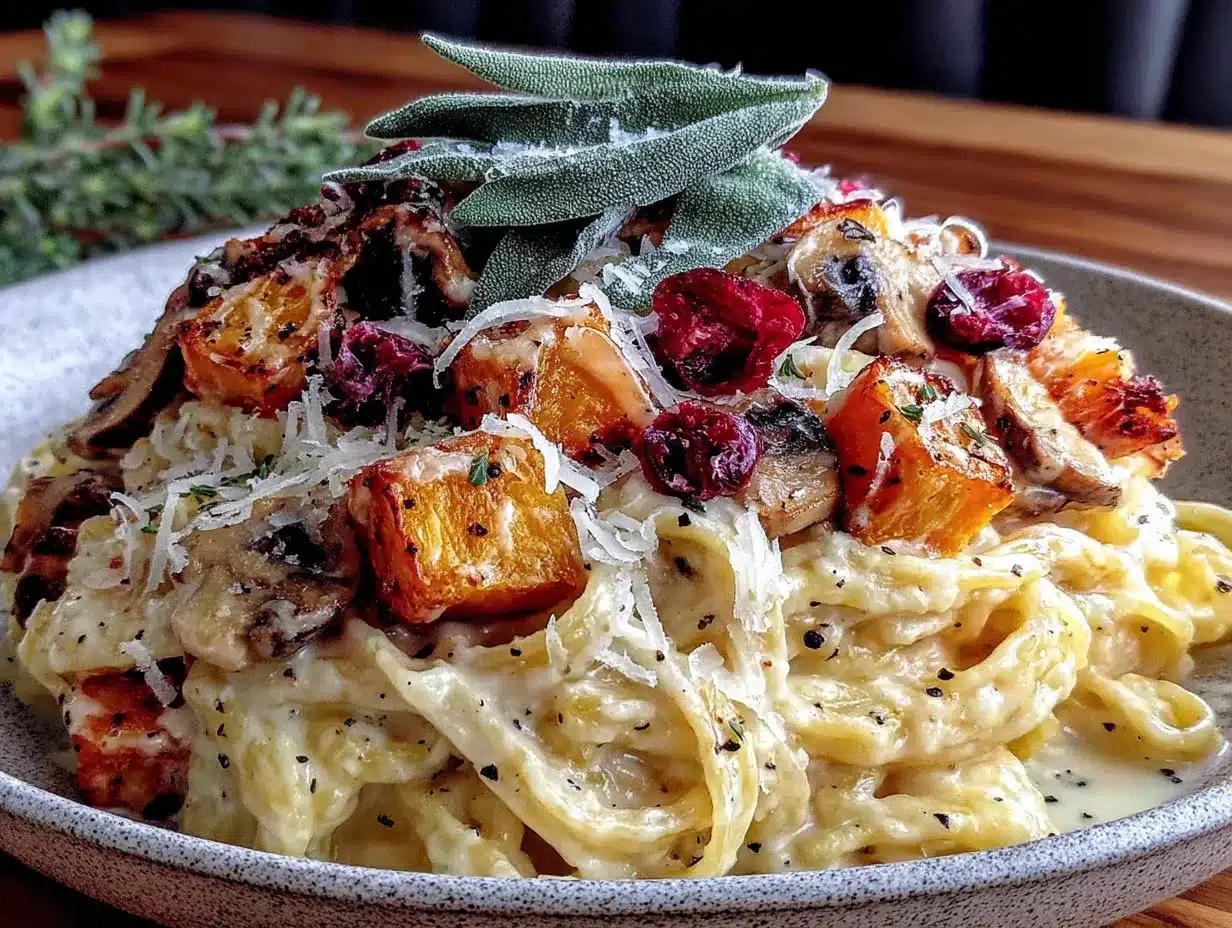
Let’s get cooking! Follow these steps, and you’ll have a restaurant-quality creamy fall harvest pasta with sage butter on your table in no time.
- Preheat your oven to 400°F (200°C). While it’s heating up, line a baking sheet with parchment paper for easy cleanup.
- Roast the squash. Toss the diced butternut squash with 2 tablespoons of olive oil, a generous pinch of salt, and a few cracks of black pepper. Spread it out in a single layer on the prepared baking sheet. Roast for 20-25 minutes, flipping halfway through, until the squash is tender and lightly caramelized on the edges. You’ll know it’s done when you can easily pierce a piece with a fork. Set it aside while you work on the rest.
- Cook the pasta. Bring a large pot of salted water to a rolling boil (I use about 1 tablespoon of salt per 4 quarts of water). Add your 12 ounces of pasta and cook according to the package directions until al dente. Before you drain it, reserve about 1 cup of the pasta water. This starchy water is gold—it helps thicken and emulsify the sauce later. Drain the pasta and set it aside.
- Brown the butter and crisp the sage. While the pasta is cooking, place your large skillet or Dutch oven over medium heat. Add the 4 tablespoons of unsalted butter. Let it melt, swirling the pan occasionally. Once it’s fully melted, it will start to foam. Keep a close eye on it—the butter will go from foamy to golden to a deep, nutty brown in just a minute or two. The second you see little brown specks forming at the bottom of the pan and smell a nutty aroma, drop in the fresh sage leaves. They’ll sizzle and crisp up in about 30 seconds. Use a slotted spoon to transfer the crispy sage leaves to a paper towel-lined plate. Don’t walk away from the butter at this stage—I’ve burned more batches than I’d like to admit by getting distracted!
- Build the sauce. Reduce the heat to low. Add the minced garlic to the browned butter and sauté for about 30 seconds until fragrant, stirring constantly. The residual heat will cook it perfectly. Slowly pour in the 1 cup of heavy cream, whisking continuously to combine. Let it simmer gently for 2-3 minutes until it starts to thicken slightly.
- Add the cheese and seasonings. Remove the skillet from the heat and stir in the grated Parmesan cheese until it’s fully melted and the sauce is smooth. Add a pinch of nutmeg, and season with salt and pepper to taste. If the sauce seems too thick, add a splash of the reserved pasta water to loosen it up. The sauce should coat the back of a spoon.
- Combine everything. Add the cooked pasta and the roasted squash to the skillet with the sauce. Toss everything together gently using tongs or a wooden spoon until the pasta is evenly coated and the squash is distributed throughout. If the sauce gets too thick as it sits, add a little more pasta water to bring it back to life.
- Serve immediately. Divide the pasta among bowls. Top each serving with a few of the reserved crispy sage leaves. I also like to add an extra sprinkle of Parmesan and a crack of black pepper right at the end.
That’s it. Seriously. In about 30 minutes, you’ve got a bowl of creamy fall harvest pasta with sage butter that tastes like it took hours.
Cooking Tips & Techniques
I’ve made this creamy fall harvest pasta with sage butter more times than I can count, and I’ve learned a few things along the way. Here are my best tips to guarantee success.
Don’t rush the brown butter. This is the most important step. The nutty, toasty flavor of browned butter is what makes this dish sing. But it can go from perfect to burnt in seconds. Keep the heat at medium and swirl the pan constantly. The second you see those brown specks and smell that nutty aroma, add the sage and move on. If it turns black, start over—it’s not worth trying to salvage.
Use cold butter for better control. Starting with cold butter straight from the fridge gives you a little more time before it browns. It melts more slowly, which means you have a wider window to catch it at the perfect moment.
Reserve more pasta water than you think you need. I always save a full cup, even if I think I won’t use it. The starch in the water is what helps the sauce cling to the pasta and stay silky. If you don’t have enough, your sauce might break or become grainy.
Grate your own Parmesan. I know it’s tempting to grab the pre-shredded bag, but it’s coated in anti-caking agents that prevent it from melting smoothly. A block of real Parmesan grated on a Microplane will give you a sauce that’s velvety and luxurious. Trust me on this one—I learned the hard way.
Toast the squash for deeper flavor. If you’re in a rush, you can sauté the squash directly in the pan, but roasting it first brings out its natural sweetness and gives it those caramelized edges that add so much texture. It’s worth the extra 20 minutes.
Don’t overcook the pasta. Cook it al dente—firm to the bite. It will continue to cook slightly when you toss it with the hot sauce, so if you cook it fully now, you’ll end up with mushy pasta.
Variations & Adaptations
One of the best things about this creamy fall harvest pasta with sage butter is how adaptable it is. Here are some of my favorite ways to change it up.
Make it vegetarian (it already is!) or vegan. To make it vegan, substitute the butter with a high-quality vegan butter, use full-fat canned coconut milk or a rich cashew cream instead of heavy cream, and use a vegan Parmesan-style cheese. The coconut milk version has a slightly different flavor, but it’s still incredibly creamy and delicious.
Swap the squash. Not a fan of butternut squash? Use sweet potatoes, pumpkin, or even acorn squash. Each one brings its own unique sweetness and texture. I’ve made this with roasted sweet potatoes, and honestly, it might be even better.
Add protein. This pasta is hearty enough on its own, but if you want to make it a full meal, add some cooked chicken, Italian sausage, or crispy bacon. I love crumbling some cooked bacon over the top for a salty, smoky crunch that contrasts beautifully with the creamy sauce.
Try a different herb. If you can’t find fresh sage, or you just want to experiment, try using fresh thyme or rosemary. The technique is the same—crisp the leaves in the brown butter—but the flavor profile changes completely. Thyme gives it a more earthy, subtle flavor, while rosemary is bold and piney.
Go gluten-free. Simply use your favorite gluten-free pasta. I’ve had great results with brown rice pasta or chickpea pasta. Just be careful not to overcook it—gluten-free pasta can turn mushy quickly.
Add some greens. Toss in a handful of fresh spinach or kale at the very end, right before you serve it. The residual heat will wilt it perfectly, adding color and nutrients without changing the flavor.
Serving & Storage Suggestions
This creamy fall harvest pasta with sage butter is best served immediately, while it’s still hot and the sauce is perfectly silky. But here’s how to handle leftovers and make the most of every bite.
Serving Temperature: Serve this pasta piping hot. The sauce is at its creamiest right off the stove. If it cools down, the sauce will thicken and become less luscious. I like to warm my serving bowls in the oven (at the lowest setting) for a few minutes before plating—it keeps the pasta hot longer.
Presentation Ideas: Twirl the pasta into a neat nest in the center of the bowl using tongs. Arrange a few pieces of roasted squash on top, and crown it all with the crispy sage leaves. A final dusting of Parmesan and a crack of black pepper makes it look like it came straight from a restaurant kitchen.
What to Serve With It: This pasta is a meal in itself, but it pairs beautifully with a simple green salad dressed with lemon vinaigrette (the acidity cuts through the richness) and a glass of crisp white wine like Sauvignon Blanc or a light Pinot Grigio. For a heartier meal, serve it alongside some crusty bread to soak up any extra sauce.
Storage Instructions: Store leftovers in an airtight container in the refrigerator for up to 3 days. The pasta will absorb some of the sauce as it sits, so don’t expect it to be as saucy the next day—it’s more like a pasta bake in texture.
Reheating Tips: The best way to reheat this pasta is in a skillet over medium-low heat. Add a splash of milk, cream, or even a little pasta water to loosen the sauce back up. Stir gently until everything is warmed through. You can also microwave it in 30-second bursts, stirring between each, but the texture won’t be quite as nice. Avoid high heat, which can cause the cream to separate.
Freezer Instructions: I don’t recommend freezing this dish. The cream-based sauce can separate and become grainy when thawed. If you must freeze it, do so before adding the cream—freeze the roasted squash and cooked pasta separately, then make the sauce fresh when you’re ready to serve.
Nutritional Information & Benefits
This creamy fall harvest pasta with sage butter is comfort food at its finest, but it also has some surprising nutritional benefits. Here’s a quick breakdown.
Estimated Nutritional Values (per serving, based on 4 servings):
- Calories: ~580
- Fat: 32g
- Saturated Fat: 18g
- Carbohydrates: 58g
- Fiber: 4g
- Sugar: 6g
- Protein: 14g
Health Benefits of Key Ingredients:
Butternut squash is packed with vitamin A (in the form of beta-carotene), which is great for eye health and immune function. It’s also a good source of fiber, which helps keep you full and satisfied. Sage isn’t just for flavor—it’s known for its anti-inflammatory properties and has been used in traditional medicine for centuries. The garlic adds a boost of allicin, a compound linked to heart health.
Dietary Considerations: This recipe is vegetarian as written. It can be made gluten-free with a simple pasta swap. For a lower-carb version, serve the sauce and squash over zucchini noodles or spaghetti squash instead of pasta. Be aware that this dish contains dairy (butter, cream, and Parmesan) and gluten (pasta), so it’s not suitable for those with allergies to those ingredients.
My Personal Wellness Perspective: I’m a firm believer that food should nourish both the body and the soul. This pasta is rich, yes, but it’s made with real, whole ingredients. It’s the kind of meal that makes you slow down and savor every bite. And honestly, a little bit of indulgence is good for the spirit. Balance is everything.
Conclusion
So there you have it—my creamy fall harvest pasta with sage butter. It’s the recipe that walked into my life by accident and refused to leave, and I’m so glad it did. Every time I make it, I’m transported back to Delia’s kitchen, standing in the doorway, watching her create magic with a stick of butter and a handful of sage. It’s simple, it’s beautiful, and it’s absolutely delicious.
I hope you’ll give this recipe a try. Customize it, make it your own, and don’t be afraid to experiment. Maybe you’ll add some bacon, or swap the squash for sweet potatoes, or go heavy on the crispy sage like I do. Whatever you choose, I promise you’re in for a treat. And when you make it, I’d love to hear about it. Leave a comment below and let me know how it turned out—did you make any changes? Was it a hit with your family? Your stories are what make this community so special.
Until next time, happy cooking! And remember, the best recipes are the ones that make you stop and smile.
Frequently Asked Questions
Can I use dried sage instead of fresh?
I really don’t recommend it for this recipe. Fresh sage leaves are what crisp up beautifully in the brown butter, giving you that amazing texture and flavor. Dried sage is better suited for soups or stews, where it can rehydrate. If you’re in a pinch, you can use dried sage, but just crumble it into the butter and skip the “crisping” step—it will flavor the sauce without adding texture.
Can I make this creamy fall harvest pasta ahead of time?
This dish is best served fresh, but you can prep components in advance. Roast the squash up to 2 days ahead and store it in the fridge. You can also cook the pasta a day ahead—just toss it with a little olive oil to prevent sticking, and store it in an airtight container. When you’re ready to serve, make the sauce from scratch and toss everything together. The sauce itself doesn’t reheat well, so don’t make it ahead.
What can I use instead of heavy cream?
If you’re looking for a lighter option, half-and-half works, but the sauce won’t be as thick or rich. For a dairy-free alternative, full-fat canned coconut milk is my go-to. It adds a slight coconut flavor, but it’s still creamy and delicious. You can also make a cashew cream by blending soaked cashews with water until smooth—it’s a great nut-based option.
How do I keep the sauce from breaking?
A broken sauce is usually caused by high heat or adding cold ingredients too quickly. Always keep the heat on low when you add the cream and cheese. Make sure your Parmesan is at room temperature before adding it to the pan. And if your sauce does start to look grainy or separated, try whisking in a tablespoon of cold butter or a splash of the reserved pasta water—it can sometimes bring it back together.
Can I use a different type of pasta?
Absolutely! I love fettuccine or pappardelle for this dish because the wide noodles catch the sauce so well, but any pasta shape works. Penne, rigatoni, farfalle, or even spaghetti will be delicious. Just make sure to cook it al dente and reserve some pasta water before draining. The key is to choose a shape that you enjoy eating—there are no wrong answers here.
Pin This Recipe!
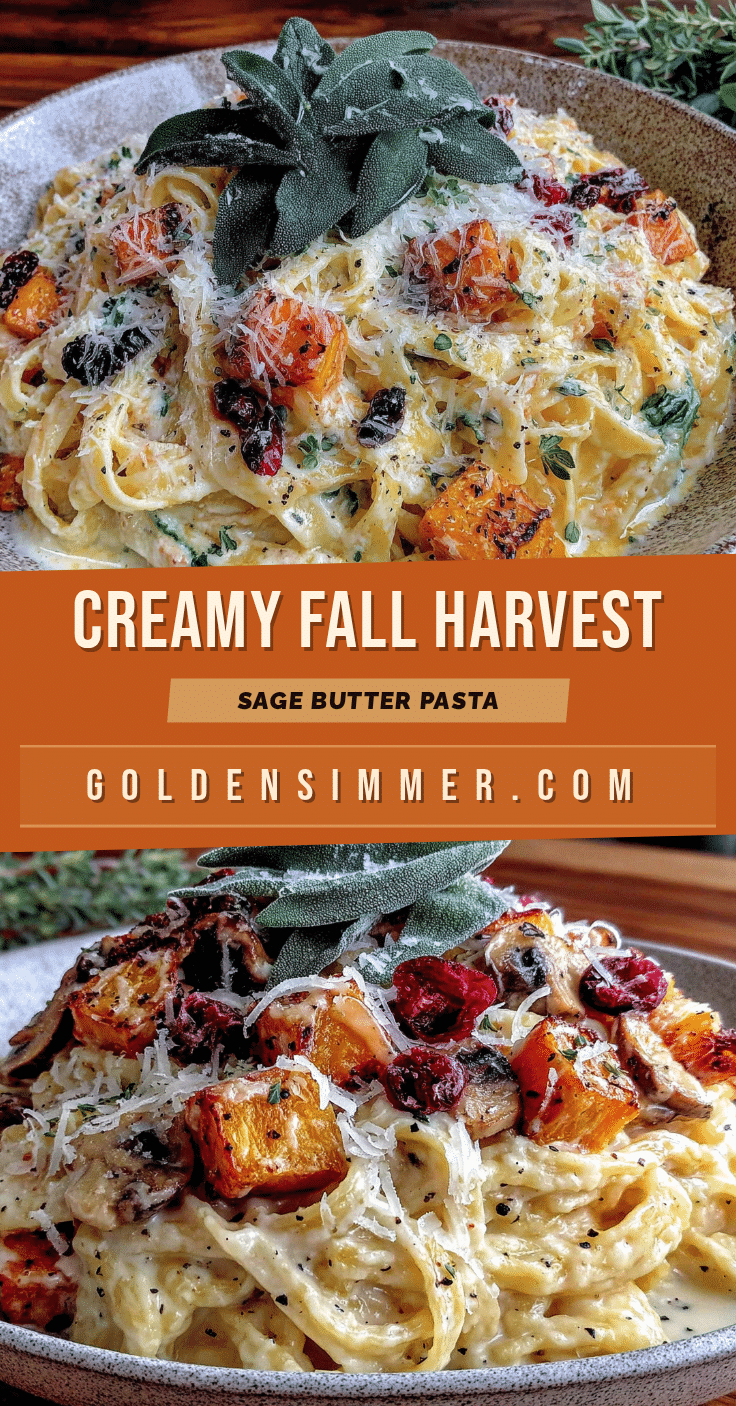
Creamy Fall Harvest Pasta with Easy Sage Butter Recipe
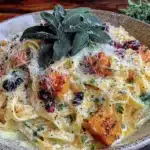
A creamy, comforting pasta dish featuring roasted butternut squash, crispy sage leaves, and a rich brown butter sauce. Ready in about 30 minutes, it’s perfect for cozy fall dinners.
- Prep Time: 10 minutes
- Cook Time: 20 minutes
- Total Time: 30 minutes
- Yield: 4 servings 1x
- Category: Main Course
- Cuisine: American
Ingredients
- 2 cups butternut squash, peeled and diced into ½-inch cubes
- 2 tablespoons olive oil
- Salt and black pepper to taste
- 12 ounces (340g) dried pasta (fettuccine or pappardelle recommended)
- 4 tablespoons (½ stick) unsalted butter
- 10–12 large fresh sage leaves
- 3 cloves garlic, minced
- 1 cup (240ml) heavy cream
- ½ cup (50g) finely grated Parmesan cheese
- ⅛ teaspoon nutmeg
- Optional garnish: extra crispy sage leaves, red pepper flakes, balsamic glaze
Instructions
- Preheat oven to 400°F (200°C). Line a baking sheet with parchment paper.
- Toss diced butternut squash with olive oil, salt, and pepper. Spread in a single layer on the baking sheet. Roast for 20-25 minutes, flipping halfway, until tender and caramelized. Set aside.
- Bring a large pot of salted water to a boil. Cook pasta according to package directions until al dente. Reserve 1 cup of pasta water before draining. Drain and set aside.
- In a large skillet or Dutch oven over medium heat, melt the butter. Swirl occasionally until it foams and turns golden brown with a nutty aroma. Immediately add sage leaves; cook for about 30 seconds until crisp. Transfer sage to a paper towel-lined plate.
- Reduce heat to low. Add minced garlic to the browned butter and sauté for 30 seconds until fragrant. Slowly pour in heavy cream, whisking continuously. Simmer for 2-3 minutes until slightly thickened.
- Remove from heat. Stir in grated Parmesan until melted and smooth. Add nutmeg, salt, and pepper to taste. If sauce is too thick, add a splash of reserved pasta water.
- Add cooked pasta and roasted squash to the skillet. Toss gently until evenly coated. Add more pasta water if needed to loosen the sauce.
- Serve immediately, topped with crispy sage leaves, extra Parmesan, and black pepper.
Notes
Don’t rush the brown butter—it can burn quickly. Reserve more pasta water than you think you need. Grate your own Parmesan for a smoother sauce. Roast the squash for deeper flavor, but you can sauté it in a pinch. Cook pasta al dente to avoid mushiness.
Nutrition
- Serving Size: 1 serving
- Calories: 580
- Sugar: 6
- Fat: 32
- Saturated Fat: 18
- Carbohydrates: 58
- Fiber: 4
- Protein: 14
Keywords: creamy fall harvest pasta, sage butter pasta, butternut squash pasta, easy fall pasta, 30-minute pasta