Love this? Save it for later!
Share the inspiration with your friends
“I wasn’t expecting to learn the secrets of a perfect schnitzel from a street vendor in Vienna,” I confessed to my friend over coffee one chilly afternoon. It was last November when I stumbled upon a tiny market stall tucked away near the Naschmarkt, the scent of frying meat and lemon slices drawing me in like a magnet. The vendor, a cheerful Austrian gentleman named Herr Klaus, had a cracked enamel pan and a simple setup, yet the schnitzel he served was anything but simple.
That day, I watched him handle the thin veal cutlets with such care—dipping them in egg wash, then breadcrumbs, frying until golden and crisp. The sizzle was mesmerizing, and the aroma? Honestly, it transported me to a cozy Vienna café on a brisk fall day. I tried to jot down notes between bites, but the pan was so hot and the line was growing. Somehow, despite the chaos and my shaky handwriting, I captured enough to recreate this crispy German schnitzel authentic Vienna style recipe at home.
Maybe you’ve been there—chasing a flavor memory that just won’t let go. This schnitzel recipe stayed with me because it’s not just about frying meat. It’s about the crunch, the tang of fresh lemon, and the comfort of something so simple done right. Let me tell you, once you master this, your weeknight dinners will never feel the same.
Why You’ll Love This Recipe
Having tested this recipe countless times in my kitchen, I can say it’s truly a keeper. It’s one of those dishes that feels special without demanding hours of prep or fancy ingredients. Here’s why you’ll want to make this crispy German schnitzel authentic Vienna style recipe your go-to:
- Quick & Easy: Ready in under 30 minutes, perfect for busy evenings when you want something comforting fast.
- Simple Ingredients: Uses pantry staples—veal or pork, eggs, breadcrumbs, lemon—nothing you need a special trip for.
- Perfect for Family Dinners: This schnitzel hits that nostalgic spot, great for cozy meals or casual get-togethers.
- Crowd-Pleaser: Kids and adults alike love the crispy, juicy texture with a bright squeeze of lemon on top.
- Unbelievably Delicious: The thin cutlets fry up with a golden crust that’s crunchy without being greasy, thanks to careful oil temperature control.
This isn’t just any schnitzel—it’s the real deal from Vienna’s streets, tested by me after that fateful market visit. The trick? Keeping the meat thin, the breading light, and frying just right for that perfect crunch. Honestly, it’s one of those recipes that makes you close your eyes after the first bite, savoring all the simple goodness.
What Ingredients You Will Need
This recipe relies on straightforward, high-quality ingredients to deliver authentic flavor and that signature crispy texture. Most of these are likely already in your kitchen, which makes this schnitzel a practical choice for any home cook.
- Veal cutlets (or pork loin cutlets, about 4 pieces, each 4-5 oz / 115-140g, pounded thin) – veal is traditional for Wiener schnitzel, but pork is a common and tasty alternative.
- All-purpose flour (about 1 cup / 120g) – for dusting the meat, helps the egg mixture stick better.
- Large eggs (2, beaten) – creates the adhesive layer for the breadcrumbs.
- Plain dry breadcrumbs (1 ½ cups / 150g) – I prefer fresh breadcrumbs from a rustic loaf for best texture, but store-bought works fine too.
- Salt and freshly ground black pepper – seasoning the meat before breading is key.
- Vegetable oil or clarified butter (enough for shallow frying, about ½ inch depth) – clarified butter adds authentic flavor, but vegetable oil works well and is budget-friendly.
- Fresh lemon wedges – essential for serving, the acid cuts through the richness beautifully.
Optional but recommended:
- Parsley (fresh, finely chopped) – for garnish, adds a fresh touch to the plate.
If you want a gluten-free twist, you can swap all-purpose flour for rice flour and use gluten-free breadcrumbs. For a dairy-free option, stick to vegetable oil for frying.
Equipment Needed
- Meat mallet or rolling pin: To pound the cutlets evenly thin, about ¼ inch (6mm) thick.
- Wide shallow bowls or plates: For flour, beaten eggs, and breadcrumbs—this makes the breading process easier and less messy.
- Large frying pan or skillet: A heavy-bottomed pan that holds heat well, ideally 10-12 inches (25-30 cm) in diameter.
- Tongs or a slotted spatula: For turning schnitzels safely without damaging the breading.
- Paper towels: To drain excess oil after frying and keep the schnitzel crispy.
If you don’t have a meat mallet, a rolling pin or the bottom of a heavy skillet works fine—just be gentle to avoid tearing the meat. Cast iron pans hold heat evenly for frying and are my personal favorite, but a good stainless steel pan will do too. Keeping your oil at the right temperature (around 350°F / 175°C) is easier with a kitchen thermometer, but if you don’t have one, you can test by dropping a small breadcrumb in the oil; it should sizzle and turn golden in about 30 seconds.
Preparation Method
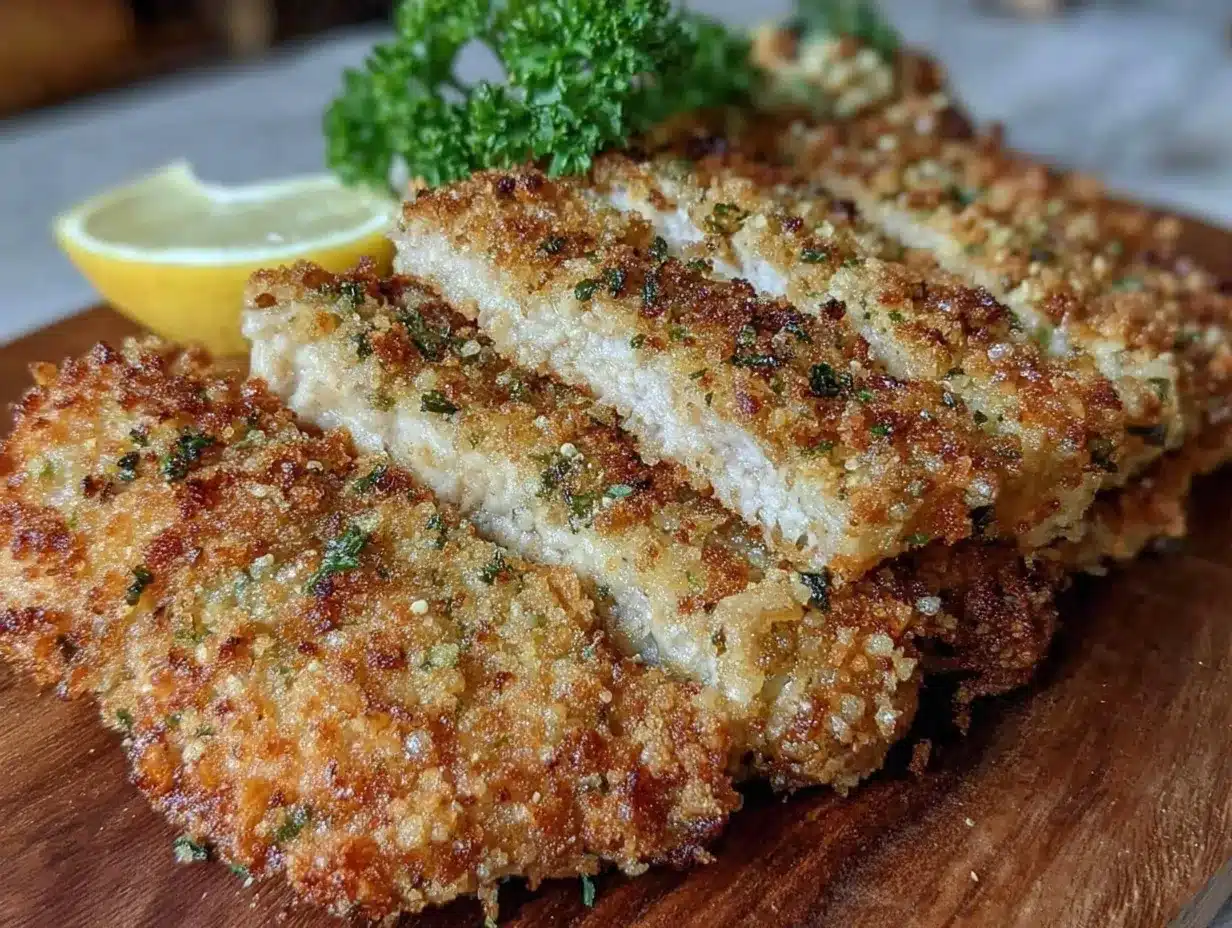
- Prepare the cutlets: Lay each veal or pork cutlet between two sheets of plastic wrap or parchment paper. Use a meat mallet or rolling pin to gently pound them evenly to about ¼ inch (6mm) thick. This helps the meat cook quickly and remain tender. Set aside on a clean plate.
- Season the meat: Sprinkle both sides of each cutlet lightly with salt and freshly ground black pepper. This simple seasoning is crucial to bring out the natural flavors.
- Set up the breading station: Place the flour in one shallow bowl, the beaten eggs in a second, and the breadcrumbs in a third. Make sure each bowl is wide enough to lay the cutlets flat.
- Bread the cutlets: Dredge each cutlet first in the flour, shaking off any excess. Next, dip into the beaten eggs, letting the excess drip off gently. Finally, coat the cutlet evenly with breadcrumbs, pressing lightly but not compacting the crumbs. The coating should be a loose, flaky layer that will fry up crisp.
- Heat the oil: Pour vegetable oil or clarified butter into a large skillet to a depth of about ½ inch (1.3 cm). Heat over medium-high until the oil reaches around 350°F (175°C). A kitchen thermometer is handy here, but if not, test with a small piece of breadcrumb—it should sizzle immediately and turn golden in about 30 seconds.
- Fry the schnitzel: Carefully place 1-2 cutlets (depending on pan size) into the hot oil. Avoid crowding—this lowers the oil temperature and leads to soggy coating. Fry for about 2-3 minutes per side until golden brown and crispy. Use tongs or a slotted spatula to flip gently.
- Drain and rest: Transfer fried schnitzels to a plate lined with paper towels to drain excess oil. Keep warm in a low oven (around 200°F / 95°C) if frying in batches.
- Serve: Arrange schnitzels on plates, garnish with fresh parsley if desired, and serve immediately with lemon wedges for squeezing over the top.
Tip: Don’t cover the schnitzel after frying; the steam will soften the crust. Also, the lemon juice isn’t just a garnish—it brightens the rich flavors and is a must-have part of the authentic experience.
Cooking Tips & Techniques
Getting that perfect crispy German schnitzel authentic Vienna style is all about attention to detail. Here are some tips I picked up—sometimes the hard way!—to help you nail it every time:
- Don’t skip pounding thin: Thin cutlets ensure even cooking and tenderness. Thick pieces tend to be chewy and take longer to cook through.
- Light breading is key: Press breadcrumbs gently; too thick a crust can become gummy or heavy. You want a delicate, crunchy shell.
- Oil temperature matters: Too hot, and the crust burns before the meat cooks; too cool, and the schnitzel absorbs oil and gets greasy. Test with a breadcrumb before frying.
- Use clarified butter for flavor: It raises the smoke point, so you get that buttery taste without burning. If you don’t have it, vegetable oil is fine.
- Don’t overcrowd the pan: Fry in batches if needed. This keeps the oil temperature steady and the crust crisp.
- Drain properly: Use paper towels and serve schnitzel right away. Leaving it to sit uncovered lets the crust stay crisp.
One time, I got distracted mid-fry and ended up with a batch that was unevenly cooked—lesson learned: stay focused and keep tasting! Also, multitasking by prepping a simple potato salad while frying schnitzel makes the whole meal come together seamlessly.
Variations & Adaptations
While the classic schnitzel is hard to beat, here are a few variations I’ve tried that add fun twists or accommodate different needs:
- Chicken Schnitzel: Substitute veal or pork with chicken breast cutlets. Pound thin and follow the same breading and frying method for a juicy alternative.
- Gluten-Free Schnitzel: Use rice flour or almond flour instead of all-purpose flour, and gluten-free breadcrumbs. It crisps nicely without compromising flavor.
- Herb-Infused Breadcrumbs: Mix finely chopped fresh herbs like parsley, thyme, or rosemary into the breadcrumbs for an aromatic touch.
- Oven-Baked Version: For a lighter option, place breaded cutlets on a baking sheet lined with parchment, drizzle with a little oil, and bake at 400°F (200°C) for about 15-20 minutes, flipping halfway through.
- Spicy Twist: Add a pinch of smoked paprika or cayenne to the flour or breadcrumb mix for subtle heat.
Personally, adding fresh herbs to the breadcrumb mixture gave the schnitzel a lovely fresh flavor that surprised guests at my last dinner party. You can customize this recipe easily depending on what’s in your pantry or how you like your meal.
Serving & Storage Suggestions
This crispy German schnitzel is best enjoyed fresh and hot, straight from the pan. Serve immediately with lemon wedges to squeeze over the top—honestly, that zing makes all the difference. It pairs beautifully with traditional sides like potato salad, cucumber salad, or simple buttered noodles.
If you want to keep leftovers, store schnitzel in an airtight container in the refrigerator for up to 2 days. To reheat, place on a wire rack over a baking sheet in a preheated oven at 350°F (175°C) for about 10 minutes to regain crispness. Avoid microwaving as it softens the crust.
Flavors develop a bit after resting, but the crispy texture is definitely at its best fresh. For parties, keep cooked schnitzels warm in a low oven until serving time.
Nutritional Information & Benefits
An average serving of this schnitzel (one 4 oz / 115g cutlet) contains approximately:
| Calories | 350-400 kcal |
|---|---|
| Protein | 30g |
| Fat | 20g |
| Carbohydrates | 15g |
This dish provides a good amount of protein from the veal or pork, with moderate fat content mainly from the frying oil and meat. Using clarified butter adds beneficial fats and a rich flavor without excess greasiness. Lemon adds vitamin C and freshness.
For those watching carbs, you can reduce the breadcrumb amount or try the almond flour variation. This recipe is naturally gluten-free if you swap the flour and breadcrumbs. It contains common allergens such as eggs and gluten unless adapted.
Conclusion
This crispy German schnitzel authentic Vienna style recipe is truly worth making if you want a delicious, satisfying meal that’s surprisingly simple. The thin, tender meat coated in a crunchy golden crust paired with fresh lemon is comfort food at its finest. I love how easy it is to customize and how reliably it impresses guests or just makes a weeknight feel special.
Give it a try, tweak it to your liking, and don’t forget to share your adaptations—I’m always curious how others put their spin on classics. Remember, the best schnitzel is the one made with care and enjoyed with good company. Happy cooking!
FAQs
- Can I use chicken instead of veal for schnitzel?
Yes, chicken breast cutlets work well and follow the same preparation and cooking method for a delicious alternative. - How thin should I pound the meat?
Aim for about ¼ inch (6mm) thickness to ensure tender, quick cooking and a crispy crust. - What oil is best for frying schnitzel?
Clarified butter is traditional for flavor and higher smoke point, but vegetable or canola oil are good, budget-friendly options. - Can I make schnitzel gluten-free?
Absolutely! Use rice flour and gluten-free breadcrumbs as substitutes for the flour and regular breadcrumbs. - How do I keep the schnitzel crispy after frying?
Drain on paper towels and serve immediately. To reheat, use a wire rack in the oven to maintain the crust crispness, avoiding microwaves.
Pin This Recipe!
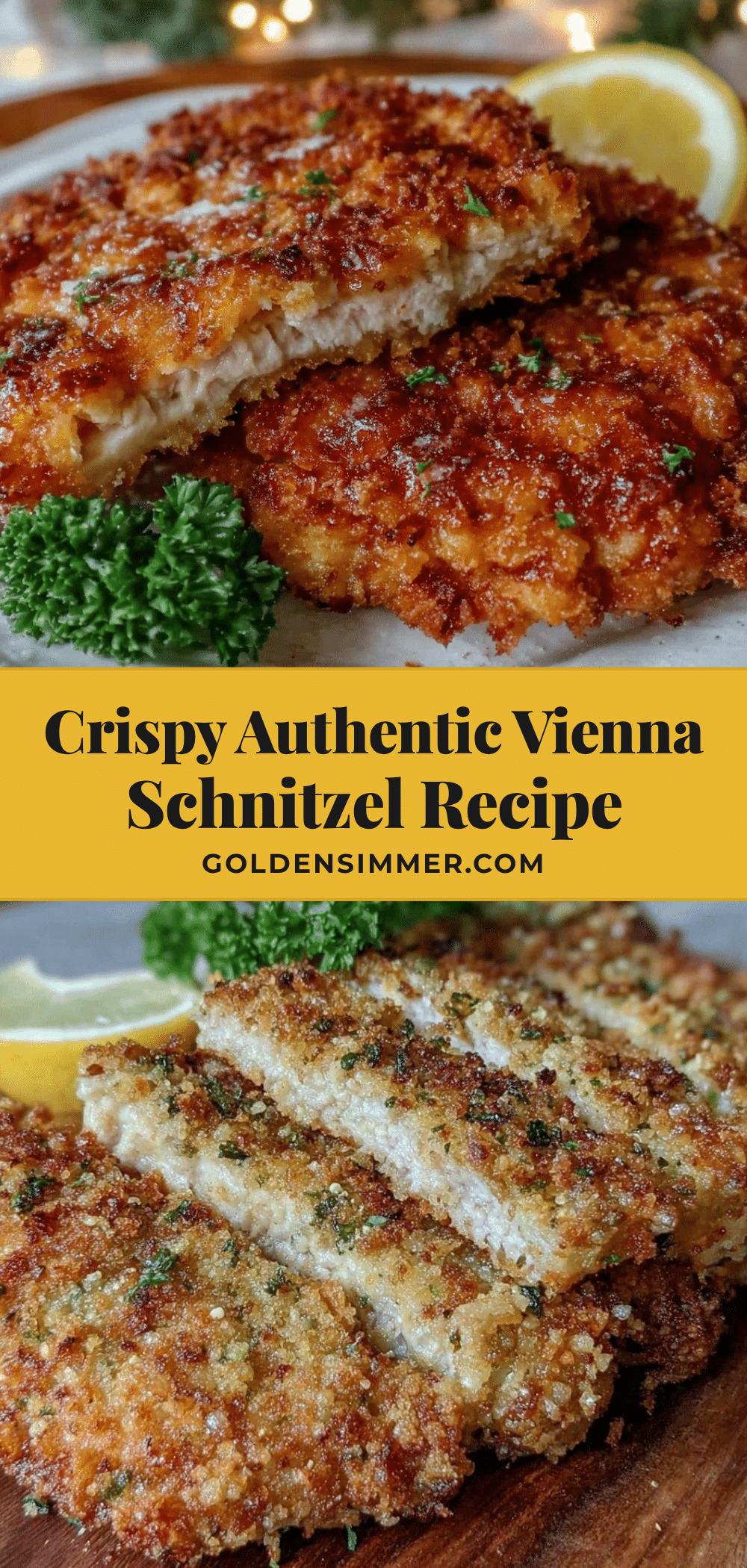
Crispy German Schnitzel Recipe Easy Authentic Vienna Style
An authentic Vienna-style schnitzel recipe featuring thin veal or pork cutlets breaded and fried to a golden, crispy perfection, served with fresh lemon wedges.
- Prep Time: 10 minutes
- Cook Time: 15 minutes
- Total Time: 25 minutes
- Yield: 4 servings 1x
- Category: Main Course
- Cuisine: German, Austrian
Ingredients
- 4 veal cutlets or pork loin cutlets (4–5 oz / 115-140g each), pounded thin
- 1 cup all-purpose flour (120g)
- 2 large eggs, beaten
- 1 ½ cups plain dry breadcrumbs (150g)
- Salt and freshly ground black pepper
- Vegetable oil or clarified butter (enough for shallow frying, about ½ inch depth)
- Fresh lemon wedges
- Optional: fresh parsley, finely chopped for garnish
Instructions
- Lay each veal or pork cutlet between two sheets of plastic wrap or parchment paper. Use a meat mallet or rolling pin to gently pound them evenly to about ¼ inch (6mm) thick. Set aside on a clean plate.
- Sprinkle both sides of each cutlet lightly with salt and freshly ground black pepper.
- Place the flour in one shallow bowl, the beaten eggs in a second, and the breadcrumbs in a third.
- Dredge each cutlet first in the flour, shaking off any excess. Next, dip into the beaten eggs, letting the excess drip off gently. Finally, coat the cutlet evenly with breadcrumbs, pressing lightly but not compacting the crumbs.
- Pour vegetable oil or clarified butter into a large skillet to a depth of about ½ inch (1.3 cm). Heat over medium-high until the oil reaches around 350°F (175°C).
- Carefully place 1-2 cutlets into the hot oil. Fry for about 2-3 minutes per side until golden brown and crispy. Use tongs or a slotted spatula to flip gently.
- Transfer fried schnitzels to a plate lined with paper towels to drain excess oil. Keep warm in a low oven (around 200°F / 95°C) if frying in batches.
- Arrange schnitzels on plates, garnish with fresh parsley if desired, and serve immediately with lemon wedges for squeezing over the top.
Notes
Do not overcrowd the pan to maintain oil temperature and crispiness. Use clarified butter for authentic flavor and higher smoke point. Do not cover schnitzel after frying to keep crust crisp. Lemon juice is essential to brighten flavors. For gluten-free, substitute flour and breadcrumbs accordingly. Reheat on wire rack in oven to maintain crispness.
Nutrition
- Serving Size: One schnitzel cutlet
- Calories: 350400
- Fat: 20
- Carbohydrates: 15
- Protein: 30
Keywords: schnitzel, German schnitzel, Vienna style, crispy schnitzel, veal schnitzel, pork schnitzel, easy schnitzel recipe, authentic schnitzel