Love this? Save it for later!
Share the inspiration with your friends
The neighborhood potluck was in three hours and I’d completely forgotten. Everyone else would be bringing their signature dishes—slow-cooked brisket, homemade lasagnas, intricate salads with heirloom ingredients I couldn’t even pronounce. I had a butternut squash sitting on my counter, a package of Italian sausage in the fridge, and honestly, about twenty minutes of actual cooking energy left in me after a long work week.
I stood there staring at my pantry like it might magically produce a plan. You know that feeling when you’re supposed to bring something impressive but your brain is just… empty? That was me, Wednesday night, completely defeated by a butternut squash I’d bought with good intentions and zero follow-through.
So I did what any reasonable person would do—I chopped everything up, threw it in a skillet, and prayed. I mean, I figured sausage and squash had to taste decent together, right? Worst case scenario, I’d grab a store-bought pie on the way and claim I forgot.
The funny thing is, that panicked, thrown-together skillet ended up being the dish everyone asked about. People came back for seconds. Someone asked for the recipe before I’d even set down my fork. And I had to admit, sheepishly, that I’d just made it up on the spot because I had no other options.
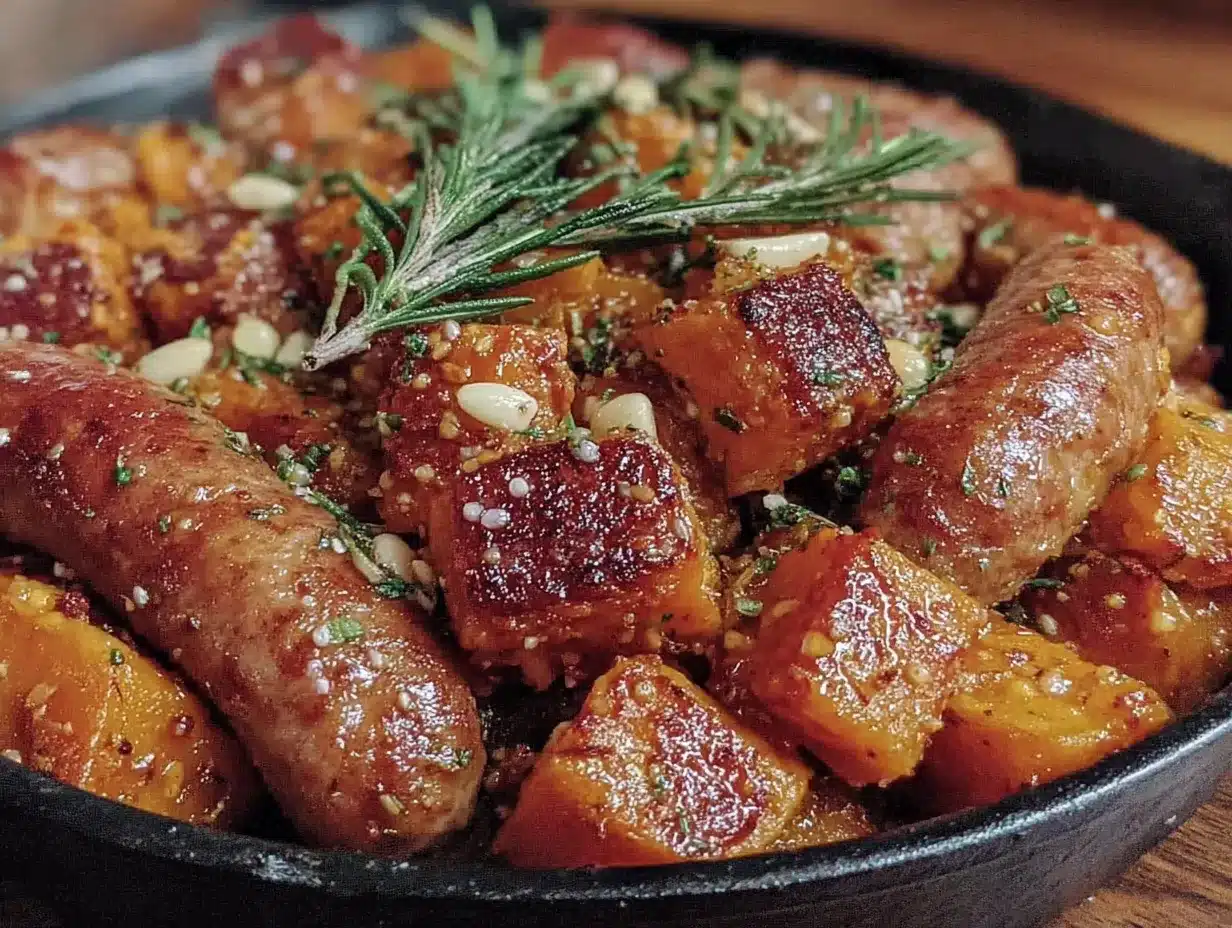
That’s the thing about this quick roasted butternut squash and sausage skillet recipe—it doesn’t try to be fancy. It’s just honest, good food that comes together fast when you need it most. The squash gets tender and caramelized around the edges, the sausage brings all that savory, herby goodness, and somehow the whole thing tastes like you spent hours on it. I’ve been making it ever since, and it still feels like cheating every single time.
Why You’ll Love This Recipe
Let me tell you why this quick roasted butternut squash and sausage skillet has become my go-to for busy weeknights. I’ve tested this recipe at least a dozen times, tweaking the cook times and seasoning ratios, and I can honestly say it’s foolproof.
- Quick & Easy: From start to finish, this comes together in about 25 minutes. No marinating, no complicated techniques, no endless chopping. Perfect for those nights when you walk in the door hungry and need food on the table fast.
- Simple Ingredients: You probably already have most of these in your kitchen. No fancy grocery store trips required—just good, basic staples that work together beautifully.
- Perfect for Weeknights: This is the definition of a one-pan meal. Less cleanup, less stress, more time to actually sit down and eat. It’s weeknight cooking at its finest.
- Crowd-Pleaser: I’ve served this to picky kids, skeptical in-laws, and foodie friends—everyone loves it. The combination of sweet squash and savory sausage is just universally appealing.
- Unbelievably Delicious: The texture here is what gets me every time. The squash gets these gorgeous caramelized edges while staying tender inside, and the sausage releases its juices to create this almost sauce-like coating on everything.
What makes this different from other skillet recipes is the technique. Most recipes roast the squash separately or boil it first—not here. By cutting the squash into small, uniform cubes and cooking it directly in the skillet with the sausage drippings, you get maximum flavor with minimum effort. The squash absorbs all that savory goodness while it cooks, so every bite is packed with taste.
This isn’t just another quick dinner—it’s the kind of meal that makes you close your eyes after the first bite. It’s comfort food that respects your time, your energy, and your budget. And honestly, after a long day, that’s exactly what we all need.
What Ingredients You Will Need
This recipe uses simple, wholesome ingredients that work together to create something truly special. Most are pantry staples, and the ones that aren’t are easy to find at any grocery store.
For the Skillet
- Butternut squash — 1 medium (about 2 pounds or 900g), peeled, seeded, and cut into ½-inch cubes. Look for one that feels heavy for its size with firm, unblemished skin. I prefer using pre-cut squash from the produce section when I’m really short on time—just make sure the pieces are roughly the same size for even cooking.
- Italian sausage — 1 pound (450g), either sweet or mild. I like using sweet Italian sausage from Al Fresco or Johnsonville for consistent quality. If you can find it, bulk sausage (casings removed) saves you the step of slicing.
- Olive oil — 2 tablespoons (30ml), for roasting. Extra virgin is fine, but regular olive oil works just as well and saves money.
- Garlic — 4 cloves, minced. Fresh garlic makes a difference here—the pre-minced stuff in jars just doesn’t have the same punch.
- Fresh sage — 8-10 leaves, roughly chopped. Sage and squash are a classic pairing, but you can substitute with 1 teaspoon dried sage if that’s what you have.
- Fresh thyme — 4-5 sprigs, leaves removed. Adds an earthy, slightly floral note that complements the sausage beautifully.
- Salt — 1 teaspoon (5g), or to taste. I use kosher salt for better control.
- Black pepper — ½ teaspoon (2g), freshly ground.
- Red pepper flakes — ¼ teaspoon (optional), for a little heat. Skip if serving kids or spice-sensitive guests.
For Serving (Optional but Recommended)
- Fresh parsley — 2 tablespoons, chopped, for garnish.
- Grated Parmesan cheese — ¼ cup (25g), for sprinkling on top.
- Balsamic glaze — a drizzle adds a nice tangy sweetness.
Ingredient Selection Tips: When choosing butternut squash, look for one with a long neck—it’s easier to peel and has fewer seeds. The bulbous end is fine for this recipe, but the neck gives you more usable flesh. For the sausage, I recommend getting links and removing the casings rather than buying pre-crumbled sausage. The texture is better, and you can control the size of the pieces.
Substitution Guidance: If you don’t have butternut squash, acorn squash or even sweet potatoes work wonderfully here. For a chicken sausage option, use apple-chicken sausage for a sweet-savory combo. Need it dairy-free? Skip the Parmesan—it’s still delicious without it. If fresh herbs aren’t available, use 1 teaspoon dried sage and ½ teaspoon dried thyme instead.
Equipment Needed
One of the best things about this recipe is how little equipment it requires. Here’s what you’ll need:
- Large cast-iron skillet or heavy-bottomed skillet — 12-inch (30cm) is ideal. Cast iron gives you the best caramelization, but any oven-safe skillet works. If you don’t have one, a regular non-stick skillet will do—just be careful with high heat.
- Sharp chef’s knife — For cutting the squash. A dull knife makes this job frustrating and dangerous. I use a 8-inch Wusthof and it makes quick work of even the toughest squash.
- Vegetable peeler — A good Y-peeler is my preference for butternut squash. It glides along the curves much better than a straight peeler.
- Cutting board — Large enough to handle the squash safely. I recommend a wooden or plastic board with a non-slip grip.
- Wooden spoon or spatula — For stirring and breaking up the sausage.
- Measuring spoons — For the oil and seasonings.
Budget-Friendly Alternatives: If you don’t own a cast-iron skillet, a stainless steel pan works great—just add a little extra oil to prevent sticking. No Y-peeler? A regular vegetable peeler or even a sharp paring knife will do the job, just be careful. And honestly, I’ve made this recipe using a cheap non-stick pan from the grocery store and it turned out just fine. Don’t let equipment hold you back.
Maintenance Tip: After using your cast-iron skillet, clean it with hot water and a stiff brush—no soap. Dry it thoroughly over low heat on the stove, then rub a thin layer of oil over the surface to keep it seasoned. This takes two minutes and your skillet will last forever.
Preparation Method
Let me walk you through this step by step. Trust me, it’s easier than it looks.
Step 1: Prep the Squash (5 minutes)
Start by peeling the butternut squash with your vegetable peeler. Cut off both ends, then slice the squash in half where the narrow neck meets the bulbous bottom. Cut the bulb in half lengthwise and scoop out the seeds with a spoon. Now cut everything into ½-inch cubes. Don’t stress about perfection—just try to keep them roughly the same size so they cook evenly. You should end up with about 4 cups of cubed squash.
Pro tip: If the squash is really hard to cut, microwave it whole for 2-3 minutes first. It softens slightly and makes cutting much easier. I learned this after nearly losing a finger to a particularly stubborn squash.
Step 2: Cook the Sausage (8 minutes)
Heat your large skillet over medium-high heat. Add 1 tablespoon of olive oil. If using sausage links, remove the casings by slicing down the length of each link and peeling the casing off. Add the sausage to the hot skillet and break it up with your wooden spoon. Cook for 6-8 minutes, stirring occasionally, until the sausage is browned and cooked through. Use a slotted spoon to transfer the sausage to a plate, leaving the drippings in the pan.
Sensory cue: You’ll know the sausage is done when it’s deep golden brown with crispy edges and the kitchen smells incredible—like garlic, fennel, and herbs.
Step 3: Roast the Squash (12 minutes)
Add the remaining 1 tablespoon of olive oil to the skillet with the sausage drippings. Add the cubed squash in a single layer—don’t overcrowd the pan. Let it cook undisturbed for 4-5 minutes until the bottom side is deeply golden. Toss the squash, then add the minced garlic, fresh sage, and thyme leaves. Cook for another 5-7 minutes, stirring occasionally, until the squash is tender and caramelized on all sides.
Watch for this: The squash is ready when a fork slides in easily but the cubes still hold their shape. If it’s mushy, you’ve gone too far. If it’s still hard, give it another 2-3 minutes.
Step 4: Combine and Finish (2 minutes)
Return the cooked sausage to the skillet with the squash. Add the salt, black pepper, and red pepper flakes if using. Stir everything together and cook for 1-2 minutes until everything is heated through and the flavors have melded. Taste and adjust seasoning—you might want a little more salt or a pinch more pepper.
Personal tip: I like to let it sit off the heat for 2-3 minutes before serving. This lets the juices settle and the flavors deepen. It’s a small thing, but it makes a difference.
Step 5: Serve (1 minute)
Transfer the skillet to a serving platter or serve directly from the pan—I always serve from the pan because it looks rustic and means fewer dishes. Sprinkle with fresh parsley and grated Parmesan if using. Drizzle with balsamic glaze for an extra touch. Serve hot.
Cooking Tips & Techniques
After making this quick roasted butternut squash and sausage skillet more times than I can count, I’ve picked up a few tricks that make a real difference.
Get the pan screaming hot. This is the number one mistake I see people make. You want that skillet hot enough that the squash sizzles the second it hits the pan. If it just sits there quietly, you won’t get any caramelization. Test the heat by flicking a drop of water into the pan—if it dances and evaporates immediately, you’re ready.
Don’t move the squash too much. I know it’s tempting to stir constantly, but let the squash sit for those first 4-5 minutes. That’s what creates the golden crust. If you stir too early, the squash will steam instead of caramelize and you’ll end up with soft, pale cubes instead of those gorgeous browned edges.
Pat the squash dry. After cubing the squash, pat it dry with a clean kitchen towel or paper towels. Excess moisture is the enemy of browning. This one step can make the difference between okay squash and amazing squash.
Use the sausage drippings. This is where all the flavor lives. After browning the sausage, don’t pour off those rendered fats—they’re liquid gold. The squash cooks in them and absorbs all that savory, herby goodness. It’s the secret to why this simple dish tastes so complex.
One mistake I made early on: I used to add the garlic at the same time as the squash. Big mistake. Garlic burns quickly, especially in a hot skillet. Now I add it halfway through the squash cooking time, and it comes out perfectly fragrant without a hint of bitterness. Learn from my failure on this one.
Timing strategy: While the sausage is cooking, prep the squash. While the squash is roasting, chop the herbs and grate the cheese. This way, everything comes together seamlessly and you’re not scrambling at the end.
Variations & Adaptations
One of the things I love about this recipe is how flexible it is. Here are some variations I’ve tried and loved:
Dietary Adaptations
- Vegetarian Version: Swap the sausage for 1 can of chickpeas (drained and rinsed) or 8 ounces of sliced mushrooms. Add them when you add the garlic and cook until golden. It’s a different dish, but still delicious.
- Gluten-Free: This recipe is naturally gluten-free as written—just double-check your sausage labels to make sure there’s no hidden gluten in the seasoning.
- Dairy-Free: Skip the Parmesan or use a dairy-free alternative. The dish is still incredibly flavorful without it.
Seasonal Twists
- Fall Version: Add ½ cup of dried cranberries and ¼ cup of chopped pecans in the last 2 minutes of cooking. The sweetness and crunch are perfect for autumn.
- Summer Version: Swap the butternut squash for zucchini and yellow squash. They cook faster, so reduce the cooking time by about 5 minutes.
- Winter Version: Add 1 cup of cubed sweet potato along with the butternut squash. Both root vegetables roast beautifully together.
Flavor Variations
- Spicy Version: Use hot Italian sausage instead of sweet, and add an extra ½ teaspoon of red pepper flakes. This is my husband’s favorite version—he likes things with a kick.
- Herb Swap: If you don’t have sage and thyme, try rosemary and oregano instead. It gives the dish a more Mediterranean vibe.
- Apple Addition: Add 1 diced apple (Honeycrisp or Granny Smith) along with the garlic. The apple softens and sweetens, adding another layer of flavor.
Personal favorite variation: I once added a splash of apple cider vinegar and a drizzle of honey at the very end, right before serving. The acidity cut through the richness of the sausage, and the honey enhanced the natural sweetness of the squash. It was one of those happy accidents that turned into a regular addition.
Serving & Storage Suggestions
This quick roasted butternut squash and sausage skillet is incredibly versatile when it comes to serving. Here’s how I like to do it:
Serving Temperature: Serve this dish hot, straight from the skillet. The squash is at its best when it’s still warm and the edges are slightly crisp. That said, it’s also surprisingly good at room temperature—I’ve eaten leftovers cold straight from the fridge and enjoyed them.
Presentation Ideas: For a casual weeknight dinner, serve directly from the skillet with a side of crusty bread to soak up the juices. For something a little nicer, spoon the mixture over a bed of arugula or mixed greens—the warm squash wilts the greens slightly and creates a beautiful warm salad. Sprinkle with fresh herbs and a generous grating of Parmesan.
Complementary Dishes: This pairs beautifully with a simple side salad dressed with lemon vinaigrette. The acidity cuts through the richness of the sausage. A side of roasted Brussels sprouts or steamed green beans also works well. For a heartier meal, serve over cooked quinoa, farro, or even pasta. I’ve tossed it with short pasta like orecchiette and it was fantastic.
Beverage Pairings: A medium-bodied red wine like Chianti or Pinot Noir complements the savory sausage and sweet squash. For beer drinkers, an amber ale or brown ale works beautifully. Non-alcoholic options: sparkling water with a squeeze of lemon or a warm apple cider.
Storage Instructions: Store leftovers in an airtight container in the refrigerator for up to 4 days. The flavors actually meld and deepen overnight, so leftovers can be even better than the first serving. To reheat, warm in a skillet over medium heat with a splash of water or broth to loosen things up. You can also microwave individual portions, but the squash won’t be as crisp.
Freezer Tips: This dish freezes well for up to 3 months. Let it cool completely, then transfer to freezer-safe containers or bags. Thaw overnight in the refrigerator and reheat in a skillet. Note that the squash will be softer after freezing, but the flavor is still excellent.
Nutritional Information & Benefits
Here’s the nutritional breakdown for one serving (about 1.5 cups) of this quick roasted butternut squash and sausage skillet, based on 4 servings:
| Nutrient | Amount Per Serving |
|---|---|
| Calories | 385 |
| Total Fat | 22g |
| Saturated Fat | 7g |
| Cholesterol | 65mg |
| Sodium | 780mg |
| Total Carbohydrates | 28g |
| Dietary Fiber | 5g |
| Sugars | 8g |
| Protein | 22g |
| Vitamin A | 457% DV |
| Vitamin C | 45% DV |
| Iron | 15% DV |
Health Benefits: Butternut squash is packed with vitamin A (one serving provides over 450% of your daily needs), which supports eye health and immune function. It’s also rich in fiber, which aids digestion and helps you feel full longer. The Italian sausage provides high-quality protein and B vitamins, while the olive oil offers heart-healthy monounsaturated fats. This meal is naturally gluten-free and can be made dairy-free with a simple cheese swap.
Dietary Considerations: This recipe is suitable for gluten-free and dairy-free diets (with modifications). It’s also relatively low in added sugars—the sweetness comes naturally from the squash. If you’re watching your sodium intake, look for low-sodium sausage or reduce the added salt.
Personal Wellness Perspective: I love that this meal feels indulgent but is actually pretty balanced. It’s got protein, healthy fats, fiber, and loads of vitamins—all in one pan. It’s the kind of dinner that leaves you satisfied without feeling heavy, which is exactly what I want on a busy weeknight.
Conclusion
This quick roasted butternut squash and sausage skillet has saved my dinner plans more times than I can count. It’s the recipe I turn to when I’m tired, when I’m short on time, and when I need something that feels special without any of the stress. The combination of caramelized squash, savory sausage, and aromatic herbs is simple but never boring.
What I love most about this recipe is how forgiving it is. Don’t have fresh herbs? Dried works fine. Want to swap the squash for sweet potatoes? Go for it. Need to feed a crowd? Double everything and use two skillets. This recipe adapts to whatever you have on hand and whatever your schedule demands.
I really hope you give this a try. It’s one of those rare recipes that delivers way more than the sum of its parts, and I think you’re going to love it as much as I do. When you make it, I’d love to hear how it turned out—did you add your own twist? Did the family ask for seconds? Drop a comment below and let me know. And if you’re looking for another quick weeknight dinner, you might enjoy this one-pan chicken thighs with vegetables I make when I’m really short on time.
Happy cooking, and remember—sometimes the best recipes come from the most panicked moments. Trust the process, and don’t forget to enjoy that first bite.
Frequently Asked Questions
Can I use frozen butternut squash instead of fresh?
Yes, you can use frozen butternut squash, but there are a few things to keep in mind. Frozen squash has a higher moisture content, so it won’t caramelize as well as fresh. To get the best results, thaw the squash first and pat it very dry with paper towels before adding it to the skillet. You may also need to cook it 2-3 minutes longer to evaporate the excess moisture. The texture won’t be quite as firm as fresh, but the flavor is still great.
Can I make this recipe ahead of time?
Absolutely! This recipe is great for meal prep. Cook the entire dish, let it cool completely, and store it in an airtight container in the refrigerator for up to 4 days. To serve, reheat in a skillet over medium heat with a splash of chicken broth or water to rehydrate. You can also prep the ingredients ahead—cube the squash and store it in a sealed bag in the fridge for up to 2 days, or freeze it for up to 3 months.
What’s the best way to peel butternut squash?
I’ve tried every method, and here’s what works best: First, microwave the whole squash for 2-3 minutes to soften the skin slightly. Then, cut off both ends and use a sharp Y-peeler to remove the skin in long strips. Work from top to bottom, following the curves of the squash. If you’re really struggling, you can also roast the squash whole at 400°F for 20 minutes to soften the skin before peeling. And honestly, buying pre-cut squash from the store is totally acceptable—no judgment here.
Can I use chicken sausage instead of pork sausage?
Yes, chicken sausage works perfectly in this recipe. I recommend using apple-chicken sausage or a mild Italian-style chicken sausage for the best flavor match. Chicken sausage tends to be leaner, so you may need to add an extra tablespoon of olive oil to compensate for the lack of rendered fat. The cooking time remains about the same—just make sure the internal temperature reaches 165°F.
How do I prevent the squash from burning?
The key to perfectly cooked squash without burning is managing your heat. Start with medium-high heat to get a good sear, then reduce to medium after the first 4-5 minutes. If you notice the squash browning too quickly, lower the heat immediately and add a splash of water or chicken broth to the pan—this will create steam and slow down the browning while still cooking the squash through. Also, make sure your squash cubes are uniform in size (about ½ inch) so they cook evenly.
Pin This Recipe!
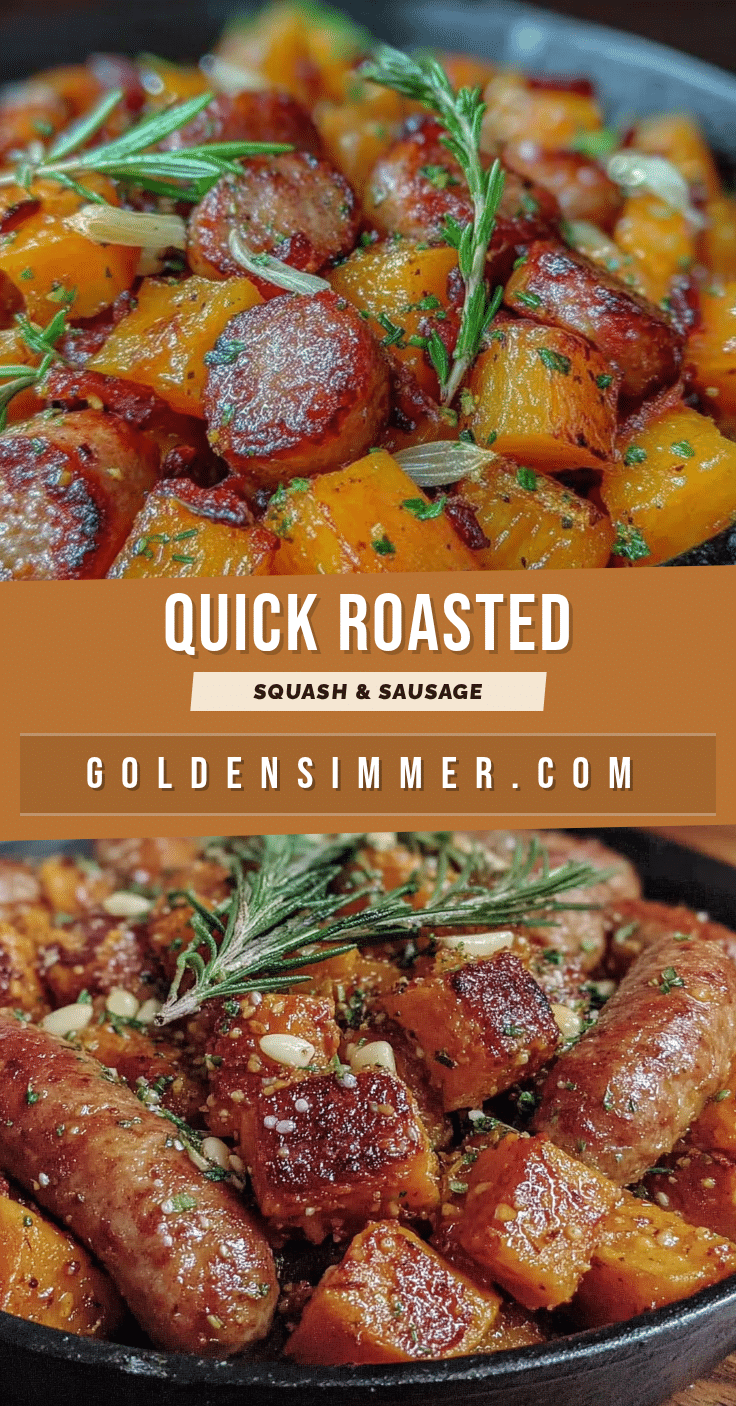
Easy Roasted Butternut Squash and Sausage Skillet Recipe (25-Minute)

A quick and easy one-pan meal featuring caramelized butternut squash and savory Italian sausage, ready in just 25 minutes. Perfect for busy weeknights, this crowd-pleasing dish is simple, delicious, and requires minimal cleanup.
- Prep Time: 10 minutes
- Cook Time: 15 minutes
- Total Time: 25 minutes
- Yield: 4 servings 1x
- Category: Main Course
- Cuisine: Italian
Ingredients
- 1 medium butternut squash (about 2 pounds or 900g), peeled, seeded, and cut into ½-inch cubes
- 1 pound (450g) Italian sausage (sweet or mild), casings removed
- 2 tablespoons (30ml) olive oil, divided
- 4 cloves garlic, minced
- 8–10 fresh sage leaves, roughly chopped (or 1 teaspoon dried sage)
- 4–5 sprigs fresh thyme, leaves removed (or ½ teaspoon dried thyme)
- 1 teaspoon (5g) kosher salt
- ½ teaspoon (2g) freshly ground black pepper
- ¼ teaspoon red pepper flakes (optional)
- 2 tablespoons fresh parsley, chopped (for garnish)
- ¼ cup (25g) grated Parmesan cheese (for serving)
- Balsamic glaze (for drizzling, optional)
Instructions
- Prep the squash: Peel the butternut squash, cut off both ends, and slice in half where the narrow neck meets the bulbous bottom. Cut the bulb in half lengthwise, scoop out the seeds, and cut everything into ½-inch cubes. You should have about 4 cups of cubed squash.
- Cook the sausage: Heat a large cast-iron or heavy-bottomed skillet over medium-high heat. Add 1 tablespoon of olive oil. Add the sausage (casings removed) and break it up with a wooden spoon. Cook for 6-8 minutes, stirring occasionally, until browned and cooked through. Transfer sausage to a plate, leaving drippings in the pan.
- Roast the squash: Add the remaining 1 tablespoon of olive oil to the skillet with the sausage drippings. Add the cubed squash in a single layer and cook undisturbed for 4-5 minutes until the bottom is deeply golden. Toss the squash, then add the minced garlic, sage, and thyme. Cook for another 5-7 minutes, stirring occasionally, until the squash is tender and caramelized on all sides.
- Combine and finish: Return the cooked sausage to the skillet. Add salt, black pepper, and red pepper flakes (if using). Stir together and cook for 1-2 minutes until heated through and flavors meld. Taste and adjust seasoning if needed. Let rest off the heat for 2-3 minutes before serving.
- Serve: Transfer to a serving platter or serve directly from the skillet. Garnish with fresh parsley and grated Parmesan cheese. Drizzle with balsamic glaze if desired. Serve hot.
Notes
For best caramelization, pat the cubed squash dry before cooking. Don’t stir the squash too early—let it sit for 4-5 minutes to develop a golden crust. If the squash is hard to cut, microwave it whole for 2-3 minutes first. Leftovers can be stored in an airtight container in the refrigerator for up to 4 days. Reheat in a skillet with a splash of water or broth.
Nutrition
- Serving Size: 1.5 cups
- Calories: 385
- Sugar: 8
- Sodium: 780
- Fat: 22
- Saturated Fat: 7
- Carbohydrates: 28
- Fiber: 5
- Protein: 22
Keywords: butternut squash, sausage, skillet, one-pan, quick dinner, weeknight meal, fall recipe, easy dinner