Love this? Save it for later!
Share the inspiration with your friends
I was wandering through the spice aisle at my local grocery store last Tuesday when a whiff of caraway and mustard seed hit me—and suddenly I was six years old at my Great-Aunt Margie’s tiny kitchen table in Milwaukee. She wasn’t actually my great-aunt by blood, just a neighbor who adopted our family, but she made the best corned beef I’ve ever had. The memory came flooding back so fast I almost dropped my shopping basket. I could practically feel the worn wooden chair beneath me and hear the old clock ticking on her wall.
For years, I tried to recreate that specific taste. I bought pre-packaged corned beef, followed the directions on the packet, and ended up with something that was fine but forgettable. It lacked that deep, complex flavor I remembered from Aunt Margie’s kitchen. Then, last fall, I was planning an Oktoberfest dinner for some friends and thought, why not combine two of my favorite comfort foods? The slow cooker was already out on the counter, and I had a good brisket in the fridge. Honestly, it felt like a gamble at the time.
I tossed in some dark German beer instead of the usual water, added a few extra spices, and let it cook all day. The smell that filled my apartment was incredible—earthy, slightly sweet, and undeniably comforting. When I finally pulled that fork-tender meat out of the slow cooker, I knew I had stumbled onto something special. Maybe you’ve been there, chasing a flavor from your past, hoping to catch lightning in a bottle again. This recipe is my way of holding onto that memory, one cozy bite at a time.
Why You’ll Love This Recipe
This slow cooker corned beef and cabbage isn’t just another recipe you’ll find online. I tested this version at least six times before I got it just right, tweaking the spices and the cooking time until every element sang. It’s the kind of dish that makes you close your eyes after the first bite—and trust me, I’ve done that more than once.
- Quick & Easy: The slow cooker does all the heavy lifting. You just need about 15 minutes of prep time in the morning, and by dinner, you have a restaurant-quality meal waiting for you.
- Simple Ingredients: No fancy grocery trips required. Most of the ingredients are pantry staples or easily found at any supermarket. The Oktoberfest twist comes from a bottle of dark German beer and a few extra spices.
- Perfect for Cozy Evenings: This dish was made for cold weather, lazy Sundays, or those days when you need a warm hug in food form. It’s also fantastic for St. Patrick’s Day or an Oktoberfest celebration.
- Crowd-Pleaser: I’ve served this to picky eaters, meat-and-potatoes folks, and adventurous foodies, and every single person has asked for the recipe. It’s that good.
- Unbelievably Delicious: The slow cooking process turns the brisket incredibly tender, while the beer and spices create a rich, savory broth that infuses every bite. The cabbage soaks up all that flavor and becomes something magical.
What makes this different from the rest? It’s the Oktoberfest twist. Most corned beef recipes rely on water or broth, but swapping in a dark German lager or Märzen adds a depth of flavor you just can’t get any other way. The beer mellows during the long, slow cook, leaving behind a subtle malty sweetness that pairs perfectly with the salty, spiced meat. This isn’t just another version—it’s my best version, the one I make for family gatherings and quiet nights alike.
What Ingredients You Will Need
This recipe uses simple, wholesome ingredients to deliver bold flavor and satisfying texture without the fuss. Most of these are pantry staples or easy to find at your local grocery store.
For the Corned Beef
- Corned beef brisket: 3-4 pounds, with the spice packet included (I prefer the flat cut for even cooking, but point cut works too)
- Dark German beer: 12 ounces, such as a Märzen, Dunkel, or a dark lager (avoid IPAs or hoppy beers—they can turn bitter during long cooking)
- Beef broth: 1 cup, low-sodium (adds richness without making it too salty)
- Brown sugar: 2 tablespoons, packed (helps balance the saltiness and adds a touch of sweetness)
- Whole peppercorns: 1 teaspoon (for extra warmth and spice)
- Mustard seeds: 1 teaspoon (adds a subtle tang that complements the beef)
- Bay leaves: 2 large (for earthy, herbal notes)
- Garlic cloves: 4, smashed (I like to use fresh garlic here—it makes a difference)
For the Vegetables
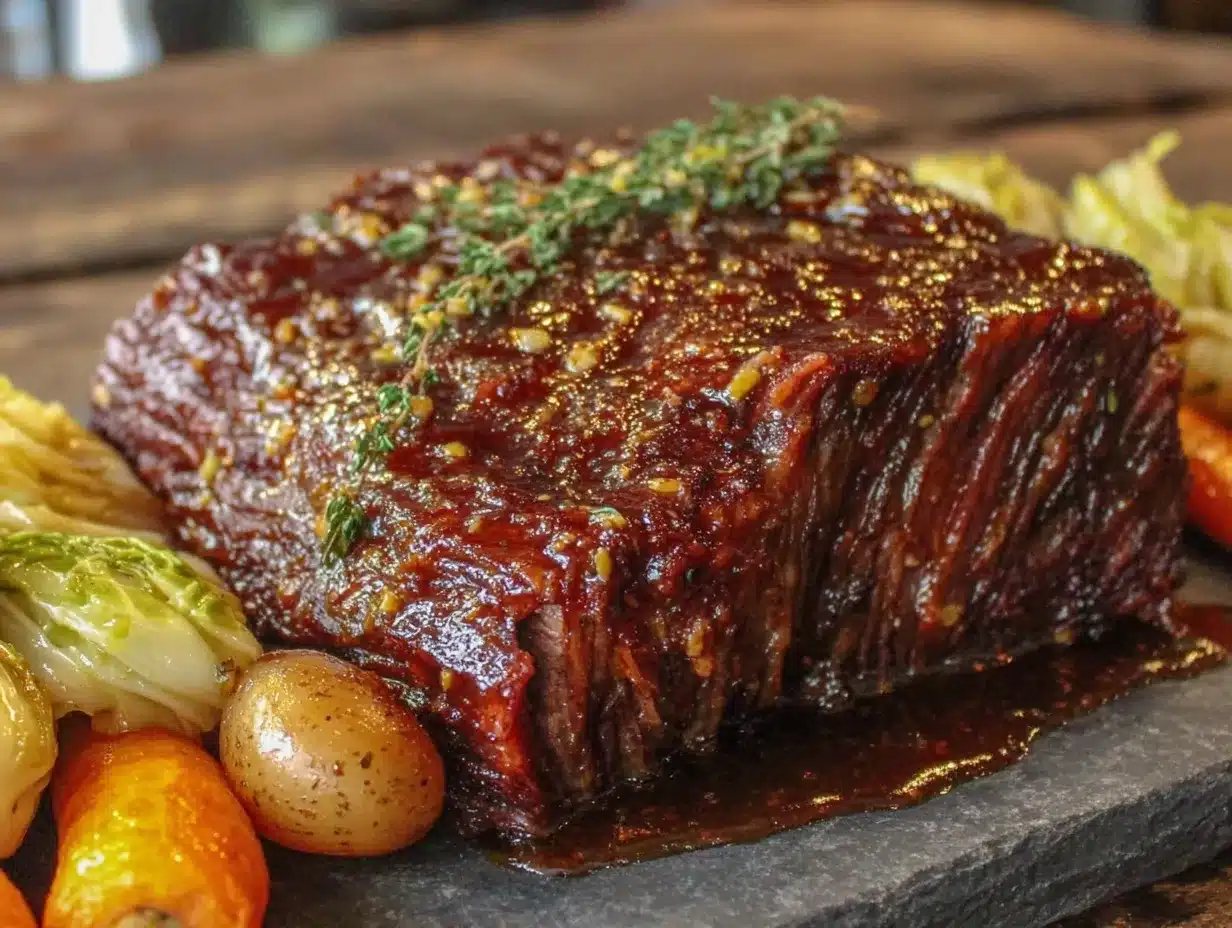
- Green cabbage: 1 medium head, cut into 8 wedges (look for a firm, dense head with no wilting leaves)
- Baby potatoes: 1.5 pounds, halved if large (Yukon Gold or red potatoes hold up best)
- Carrots: 4 large, peeled and cut into 2-inch chunks (adds natural sweetness to the broth)
- Yellow onion: 1 large, cut into thick wedges (don’t skip this—it adds so much flavor to the cooking liquid)
For the Optional Topping
- Fresh parsley: Chopped, for garnish (adds a pop of color and freshness)
- Whole-grain mustard or horseradish: For serving (a classic pairing that cuts through the richness)
Ingredient Tips: I recommend using Korbel or Spaten Oktoberfest beers if you can find them—they have that perfect malty profile. For the corned beef, look for a brisket that’s well-marbled but not overly fatty. If you’re watching your sodium, you can rinse the brisket briefly under cold water before cooking, though I find it’s not necessary with the low-sodium broth. For a gluten-free option, use a gluten-free dark beer or substitute with additional beef broth and a splash of apple cider vinegar.
Equipment Needed
You don’t need a professional kitchen to make this recipe—just a few basic tools that most home cooks already have.
- Slow cooker: 6-quart or larger (I use a Crock-Pot brand, but any brand works fine. A 6-quart is ideal for fitting the brisket and all the vegetables)
- Cutting board: A large one for prepping the vegetables and slicing the meat
- Chef’s knife: A sharp 8-inch knife makes quick work of the cabbage and carrots
- Measuring cups and spoons: For accurate ingredient portions
- Tongs: For handling the hot brisket and vegetables safely
- Large bowl: For holding the sliced cabbage wedges before adding them to the slow cooker
- Fork or meat thermometer: To check if the meat is tender enough (it should shred easily with a fork)
If you don’t have a slow cooker, you can use a Dutch oven and cook it in the oven at 300°F for about 3-4 hours, though the slow cooker version is much more hands-off. A cheaper slow cooker works just as well as an expensive one—I’ve used both, and the results are nearly identical. Just make sure to clean the lid seal regularly to keep it working properly.
Preparation Method
This recipe is incredibly forgiving, but following these steps in order ensures the best results. Let’s get cooking!
- Prep the brisket (5 minutes): Remove the corned beef brisket from its packaging. Reserve the spice packet that comes with it—you’ll use that later. Rinse the brisket briefly under cold water if you want to reduce saltiness, then pat it dry with paper towels. Place it fat-side up on your cutting board.
- Build the base (5 minutes): In a small bowl, whisk together the dark beer, beef broth, and brown sugar until the sugar dissolves. Set this aside. Smash your garlic cloves with the flat side of your knife—this releases more flavor than chopping.
- Layer the aromatics (5 minutes): Place the onion wedges and smashed garlic in the bottom of your slow cooker. This creates a little bed for the brisket to sit on, which prevents it from sticking and infuses the meat with flavor from below. Sprinkle half of the reserved spice packet over the onions.
- Add the brisket (2 minutes): Place the brisket fat-side up on top of the onions. Pour the beer mixture around the brisket—try not to wash the spice packet off the top. Add the whole peppercorns, mustard seeds, and bay leaves to the liquid. The brisket should be mostly submerged; if it isn’t, add a little more broth or water.
- Slow cook the brisket (8-10 hours on low, or 4-5 hours on high): Cover the slow cooker and cook on low for 8-10 hours or on high for 4-5 hours. I strongly recommend using low heat—it makes the meat noticeably more tender. About halfway through, you can flip the brisket if you want, but it’s not necessary. The meat is ready when it’s fork-tender and easily pulls apart.
- Add the vegetables (30-40 minutes before serving): About 30-40 minutes before you want to eat, carefully remove the brisket from the slow cooker and place it on a cutting board. Tent it loosely with foil to keep it warm. Add the baby potatoes and carrot chunks to the cooking liquid. Nestle the cabbage wedges on top—they should be partially submerged but not fully covered. Cover and cook on high for 30-40 minutes, or until the potatoes are tender and the cabbage is soft but not mushy.
- Slice and serve (10 minutes): Use a sharp knife to slice the brisket against the grain into 1/2-inch thick slices. The meat should be so tender it almost falls apart—that’s perfect. Arrange the sliced meat on a platter with the vegetables around it. Ladle a little of the cooking liquid over everything for extra moisture and flavor. Garnish with fresh parsley and serve with whole-grain mustard or horseradish on the side.
Pro tip: If you want the cabbage to have a little more texture, add it just 20 minutes before serving instead of 40. Some people prefer their cabbage with a slight crunch, and that’s totally fine!
Cooking Tips & Techniques
I’ve made this recipe more times than I can count, and I’ve definitely made some mistakes along the way. Here’s what I’ve learned so you don’t have to repeat my failures.
Don’t skip the rinse: The first time I made corned beef in a slow cooker, I didn’t rinse the brisket at all, and it came out way too salty. Now I give it a quick rinse under cold water—just a few seconds—and it makes a huge difference. You still get all the flavor without the salt bomb.
Low and slow is the way to go: I know it’s tempting to use the high setting when you’re in a hurry, but trust me on this one. Cooking on low for 8-10 hours breaks down the connective tissue in the brisket much more effectively, giving you that melt-in-your-mouth texture. The high setting works in a pinch, but the meat won’t be quite as tender.
Watch your liquid level: The brisket should be mostly submerged when you start cooking. If you’re using a larger slow cooker, you might need to add a bit more broth or water to cover the meat. I’ve had times where the liquid evaporated too much, and the top of the brisket dried out. Not a disaster, but not ideal either.
Timing the vegetables is key: Adding the vegetables at the beginning with the meat is a common mistake. After 8 hours in the slow cooker, your potatoes will be mush and your cabbage will be a sad, gray mess. Adding them in the last 30-40 minutes keeps everything perfectly textured. I learned this the hard way when I ended up with what looked like potato soup.
Let it rest before slicing: After you remove the brisket from the slow cooker, let it rest for at least 5-10 minutes before slicing. This lets the juices redistribute throughout the meat. If you slice it right away, all those delicious juices will end up on your cutting board instead of in your mouth.
Variations & Adaptations
One of the best things about this recipe is how easy it is to tweak. Here are some variations I’ve tried and loved.
German-style with sauerkraut: For a true Oktoberfest experience, swap the cabbage wedges for 2 cups of sauerkraut (rinsed and drained) added in the last 30 minutes of cooking. The tangy sauerkraut pairs beautifully with the dark beer and spices. Serve with soft pretzels and spicy brown mustard on the side.
Irish-inspired version: If you want to keep it more traditional, skip the beer and use Guinness or another Irish stout instead. Add an extra tablespoon of brown sugar to balance the bitterness. The result is a richer, darker broth that’s incredibly satisfying on a cold winter night.
Low-carb adaptation: Omit the potatoes entirely and add extra cabbage and carrots. You can also add turnips or rutabagas for a lower-carb root vegetable option. The broth is still packed with flavor, so you won’t miss the potatoes at all.
Spicy twist: Add 1-2 teaspoons of red pepper flakes or a chopped jalapeño to the cooking liquid for some heat. The spice cuts through the richness of the beef beautifully. I tried this once on a whim and it was surprisingly good—not for everyone, but if you like heat, give it a shot.
Smoked paprika version: Stir 1 tablespoon of smoked paprika into the beer mixture before pouring it over the brisket. It adds a subtle smokiness that makes the dish feel even more rustic and comforting. This has become my go-to variation for fall dinners.
Serving & Storage Suggestions
This dish is best served warm, straight from the slow cooker to the table. The aroma alone will have everyone gathering around the kitchen.
Serving temperature: Serve the brisket and vegetables hot, with a ladleful of the cooking liquid spooned over the top. I like to set out small bowls of whole-grain mustard and prepared horseradish so everyone can add as much or as little as they want. A sprinkle of fresh parsley adds a nice pop of color.
What to serve with it: This is a complete meal in one pot, but if you want to round it out, try serving it with crusty rye bread or Irish soda bread to soak up the broth. A simple green salad with a tangy vinaigrette also works well to cut through the richness. For drinks, a cold German lager or a crisp cider is perfect.
Storage: Leftovers keep beautifully in an airtight container in the refrigerator for up to 4 days. In fact, the flavors actually get better overnight as they meld together. Store the meat and vegetables separately from the cooking liquid if you can—this prevents the vegetables from getting too soft.
Reheating: The best way to reheat this is in a covered pot on the stovetop over medium-low heat, with a splash of the reserved cooking liquid or some beef broth. You can also microwave individual portions, but the meat won’t be as moist. If you’re reheating the whole batch, the slow cooker on low for 1-2 hours works great too.
Freezing: This dish freezes surprisingly well. Let everything cool completely, then transfer to freezer-safe containers or bags. It will keep for up to 3 months. Thaw overnight in the refrigerator before reheating. The potatoes might be a bit softer after freezing, but the flavor is still fantastic.
Nutritional Information & Benefits
Here’s a rough estimate of the nutritional values per serving (based on 6 servings, including vegetables):
| Nutrient | Amount Per Serving |
|---|---|
| Calories | 485 |
| Protein | 32g |
| Fat | 22g |
| Carbohydrates | 38g |
| Fiber | 6g |
| Sugar | 12g |
| Sodium | 1280mg |
| Iron | 4mg |
| Vitamin C | 45mg |
This dish is packed with protein from the beef, which helps keep you full and satisfied. The cabbage and carrots provide a good dose of fiber and vitamin C, while the potatoes offer complex carbohydrates for lasting energy. If you’re watching your sodium, rinsing the brisket and using low-sodium broth can help reduce the salt content significantly. For a lower-fat option, trim any visible fat from the brisket before cooking.
While this isn’t a “health food” by any stretch, it’s a balanced meal that provides real nourishment. There’s something deeply satisfying about knowing exactly what went into your dinner—no hidden preservatives or mystery ingredients. Plus, the slow cooking method is one of the healthiest ways to prepare tougher cuts of meat, as it breaks down the connective tissue without requiring extra fat.
Conclusion
This slow cooker corned beef and cabbage with an Oktoberfest twist has become my go-to comfort meal for cold nights, family gatherings, and any time I need a little warmth in my life. It’s the recipe I turn to when I want to feel connected to those cozy memories of Aunt Margie’s kitchen, but with a little twist that makes it entirely my own.
I hope you give this recipe a try and make it your own too. Maybe you’ll add a little extra spice, swap in a different beer, or serve it with your favorite mustard. That’s the beauty of cooking—you get to put your own stamp on every dish. I’d love to hear how it turns out for you. Did you try a variation? Did the whole family love it? Drop a comment below and let me know. And if you’re looking for another cozy slow cooker meal, you might enjoy my hearty beef stew with dark beer or this slow cooker chicken and dumplings for another night of comfort food.
Until next time, happy cooking—and don’t forget to save some leftovers for breakfast. Trust me, cold corned beef and potatoes the next morning is a gift you didn’t know you needed.
Frequently Asked Questions
Can I use a different cut of meat for this recipe?
Yes, you can use a corned beef round or a bottom round roast if you can’t find brisket. The cooking time might vary slightly—check for fork tenderness around the 7-hour mark on low. The brisket is ideal because it has more marbling, which keeps it moist during the long cook, but other cuts will work in a pinch.
Do I have to use beer, or can I substitute something else?
You can absolutely skip the beer if you prefer. Substitute with an equal amount of beef broth plus 2 tablespoons of apple cider vinegar for acidity. The flavor won’t be quite as complex, but it will still be delicious. For a non-alcoholic option, use a non-alcoholic dark beer or a combination of broth and a splash of balsamic vinegar.
How do I know when the corned beef is done?
The best test is the fork test. Insert a fork into the thickest part of the brisket—it should slide in easily with little resistance, and the meat should start to pull apart. If you have a meat thermometer, the internal temperature should be at least 190°F for tender results. Don’t rely solely on time, as slow cookers can vary.
Can I cook this on high instead of low?
Yes, you can cook on high for 4-5 hours, but the meat won’t be quite as tender as when cooked on low for 8-10 hours. If you’re short on time, high works fine—just keep an eye on it around the 4-hour mark. The vegetables should still be added in the last 30-40 minutes regardless of the setting you choose.
Why is my corned beef tough?
Corned beef is a tough cut of meat that needs time to break down. If it’s tough, it likely hasn’t cooked long enough. Let it go another 1-2 hours on low and check again. Also, make sure you’re slicing against the grain—slicing with the grain can make even tender meat seem chewy. Look for the lines running through the meat and cut perpendicular to them.
Pin This Recipe!
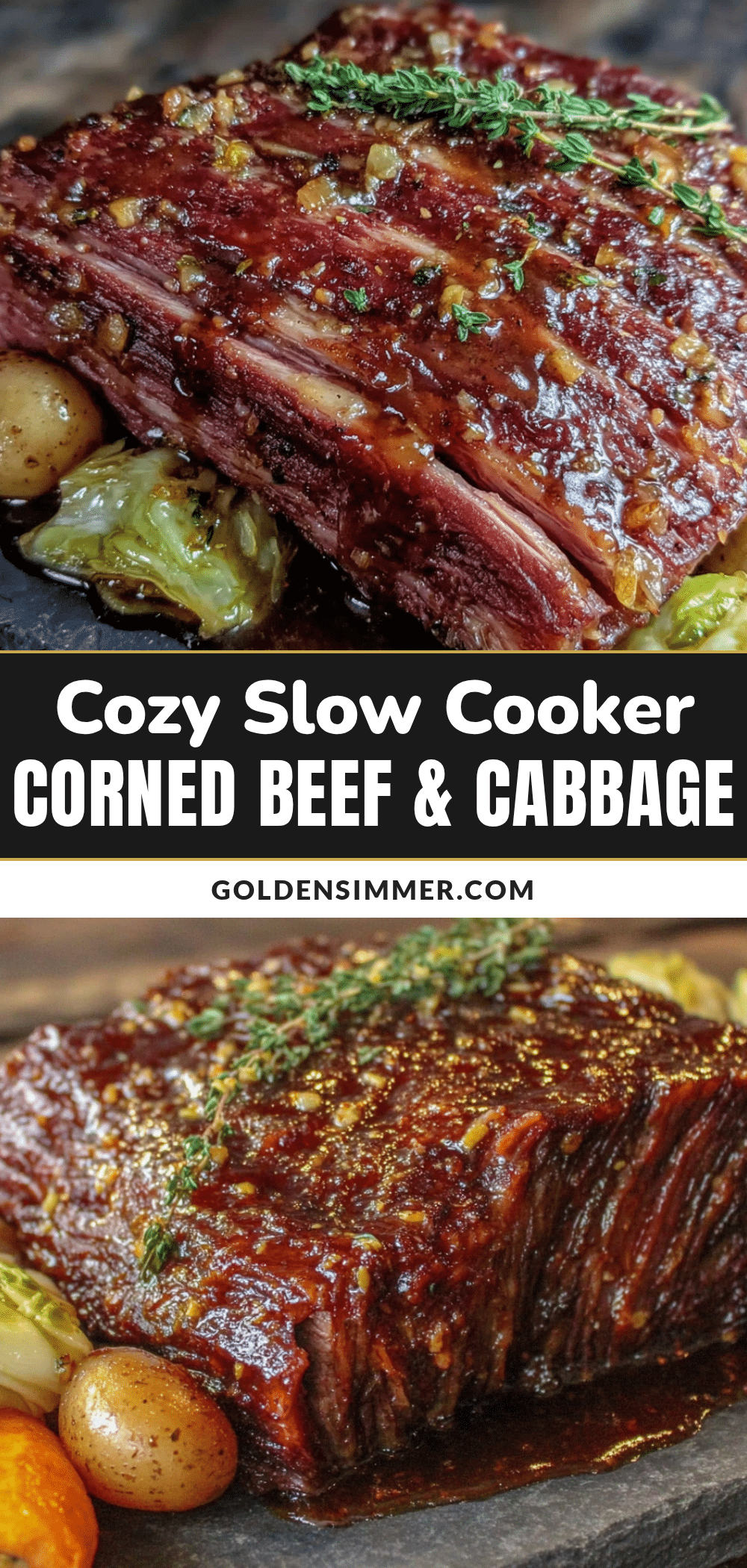
Easy Slow Cooker Corned Beef & Cabbage with Oktoberfest Twist
This slow cooker corned beef and cabbage gets an Oktoberfest twist with dark German beer and extra spices, creating a tender, flavorful meal that’s perfect for cozy evenings or celebrations.
- Prep Time: 15 minutes
- Cook Time: 8 hours 40 minutes
- Total Time: 8 hours 55 minutes
- Yield: 6 servings 1x
- Category: Main Course
- Cuisine: German-Irish
Ingredients
- 3–4 pounds corned beef brisket (with spice packet)
- 12 ounces dark German beer (Märzen, Dunkel, or dark lager)
- 1 cup low-sodium beef broth
- 2 tablespoons packed brown sugar
- 1 teaspoon whole peppercorns
- 1 teaspoon mustard seeds
- 2 large bay leaves
- 4 garlic cloves, smashed
- 1 medium head green cabbage, cut into 8 wedges
- 1.5 pounds baby potatoes (Yukon Gold or red), halved if large
- 4 large carrots, peeled and cut into 2-inch chunks
- 1 large yellow onion, cut into thick wedges
- Fresh parsley, chopped (for garnish)
- Whole-grain mustard or horseradish (for serving)
Instructions
- Prep the brisket: Remove corned beef from packaging, reserve spice packet. Rinse briefly under cold water if desired, pat dry. Place fat-side up on cutting board.
- Build the base: In a small bowl, whisk together dark beer, beef broth, and brown sugar until sugar dissolves. Smash garlic cloves.
- Layer the aromatics: Place onion wedges and smashed garlic in bottom of slow cooker. Sprinkle half of reserved spice packet over onions.
- Add the brisket: Place brisket fat-side up on onions. Pour beer mixture around brisket. Add whole peppercorns, mustard seeds, and bay leaves to liquid. Brisket should be mostly submerged; add more broth or water if needed.
- Slow cook the brisket: Cover and cook on low for 8-10 hours or on high for 4-5 hours, until fork-tender.
- Add the vegetables: About 30-40 minutes before serving, carefully remove brisket and tent with foil. Add baby potatoes and carrot chunks to cooking liquid. Nestle cabbage wedges on top. Cover and cook on high for 30-40 minutes until potatoes are tender and cabbage is soft.
- Slice and serve: Slice brisket against the grain into 1/2-inch thick slices. Arrange on platter with vegetables. Ladle cooking liquid over everything. Garnish with parsley and serve with mustard or horseradish.
Notes
For best results, cook on low for 8-10 hours. Rinse brisket to reduce saltiness. Add vegetables in the last 30-40 minutes to avoid mushiness. Let brisket rest 5-10 minutes before slicing against the grain. Leftovers keep up to 4 days in the refrigerator or 3 months frozen.
Nutrition
- Serving Size: 1 serving (about 1/6
- Calories: 485
- Sugar: 12
- Sodium: 1280
- Fat: 22
- Saturated Fat: 8
- Carbohydrates: 38
- Fiber: 6
- Protein: 32
Keywords: slow cooker corned beef, corned beef and cabbage, Oktoberfest recipe, German beer corned beef, St. Patrick's Day, comfort food, brisket