Love this? Save it for later!
Share the inspiration with your friends
Introduction
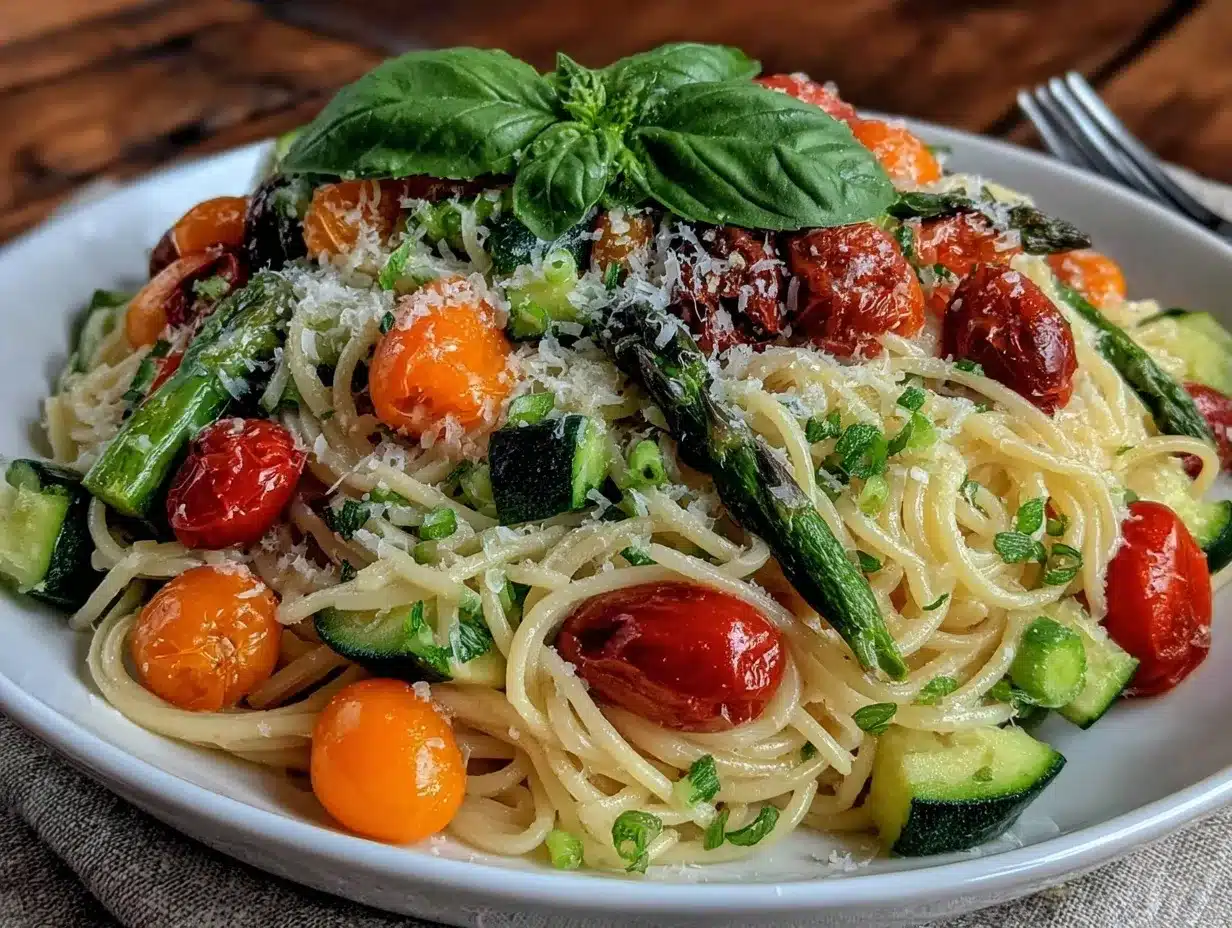
“You know that moment when you open your fridge and find a medley of fresh, colorful veggies begging to be used? Last July, after a spontaneous trip to the farmer’s market, I stood in my kitchen staring at a basket overflowing with zucchini, cherry tomatoes, and snap peas. No grand plan, just a craving for something light but satisfying. Honestly, I wasn’t expecting much to come from this random assortment—until I tossed them together with some pasta and a quick homemade dressing. The result? An easy summer pasta primavera with fresh vegetables that’s become my go-to for those lazy, warm evenings.
Let me tell you, the sizzle of garlic hitting olive oil, the pop of tomatoes releasing their juice, and the fresh crunch of peas and zucchini bring a kind of joy that’s hard to beat. I even made a bit of a mess—spilled some olive oil on the counter while distracted by a phone call—but it was worth every drop. Maybe you’ve been there, juggling fresh ingredients and trying to whip up something healthy without fuss.
This recipe stuck with me because it’s as simple as it is delicious. It’s a celebration of summer’s bounty, easy enough for a weeknight but impressive enough to share with friends. Whether you’re a veggie lover or just want a break from heavy meals, this pasta primavera hits the spot every time. Let’s get into why you’ll love it, what you need, and how to make it your own.
Why You’ll Love This Recipe
After testing countless versions in my kitchen (and yes, a few that ended up in the compost), this easy summer pasta primavera with fresh vegetables stands out for a bunch of reasons:
- Quick & Easy: Ready in about 30 minutes, perfect for busy summer nights or when you want a fresh, fuss-free meal.
- Simple Ingredients: No need for specialty stores; this recipe shines with everyday veggies and pantry staples.
- Perfect for Summer Gatherings: Light and colorful, it’s an ideal choice for picnics, potlucks, or casual dinners on the patio.
- Crowd-Pleaser: Even my picky nephew asks for seconds, and he usually avoids anything green!
- Unbelievably Delicious: The mix of fresh vegetables, garlic, and a hint of lemon creates a flavor combo that feels both refreshing and comforting.
What makes this pasta primavera different? Well, the magic is in the balance—lightly sautéing the veggies so they keep their snap but still soften just enough. Plus, the addition of fresh herbs and a splash of pasta water to tie everything together delivers a silky, cohesive sauce without turning it heavy. Honestly, it’s not just pasta with veggies thrown in; it’s a harmony of textures and vibrant flavors that dance on your palate.
This recipe isn’t just good food; it’s the kind you remember because it reminds you of sunshine and easy evenings. It’s healthy, fresh, and just the right amount of indulgent. You’re going to love making this your summer staple.
What Ingredients You Will Need
This easy summer pasta primavera relies on simple, wholesome ingredients that highlight the natural flavors of fresh vegetables. Most are pantry staples or easy to find at your local market—bonus points if you pick up your veggies from a farmer’s stand or grow them yourself!
- Pasta: 12 oz (340 g) of penne or farfalle works best for catching the sauce and veggies.
- Olive oil: 3 tablespoons of extra virgin olive oil (I love Colavita for its smooth, fruity notes).
- Garlic: 3 cloves, minced (fresh is best here—adds that sharp, aromatic punch).
- Zucchini: 2 medium, sliced into half-moons (adds a tender, slightly sweet bite).
- Cherry tomatoes: 1 cup, halved (for bursts of juicy acidity).
- Snap peas: 1 cup, trimmed (gives a fresh crunch and mild sweetness).
- Yellow bell pepper: 1 medium, thinly sliced (brightens the dish with color and a bit of sweetness).
- Fresh basil: A handful, torn (for that unmistakable summer herb aroma).
- Fresh parsley: 2 tablespoons, chopped (adds freshness and a little peppery bite).
- Lemon: Zest and juice of 1 lemon (brings brightness and lifts the whole dish).
- Grated Parmesan cheese: ½ cup (optional, but highly recommended for richness).
- Salt and black pepper: To taste (seasoning is everything here!).
Substitution tips: If you need a gluten-free option, brown rice pasta or chickpea pasta works wonderfully. For a vegan twist, leave out the Parmesan or swap it with nutritional yeast for a cheesy flavor without dairy.
Equipment Needed
- Large pot for boiling pasta – a heavy-bottomed pot helps with even boiling.
- Large sauté pan or skillet – I recommend a non-stick one for easy veggie cooking and cleanup.
- Colander or strainer for pasta draining.
- Sharp knife and cutting board – a good, sharp knife makes slicing veggies a breeze.
- Measuring cups and spoons – precision helps, especially with seasoning and lemon juice.
- Wooden spoon or silicone spatula – perfect for stirring without scratching your pans.
If you don’t have a large sauté pan, a wide frying pan will do just fine. And for budget-friendly options, consider silicone spatulas and basic stainless-steel measuring cups—they last forever and clean easily.
Preparation Method
- Cook the pasta: Bring a large pot of salted water to a boil. Add 12 oz (340 g) of pasta and cook according to package instructions until al dente, about 9-11 minutes. Reserve ½ cup (120 ml) of pasta water, then drain the pasta. (Tip: Save that pasta water—it’s liquid gold for your sauce.)
- Prepare the vegetables: While the pasta cooks, wash and slice the zucchini into half-moons, halve the cherry tomatoes, trim the snap peas, and thinly slice the yellow bell pepper. (Pro tip: Try to keep the veggie slices uniform for even cooking.)
- Sauté garlic and veggies: Heat 3 tablespoons of olive oil in a large skillet over medium heat. Add the minced garlic and sauté for about 30 seconds until fragrant but not browned. Add zucchini and bell pepper first; cook for 4-5 minutes, stirring occasionally, until the veggies start to soften but still have a slight bite.
- Add snap peas and tomatoes: Toss in the snap peas and cherry tomatoes. Cook for another 2-3 minutes until the peas are bright green and tomatoes have softened slightly but not lost their shape. Season veggies with salt and black pepper to taste.
- Combine pasta and veggies: Add the drained pasta directly to the skillet with the veggies. Pour in reserved pasta water (start with ¼ cup/60 ml and add more if needed) and stir gently. This helps create a light sauce that clings to the pasta and veggies.
- Add herbs and lemon: Stir in torn basil, chopped parsley, lemon zest, and juice. Mix thoroughly so everything is evenly coated and fragrant. Give it a taste and adjust seasoning as needed.
- Finish with Parmesan: If using, sprinkle ½ cup grated Parmesan cheese over the pasta and stir until melted and combined. The cheese adds a creamy, savory touch that brings the dish together beautifully.
- Serve immediately: Transfer to plates or a serving bowl. For a little extra flair, garnish with a few whole basil leaves or an extra drizzle of olive oil. Enjoy warm or at room temperature.
Remember, the key to this dish is not overcooking the vegetables—they should be tender-crisp and bright, not mushy. If you notice the pasta drying out, add a splash more pasta water to keep things saucy.
Cooking Tips & Techniques
When making this easy summer pasta primavera, a few tricks can really up your game:
- Don’t overcook the pasta: Al dente is crucial here—firm to the bite helps it hold up against the fresh veggies.
- Use fresh garlic: Mince it finely and add it early in the sauté to infuse the olive oil without burning it. Burnt garlic tastes bitter and can ruin the whole dish.
- Reserve pasta water: The starch in that water acts like a natural thickener and helps bind your sauce without adding cream or butter.
- Cook veggies in stages: Start with denser vegetables like zucchini and bell peppers first, then add delicate ones like tomatoes last to preserve their texture.
- Fresh herbs last: Add fresh basil and parsley at the end. Cooking them too long makes them lose their vibrant flavor and color.
- Season gradually: Salt the pasta water and veggies as you go, but always taste before the final seasoning. It’s easy to overdo it.
- Multitasking tip: Prepare veggies while pasta cooks to save time and keep everything fresh.
I once forgot to reserve pasta water and ended up scrambling to add extra olive oil—lesson learned! Also, don’t hesitate to taste as you go; it’s the best way to make sure each bite sings.
Variations & Adaptations
This easy summer pasta primavera recipe is a fantastic base to customize depending on your mood or pantry. Here are some of my favorite tweaks:
- Protein boost: Add grilled chicken, shrimp, or chickpeas for a heartier meal.
- Seasonal swaps: In spring, swap snap peas for fresh asparagus tips or peas. In fall, roasted butternut squash cubes make a cozy addition.
- Flavor twist: Toss in a teaspoon of red pepper flakes for a subtle heat kick, or add a splash of balsamic vinegar for a tangy finish.
- Vegan version: Skip the Parmesan or replace it with vegan cheese or nutritional yeast for cheesy flavor without dairy.
- Gluten-free option: Use your preferred gluten-free pasta, like quinoa or lentil-based varieties, to keep it light and accessible.
One time, I tried adding sautéed mushrooms and swapped basil for fresh oregano—gave the dish a more earthy vibe that surprised me. Feel free to experiment with what’s in your fridge or garden!
Serving & Storage Suggestions
This pasta primavera is best served warm right after cooking, but it also holds up well at room temperature, making it great for outdoor meals or packed lunches.
- Serving ideas: Plate with an extra sprinkle of Parmesan and a drizzle of good olive oil. Pair it with a crisp white wine or sparkling water with lemon for a refreshing combo.
- Side dishes: A simple green salad or crusty bread complements the meal perfectly without overpowering those fresh vegetable flavors.
- Storage: Store leftovers in an airtight container in the fridge for up to 3 days.
- Reheating: Warm gently on the stovetop or microwave, adding a splash of water or olive oil to keep the pasta moist.
- Flavor development: The flavors meld beautifully overnight, so leftovers can taste even better the next day—just give it a good stir before serving.
Nutritional Information & Benefits
This easy summer pasta primavera is a nutritious choice that’s light but satisfying. Here’s a rough estimate per serving (serves 4):
| Calories | 350-400 kcal |
|---|---|
| Protein | 12-15 g |
| Carbohydrates | 50-55 g |
| Fat | 10-12 g (mostly healthy fats from olive oil) |
| Fiber | 6-8 g (thanks to the fresh veggies) |
Key health benefits come from the variety of vegetables packed with vitamins A and C, antioxidants, and fiber. Olive oil adds heart-healthy monounsaturated fats, and fresh herbs contribute anti-inflammatory compounds.
This recipe can easily fit into gluten-free, vegetarian, or low-sodium diets with minor adjustments. Just watch out for Parmesan if you have dairy allergies or sensitivities.
Conclusion
If you’re looking for a simple, fresh, and tasty way to celebrate summer’s bounty, this easy summer pasta primavera with fresh vegetables is a winner. It’s the kind of recipe that feels like a hug in a bowl—bright, wholesome, and effortless to pull together. I love how adaptable it is, whether I’m rushing home from work or hosting friends for a casual dinner.
Give it a try, play around with your favorite veggies or herbs, and make it your own. And hey, I’d love to hear how you customize it or what fresh finds you add to your version. Drop a comment below and share your experience—you never know whose weeknight dinner you might inspire!
Remember, healthy meals don’t have to be complicated. Sometimes, the best dishes come from simple ingredients and a little love. Enjoy!
Frequently Asked Questions
Can I use other types of pasta for this primavera?
Absolutely! While penne or farfalle work great, you can use spaghetti, fusilli, or any pasta you have on hand. Just adjust the cooking time accordingly.
How do I keep the vegetables from getting mushy?
Cook them in stages, starting with the firmer veggies like zucchini and bell peppers first, then add softer ones like tomatoes last. Also, don’t overcook—aim for tender-crisp.
Is this recipe suitable for vegans?
Yes! Simply omit the Parmesan cheese or replace it with nutritional yeast or a vegan cheese alternative.
Can I prepare this pasta primavera ahead of time?
You can prep the veggies in advance, but it’s best to combine with pasta just before serving for optimal texture. Leftovers store well for up to 3 days in the fridge.
What’s the best way to reheat leftover pasta primavera?
Warm it gently on the stovetop with a splash of water or olive oil to keep it from drying out. Microwaving works too, but stir halfway through to heat evenly.
Pin This Recipe!
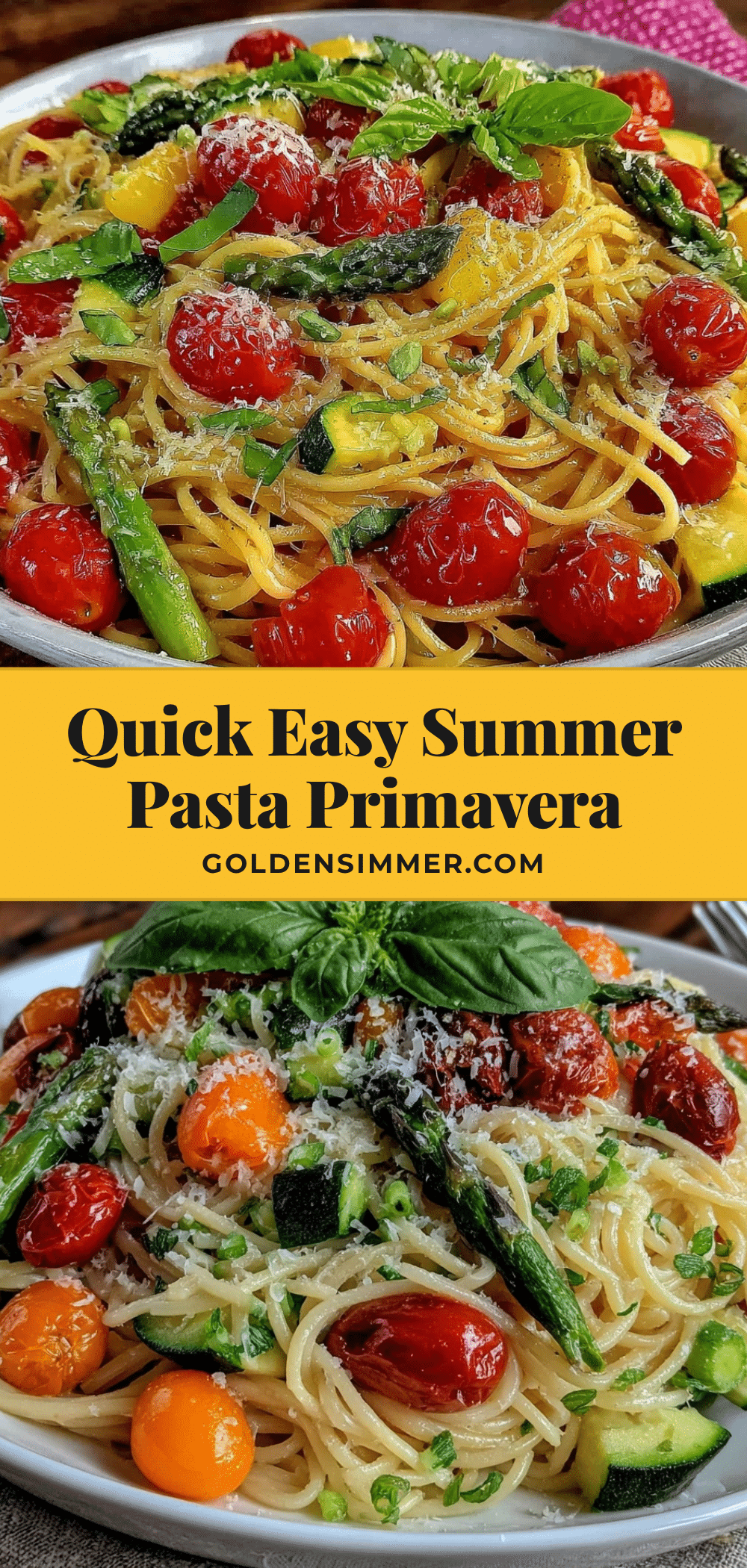
Easy Summer Pasta Primavera Recipe with Fresh Vegetables for Perfect Healthy Meals
A light, fresh, and easy pasta primavera featuring a medley of summer vegetables, perfect for quick weeknight dinners or casual gatherings.
- Prep Time: 10 minutes
- Cook Time: 20 minutes
- Total Time: 30 minutes
- Yield: 4 servings 1x
- Category: Main Course
- Cuisine: Italian
Ingredients
- 12 oz (340 g) penne or farfalle pasta
- 3 tablespoons extra virgin olive oil
- 3 cloves garlic, minced
- 2 medium zucchini, sliced into half-moons
- 1 cup cherry tomatoes, halved
- 1 cup snap peas, trimmed
- 1 medium yellow bell pepper, thinly sliced
- A handful fresh basil, torn
- 2 tablespoons fresh parsley, chopped
- Zest and juice of 1 lemon
- ½ cup grated Parmesan cheese (optional)
- Salt and black pepper to taste
Instructions
- Bring a large pot of salted water to a boil. Add 12 oz (340 g) of pasta and cook according to package instructions until al dente, about 9-11 minutes. Reserve ½ cup (120 ml) of pasta water, then drain the pasta.
- While the pasta cooks, wash and slice the zucchini into half-moons, halve the cherry tomatoes, trim the snap peas, and thinly slice the yellow bell pepper.
- Heat 3 tablespoons of olive oil in a large skillet over medium heat. Add the minced garlic and sauté for about 30 seconds until fragrant but not browned.
- Add zucchini and bell pepper; cook for 4-5 minutes, stirring occasionally, until the veggies start to soften but still have a slight bite.
- Toss in the snap peas and cherry tomatoes. Cook for another 2-3 minutes until the peas are bright green and tomatoes have softened slightly but not lost their shape. Season veggies with salt and black pepper to taste.
- Add the drained pasta directly to the skillet with the veggies. Pour in reserved pasta water (start with ¼ cup/60 ml and add more if needed) and stir gently to create a light sauce.
- Stir in torn basil, chopped parsley, lemon zest, and juice. Mix thoroughly so everything is evenly coated and fragrant. Adjust seasoning as needed.
- If using, sprinkle ½ cup grated Parmesan cheese over the pasta and stir until melted and combined.
- Transfer to plates or a serving bowl. Garnish with whole basil leaves or an extra drizzle of olive oil. Serve warm or at room temperature.
Notes
Do not overcook the vegetables; keep them tender-crisp and bright. Reserve pasta water to help create a light sauce. Add fresh herbs and lemon at the end to preserve flavor. For gluten-free, use brown rice or chickpea pasta. For vegan, omit Parmesan or use nutritional yeast.
Nutrition
- Serving Size: 1 serving (approxima
- Calories: 375
- Sugar: 7
- Sodium: 250
- Fat: 11
- Saturated Fat: 2
- Carbohydrates: 53
- Fiber: 7
- Protein: 14
Keywords: pasta primavera, summer pasta, fresh vegetables, easy pasta recipe, healthy meals, vegetarian pasta, quick dinner