Love this? Save it for later!
Share the inspiration with your friends
“You gotta try the char kway teow,” my taxi driver said, glancing in the rearview mirror with a grin that suggested he knew a secret only locals could appreciate. It was a humid evening in Kuala Lumpur, and the city buzzed with the kind of energy that only a street food haven can offer. Honestly, I wasn’t expecting much—just a quick bite before my next appointment—but that plate changed everything.
The sizzle of flat rice noodles hitting a scorching wok, the smoky aroma wafting through the alley, the perfect balance of sweet, salty, and spicy flavors—it all felt like a small celebration in every bite. I mean, you know that feeling when a simple dish surprises you so much it sticks with you? That was me, sitting on a plastic stool, wiping sweat and smiling like a kid with a new favorite toy.
Later, back in my tiny apartment, I tried to recreate that magic. It wasn’t without mishaps—burnt noodles, missing ingredients, and a kitchen that looked like a tornado hit—but after a few tries, this flavorful Char Kway Teow Malaysian street food recipe was born. It’s smoky, slightly sweet, and packed with umami, much like the version that hooked me on that bustling night. Let me tell you, it’s worth every minute—and maybe a little mess—to make this at home.
Why You’ll Love This Recipe
After testing this Char Kway Teow recipe multiple times, it’s clear why it’s a street food staple and a home kitchen favorite alike. Here’s why you’ll want to make it your go-to noodle dish:
- Quick & Easy: Comes together in under 30 minutes, ideal for busy weeknights or last-minute cravings.
- Simple Ingredients: No need for exotic stores—you probably have most of this in your pantry or fridge already.
- Perfect for Casual Gatherings: Great for dinner parties, potlucks, or a cozy solo meal when you want something hearty yet light.
- Crowd-Pleaser: The smoky wok hei flavor always impresses, even picky eaters ask for seconds.
- Unbelievably Delicious: The interplay of sweet soy sauce, crunchy bean sprouts, and tender noodles creates a texture and taste combo that’s just irresistible.
What sets this recipe apart is the attention to that elusive wok hei—the smoky char flavor you don’t get from just any stir-fry. I use a hot cast iron skillet to mimic the street hawker’s blazing wok, combining it with the right balance of sweet and savory sauces. I mean, you might have tried Char Kway Teow before, but this version hits all the right notes without complicated steps or hard-to-find ingredients. It’s comfort food with a kick, perfect for anyone who loves authentic Malaysian street food without leaving their kitchen.
What Ingredients You Will Need
This recipe uses straightforward ingredients that come together to deliver bold flavor and that signature smoky aroma. Many are pantry staples, so you can whip this up anytime the craving hits.
- Flat rice noodles (kway teow): About 8 oz (225 g), fresh preferred but dried soaked in warm water works well too.
- Eggs: 2 large, lightly beaten, for richness and texture.
- Shrimp: 6-8 medium, peeled and deveined (substitute with chicken or tofu for variations).
- Chinese sausage (lap cheong): 1 small, thinly sliced (adds sweetness and depth).
- Bean sprouts: 1 cup, fresh and crunchy.
- Garlic: 3 cloves, finely minced (aroma base).
- Chives: ¼ cup, chopped (adds freshness).
- Light soy sauce: 2 tablespoons (for seasoning).
- Dark soy sauce: 1 tablespoon (for color and sweetness).
- Oyster sauce: 1 tablespoon (umami boost).
- Chili paste or fresh chilies: To taste (optional, for heat).
- Vegetable oil or lard: 2 tablespoons (for authentic flavor; lard is traditional but oil works fine).
- White pepper: A pinch (for subtle spice).
For best results, I recommend using fresh flat rice noodles from an Asian market—brands like Three Ladies Brand are reliable. If you can’t find Chinese sausage, smoked sausage or even bacon can work as a substitute, though the flavor will shift a bit. Fresh bean sprouts and chives are essential for that crunchy, fresh contrast. And don’t skip the oyster sauce—it’s the secret weapon for that rich, savory punch.
Equipment Needed
- Wok or large cast iron skillet: The key to getting that smoky wok hei flavor. A wok heats up quickly and distributes heat evenly.
- Spatula or wooden spoon: For tossing and stir-frying ingredients.
- Mixing bowls: To prep and hold ingredients separately.
- Knife and cutting board: For slicing sausage, chopping garlic, and prepping garnishes.
- Measuring spoons: To keep the seasoning balanced.
If you don’t have a wok, a heavy-bottomed skillet can work. I’ve tried this recipe on my standard non-stick pan—while the flavor is good, it lacks the characteristic char. For best results, a well-seasoned cast iron skillet is a budget-friendly alternative that holds heat well. Also, keep your spatula handy for quick tossing; a flat metal spatula works wonders for scraping up those tasty browned bits.
Preparation Method
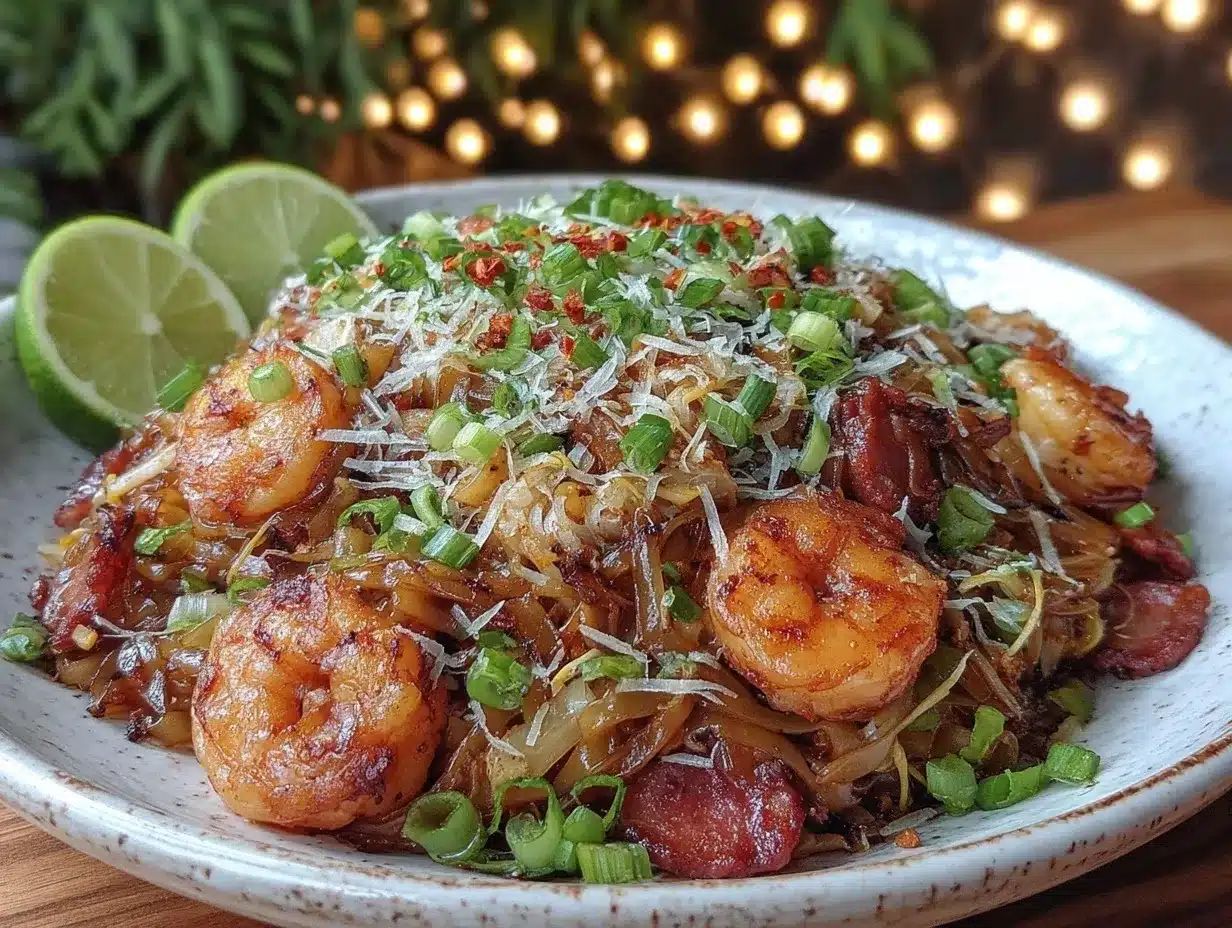
- Prep the noodles: If using fresh flat rice noodles, gently separate them by hand to avoid tearing. For dried noodles, soak in warm water for about 20 minutes or until pliable, then drain well.
- Mix sauces: In a small bowl, combine light soy sauce, dark soy sauce, and oyster sauce. Set aside.
- Heat the wok/skillet: Add 2 tablespoons of oil or lard over high heat until shimmering. This step is crucial to get that smoky flavor going—don’t rush it!
- Cook the sausage and shrimp: Toss in the sliced Chinese sausage and shrimp. Stir-fry for 1-2 minutes until shrimp start turning pink and sausage releases fragrant oils. Remove and set aside.
- Sauté garlic: Add minced garlic to the hot wok and fry for about 15 seconds until golden and aromatic. Be careful not to burn it!
- Cook eggs: Pour in the beaten eggs, swirling the wok to create a thin omelet. When the eggs are almost set, scramble lightly with your spatula.
- Add noodles and sauce: Toss the noodles into the wok with the eggs. Immediately pour in the sauce mixture. Stir-fry vigorously for 2-3 minutes, ensuring noodles are coated and heated through.
- Return sausage and shrimp: Add them back to the wok along with bean sprouts and chives. Stir-fry for another 1-2 minutes. The bean sprouts should stay crisp but warmed.
- Season and finish: Sprinkle a pinch of white pepper and add chili paste or fresh chilies if using. Give everything a final toss, then transfer to serving plates hot off the wok.
Pro tip: Keep your wok at high heat the entire time to mimic a street hawker’s intense flame. If the noodles stick, add a splash of oil or soy sauce to loosen them. And don’t overcrowd the wok—if needed, cook in batches. You’ll know it’s done when you see those slight charred bits, and the noodles glisten with sauce but aren’t mushy.
Cooking Tips & Techniques
Getting the authentic char kway teow flavor at home can feel tricky, but a few tricks make all the difference.
- High heat is non-negotiable: It’s what gives the dish that signature smoky “wok hei” aroma. Preheat your pan well before cooking.
- Use fresh ingredients: Fresh noodles and crunchy bean sprouts keep the texture lively. Avoid over-soaking dried noodles or they’ll become soggy.
- Don’t overcook the shrimp and sausage: They only need a minute or two to release flavor—overcooking makes them tough.
- Stir-fry quickly: Continuous tossing prevents sticking and ensures everything cooks evenly.
- Balance your sauces: Taste as you add; different brands vary in saltiness and sweetness.
Once, I forgot to drain my soaked noodles properly, and the dish turned watery—lesson learned! Also, I sometimes add a splash of fish sauce for extra umami, but that’s optional. I find multitasking helps—while the noodles soak, prep your other ingredients so everything hits the wok fast. The magic is in timing and heat control.
Variations & Adaptations
This recipe is flexible and welcomes personal twists. Here are some ideas to suit your taste or dietary needs:
- Vegetarian version: Swap shrimp and sausage for firm tofu and shiitake mushrooms. Use vegetarian oyster sauce or mushroom soy sauce.
- Spicy kick: Add extra fresh chilies or sambal oelek for a fiery bite. I sometimes toss in chopped bird’s eye chilies for authentic Malaysian heat.
- Gluten-free: Use tamari or gluten-free soy sauce and make sure your oyster sauce is gluten-free. Fresh rice noodles are naturally gluten-free.
- Alternative proteins: Chicken strips, thinly sliced beef, or even crispy pork belly work well if you want a different protein profile.
- Seasonal veggies: Incorporate baby corn, bell peppers, or snap peas for color and crunch—just toss them in with the bean sprouts.
Personally, I’ve made a version with leftover roast chicken and it turned out fantastic—kind of a fusion twist I keep coming back to when I want to use up fridge odds and ends.
Serving & Storage Suggestions
Char kway teow is best served hot and fresh, straight from the wok. The noodles are at their peak texture and flavor right away.
Pair it with a simple side of sliced cucumbers or a tangy pickled vegetable salad to cut through the richness. For beverages, an iced teh tarik or a cold lager complements the smoky, spicy notes nicely.
If you have leftovers, store them in an airtight container in the fridge for up to 2 days. Reheat gently in a hot skillet with a splash of oil to revive the noodles and avoid mushiness—microwaving tends to make the texture limp.
Keep in mind, the flavors tend to meld and deepen after resting overnight, so sometimes I actually prefer it slightly cooled the next day!
Nutritional Information & Benefits
This flavorful Char Kway Teow recipe offers a balanced mix of carbs, protein, and fats, making it a satisfying meal. Here’s a rough estimate per serving:
| Nutrient | Amount |
|---|---|
| Calories | 450-500 kcal |
| Protein | 25 g |
| Carbohydrates | 50 g |
| Fat | 15 g |
| Fiber | 3 g |
The shrimp and eggs provide lean protein, while bean sprouts add fiber and vitamins. Using vegetable oil or lard offers different fat profiles—go with oil for a lighter option. This dish is naturally gluten-free if you pick the right sauces, making it accessible for many dietary needs. Just watch the sodium levels if you’re sensitive to salt.
Conclusion
This Char Kway Teow recipe is more than just noodles tossed in a wok; it’s a snapshot of Malaysian street food culture you can bring right to your kitchen. It’s smoky, sweet, and a little spicy—a combination that keeps me coming back every time. I hope you have as much fun making it as I do eating it.
Don’t hesitate to tweak the ingredients and spice level to match your palate. Maybe add extra greens or swap the proteins to make it your own. And hey, if you try this recipe, I’d love to hear how it turned out for you—drop a comment or share your variations!
Now, fire up that wok and get ready for a truly flavorful experience—you’re about to make some seriously good Malaysian street food at home.
Frequently Asked Questions
What can I substitute for Chinese sausage in Char Kway Teow?
If you can’t find Chinese sausage, smoked sausage, bacon, or even a bit of pancetta can add a similar smoky, sweet flavor. For a vegetarian version, omit it or use smoked tofu.
Can I use dried rice noodles instead of fresh?
Yes, soak dried flat rice noodles in warm water for about 20 minutes until soft but still firm. Drain well before stir-frying to prevent sogginess.
How do I get that smoky “wok hei” flavor at home?
High heat is the secret. Use a well-seasoned wok or cast iron skillet and cook quickly without overcrowding. Preheat your pan thoroughly before adding ingredients.
Is Char Kway Teow gluten-free?
Traditionally, it can be gluten-free if you use gluten-free soy sauce and oyster sauce. Always check labels to avoid hidden gluten.
Can I make Char Kway Teow ahead of time?
It’s best fresh, but you can prepare ingredients in advance. Leftovers reheat well in a hot pan with a little oil, though the texture may soften slightly.
For those curious about similar noodle dishes, you might enjoy crispy garlic chicken as a complementary protein or the spicy Sichuan noodles for a different spicy noodle experience.
Pin This Recipe!
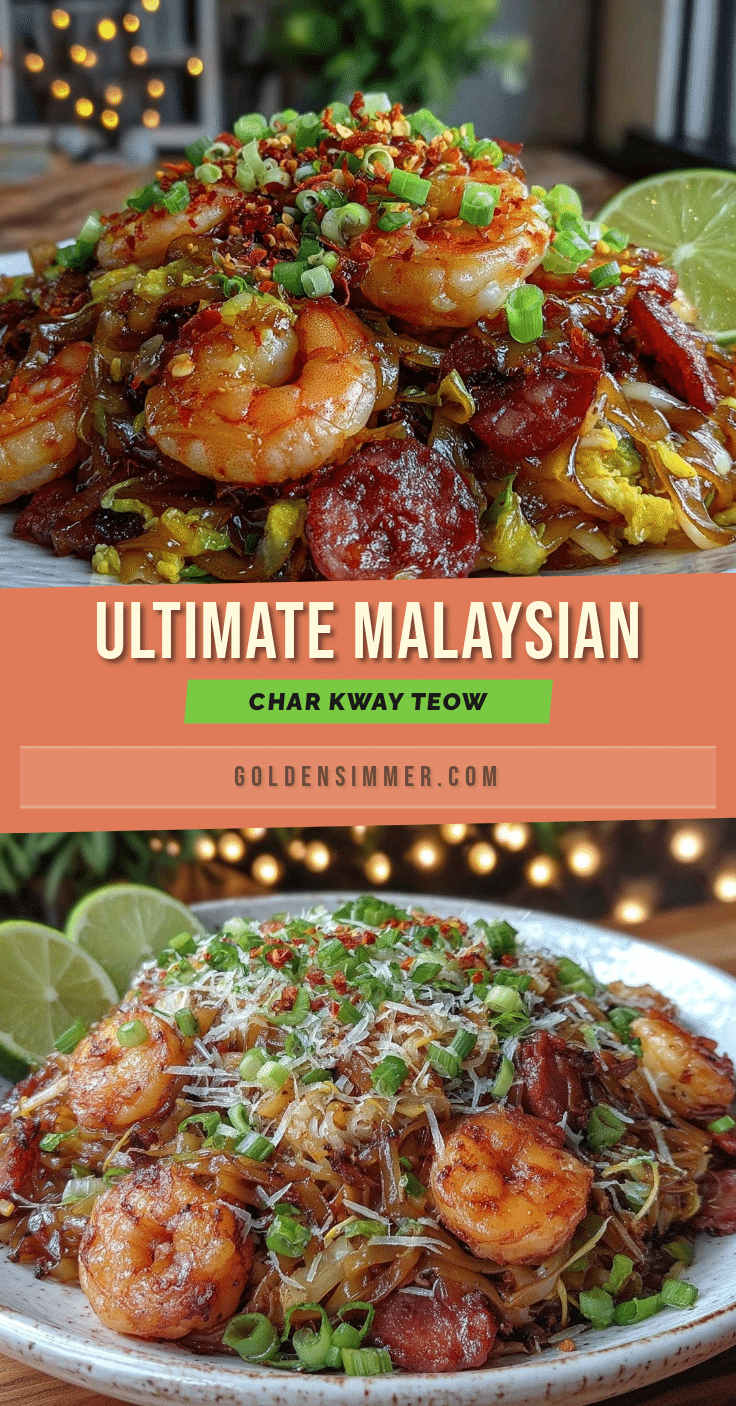
Flavorful Char Kway Teow Recipe

An easy and authentic Malaysian street food recipe featuring smoky flat rice noodles with shrimp, Chinese sausage, and a perfect balance of sweet, salty, and spicy flavors.
- Prep Time: 20 minutes
- Cook Time: 10 minutes
- Total Time: 30 minutes
- Yield: 2-3 servings 1x
- Category: Main Course
- Cuisine: Malaysian
Ingredients
- 8 oz (225 g) flat rice noodles (kway teow), fresh preferred or dried soaked in warm water
- 2 large eggs, lightly beaten
- 6–8 medium shrimp, peeled and deveined (substitute with chicken or tofu for variations)
- 1 small Chinese sausage (lap cheong), thinly sliced
- 1 cup fresh bean sprouts
- 3 cloves garlic, finely minced
- 1/4 cup chopped chives
- 2 tablespoons light soy sauce
- 1 tablespoon dark soy sauce
- 1 tablespoon oyster sauce
- Chili paste or fresh chilies to taste (optional)
- 2 tablespoons vegetable oil or lard
- Pinch of white pepper
Instructions
- If using fresh flat rice noodles, gently separate them by hand to avoid tearing. For dried noodles, soak in warm water for about 20 minutes or until pliable, then drain well.
- In a small bowl, combine light soy sauce, dark soy sauce, and oyster sauce. Set aside.
- Heat the wok or cast iron skillet over high heat and add 2 tablespoons of oil or lard until shimmering.
- Add sliced Chinese sausage and shrimp. Stir-fry for 1-2 minutes until shrimp start turning pink and sausage releases fragrant oils. Remove and set aside.
- Add minced garlic to the hot wok and fry for about 15 seconds until golden and aromatic, being careful not to burn it.
- Pour in the beaten eggs, swirling the wok to create a thin omelet. When the eggs are almost set, scramble lightly with your spatula.
- Toss the noodles into the wok with the eggs. Immediately pour in the sauce mixture. Stir-fry vigorously for 2-3 minutes, ensuring noodles are coated and heated through.
- Return sausage and shrimp to the wok along with bean sprouts and chives. Stir-fry for another 1-2 minutes, keeping bean sprouts crisp but warmed.
- Sprinkle a pinch of white pepper and add chili paste or fresh chilies if using. Give everything a final toss and transfer to serving plates hot off the wok.
Notes
Use high heat to achieve the smoky ‘wok hei’ flavor. Avoid overcrowding the wok and cook in batches if necessary. Fresh noodles and crunchy bean sprouts are essential for texture. Substitute Chinese sausage with smoked sausage or bacon if unavailable. For vegetarian version, replace shrimp and sausage with tofu and shiitake mushrooms and use vegetarian oyster sauce.
Nutrition
- Serving Size: Approximately 1 plat
- Calories: 475
- Sugar: 4
- Sodium: 900
- Fat: 15
- Saturated Fat: 3
- Carbohydrates: 50
- Fiber: 3
- Protein: 25
Keywords: Char Kway Teow, Malaysian street food, flat rice noodles, shrimp noodles, wok hei, easy stir-fry, authentic Malaysian recipe