Love this? Save it for later!
Share the inspiration with your friends
“You ever get that moment when a neighbor’s cooking drifts through the hallway, and suddenly your whole day shifts?” That happened to me one humid Thursday evening last summer. I was fixing a leaky faucet in my apartment, and from the unit next door, the rich aroma of spices—the kind that makes your eyes water just a bit—floated right in. Turns out, my neighbor Amina was simmering her famous Doro Wat, the Ethiopian chicken stew I’d only ever read about but never tasted.
She invited me over in between my clumsy plumbing fixes, and honestly, that night changed my kitchen game. The deep, smoky notes of the summer berbere spice mixed with tender chicken and served alongside soft, spongy injera felt like a warm welcome I didn’t know I needed. I wasn’t expecting to get cooking tips from a stranger, but here we were, laughing over a cracked bowl and a spilled pot of stew, crafting something unforgettable.
Maybe you’ve been there—caught off guard by a dish that sticks with you long after the last bite. That’s exactly why this Flavorful Ethiopian Doro Wat with Injera and Summer Berbere Spice recipe has found its way into my regular rotation. It’s the kind of meal that invites stories, slow conversations, and a touch of spice that lingers on your tongue. Let me tell you, it’s not just food; it’s a little celebration of culture, warmth, and those unexpected friendships forged over a bubbling pot.
Why You’ll Love This Recipe
After countless attempts and a few near disasters (hello, over-spiced batches), this recipe has earned its place as a family favorite and a go-to for impressing friends. It’s been tested, tasted, and tweaked until it felt just right. Here’s why it stands out:
- Quick & Easy: Comes together in about 1 hour and 15 minutes, perfect for those evenings when you want something special without all the fuss.
- Simple Ingredients: No need to hunt down obscure spices—the summer berbere blend is straightforward and adaptable with pantry staples.
- Perfect for Shared Meals: Whether it’s a casual dinner party or a cozy family gathering, this dish brings people to the table.
- Crowd-Pleaser: The balance of heat, sweetness, and savory depth always gets rave reviews from both spice lovers and skeptics.
- Unbelievably Delicious: The slow-cooked chicken soaks up the bold flavors, while the injera adds that perfect tangy softness, creating a harmony you’ll want again and again.
What really makes this recipe different? It’s the way the summer berbere spice is crafted to be vibrant but not overpowering, making it approachable for anyone new to Ethiopian cuisine. Plus, the technique of gently simmering the stew tenderizes the chicken to a melt-in-your-mouth texture that feels like a warm hug on a plate. Honestly, it’s a dish I keep coming back to—not just for the flavor but for the memories it sparks.
What Ingredients You Will Need
This recipe uses simple, wholesome ingredients to deliver bold flavor and satisfying texture without the fuss. The summer berbere spice blend acts as the backbone, bringing those signature Ethiopian notes right into your kitchen. Most ingredients are pantry staples or easy to find at your local market.
- For the Doro Wat:
- 2 lbs (900g) chicken drumsticks or thighs, skin removed
- 3 large onions, finely chopped (for that deep, rich base)
- 4 cloves garlic, minced
- 1-inch piece fresh ginger, grated
- 3 tbsp summer berbere spice blend (see below)
- 1/4 cup (60ml) niter kibbeh or unsalted butter, melted (adds richness)
- 1/2 cup (120ml) water or chicken broth
- 2 hard-boiled eggs per person (optional but traditional!)
- Salt to taste
- 1 tbsp lemon juice (to brighten flavors)
- For the Summer Berbere Spice Blend:
- 2 tbsp smoked paprika (for that smoky warmth)
- 1 tbsp ground coriander
- 1 tbsp ground fenugreek
- 1 tbsp ground cardamom
- 1 tsp ground cinnamon
- 1 tsp ground cloves
- 1 tsp cayenne pepper (adjust to taste for heat)
- 1 tsp ground black pepper
- For the Injera:
- 2 cups (480ml) teff flour (or a mix of teff and whole wheat flour)
- 3 cups (720ml) water
- Pinch of salt
I personally recommend using a trusted brand like Mesob Ethiopian Teff Flour for the authentic injera texture. If teff is tricky to find, a 50/50 mix with whole wheat flour works well for beginners. For the niter kibbeh, you can buy pre-made or make your own with clarified butter and spices—it’s worth the effort if you want that genuine depth.
Equipment Needed
- Large heavy-bottomed pot or Dutch oven (for even heat and perfect simmering)
- Non-stick skillet or crepe pan (for cooking injera)
- Mixing bowls (for batter and spice blend)
- Fine mesh sieve or cheesecloth (optional, for smoothing injera batter)
- Wooden spoon or spatula (for stirring the stew gently)
- Measuring cups and spoons
If you don’t have a Dutch oven, a thick-bottomed saucepan will work, but keep an eye to avoid burning the onions. For injera, a non-stick crepe pan is ideal, but a cast-iron skillet works just fine once well seasoned. Personally, I keep a small whisk handy for mixing the injera batter smoothly—makes life easier!
Preparation Method
- Prepare the summer berbere spice: In a small bowl, combine all the spices listed for the blend. Mix well and set aside. You can store any leftover in an airtight container for up to a month.
- Make the injera batter: In a large bowl, whisk together the teff flour and water until smooth. Cover loosely with a cloth and leave to ferment at room temperature for 2-3 days. (If you’re short on time, you can skip fermentation but the flavor and texture won’t be quite the same.) Add a pinch of salt and stir well before cooking.
- Cook the injera: Heat your non-stick skillet over medium-high heat. Pour a thin layer of batter onto the pan, swirling to cover the surface evenly like a crepe. Cook until bubbles form and the edges lift, about 2 minutes. Do not flip. Transfer to a plate and cover to keep warm. Repeat until all batter is used.
- Start the stew base: Heat the niter kibbeh or melted butter in a large pot over medium heat. Add the chopped onions and cook, stirring frequently, for about 20 minutes until deeply caramelized and soft—this step is key for flavor, so be patient.
- Add garlic, ginger, and berbere: Stir in the minced garlic and grated ginger. Cook for 2 minutes until fragrant. Then add the summer berbere spice blend, stirring constantly for 1-2 minutes to toast the spices without burning.
- Add chicken pieces: Add the chicken, stirring to coat with the spice mixture. Pour in water or broth, cover partially, and simmer gently for 45 minutes. Stir occasionally, making sure nothing sticks to the bottom.
- Finish and season: Check the chicken for tenderness. Season with salt and lemon juice. Add hard-boiled eggs, piercing them slightly so they soak up the sauce. Simmer another 10 minutes to meld flavors.
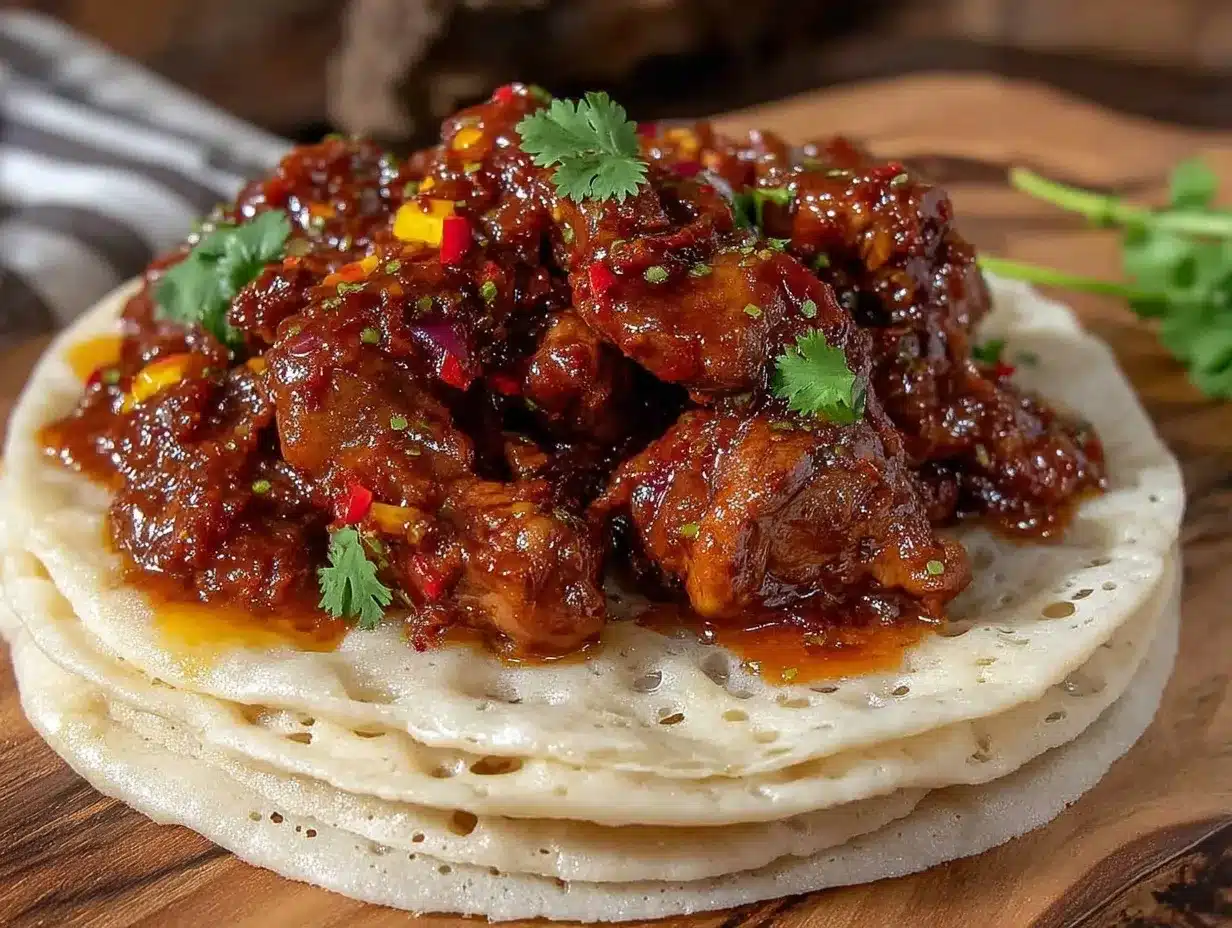
- Serve: Place injera on a large plate or board. Spoon the doro wat over the injera or serve on the side, tearing pieces of injera to scoop up the stew.
Tip: If your stew looks too thick, add a splash of water. If it’s too thin, uncover and simmer a bit longer. The smell should be rich, spicy, and inviting—like a hug from the inside out.
Cooking Tips & Techniques
- Patience with onions: The caramelization of the onions is the backbone of doro wat’s flavor. Resist the urge to rush this step—you want them soft and golden, not burnt or raw.
- Spice balance: Adjust the cayenne in your berbere spice depending on your heat tolerance. I learned the hard way that too much can overpower the chicken, but too little loses the essence.
- Chicken prep: Removing the skin helps the sauce cling better and reduces greasiness. I usually trim off excess fat too.
- Injera cooking: If your injera tears easily, your batter may be too thin or the pan temperature off. It takes a few tries to get it just right, so don’t be discouraged.
- Multitasking: While the onions caramelize, prep your spice blend and boil eggs. This keeps the rhythm flowing without idle waiting.
Variations & Adaptations
This recipe is wonderful as is, but feel free to try these tweaks I’ve enjoyed:
- Vegetarian version: Replace chicken with hearty mushrooms or eggplant chunks. Use vegetable broth and add a splash of tamarind for tang.
- Seasonal twist: Add diced tomatoes or pumpkin during simmering for a different texture and sweetness.
- Gluten-free injera: Use 100% teff flour or substitute with gluten-free flour blends, adjusting water for consistency.
- Spice level: For a milder stew, reduce cayenne and paprika. For the brave, fresh chili peppers can add a fiery kick.
- Personal favorite: I once added a splash of Ethiopian honey at the end to balance the heat with a subtle sweetness—unexpected but delightful!
Serving & Storage Suggestions
Serve the doro wat hot, straight from the pot, with fresh injera laid underneath or on the side. It pairs beautifully with simple sides like collard greens or a fresh salad to balance the richness.
Leftovers keep well in the fridge for up to 3 days. Reheat gently over low heat to preserve tenderness and avoid drying out the chicken. You can freeze portions for up to 2 months; just thaw overnight in the fridge before warming.
Flavors deepen the next day, so if you can wait, reheating often tastes even better. Just remember to keep the injera separate from the stew to avoid sogginess.
Nutritional Information & Benefits
Per serving, this doro wat with injera provides a hearty mix of protein, fiber, and spices known for their anti-inflammatory properties. Chicken thighs offer iron and zinc, while the berbere spices bring antioxidants and digestive benefits.
The injera, made from teff flour, is naturally gluten-free and rich in calcium and resistant starch, supporting gut health. This dish fits well into balanced diets and can be adapted for low-carb or vegetarian preferences.
Personally, I appreciate how this meal feels nourishing without being heavy, making it a satisfying choice for both body and soul.
Conclusion
This Flavorful Ethiopian Doro Wat with Injera and Summer Berbere Spice recipe is more than just a meal—it’s a journey into a vibrant culinary tradition that’s approachable for home cooks. Whether you’re new to Ethiopian flavors or a seasoned fan, this dish invites you to slow down, savor, and share.
Feel free to play with the spice levels or try the vegetarian version to suit your tastes. I love this recipe because it’s comforting, exciting, and always brings people together in the best way.
Give it a try, and let me know how your kitchen adventure goes—comments and stories from your table are always welcome. Happy cooking, and may your next meal be as flavorful and memorable as this one!
FAQs
What can I use if I can’t find teff flour for injera?
You can try a mix of whole wheat and gluten-free flours, but keep in mind the taste and texture will differ from traditional injera. Some stores also sell teff flour online.
Is it okay to use chicken breasts instead of thighs?
Yes, but thighs stay juicier and more tender during the long simmer. If using breasts, watch cooking time closely to avoid drying out.
Can I make the berbere spice blend ahead of time?
Absolutely! Store it in an airtight container away from light and heat. It stays fresh for about a month and makes cooking faster.
How do I know when the injera batter is properly fermented?
After 2-3 days at room temperature, it should have a slightly sour smell and bubbles on the surface. That’s the sign your injera will have its signature tang.
What’s the best way to serve doro wat for a dinner party?
Serve it family-style on a large platter with injera spread out for scooping. Add sides like sautéed greens or lentils, and provide extra berbere spice for guests who like more heat.
Pin This Recipe!

Flavorful Ethiopian Doro Wat Recipe with Injera and Summer Berbere Spice Guide

A rich and spicy Ethiopian chicken stew simmered with a vibrant summer berbere spice blend, served alongside traditional injera bread. This recipe offers a warm, flavorful meal perfect for sharing and celebrating culture.
- Prep Time: 15 minutes
- Cook Time: 1 hour
- Total Time: 1 hour 15 minutes
- Yield: 4 servings 1x
- Category: Main Course
- Cuisine: Ethiopian
Ingredients
- 2 lbs (900g) chicken drumsticks or thighs, skin removed
- 3 large onions, finely chopped
- 4 cloves garlic, minced
- 1-inch piece fresh ginger, grated
- 3 tbsp summer berbere spice blend
- 1/4 cup (60ml) niter kibbeh or unsalted butter, melted
- 1/2 cup (120ml) water or chicken broth
- 2 hard-boiled eggs per person (optional)
- Salt to taste
- 1 tbsp lemon juice
- Summer Berbere Spice Blend:
- 2 tbsp smoked paprika
- 1 tbsp ground coriander
- 1 tbsp ground fenugreek
- 1 tbsp ground cardamom
- 1 tsp ground cinnamon
- 1 tsp ground cloves
- 1 tsp cayenne pepper
- 1 tsp ground black pepper
- Injera:
- 2 cups (480ml) teff flour (or a mix of teff and whole wheat flour)
- 3 cups (720ml) water
- Pinch of salt
Instructions
- Prepare the summer berbere spice: Combine all the spices listed for the blend in a small bowl. Mix well and set aside. Store leftovers in an airtight container for up to a month.
- Make the injera batter: Whisk together teff flour and water until smooth in a large bowl. Cover loosely and ferment at room temperature for 2-3 days. Add a pinch of salt and stir before cooking.
- Cook the injera: Heat a non-stick skillet over medium-high heat. Pour a thin layer of batter, swirling to cover the surface evenly. Cook until bubbles form and edges lift, about 2 minutes. Do not flip. Transfer to a plate and cover to keep warm. Repeat until all batter is used.
- Start the stew base: Heat niter kibbeh or melted butter in a large pot over medium heat. Add chopped onions and cook, stirring frequently, for about 20 minutes until deeply caramelized and soft.
- Add garlic, ginger, and berbere: Stir in minced garlic and grated ginger. Cook for 2 minutes until fragrant. Add summer berbere spice blend, stirring constantly for 1-2 minutes to toast spices without burning.
- Add chicken pieces: Add chicken, stirring to coat with spice mixture. Pour in water or broth, cover partially, and simmer gently for 45 minutes. Stir occasionally to prevent sticking.
- Finish and season: Check chicken tenderness. Season with salt and lemon juice. Add hard-boiled eggs, piercing them slightly to soak up sauce. Simmer another 10 minutes to meld flavors.
- Serve: Place injera on a large plate or board. Spoon doro wat over injera or serve on the side, tearing pieces of injera to scoop up the stew.
Notes
Patience with caramelizing onions is key for deep flavor. Adjust cayenne pepper in berbere spice to control heat. Removing chicken skin helps sauce cling better and reduces greasiness. For injera, batter fermentation improves flavor and texture but can be skipped if short on time. Leftovers keep well refrigerated for 3 days and freeze up to 2 months. Reheat gently to preserve tenderness. Keep injera separate from stew to avoid sogginess.
Nutrition
- Serving Size: 1 serving (includes
- Calories: 450
- Sugar: 6
- Sodium: 450
- Fat: 22
- Saturated Fat: 8
- Carbohydrates: 35
- Fiber: 5
- Protein: 35
Keywords: Ethiopian, Doro Wat, chicken stew, injera, berbere spice, traditional, spicy, slow-cooked, African cuisine