Love this? Save it for later!
Share the inspiration with your friends
“You ever get that late-night craving that just won’t quit?” my friend Ken asked me one chilly Thursday evening as we stood in his cramped kitchen surrounded by empty takeout containers. It was one of those nights where nothing seemed to hit the spot, and honestly, I was about ready to give up on dinner altogether. Then Ken pulled out his secret weapon—a simmering pot of pork bone broth that smelled like it had been brewing for days. That night, I tasted what would become my favorite bowl of ramen: rich, creamy, and so deeply comforting it felt like a warm hug on a winter’s night.
What makes this Flavorful Tonkotsu Ramen Authentic Pork Bone Broth Recipe stand apart is the slow, patient cooking process that transforms humble pork bones into a luscious, milky-white broth bursting with umami. I remember watching the broth bubble away as Ken shared that he’d learned this recipe from a little ramen shop tucked away in Fukuoka, Japan. It wasn’t flashy, just honest food made with care—a stark contrast to the quick fixes we often settle for.
Maybe you’ve been there too—craving something hearty but not wanting to spend hours in the kitchen. Well, this recipe is proof that with some patience and simple ingredients, you can bring a taste of authentic Japanese ramen right to your own table. I mean, I forgot to buy the green onions once and still managed to make a bowl that blew my mind. That’s how forgiving and rewarding this recipe is. Let me tell you, this Tonkotsu broth has stuck with me ever since, turning casual weeknights into something a little more special.
Why You’ll Love This Recipe
This Tonkotsu ramen recipe isn’t just another bowl of noodles; it’s a journey into rich, soul-soothing flavors that come together with surprisingly little fuss. After testing this myself over several months, I can say it’s perfectly balanced between authentic taste and practical home cooking.
- Slow-Cooked Depth: The pork bone broth is simmered for hours to develop that signature creamy texture and full-bodied flavor you expect from authentic Tonkotsu ramen.
- Simple Ingredients: No need for exotic or hard-to-find items—just pork bones, aromatics, and pantry staples you likely already have.
- Comfort Food Classic: Ideal for cozy dinners or impressing guests craving a taste of Japan.
- Adaptable and Family-Friendly: While rich, it’s surprisingly approachable and can be adjusted for milder tastes or dietary needs.
- Proven at Home: I’ve tested this recipe countless times, tweaking the simmering times and seasoning, to bring you a foolproof version that’s restaurant-quality but doable on a weeknight.
What really sets this recipe apart is the way it brings that authentic Tonkotsu experience home without demanding you have a professional kitchen or days to prepare. Plus, the broth’s silky mouthfeel and deep porky flavor make every spoonful a little celebration. Honestly, once you make this, you’ll find yourself craving ramen nights more often than you expected.
What Ingredients You Will Need
This recipe uses simple, wholesome ingredients to deliver bold flavor and that signature creamy texture without any complicated steps. Most of the ingredients are pantry staples or easy to source from your local market.
- Pork Bones (4-5 pounds / 1.8-2.3 kg): A mix of femur and neck bones works best to extract maximum collagen, which gives the broth its silky richness.
- Pork Trotters (optional, 1-2 pieces): Adds gelatin for extra body; you can skip if unavailable.
- Onion (1 large, halved): Provides a natural sweetness to balance the savory broth.
- Garlic (6 cloves, smashed): Adds aromatic depth.
- Ginger (2-inch piece, sliced): Brightens the broth with subtle spice.
- Leek (1 stalk, halved): For mild onion flavor; substitute with green onions if needed.
- Water (about 5-6 quarts / 4.7-5.7 liters): For long simmering.
- Salt: To taste; start with kosher salt for better control.
- Soy Sauce (2-3 tablespoons): Adds umami and seasoning.
- Miso Paste (optional, 1 tablespoon): For an extra layer of flavor.
- Ramen Noodles (fresh or dried, 4 servings): Choose alkaline noodles for authentic texture.
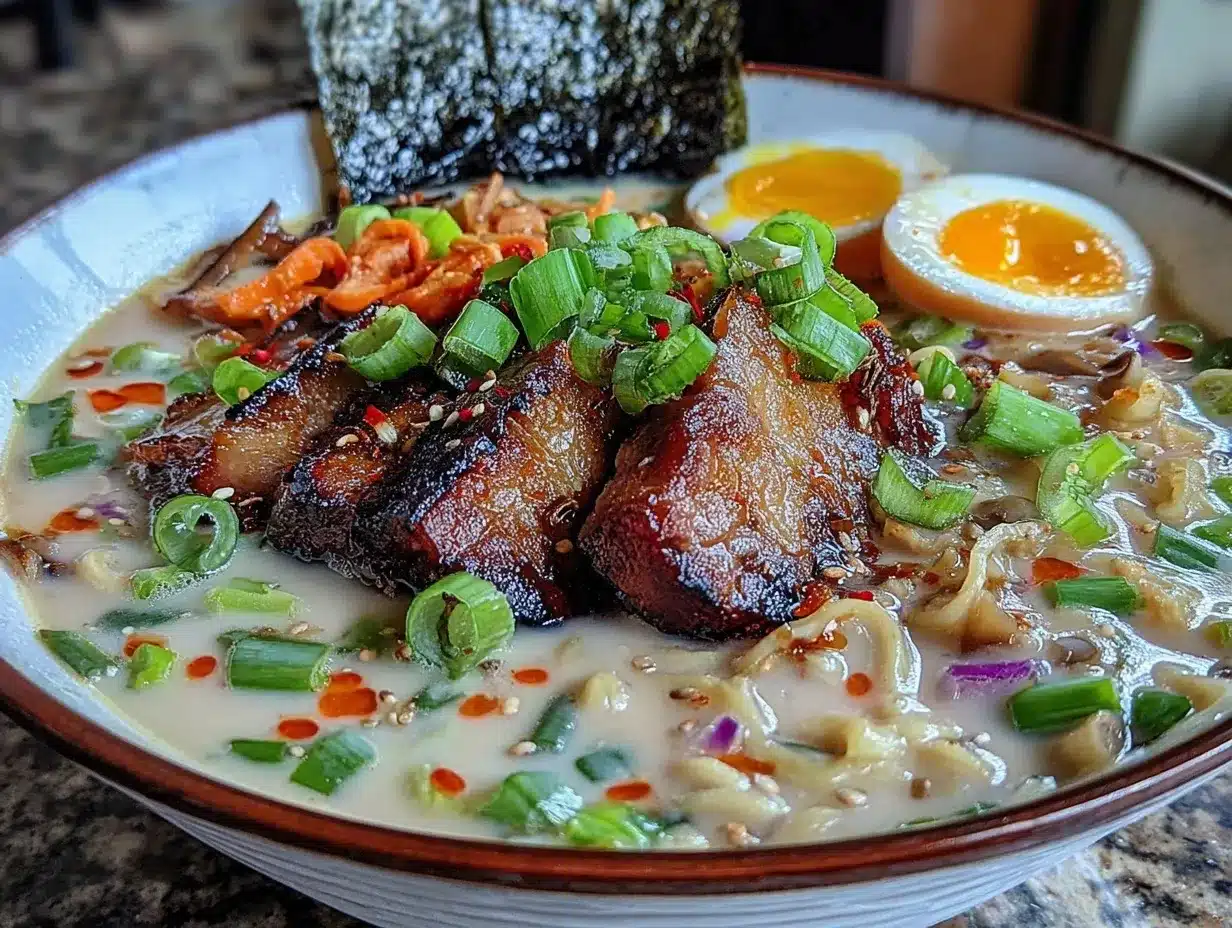
- Toppings: Chashu pork slices, soft-boiled eggs, nori sheets, bamboo shoots, and sliced green onions (optional but highly recommended).
When picking pork bones, I like to check with my butcher for fresh, meaty bones with some marrow intact—that’s where the magic happens. If you want a slightly lighter broth, you can reduce the trotters or swap half the bones for pork neck bones only. For a gluten-free option, seek out tamari instead of soy sauce, and use gluten-free ramen noodles.
Equipment Needed
- Large Stockpot (at least 8 quarts / 7.5 liters): Essential for holding all the bones and water during the long simmer.
- Fine Mesh Strainer: To remove bones and aromatics after cooking, ensuring a smooth broth.
- Skimmer or Slotted Spoon: Helpful for removing scum and impurities while simmering.
- Large Bowl: For soaking and rinsing noodles or holding toppings.
- Sharp Knife and Cutting Board: For prepping aromatics and toppings.
- Soup Ladle: For serving the broth.
If you don’t have a large stockpot, a heavy-duty slow cooker can work, but you’ll need to adjust cooking times. Personally, I find a sturdy pot with a tight lid best for maintaining the gentle simmer needed. Don’t worry if your strainer isn’t super fine; just double strain the broth through cheesecloth or a clean kitchen towel for extra clarity. Also, keeping a kitchen thermometer nearby can help you maintain the right simmer temperature without guesswork.
Preparation Method
- Prepare the Bones (20 minutes): Start by rinsing the pork bones under cold water to remove any residual blood. Place them in your large stockpot and cover with cold water. Bring to a rolling boil over high heat. Once boiling, let it continue for 10 minutes to blanch the bones, which helps get rid of impurities.
- Drain and Clean (10 minutes): Carefully drain the pot and discard the water. Rinse the bones and the pot thoroughly to remove scum and residue. This step might seem tedious, but it makes the broth much cleaner and less cloudy.
- Simmer the Broth (6-8 hours): Return the bones to the pot and add fresh cold water (about 5-6 quarts / 4.7-5.7 liters). Add the onion, garlic, ginger, and leek. Bring to a gentle boil, then reduce heat to low to maintain a steady simmer. Skim off any scum or foam that rises to the surface regularly during the first two hours. Keep the pot partially covered.
- Maintain the Simmer: Let the broth simmer for at least 6 hours; longer if you can. I usually aim for 8 hours on weekends when I have more time. The broth should gradually turn milky white and develop a thick, rich consistency. If the water level drops below the bones, add more boiling water to keep them submerged.
- Strain the Broth (15 minutes): Once the broth reaches that creamy tonkotsu texture, remove the pot from heat. Using your fine mesh strainer, strain the broth into a clean container. Discard the solids. If you want extra smoothness, strain again through cheesecloth.
- Season the Broth: Return the strained broth to the pot. Stir in soy sauce, salt, and miso paste if using. Taste and adjust seasoning as desired. Keep warm while you prepare the noodles and toppings.
- Cook the Noodles and Assemble (10 minutes): Cook ramen noodles according to package instructions (usually 2-3 minutes for fresh). Drain and divide into bowls. Ladle hot broth over noodles and add your favorite toppings like chashu pork, soft-boiled egg, bamboo shoots, and green onions.
Pro tip: Keep an eye on the simmer temperature—too high, and the broth turns cloudy and greasy; too low, and you won’t extract enough collagen. I learned this the hard way after one batch ended up more like soup than broth. Also, the smell alone while simmering will have your whole kitchen smelling like a ramen shop, so maybe open a window or light a candle if you live with sensitive noses!
Cooking Tips & Techniques
Getting the perfect Tonkotsu broth is all about patience and attention to detail. Here are some tips I picked up from trial and error:
- Blanch Bones Thoroughly: Don’t skip this step—it removes blood and impurities that can make your broth bitter or cloudy.
- Steady Simmer, Not Boil: Keep the broth at just a gentle simmer, around 190°F (88°C). Boiling breaks down the collagen too fast and clouds the broth.
- Regular Skimming: Use a skimmer or spoon to remove scum during the first few hours. This keeps the broth clear and clean-tasting.
- Use a Mix of Bones: Combining marrow-rich femur bones with trotters or neck bones balances richness and flavor.
- Don’t Rush the Cooking Time: The creamy white color and deep flavor only develop after hours of slow cooking. I know it’s tempting to speed things up, but trust me, it’s worth the wait.
- Store Broth Properly: Let the broth cool before refrigerating. It thickens in the fridge due to gelatin; just reheat gently before serving.
One mistake I made early on was over-seasoning too soon. Always season after straining because the broth reduces and concentrates as it cooks. Also, multitasking is key: while the broth simmers, you can prep toppings or sides so everything comes together smoothly at the end.
Variations & Adaptations
While this recipe sticks pretty close to traditional Tonkotsu ramen, I’ve played around with a few tweaks to suit different needs and tastes.
- Vegetarian Version: Swap pork bones for a hearty mix of mushrooms, kombu, and dried shiitake simmered for a rich umami broth, though the creamy texture won’t be quite the same.
- Spicy Tonkotsu: Add chili oil or a spoonful of spicy miso to the broth before serving for an extra kick.
- Instant Pot Shortcut: Use an electric pressure cooker to reduce simmering time to about 2 hours. The broth won’t be quite as silky but still delicious.
- Low-Sodium Option: Cut back on soy sauce and salt, and boost flavor with garlic and ginger for a lighter broth.
- Personal Favorite: I once added a splash of sake and a touch of sesame oil at the end—it gave the broth a subtle aromatic lift without overpowering the pork flavor.
Serving & Storage Suggestions
This Tonkotsu ramen is best served piping hot, right after assembling. Ladle the broth generously over freshly cooked noodles and toppings to keep everything perfectly warm.
For presentation, a bowl of ramen feels complete with a soft-boiled egg sliced in half, some crisp nori, and a sprinkle of sliced green onions. Pair it with a side of pickled ginger or a cold Japanese beer for a full experience.
Leftover broth can be stored in the refrigerator for up to 3 days or frozen for 2-3 months. When reheating, warm gently on the stove to avoid separating the fats. The broth actually tastes better the next day as the flavors meld, so don’t hesitate to make a big batch.
Nutritional Information & Benefits
This Tonkotsu ramen broth is rich in collagen and protein thanks to the long-simmered pork bones, which some believe supports joint and skin health. The broth is naturally low in carbs and can be adapted for different dietary needs by selecting gluten-free noodles or reducing sodium.
While it’s a hearty comfort food, the recipe avoids heavy additives or preservatives common in store-bought broths. The aromatics like garlic and ginger also add their own health benefits, including immune support and digestion aid. Just be mindful of portion sizes and seasoning if watching sodium intake.
Conclusion
Making this Flavorful Tonkotsu Ramen Authentic Pork Bone Broth Recipe at home might feel like a big project, but honestly, it’s one of those kitchen wins that pays off big time. The creamy, savory broth and tender noodles come together to create a bowl that’s so satisfying and memorable you’ll want to make it again and again.
Feel free to customize it with your favorite toppings or seasoning adjustments—maybe you love it spicier or with extra garlic. Whatever your version looks like, this recipe offers a solid foundation for enjoying authentic Japanese ramen any night of the week.
If you try it out, I’d love to hear how your Tonkotsu ramen turned out or any fun twists you added. Cooking is always better when shared, so don’t hesitate to leave a comment or share your experience!
Here’s to many cozy, delicious ramen nights ahead.
FAQs
What cuts of pork are best for Tonkotsu broth?
Use a combination of pork femur bones and trotters for collagen-rich broth. Neck bones also work well for added meatiness.
Can I make Tonkotsu ramen broth in a slow cooker or Instant Pot?
Yes! Slow cookers can simmer the broth over 12 hours, while Instant Pots reduce cooking time to about 2 hours, though texture may vary slightly.
How do I prevent the broth from becoming cloudy or greasy?
Blanch bones before simmering, keep a gentle simmer (not boiling), and skim off scum regularly during cooking.
What toppings go well with Tonkotsu ramen?
Traditional toppings include chashu pork, soft-boiled eggs, nori, bamboo shoots, and sliced green onions.
Can I prepare the broth in advance?
Absolutely! The broth stores well in the fridge for 3 days or freezer for up to 3 months. Reheat gently before serving.
Pin This Recipe!
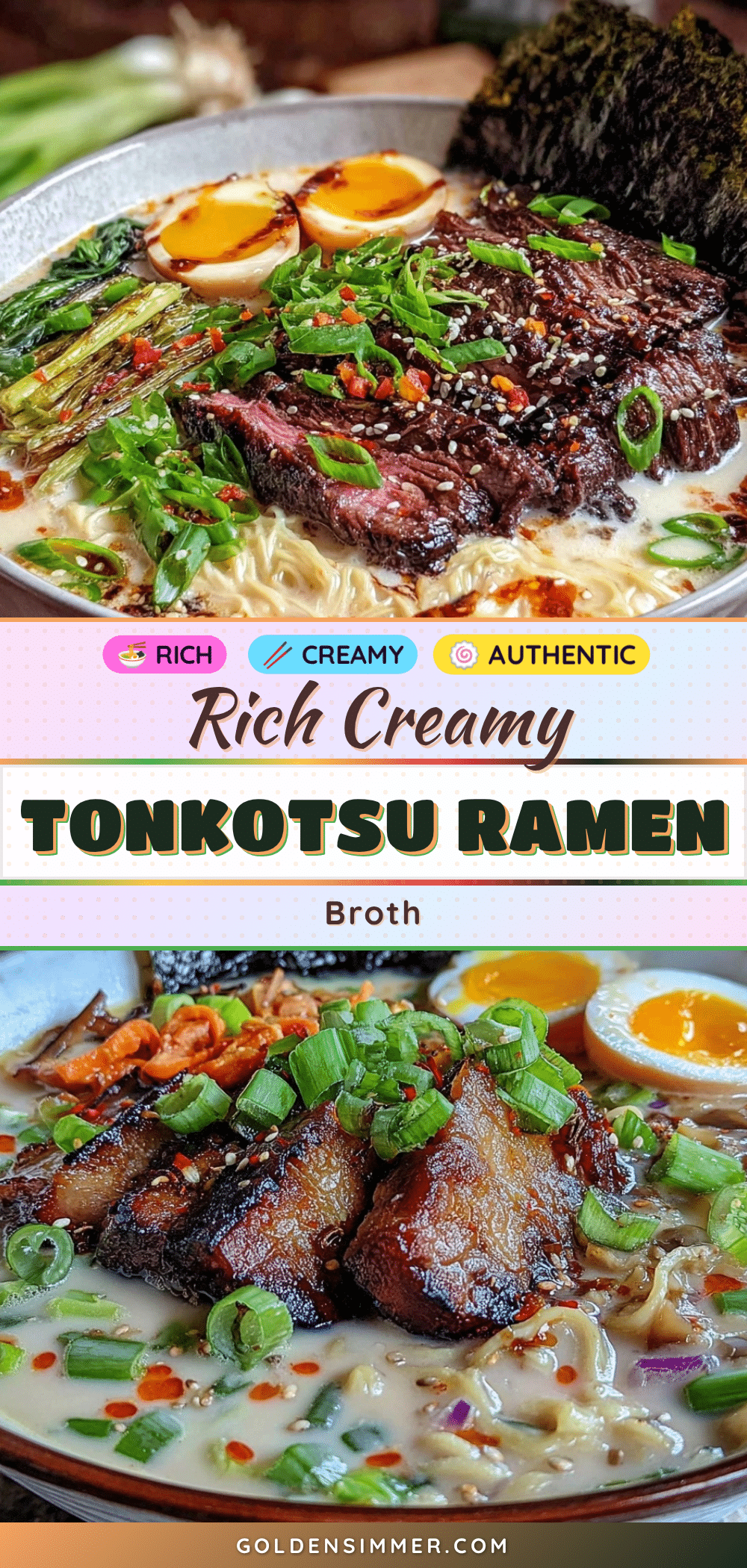
Flavorful Tonkotsu Ramen Recipe Easy Authentic Pork Bone Broth Guide

This authentic Tonkotsu ramen recipe features a rich, creamy pork bone broth simmered for hours to develop deep umami flavors. Perfect for cozy dinners, it brings a taste of Japan to your home with simple ingredients and patient cooking.
- Prep Time: 30 minutes
- Cook Time: 6-8 hours
- Total Time: 6 hours 30 minutes to 8 hours 30 minutes
- Yield: 4 servings 1x
- Category: Main Course
- Cuisine: Japanese
Ingredients
- 4–5 pounds pork bones (femur and neck bones mix)
- 1–2 pork trotters (optional)
- 1 large onion, halved
- 6 cloves garlic, smashed
- 2-inch piece ginger, sliced
- 1 stalk leek, halved (or substitute green onions)
- 5–6 quarts water
- Kosher salt, to taste
- 2–3 tablespoons soy sauce
- 1 tablespoon miso paste (optional)
- Ramen noodles (fresh or dried, 4 servings)
- Toppings: chashu pork slices, soft-boiled eggs, nori sheets, bamboo shoots, sliced green onions (optional but recommended)
Instructions
- Rinse pork bones under cold water to remove blood. Place in large stockpot and cover with cold water. Bring to rolling boil over high heat and boil for 10 minutes to blanch bones.
- Drain and discard water. Rinse bones and pot thoroughly to remove scum and residue.
- Return bones to pot and add fresh cold water (5-6 quarts). Add onion, garlic, ginger, and leek. Bring to gentle boil, then reduce heat to low to maintain steady simmer. Skim scum regularly during first two hours. Keep pot partially covered.
- Simmer broth for at least 6 hours, preferably 8 hours, until broth turns milky white and thick. Add boiling water as needed to keep bones submerged.
- Remove pot from heat and strain broth through fine mesh strainer into clean container. Discard solids. For extra smoothness, strain again through cheesecloth.
- Return strained broth to pot. Stir in soy sauce, salt, and miso paste if using. Taste and adjust seasoning. Keep warm.
- Cook ramen noodles according to package instructions (2-3 minutes for fresh). Drain and divide into bowls. Ladle hot broth over noodles and add desired toppings.
Notes
Blanch bones thoroughly to remove impurities and prevent cloudy broth. Maintain a gentle simmer around 190°F (88°C) to extract collagen without cloudiness. Skim scum regularly during first hours. Season broth after straining to avoid over-seasoning. Broth thickens when refrigerated due to gelatin; reheat gently before serving. For gluten-free, substitute tamari for soy sauce and use gluten-free noodles. Instant Pot can reduce cooking time to about 2 hours but broth may be less silky.
Nutrition
- Serving Size: 1 bowl (including br
- Calories: 550
- Sugar: 4
- Sodium: 900
- Fat: 25
- Saturated Fat: 8
- Carbohydrates: 45
- Fiber: 3
- Protein: 35
Keywords: Tonkotsu ramen, pork bone broth, authentic ramen, Japanese ramen, slow-cooked broth, homemade ramen, ramen recipe, pork broth, comfort food