Love this? Save it for later!
Share the inspiration with your friends
“You know that moment when the sun hits your kitchen just right and suddenly everything smells like summer in Provence?” That’s exactly how I felt the afternoon I first tried making this fresh authentic Provençal ratatouille recipe. It wasn’t in some fancy French restaurant or even a cooking class, but in my tiny urban kitchen with a slightly cracked ceramic bowl I’d inherited from a flea market. I was fiddling with a bunch of summer veggies I’d bought at an outdoor market in my neighborhood—zucchini, eggplant, bell peppers, and tomatoes that looked too good to pass up. Honestly, I wasn’t expecting much; ratatouille seemed like one of those old-school dishes that’s more about tradition than taste. But as the flavors melded and the kitchen filled with that unmistakable herby aroma, I realized this simple vegetable stew was something else entirely.
Maybe you’ve been there—trying to conjure up a dish that feels both rustic and fresh, comforting yet vibrant. I remember getting distracted halfway through chopping because my cat decided the basil smelled irresistible, knocking over a bowl and sending a splash of olive oil onto the floor. Classic cooking chaos, right? But that little mess actually made me slow down and savor the process. This ratatouille recipe stuck with me because it’s about more than just ingredients; it’s about capturing a feeling, a moment of warmth and simplicity that lingers long after the meal is gone.
Let me tell you—this fresh authentic Provençal ratatouille recipe is not just another vegetable stew. It’s the kind of dish that makes you close your eyes after the first bite and whisper, “Yep, this is summer.” Whether you’re a seasoned cook or just someone who loves good food without fuss, you’re going to appreciate how straightforward and rewarding it is. So, grab your favorite chopping board, and let’s get to the heart of Provençal cooking with this easy homemade recipe that truly celebrates fresh, vibrant flavors.
Why You’ll Love This Fresh Authentic Provençal Ratatouille Recipe
After countless tries and tweaks in my kitchen, I can confidently say this ratatouille recipe is a keeper. It’s been taste-tested by friends, family, and even a few skeptical vegetable-haters (who are now converts). What makes it stand out isn’t just the colorful mix of fresh produce but the way the flavors balance perfectly without drowning each other out. Here’s why you’ll want to keep this recipe bookmarked:
- Quick & Easy: Comes together in under 45 minutes, perfect for those busy weeknights or when you want a wholesome meal without the hassle.
- Simple Ingredients: No fancy or hard-to-find items—just fresh, seasonal vegetables and pantry staples you likely have on hand.
- Perfect for Summer Dinners: This dish shines when made with ripe, in-season produce, making it ideal for warm-weather meals or casual gatherings.
- Crowd-Pleaser: Whether you’re serving it as a side or the main event, ratatouille consistently earns compliments from kids and adults alike.
- Unbelievably Delicious: The slow melding of herbs, garlic, and olive oil gives the vegetables a rich, earthy flavor that’s truly comforting yet light.
What really sets this recipe apart is the layering technique I’ve developed over time—cooking each vegetable just right before bringing them all together. This ensures every bite has the perfect texture and that fresh, vibrant flavor that makes Provençal cuisine so beloved. And honestly, it’s one of those recipes that feels like a warm hug from the south of France—simple, soulful, and endlessly satisfying.
What Ingredients You Will Need
This fresh authentic Provençal ratatouille recipe uses simple, wholesome ingredients to deliver bold flavor and satisfying texture without too much fuss. Most of these are pantry staples or fresh market finds, and you can easily swap a few if needed.
- Vegetables:
- 2 medium eggplants, diced (choose firm, glossy ones for best texture)
- 3 medium zucchinis, sliced into rounds
- 2 red bell peppers, diced (adds sweetness and color)
- 2 yellow bell peppers, diced (optional for extra brightness)
- 4 large ripe tomatoes, chopped (Roma or plum tomatoes work great)
- 1 large onion, finely chopped (yellow or sweet onion)
- 4 cloves garlic, minced
- Herbs & Seasonings:
- 2 teaspoons fresh thyme leaves (or 1 teaspoon dried)
- 2 tablespoons fresh basil, chopped (adds that iconic Provençal aroma)
- 1 teaspoon fresh rosemary, chopped (optional but recommended)
- Salt and freshly ground black pepper, to taste
- Oils & Others:
- 4 tablespoons good quality extra virgin olive oil (I like Colavita or California Olive Ranch)
- 1 tablespoon red wine vinegar or balsamic vinegar (adds subtle tang)
Substitution tips: For a gluten-free option, this recipe is naturally suitable. If you want to add a smoky note, try roasting the bell peppers instead of sautéing. In the winter, swap fresh tomatoes for canned San Marzano for reliable flavor.
Equipment Needed
- Large skillet or sauté pan (a heavy-bottomed pan works best to prevent burning)
- Sharp chef’s knife (trust me, a dull knife will slow you down and frustrate you)
- Cutting board (preferably wood or bamboo for stability)
- Wooden spoon or heat-resistant spatula for stirring
- Measuring spoons for accuracy in herbs and seasonings
- Optional: a wide shallow casserole dish if you want to finish the ratatouille in the oven for a more traditional touch
If you don’t have a large skillet, a deep frying pan or even a sauté pan with high sides will do the trick. I started with a budget-friendly non-stick pan and upgraded to cast iron after a few years, which really improved the caramelization and flavor development. Just remember to season your cast iron regularly if you go that route!
Preparation Method
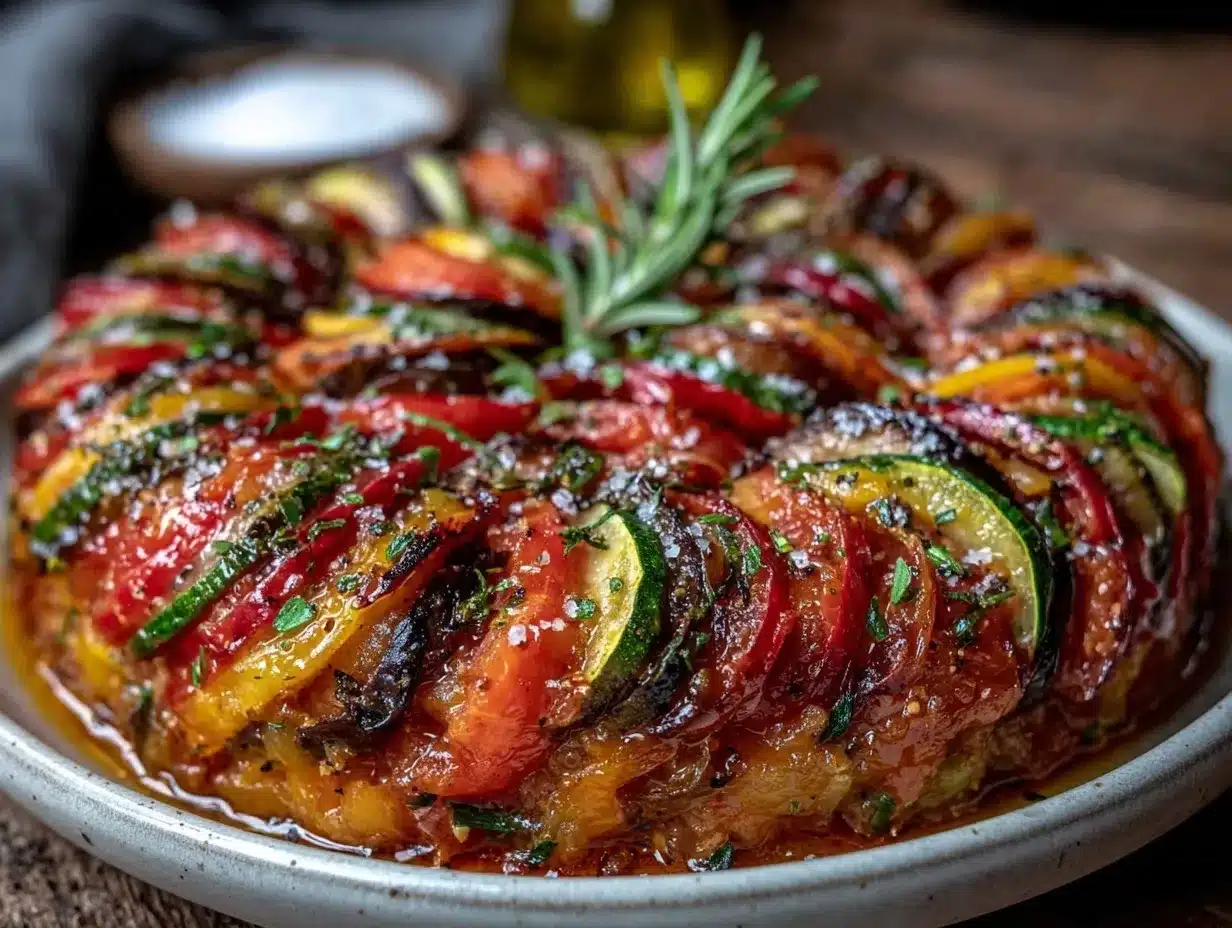
- Prep the vegetables: Wash all your vegetables thoroughly. Dice the eggplants into roughly 1-inch cubes and slice the zucchinis into ½-inch rounds. Chop the bell peppers into bite-size pieces and finely chop the onion and garlic. Set everything aside.
- Cook the eggplant: Heat 2 tablespoons of olive oil in your skillet over medium heat. Add the diced eggplant in a single layer (you may need to do this in batches to avoid overcrowding). Cook for about 7-8 minutes, stirring occasionally, until the eggplant is golden and tender but not mushy. Remove and set aside.
- Sauté the peppers and onions: In the same pan, add another tablespoon of olive oil. Toss in the onions and bell peppers, cooking for about 5-6 minutes until softened and slightly caramelized. Stir frequently to avoid burning.
- Add the zucchini: Add the zucchini slices to the pan, and cook for another 5 minutes, letting them brown lightly on each side. This layering of cooking helps maintain texture and prevents the dish from becoming mushy.
- Combine vegetables and add tomatoes: Return the eggplant to the pan with the other vegetables. Add the chopped tomatoes and minced garlic. Stir gently to combine.
- Season and simmer: Sprinkle in the thyme, rosemary, salt, and pepper. Drizzle the remaining tablespoon of olive oil and add the vinegar. Lower the heat to medium-low, cover loosely, and let it simmer gently for about 15-20 minutes. Stir occasionally, allowing the flavors to marry and excess liquid to reduce.
- Final touches: Taste and adjust seasoning if needed. Stir in the fresh basil just before serving for a fresh burst of flavor. The ratatouille should be thick but still saucy, with tender vegetables that hold their shape.
Pro tip: If your ratatouille is too watery, uncover the pan in the last 5 minutes of cooking and turn the heat up slightly to evaporate some liquid. If you prefer a chunkier texture, avoid stirring too vigorously. Oh, and don’t forget to taste as you go—seasoning is key!
Cooking Tips & Techniques
Ratatouille seems straightforward, but nailing the texture and flavor balance takes a bit of finesse. Here’s what I’ve learned through trial and error:
- Cook vegetables separately: It might feel like extra work, but sautéing each vegetable individually prevents them from turning into a mushy mess. Each veggie has a different moisture content and cooking time.
- Use good olive oil: The quality of olive oil really shines here. I’ve tried cheaper brands before, and the flavor difference is noticeable. A fruity, peppery extra virgin olive oil brings authenticity.
- Don’t rush the simmer: Letting the ratatouille cook gently allows the flavors to blend beautifully. I usually simmer mine for at least 15 minutes, sometimes longer if I have time.
- Fresh herbs matter: Adding fresh basil and thyme at the end keeps their flavors bright. Dried herbs are fine for cooking, but fresh herbs add that vibrant touch.
- Avoid over-salting: Vegetables release their own natural sweetness and saltiness when cooked slowly. Start with less salt and add more at the end if needed.
- Multitasking tip: While vegetables cook, clean your prep area or prepare a simple side like crusty bread or a green salad to accompany the dish.
Funny story: Once I forgot the garlic until the last minute and threw it in raw. The flavor was sharper but surprisingly pleasant—though I prefer it cooked gently to mellow out its bite.
Variations & Adaptations
This ratatouille recipe is wonderfully versatile. Here are some of my favorite twists and ideas to suit different tastes or dietary needs:
- Spicy ratatouille: Add a pinch of red chili flakes or a diced fresh chili pepper during the onion and pepper sauté for a subtle heat kick.
- Roasted ratatouille: Instead of sautéing, roast all the vegetables in the oven at 400°F (200°C) for about 30-35 minutes, tossing halfway through. This method gives a smoky, caramelized flavor.
- Protein boost: Stir in cooked chickpeas or white beans for a heartier meal that’s perfect for vegetarian lunches or dinners.
- Low-fat option: Use half the olive oil or swap it out for a light vegetable broth to reduce fat without sacrificing flavor.
- Personal favorite: I sometimes add a splash of dry white wine during simmering for a subtle depth that really pops.
Feel free to customize with your favorite herbs or seasonal vegetables. Ratatouille is forgiving and welcoming to experimentation, which is part of its charm.
Serving & Storage Suggestions
Serve your fresh authentic Provençal ratatouille warm or at room temperature—it’s delicious either way. I like to spoon it over a bed of fluffy couscous or alongside a crusty baguette for soaking up all that lovely sauce. It also pairs beautifully with grilled meats or fish for a complete Mediterranean-inspired meal.
If you have leftovers (good luck!), store them in an airtight container in the refrigerator for up to 4 days. Ratatouille actually tastes better the next day as the flavors deepen. To reheat, warm gently on the stove over low heat or microwave covered, stirring occasionally to keep the texture intact.
For longer storage, ratatouille freezes well. Portion it into freezer-safe containers and freeze for up to 3 months. Thaw overnight in the fridge and reheat slowly to maintain texture and flavor.
Nutritional Information & Benefits
This Provençal ratatouille recipe is naturally gluten-free, low in calories, and packed with vitamins and antioxidants thanks to its fresh vegetables. A typical serving (about 1 cup or 240g) contains approximately:
| Nutrient | Amount |
|---|---|
| Calories | 120 kcal |
| Carbohydrates | 15 g |
| Fiber | 5 g |
| Protein | 3 g |
| Fat | 7 g (mostly from olive oil) |
| Vitamin C | 40% DV |
| Vitamin A | 25% DV |
Besides being delicious, the veggies provide heart-healthy nutrients and anti-inflammatory compounds. Olive oil adds beneficial monounsaturated fats, making this dish a wholesome choice that feels indulgent but supports wellness.
Conclusion
This fresh authentic Provençal ratatouille recipe is truly one of those dishes that brings joy with every bite. It’s simple enough for weeknight dinners but special enough to impress guests without stress. I love how it showcases the natural beauty of fresh vegetables, and the cooking process itself always feels calming and satisfying—especially when you remember to breathe through the little kitchen mishaps.
Give this recipe a try and make it your own by adjusting the herbs, veggies, or cooking method. I’d love to hear how your version turns out—drop a comment or share your twists! Trust me, once you taste this ratatouille, you’ll find yourself making it again and again, savoring that taste of Provence right at home.
Frequently Asked Questions About Provençal Ratatouille
What is the best way to store leftover ratatouille?
Store leftovers in an airtight container in the fridge for up to 4 days. It also freezes well for up to 3 months. Reheat gently to preserve texture.
Can I make ratatouille ahead of time?
Absolutely! Ratatouille often tastes better the next day as flavors meld. Just keep it refrigerated and reheat before serving.
Is ratatouille gluten-free and vegan?
Yes, this recipe is naturally gluten-free and vegan, making it suitable for many dietary preferences.
Can I use canned tomatoes instead of fresh?
Yes, especially in winter months. Use good quality canned San Marzano tomatoes for the best flavor.
What can I serve with ratatouille?
It pairs wonderfully with crusty bread, couscous, rice, or grilled meats and fish for a full Mediterranean meal.
Pin This Recipe!
Fresh Authentic Provençal Ratatouille Recipe
A vibrant and comforting vegetable stew from Provence, made with fresh summer vegetables and herbs, perfect for a wholesome and flavorful meal.
- Prep Time: 15 minutes
- Cook Time: 30 minutes
- Total Time: 45 minutes
- Yield: 6 servings 1x
- Category: Main Course
- Cuisine: French
Ingredients
- 2 medium eggplants, diced (about 1-inch cubes)
- 3 medium zucchinis, sliced into ½-inch rounds
- 2 red bell peppers, diced
- 2 yellow bell peppers, diced (optional)
- 4 large ripe tomatoes, chopped (Roma or plum tomatoes)
- 1 large onion, finely chopped (yellow or sweet onion)
- 4 cloves garlic, minced
- 2 teaspoons fresh thyme leaves (or 1 teaspoon dried)
- 2 tablespoons fresh basil, chopped
- 1 teaspoon fresh rosemary, chopped (optional)
- Salt and freshly ground black pepper, to taste
- 4 tablespoons extra virgin olive oil
- 1 tablespoon red wine vinegar or balsamic vinegar
Instructions
- Wash all vegetables thoroughly. Dice eggplants into roughly 1-inch cubes and slice zucchinis into ½-inch rounds. Chop bell peppers into bite-size pieces and finely chop onion and garlic. Set aside.
- Heat 2 tablespoons olive oil in a large skillet over medium heat. Add diced eggplant in a single layer (in batches if needed). Cook 7-8 minutes, stirring occasionally, until golden and tender but not mushy. Remove and set aside.
- In the same pan, add 1 tablespoon olive oil. Add onions and bell peppers, cook 5-6 minutes until softened and slightly caramelized, stirring frequently.
- Add zucchini slices to the pan and cook for another 5 minutes, browning lightly on each side.
- Return eggplant to the pan with other vegetables. Add chopped tomatoes and minced garlic. Stir gently to combine.
- Sprinkle thyme, rosemary, salt, and pepper. Drizzle remaining 1 tablespoon olive oil and add vinegar. Lower heat to medium-low, cover loosely, and simmer gently for 15-20 minutes, stirring occasionally.
- Taste and adjust seasoning if needed. Stir in fresh basil just before serving. The ratatouille should be thick but saucy, with tender vegetables that hold their shape.
Notes
Cook vegetables separately to avoid mushiness. Use good quality extra virgin olive oil for best flavor. Simmer gently to blend flavors. Add fresh basil at the end for brightness. If too watery, uncover and increase heat to evaporate excess liquid. Taste and adjust seasoning as you go.
Nutrition
- Serving Size: 1 cup (about 240g)
- Calories: 120
- Fat: 7
- Carbohydrates: 15
- Fiber: 5
- Protein: 3
Keywords: ratatouille, Provençal, vegetable stew, summer vegetables, vegetarian, gluten-free, easy recipe, Mediterranean