Love this? Save it for later!
Share the inspiration with your friends
“The clatter of woks, the burst of spices in the air, and the chatter of eager street food lovers—these are the sounds that greeted me that humid Saturday evening in Jakarta’s bustling market,” my friend Rina told me as she stirred a sizzling pan of nasi goreng. Honestly, I wasn’t expecting much from my spontaneous visit to her tiny apartment kitchen. But one whiff of that fragrant, smoky rice and the cheerful chaos of chopping, frying, and seasoning changed everything. It wasn’t just food; it was a whole experience wrapped up in a simple, colorful plate.
That day, I learned that Indonesian street food, especially nasi goreng, is more than just fast food; it’s a celebration of flavors born from humble ingredients and lively cooking traditions. You know that feeling when a dish surprises you so much, you find yourself craving it days later? That’s exactly how this Flavorful Indonesian Street Food Nasi Goreng Summer Recipe stayed with me.
Maybe you’ve been there—looking for a quick, satisfying meal that doesn’t skimp on taste or character. This recipe captures that effortless magic with easy-to-find ingredients and a splash of summer sunshine. Let me tell you, even on the hottest days, this nasi goreng brings a burst of freshness and warmth that makes you feel right at home, whether you’re in a Jakarta street market or your own backyard.
Why You’ll Love This Recipe
After testing countless versions of nasi goreng, this recipe quickly became my go-to for busy summer nights and casual gatherings. Here’s why you’ll want it bookmarked too:
- Quick & Easy: Ready in under 30 minutes, perfect for those “I want something tasty now” moments.
- Simple Ingredients: You won’t need exotic items—mostly pantry staples and fresh veggies.
- Perfect for Summer Meals: Light enough for warm weather but hearty enough to satisfy.
- Crowd-Pleaser: Kids and adults alike can’t get enough, making it a winner for potlucks or family dinners.
- Unbelievably Delicious: The balance of sweet, spicy, and smoky notes makes each bite a little adventure.
What sets this nasi goreng recipe apart is the touch of fresh lime juice added right at the end—trust me, it adds a zing that brightens the dish without overpowering the authentic flavors. Plus, I blend a bit of shrimp paste for that unmistakable umami kick, but if you’re not a fan, I’ve got you covered with substitutions below.
This isn’t just another fried rice. It’s a recipe that’s been lovingly adapted from street food stalls, tested in my own chaotic kitchen (where my cat once decided to dive into the rice bowl mid-prep—don’t ask!), and perfected to bring a little Indonesian summer magic to your table.
What Ingredients You Will Need
This recipe uses simple, wholesome ingredients to deliver bold flavor and satisfying texture without the fuss. Most are pantry basics or fresh produce you can find at any market. Here’s what you’ll want on hand:
- For the Rice Base:
- 2 cups cooked jasmine rice (preferably day-old for better texture)
- 2 tablespoons vegetable oil (I like using palm or sunflower oil)
- For the Aromatics & Sauce:
- 3 cloves garlic, minced
- 2 shallots, finely chopped (adds a subtle sweetness)
- 1 red chili, thinly sliced (adjust to taste)
- 1 tablespoon kecap manis (sweet soy sauce) – I recommend ABC brand for authentic flavor
- 1 teaspoon shrimp paste (terasi), optional but highly recommended (can substitute with miso paste if needed)
- 1 tablespoon soy sauce (light soy sauce works best)
- 1 teaspoon palm sugar or brown sugar (balances the heat)
- For the Add-ins:
- 2 large eggs (beaten)
- 100 grams cooked chicken or shrimp, chopped (optional for protein boost)
- 1 cup shredded carrots (for crunch and color)
- 1/2 cup chopped green beans or peas (fresh or frozen)
- For Garnish:
- Fresh cucumber slices (cooling contrast)
- Fried shallots (adds crispy texture)
- Fresh lime wedges (for squeezing over right before eating)
- Chopped scallions or fresh cilantro
Feel free to swap the protein with tofu or tempeh for a vegetarian twist. In summer, fresh snap peas or bell peppers also make a great addition. I find that using day-old rice is key—it keeps the grains separated and prevents mushiness.
Equipment Needed
- Large wok or heavy skillet: The high sides make tossing easier and help with even cooking. If you don’t have a wok, a large sauté pan works fine.
- Spatula or wooden spoon: Essential for stirring and mixing the ingredients without scratching your cookware.
- Sharp knife and cutting board: For prepping the aromatics and vegetables efficiently.
- Measuring spoons and cups: For accuracy, especially with the sauces and seasonings.
- Mixing bowl: Handy for beating eggs and holding prepped ingredients.
Personally, I love using a carbon steel wok—it heats up quickly and gives that slightly smoky flavor. But a non-stick pan is easier to clean and fine for beginners. If you’re on a budget, a sturdy cast-iron skillet can also do the trick but watch the heat to avoid burning.
Preparation Method
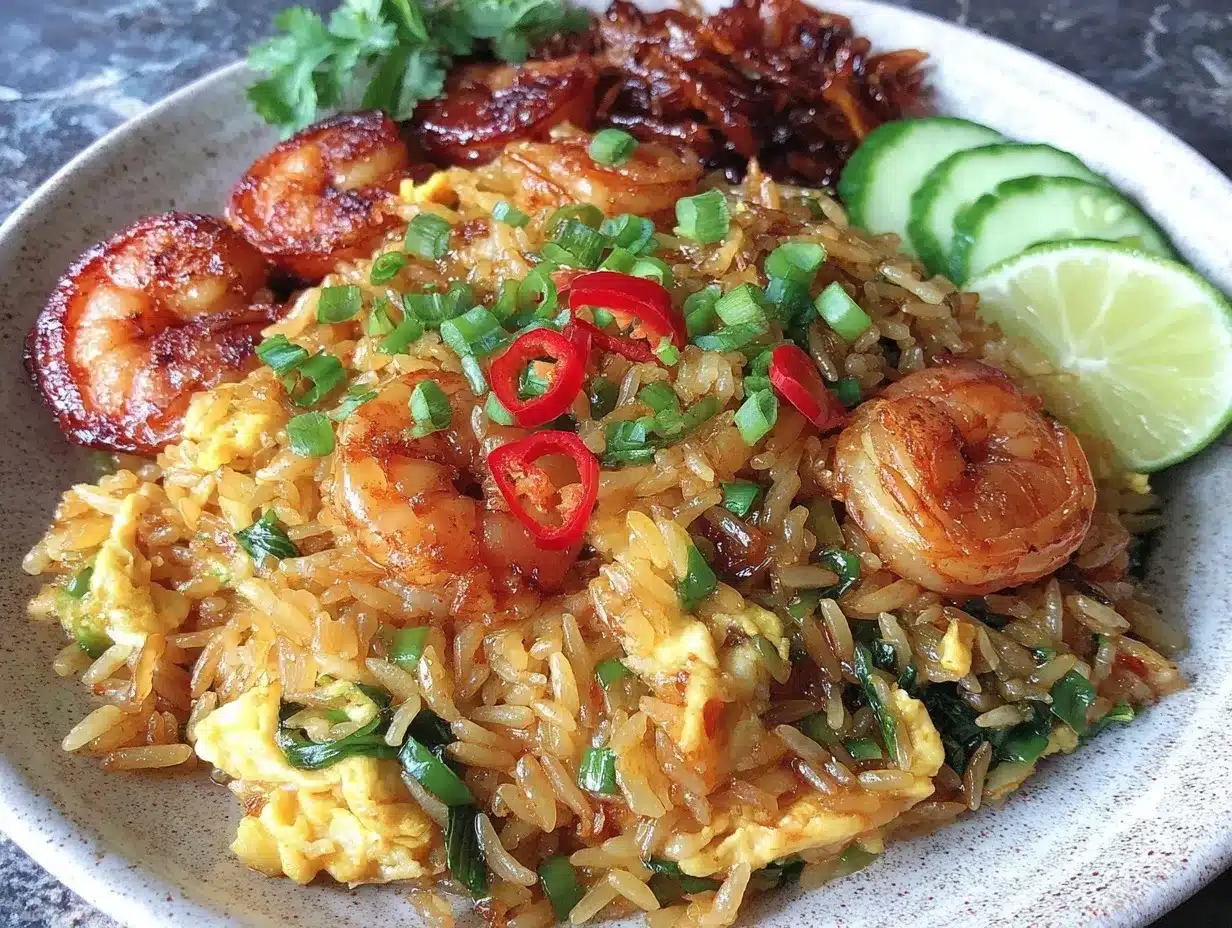
- Prepare the Rice: Use jasmine rice cooked at least a day before and chilled in the fridge. This helps the grains stay firm and separate, making your nasi goreng fluffy instead of mushy. If you forgot to plan ahead, spread freshly cooked rice on a tray and chill it in the freezer for 15-20 minutes.
- Mix the Sauce: In a small bowl, combine the kecap manis, soy sauce, shrimp paste (or miso), and palm sugar. Stir to dissolve the sugar. This blend is the heart of your dish, giving it that signature sweet-savory depth.
- Cook the Aromatics: Heat 2 tablespoons of oil in your wok over medium-high heat. Add the garlic, shallots, and sliced chili. Stir-fry for about 1-2 minutes until fragrant but not browned—this step releases their flavors beautifully.
- Add the Protein & Veggies: Toss in the cooked chicken or shrimp if using, stirring to heat through. Add shredded carrots and green beans or peas, cooking for another 2-3 minutes until veggies are tender-crisp.
- Push Ingredients Aside and Scramble Eggs: Move the mixture to one side of the wok. Pour the beaten eggs onto the empty side and scramble gently until just set. Then mix everything together, combining eggs with the other ingredients.
- Add the Rice & Sauce: Add the chilled rice and pour over the sauce mixture. Use your spatula to break up clumps and toss everything together. Stir-fry for 4-5 minutes, making sure the rice is evenly coated and heated through. Look for a slight caramelization on some grains—that’s flavor gold.
- Final Touches: Turn off the heat and squeeze fresh lime juice over the rice. Give it a quick toss to brighten the flavors. Sprinkle with chopped scallions or cilantro if you like.
- Serve: Plate the nasi goreng and garnish with cucumber slices and fried shallots for texture contrast. Don’t forget extra lime wedges on the side.
Pro tip: If your shrimp paste smells overwhelming, fry it briefly in the oil before adding aromatics to mellow it out. Also, keep your wok hot but not smoking to avoid burning the garlic.
Cooking Tips & Techniques
Cooking nasi goreng is all about balancing heat and timing. Here are some tips I learned after a few too many burnt batches:
- Use Day-Old Rice: Fresh rice is too moist and clumps together. Letting it dry out in the fridge is key.
- Prep Everything First: Once the wok is hot, things move fast. Have all your ingredients chopped and ready to go.
- High Heat, Quick Tossing: Keep the heat medium-high to get a nice sear on the rice, which adds smoky flavor.
- Don’t Overcrowd the Pan: If you double the recipe, cook in batches to avoid steaming the ingredients.
- Adjust the Spice: If you prefer milder dishes, remove the chili seeds or swap for a sweet red pepper.
- Master the Egg Scramble: Scramble the eggs gently and don’t overcook them—they’ll keep the rice moist and add richness.
I once tried adding raw onions instead of shallots—big mistake. They overwhelmed the dish with sharpness. Lesson learned: stick to shallots for that subtle sweetness. Also, multitasking helps; while the rice fries, you can chop garnishes or prep a quick salad to complete the meal.
Variations & Adaptations
This nasi goreng recipe is pretty flexible, so you can tweak it based on your taste or dietary needs:
- Vegetarian Version: Skip the shrimp paste and protein. Use smoked tofu or tempeh for a hearty bite and add extra veggies like bell peppers or baby corn.
- Spicy Kick: Add sambal oelek or fresh chopped bird’s eye chilies for an authentic fiery punch.
- Low-Carb Option: Substitute cooked cauliflower rice for jasmine rice to keep it light and keto-friendly.
- Cooking Method Swap: Try making this in an air fryer wok pan or even a large cast iron skillet if you don’t have a wok. Just watch the heat carefully.
- Personal Twist: I sometimes toss in a handful of roasted peanuts for crunch or drizzle a bit of sriracha mayo on top for a creamy contrast.
Experimenting with different proteins or seasonal veggies keeps this dish fresh and exciting every time. Feel free to adjust the sweetness or saltiness to your liking—the balance is what makes nasi goreng so addictive.
Serving & Storage Suggestions
Serve your nasi goreng hot right from the wok with fresh cucumber slices and lime wedges. The cool crunch pairs perfectly with the warm, flavorful rice. A side of simple stir-fried greens or a light soup makes it a complete meal.
Leftovers store well in an airtight container in the fridge for up to 3 days. Reheat in a skillet over medium heat, adding a splash of water or oil to revive moisture. Microwave works too—just cover to avoid drying out.
Interestingly, the flavors deepen when refrigerated overnight, so some folks prefer it as a next-day treat. Just add fresh garnishes after reheating for brightness. For longer storage, freeze portions in freezer-safe bags for up to a month. Thaw thoroughly before reheating.
Nutritional Information & Benefits
This nasi goreng recipe is a balanced mix of carbs, protein, and veggies. A typical serving provides approximately:
| Nutrient | Amount |
|---|---|
| Calories | 450 kcal |
| Protein | 20 g |
| Carbohydrates | 55 g |
| Fat | 12 g |
| Fiber | 5 g |
Key ingredients like garlic and shallots offer antioxidants, while the vegetables provide vitamins A and C. Using lean protein or tofu helps keep it light. The recipe is naturally gluten-free if you check your soy sauce labels, and can be adapted for low-carb diets.
From a wellness perspective, this dish strikes a nice balance between comfort and nutrition. It’s satisfying without feeling heavy, making it a smart choice for summer meals.
Conclusion
If you’ve been searching for a flavorful, fuss-free summer meal, this Flavorful Indonesian Street Food Nasi Goreng Summer Recipe might just become your new favorite. It’s easy to prepare, packed with taste, and flexible enough to suit your pantry and preferences. Honestly, I keep coming back to it—not just because it’s delicious but because it reminds me of those lively evenings with Rina, where food was about connection and joy.
Give this recipe a try and make it your own. Tweak the spice, swap ingredients, or add your favorite protein. I’d love to hear how you customize it—drop a comment below or share your version! Cooking is all about sharing stories and flavors, after all.
Here’s to many summer feasts filled with bold tastes and happy memories!
FAQs
What type of rice is best for nasi goreng?
Day-old cooked jasmine rice works best because it’s drier and less sticky, helping to achieve that perfect fried rice texture.
Can I make nasi goreng without shrimp paste?
Yes! You can substitute shrimp paste with miso paste or simply omit it. The dish will still be tasty but slightly less umami-rich.
Is nasi goreng spicy?
Traditionally, yes—it often includes chili. But you can adjust the heat level by controlling the amount and type of chili used.
Can I prepare nasi goreng in advance?
You can prepare the rice and sauce ahead of time, but it’s best to cook the dish fresh for optimal flavor and texture.
What are good side dishes to serve with nasi goreng?
Simple sides like cucumber slices, fried eggs, stir-fried greens, or a light soup complement nasi goreng beautifully.
Pin This Recipe!
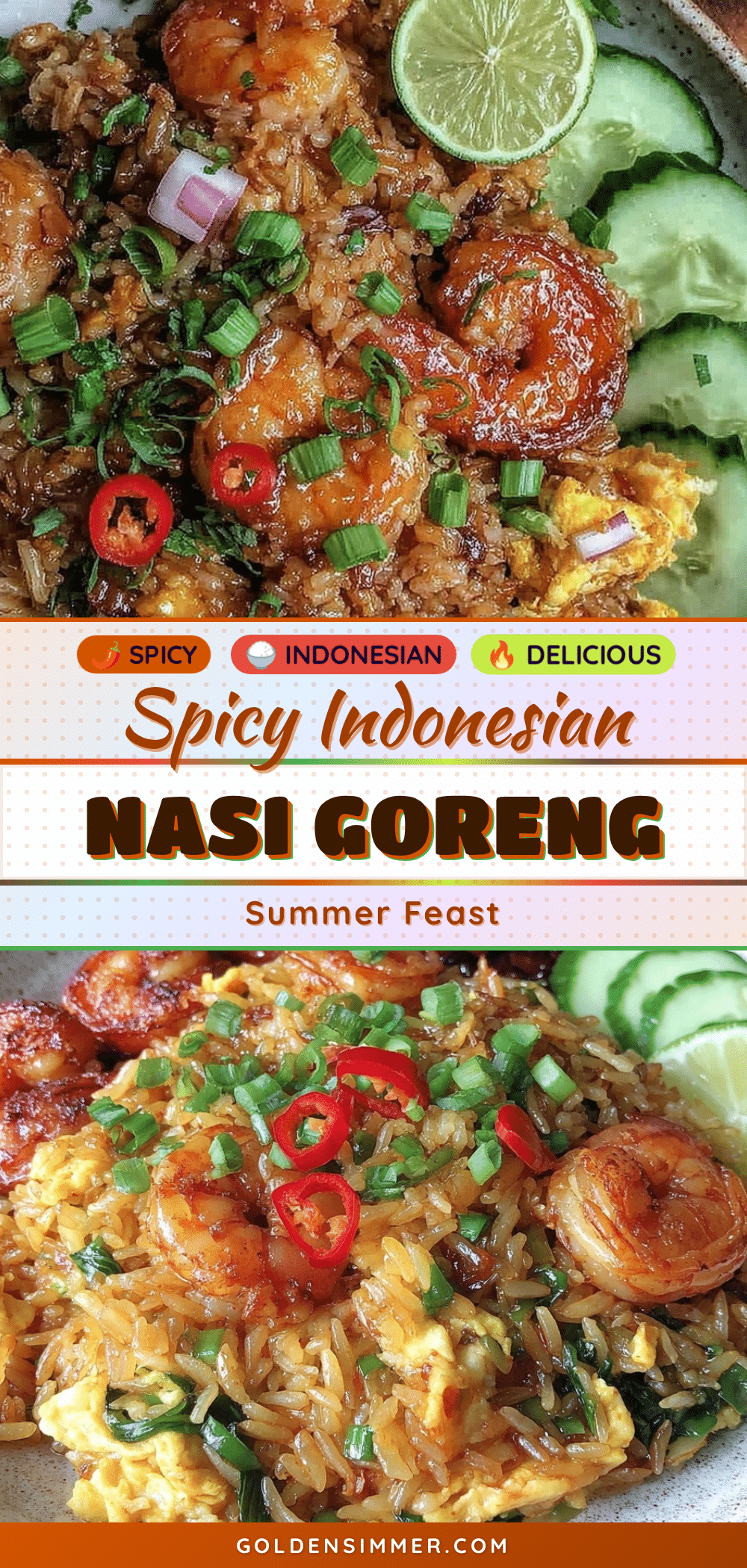
Nasi Goreng Recipe Easy Indonesian Street Food for Summer Meals

A quick and easy Indonesian fried rice recipe bursting with sweet, spicy, and smoky flavors, perfect for summer meals and casual gatherings.
- Prep Time: 10 minutes
- Cook Time: 15 minutes
- Total Time: 25 minutes
- Yield: 4 servings 1x
- Category: Main Course
- Cuisine: Indonesian
Ingredients
- 2 cups cooked jasmine rice (preferably day-old for better texture)
- 2 tablespoons vegetable oil (palm or sunflower oil preferred)
- 3 cloves garlic, minced
- 2 shallots, finely chopped
- 1 red chili, thinly sliced (adjust to taste)
- 1 tablespoon kecap manis (sweet soy sauce)
- 1 teaspoon shrimp paste (terasi), optional (can substitute with miso paste)
- 1 tablespoon soy sauce (light soy sauce works best)
- 1 teaspoon palm sugar or brown sugar
- 2 large eggs, beaten
- 100 grams cooked chicken or shrimp, chopped (optional)
- 1 cup shredded carrots
- 1/2 cup chopped green beans or peas (fresh or frozen)
- Fresh cucumber slices (for garnish)
- Fried shallots (for garnish)
- Fresh lime wedges (for garnish)
- Chopped scallions or fresh cilantro (for garnish)
Instructions
- Prepare the rice: Use jasmine rice cooked at least a day before and chilled in the fridge. If fresh, spread on a tray and chill in the freezer for 15-20 minutes.
- Mix the sauce: In a small bowl, combine kecap manis, soy sauce, shrimp paste (or miso), and palm sugar. Stir to dissolve the sugar.
- Cook the aromatics: Heat 2 tablespoons of oil in a wok over medium-high heat. Add garlic, shallots, and sliced chili. Stir-fry for 1-2 minutes until fragrant but not browned.
- Add protein and veggies: Toss in cooked chicken or shrimp if using, stirring to heat through. Add shredded carrots and green beans or peas, cooking for 2-3 minutes until tender-crisp.
- Push ingredients aside and scramble eggs: Move mixture to one side of the wok. Pour beaten eggs onto empty side and scramble gently until just set. Mix eggs with other ingredients.
- Add rice and sauce: Add chilled rice and pour sauce mixture over. Break up clumps and toss together. Stir-fry for 4-5 minutes until rice is evenly coated and heated through with slight caramelization.
- Final touches: Turn off heat and squeeze fresh lime juice over rice. Toss quickly and sprinkle with chopped scallions or cilantro.
- Serve: Plate nasi goreng and garnish with cucumber slices and fried shallots. Serve with extra lime wedges.
Notes
Use day-old rice for best texture. If shrimp paste smell is strong, fry briefly in oil before adding aromatics. Keep wok hot but not smoking to avoid burning garlic. Adjust chili to taste or substitute with sweet red pepper for milder flavor. Protein can be swapped with tofu or tempeh for vegetarian version. Leftovers store well up to 3 days refrigerated or up to 1 month frozen.
Nutrition
- Serving Size: 1 serving (about 1.5
- Calories: 450
- Sugar: 5
- Sodium: 700
- Fat: 12
- Saturated Fat: 2
- Carbohydrates: 55
- Fiber: 5
- Protein: 20
Keywords: nasi goreng, Indonesian fried rice, street food, summer meals, easy recipe, quick dinner, sweet soy sauce, shrimp paste, vegetarian option